


Corporate cards are specialized financial tools created for mid-sized to large businesses with substantial revenue and sizable workforces. While a few options may also suit small businesses, these cards primarily cater to companies with more complex financial operations.
The best corporate business credit cards stand out by offering generous credit limits, advanced expense management features, detailed reporting capabilities, flexible billing options, and valuable rewards tailored to corporate spending patterns. If you’re in the market for a corporate credit card for your business, I’ve done some research and compiled 7 of what I believe are some of the best options:
- Ramp Credit Card: Best overall for spending controls and up to 1.5% cash back
- Emburse Spend Card: Best prepaid card option with real-time expense tracking
- Coast Fuel Card: Best for businesses with high fuel expenses
- Rippling Spend Credit Card: Best for robust integration capabilities
- Rho Card: Best for daily or monthly repayment options
- BILL Divvy Card: Best for scalable credit limits
- Brex Card: Best for startups
- Top corporate credit cards quick comparison
- Ramp Card: Best overall for spending controls and up to 1.5% cash back
- Emburse Card: Best prepaid card option with real-time expense tracking
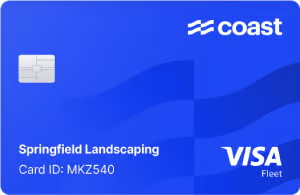
- Coast Fuel Card: Best for businesses with high fuel expenses
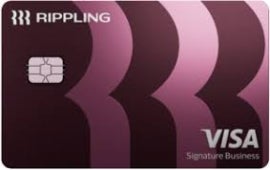
- Rippling Spend Card: Best for robust integration capabilities
- Rho Card: Best for daily or monthly repayment options
- BILL Divvy Card: Best for scalable credit limits
- Brex Card: Best for startups
- How to choose the right corporate card
- Corporate cards vs. business credit cards: What’s the difference?
- Methodology: How I chose the best corporate cards
- Frequently asked questions (FAQs)
Top corporate credit cards quick comparison
 | Up to 1.5% cash back | |||
 | Free 30-day trial on the Emburse Spend all-in-one platform for expense management | 1% cash back on every purchas | ||
 | None, only $4 per active card | 4¢ - 10¢ per gallon at 30,000+ stations, 1% cash back on fleet expenses | ||
 | $0; $11 per month platform fee | 1.75% cash back on all purchases when meeting card spend threshold | ||
 | Up to 1.5% cash back | |||
 | Up to 7x points | |||
 | Up to 7x points |
Ramp Card: Best overall for spending controls and up to 1.5% cash back
 |
|
|---|---|
Pros
| Cons
|
Card Details
Rewards
|
|
Why I like it
Ramp is an ideal solution for modern companies that value streamlined operations, reward programs, and advanced management tools. It delivers a balanced mix of ease-of-use, financial oversight, and security. With up to 1.5% cash back rewards on eligible purchases, businesses can collect rewards without the hassle of managing spending categories or jumping through hoops.
Its advanced automation tools, such as instant expense tracking, automatic receipt integration, and built-in policy compliance, help reduce administrative work and boost operational efficiency. For companies seeking a contemporary financial platform with integrated perks and strong financial controls, Ramp presents a smart, future-ready option.
Other benefits
Along with its cash back perks, the Ramp Card offers tools that make it easier for businesses to control spending and stay organized, such as:
- Spending controls that let you set limits, block certain types of purchases, and manage card access instantly
- Easy connection to accounting software like QuickBooks, NetSuite, and Xero for faster bookkeeping
- Both virtual and physical cards to support remote teams and handle one-time expenses
- Live transaction updates so you can track spending in real time and avoid manual work
Emburse Card: Best prepaid card option with real-time expense tracking
 |
|
|---|---|
Pros
| Cons
|
Card Details
Rewards
|
|
Why I like it
The Emburse Spend Card is a great option for businesses that want to maintain control over their expenses. Designed as a prepaid card, it requires you to load funds before use, which helps enforce spending limits and encourages smarter budgeting. It is especially useful for teams that need to issue cards to multiple employees while keeping overall expenses in check, and offers both physical and virtual card options.
The card offers unlimited 1% cash back on every purchase, letting companies earn rewards without navigating complex point systems. It also comes with zero monthly or annual fees, making it a cost-effective choice for managing day-to-day business spending.
With a standard funding limit of $100,000 and the ability to request higher limits, it is well-suited for organizations with solid cash flow that want to streamline expense tracking and avoid relying on traditional credit.
Other benefits
- Create as many virtual and physical cards as you need, with no extra fees
- Use built-in card management tools to set spending limits and monitor purchases as they happen
- Access a fully functional mobile app that makes managing expenses easy for all team members
- Live customer support available whenever you need help
- No personal guarantee required to get started
Coast Fuel Card: Best for businesses with high fuel expenses
 |
|
|---|---|
Pros
| Cons
|
Card Details
Welcome offer
Rewards
Features
|
|
Why I like it
For companies that manage fuel expenses frequently, the Coast Fuel Card offers an affordable and practical solution. At just $4 per active card each month, businesses can earn up to 10 cents per gallon in fuel rebates at major brands like Exxon, Mobil, 7-Eleven, Casey’s, Circle K, and more. On top of that, the card provides 1% cash back on purchases made outside of gas stations for other business expenses.
The platform is designed with corporate needs in mind, making it easy to onboard drivers and vehicles, issue cards, and set detailed spending controls. Administrators can apply restrictions by location, merchant type, or time of day, all while monitoring transactions in real time.
With a simple fee structure, built-in rewards, and tools that support oversight and flexibility, the Coast Fuel Card helps businesses keep fuel costs in check and manage expenses more efficiently.
Other benefits
The Coast Fuel Card offers tools that make managing fleet and fuel costs easier, as well as other features and benefits that allow you to:
- Set tailored spending rules based on where, when, or how much employees spend
- Use the card nearly anywhere that accepts Visa, including gas stations, repair shops, and car washes
- Get instant visibility into purchases with live tracking and alerts to help prevent unauthorized use
- Enjoy straightforward pricing with no hidden fees or setup charges
Rippling Spend Card: Best for robust integration capabilities
 |
|
|---|---|
Pros
| Cons
|
Card Details
Rewards
|
|
Why I like it
The Rippling Spend Card is a smart choice for companies that want a unified way to manage spending across a wide variety of teams, including HR, IT, and finance operations. Integrated directly into Rippling’s all-in-one platform, the card can be issued and controlled through the same system used to onboard staff, manage equipment, and handle payroll. This tight integration helps keep expenses organized and aligned with internal policies and departmental needs.
Admins can create custom approval workflows, apply detailed spending rules, and monitor card usage in real time through a single dashboard. For teams already using Rippling or those aiming to connect financial tools with daily operations, this card brings a simple and well-connected solution.
Other benefits
The Rippling Spend Card offers tools that simplify financial management and boost coordination between departments while offering benefits like:
- Virtual or physical cards with custom rules based on job roles, team assignments, or types of expenses
- Automatically assigning or deactivating cards during employee onboarding and offboarding to save time and reduce errors
- Monitor spending as it happens and apply company policies up front to stop non-compliant purchases
- Connecting seamlessly with accounting platforms like QuickBooks and NetSuite for smoother reconciliation and more accurate reports
Rho Card: Best for daily or monthly repayment options
 |
|
|---|---|
Pros
| Cons
|
Card Details
Rewards
|
|
Why I like it
For tech-driven startups that want to modernize how they manage company spending, the Rho Corporate Card stands out. It offers both daily and monthly repayment options, making it suitable for businesses looking to simplify their repayment terms. Designed with automation at its core, this card integrates directly with Rho’s broader banking and expense management platform, allowing teams to oversee card usage, approvals, and reconciliation from a single, intuitive system.
Combined with its emphasis on data transparency, automated workflows, and integration with popular accounting software, Rho is particularly appealing for its ability to streamline every step of the expense lifecycle. Businesses can issue virtual and physical cards instantly, assign them by role or project, and apply custom limits to stay on budget. Real-time transaction tracking and automatic expense categorization take the manual work out of reporting, giving teams better visibility and controls.
Other benefits
The Rho Corporate Card offers a variety of features and benefits designed to help businesses manage spending more efficiently and with greater control, such as:
- Live tracking of every transaction, along with automatic categorization, to simplify expense reporting and reduce manual work
- Smooth integration with major accounting platforms such as QuickBooks and NetSuite, streamlining reconciliation and monthly close
- Zero foreign transaction fees, making it a great option for international travel or global vendor payments
- Built-in expense management tools that centralize receipts, policies, and card usage for a cleaner, more organized process
- No need for a personal guarantee
BILL Divvy Card: Best for scalable credit limits
 |
|
|---|---|
Pros
| Cons
|
Card Details
Rewards
|
|
Why I like it
The BILL Divvy Card is built for growing businesses that need flexible access to capital without being locked into rigid repayment terms. With credit limits scaling up to $5 million, it serves a wide range of company sizes, from early-stage startups to established mid-market firms. The card charges no annual fee, making it a cost-effective choice.
One of Divvy’s standout features is its customizable payment schedule, which allows companies to choose how often they settle their balance: weekly, semimonthly, or monthly. This flexibility helps businesses align payments with their cash flow cycles. In return, Divvy rewards more frequent payments with higher earning potential, encouraging thoughtful spending habits, while maximizing value. Combined with spend management tools and real-time visibility, the card is a strong option for teams that want both control and scalability in a single platform.
Other benefits
- Choose how to redeem rewards with options like cash back, travel, statement credits, or gift cards
- Use integrated expense management tools to monitor spending and apply controls across your team
- Connect seamlessly with accounting platforms including QuickBooks, NetSuite, and Sage Intacct for easier reconciliation and reporting
Brex Card: Best for startups
|
|
|---|---|
Pros
| Cons
|
Card Details
Rewards
|
|
Why I like it
The Brex Corporate Card is ideal for startups, as it offers flexible repayment options that allow companies to choose either daily or monthly payment schedules based on their financial preferences. It can function as a charge card or a prepaid card, depending on how the business sets it up. There are no additional fees for purchases or for issuing physical and virtual cards, which makes it easy to equip employees with the tools they need.
Brex also provides a points-based rewards program, giving companies the ability to earn points on key spending categories. These points can be redeemed for cash back, statement credits, rebates, or even promotional resources like billboards. With its adaptable structure and practical benefits, the Brex Card is well-suited for businesses seeking control over their spending and a modern way to manage expenses.
Other benefits
- Set custom spend controls by team, department, or individual cardholder
- Monitor transactions as they happen through real-time expense tracking
- Automate receipt capture and matching for faster reconciliation
- Create role-based approval workflows to manage compliance and reduce errors
- Integrates directly with accounting tools like QuickBooks, NetSuite, Xero, and Expensify
- Centralized dashboard for managing all card activity and budgets in one place
- Includes fraud monitoring and security alerts for added protection
- Offers exclusive partner discounts on services such as AWS, Slack, and Zoom
How to choose the right corporate card
Choosing the right corporate card for your business and employees should be a careful consideration. I’ve detailed below a few key factors you should keep in mind when making your decision.
Your business size & industry
Corporate cards are typically best suited for larger corporations that would benefit having multiple users be able to access capital. Industry is also a consideration, as some employees may need to rely on a company card as part of their daily operations.
Liability & approval requirements
Approval requirements will vary depending on the card provider. However, it’s common that factors such as business structure, annual revenue, number of employees and creditworthiness will all be taken into consideration.
It’s also important to understand liability in terms of the company vs the employee. Essentially, the company is responsible for charges made on the card, along with required payments. However, the employee using the card may be on the hook for unauthorized charges such as misuse or personal expenses, and may be responsible for any fees or penalties incurred.
Rewards vs. controls vs. integrations
Rewards associated with a corporate card can include miles, cashback, and other perks or discounts. Controls can include features such as spending limits, authorized users, and security protections. Some cards also have various integrations to better manage accounting practices and simplify reporting.
All of these are important considerations that will vary depending on your preferences and specific business needs.
Corporate cards vs. business credit cards: What’s the difference?
While they may seem similar, corporate and business cards are in fact different products with different uses. While both can be used for accessing funds and helping manage business expenses, they are commonly issued to different employees within a business.
For instance, a business credit card is likely to be used strictly by the business owner and is commonly suited for small to medium sized businesses. On the other hand, a corporate card might be used by assigned employees as part of a larger corporation.
Who Qualifies for a Corporate Card?
Generally, corporate cards are best suited for large corporations that have strong creditworthiness and cash flow, as they don’t commonly require a personal guarantee. If your business is structured as an LLC, S-Corp, or C-Corp, it’s likely that you qualify for a corporate card.
Key Features That Set Corporate Cards Apart
Corporate cards can allow you to effectively manage your business expenses, help control employee spending, and overall streamline financial management of your business. As such, you’ll need a clearly defined policy for card usage, and it’s recommended you get a card that has key features such as accounting integrations, real-time spending tracking, customizable controls, and security measures.
Methodology: How I chose the best corporate cards
My methodology in choosing the best corporate cards revolved around features and capabilities specific to business that might utilize corporate cards to support operations. Key features I looked for included employee spending controls, flexible structures, and seamless integrations.
I also took into consideration cards that are low-cost and have potential for rewards. I made my decisions based on the most suitable options for businesses of all sizes and industries that need to utilize corporate cards in their day-to-day.
Frequently asked questions (FAQs)
Do corporate cards require a personal guarantee?
No, it’s not common that corporate cards require a personal guarantee. They are usually associated with the corporation only, in which they are liable for charges incurred, not the individual who uses it.
What’s the best corporate card for employee control?
It depends on how often you plan to use the card, and other features or rewards that may benefit you. You should look for cards with customizable controls, real-time transaction monitoring, and integrations. All of these features can be used for employee spending control, and allow you to stay on top of your budget.
Are corporate card rewards taxable?
Generally, no. If they are considered rebates or discounts, they don’t qualify as income and aren’t taxable.