


The saying, “Good help is hard to find,” rings loud and true. Sourcing skilled candidates has become a persistent challenge, especially for specialized and technical roles.
Even with competitive compensation packages and modern recruiting tools, many organizations are still falling behind in finding employees with the right skills.
And the data reflects that reality: 74% of employers say they’re struggling to find skilled talent.
That’s a clear sign to go back to the drawing board to redesign the traditional hiring approaches still in effect. But before real progress can be made, you have to understand the factors standing in your way.
 Find Qualified Candidates Faster with ZipRecruiterReach qualified talent wherever they are with ZipRecruiter. From smart matching to one-click posting across 100+ job boards, ZipRecruiter helps teams attract top applicants, streamline screening, and hire with confidence. |
The challenges in hiring today
Market competition isn’t the only reason finding employees is difficult. There’s a growing set of challenges slowing down your recruitment efforts.
1. Tight competition for skills
New technology is changing how work gets done, but recruiting for the skills to keep up hasn’t kept pace. Many of today’s roles depend on skills and tools that didn’t exist years ago, and the demand is growing.
By 2030, the importance of AI and big data skills is projected to increase by 87%, making them the most sought-after capabilities.
But technical skills aren’t the only ones in high demand. Soft skills, such as creative thinking, resilience, and leadership, are also on the rise.
Even though more people are developing these skills, there still aren’t enough professionals with the expertise you need to support modern operations.
2. Budget constraints
65% of HR leaders expect flat or reduced budgets. Even the strongest hiring strategy hits a wall when budgets tighten.
Keep in mind that it still costs $4,700 on average to hire an employee, and that number increases depending on the role and required competencies. But regardless, hiring teams are still expected to fill roles quickly and compete for top talent, even with fewer resources.
3. Overwhelming volume of applications
In theory, more applicants should be a good thing. In reality, it’s causing a major bottleneck in the application process. Recruiters are drowning in the sheer volume of applicants.
Oftentimes, they’re receiving hundreds to thousands of résumés per role, with only a small number meeting the essential requirements.
Executive headhunter Nicole Kaiser described today’s hiring landscape as recruiters “drinking through a fire hose of applications,” which is exactly how it feels.
The upsides and blind spots of AI in hiring
AI in recruitment has added real efficiency to the hiring process, from résumé parsing to automated scheduling, but it’s also introduced new challenges.
Résumé parsers may flag promising candidates too late in the process, or filter them out altogether based on formatting or phrasing. While these tools save time upfront, they make it more challenging to spot unconventional experience and transferable skills.
Pressure to regulate and mitigate bias in AI hiring tools is also increasing. Several jurisdictions now require transparency around how AI is used in hiring. That means more oversight and more documentation for teams that heavily rely on third-party platforms.
The best talent sourcing methods
I reviewed the daunting challenges keeping you from hiring your best employees, but I don’t want you to feel defeated. Like with any obstacle, you have to move strategically to accomplish your objective.
If you’re trying to nail down how to find employees going forward, you have to refine how you source them. The candidate sourcing methods below aren’t new. What is new is how you’ll use them.
I’ll explain how to make the right adjustments to get the most out of these strategies and secure today’s talent.
Job boards
The days of copying and pasting job posts have made their exit. Candidates scroll past vague listings. If you want to stand out, write job descriptions that are clear and realistic to the role.
Of course, you want to include the essentials—job title, job summary, a list of responsibilities, compensation—but you also want to highlight your Employee Value Proposition (EVP).
Your EVP explains why a candidate would want to work there and what they gain in return. Don’t be afraid to get creative. You really want to think about what your company has to offer besides compensation and benefits.
Are you making measurable progress toward sustainability? Say that.
Do you invest in your employees through workshops, certifications, or career growth stipends? Include that.
Are your teams flexible, collaborative, or tackling meaningful challenges? I strongly advise making it known. These are the extras many candidates are seeking, especially Gen Z, who value purpose over salary.
Once your job description is dialed in, it’s time to optimize your job post. That’s right, just like your SEO, you want to optimize your job post with keywords that’ll increase your visibility on job boards like LinkedIn, Indeed, and ZipRecruiter.
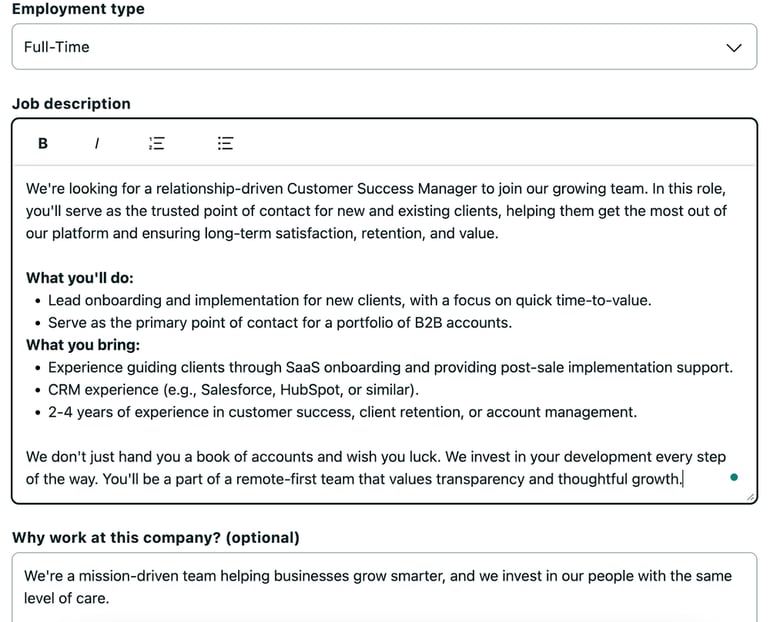
For example, ZipRecruiter’s smart matching technology analyzes the keywords in job titles and descriptions. So if you’re hiring for a customer success manager, it’s important to include specific keywords such as:
- SaaS onboarding
- Client retention
- CRM experience
- Post-sale implementation support
These keywords help ZipRecruiter match the post with candidates who’ve held similar roles or have these terms in their resumes. Optimizing your job posts makes sure that your listing reaches candidates with the right background and surfaces in relevant search results.
Referral programs
Referral programs expand your talent pool by granting you access to both passive and active candidates. Your employees essentially become brand ambassadors.
They can explain the reality of the role and answer questions long before an interview is scheduled. Plus, referral programs lower job advertising costs, giving you more bang for your buck if you’re working with a tighter budget.
If you’re starting from scratch, keep it simple. Focus on one or two roles that consistently take the longest to fill. This allows you to test the program and iron out the wrinkles in the process.
Then determine the incentives. You can offer cash bonuses, extra PTO, curated experiences, or even paid trips. The main point is to select what fits your budget and also piques your employees’ interest.
Universities and local programs
I’m a firm believer in connecting with people who are actively developing the skills I’m looking for. In my book, it’s one of the best ways to build a talent pipeline.
Colleges, trade schools, and certification programs are filled with candidates learning exactly what your organization is missing. Start by reaching out to the career services office at the institutions that align with your hiring needs.
You can participate in job fairs, guest lectures, and mentorship programs. You can set up an internship or post-graduation employment program.
And don’t overlook non-traditional paths. Some local programs and bootcamps train professionals in niche areas, like cloud computing and digital literacy.
Their goal is to have employment lined up for their new certification holders, and you need professionals with specialized skills. It’s a win-win!
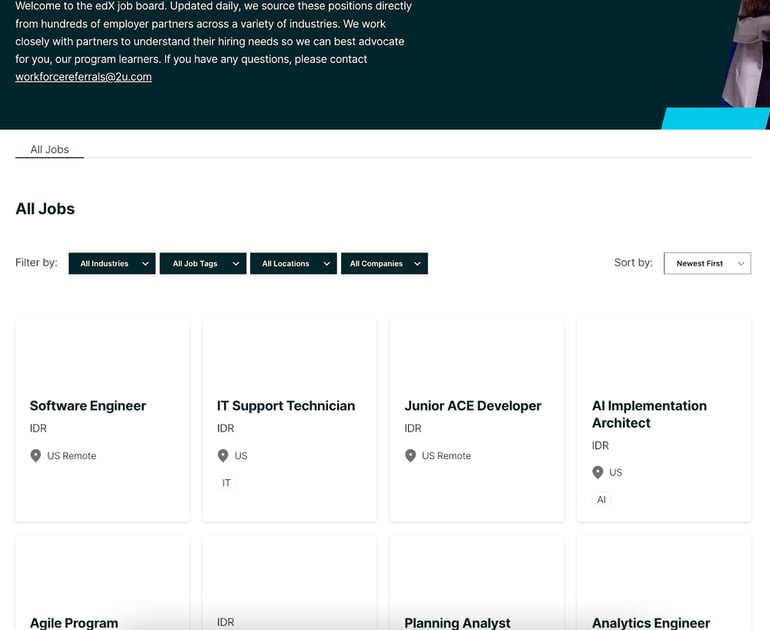
You can also tap into online education programs. Some online platforms, like edX, offer a job board exclusively to their students so they can find work as soon as they complete their program.
Social media recruiting
When many people think of social media recruiting, they picture posting their job listing on the company page and having some employees share it on their feeds.
Sometimes it works, sometimes it doesn’t. The results aren’t consistent, and you’re left wondering if it was worth it. To take it in the right direction, consider using social media recruiting platforms that place your jobs directly in the feeds of your ideal candidates.
Platforms, like HireSocial by CareerArc, boost your listings’ reach to both active and passive candidates. These platforms also make it easy for applicants to apply with just a few clicks. You can interact with prospective candidates with direct messages or answer their questions in the comments before they apply.
Future-proofing your talent pipeline
The demand for specialized skills will continue to increase as we approach 2030, and at the same time, the skills in demand will change. To prepare for such an ever-changing future, again, strategy is key.
Skills-based hiring
Skills-based hiring means you’re intentionally recruiting the people who demonstrate the abilities you need, versus focusing on their degree. Shifting the attention to skills helps you build a workforce that’s adaptable and growth-oriented.
Start by identifying the core skills your company thrives on today and the emerging skills you’ll need over the next one to three years. Those are the skills your hiring team will prioritize.
Workforce planning
Identifying the core skills you need sets up the foundation for proactive workforce planning. I have a genuine soft spot for workforce planning.
Ultimately, I love how it makes you step back and ask:
- What skills do we already have?
- Where are the gaps?
- What will we need six months from now? A year from now?
- Can we train for it, or do we need to hire for it?
To answer, begin by taking an inventory of your current workforce to see what capabilities you have and where. Then, determine which initiatives you have coming up and what skills they require.
Compare the skills you have with what you’ll need. That’s your skills gap, and now you can figure out whether you’ll need to hire for it or train for it.
This is how you can anticipate what your organization will need and move accordingly. You won’t have to rush to hire because you’ll already know what’s coming.
Internal mobility
External recruitment gets all the attention, but your best candidates may already be on your payroll. Investing in internal mobility reduces your time-to-fill rate and protects institutional knowledge by upskilling your employees.
With targeted upskilling, employees grow into the roles your company will need down the line. Workforce planning already shows you which skills you need most.
Now, you have to create the pathway for your employees to get there. You can offer in-house training, mentorship programs, workshops, or stretch assignments.
Whatever you choose, make sure the opportunities are visible and accessible. If you take a look at my recommendations, you’ll notice they encourage you to look inward.
I’ve experienced competitive job markets and talent shortages a few times, and the lesson is that it’s vital to know what your company has in its wheelhouse. You must know what your company offers and show candidates what it’s like working there.
That’s how you genuinely attract and retain employees, and build a lasting workforce.