
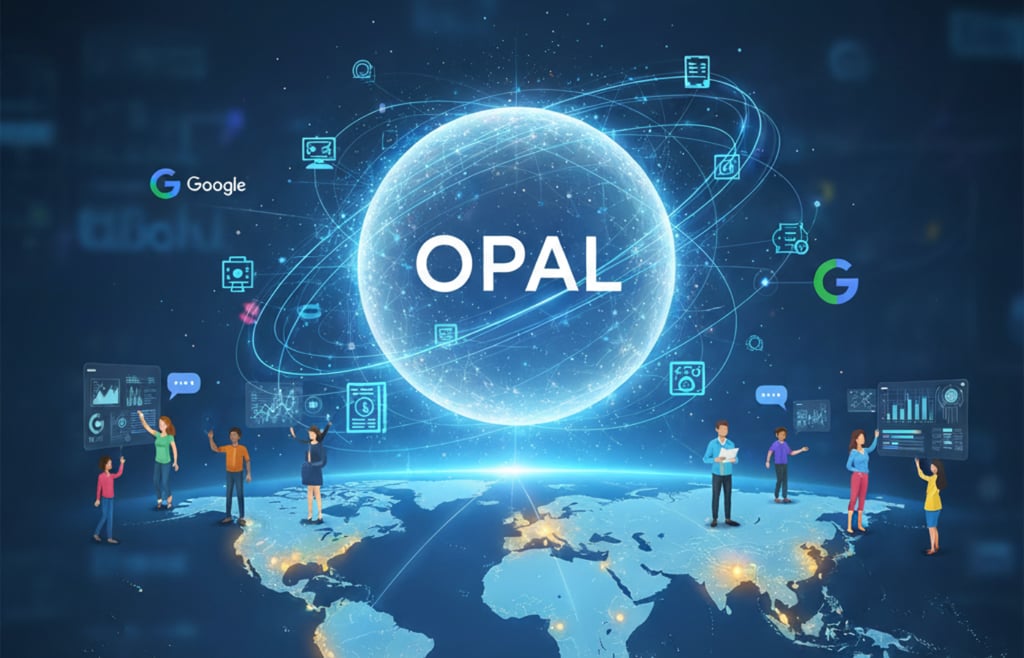


Google is taking no-code AI global. The company’s Opal app builder — once available in just 15 countries — has now expanded to 160, putting AI creation tools directly into the hands of non-developers everywhere.
Built with Google Labs, Opal enables users to create AI-driven applications through a visual interface, eliminating the need for advanced programming skills. The platform integrates with Google’s AI models, including Gemini, and offers tools for text, image, and data processing tasks.
Developers can connect Opal apps to Google Cloud services, BigQuery datasets, and APIs, allowing for scalable deployment across enterprise environments.
AI for all
Opal’s global expansion is part of Google’s ongoing strategy to democratize AI tools for everyone. By broadening the platform’s reach, Google aims to encourage experimentation and faster prototyping for AI use cases ranging from customer support chatbots to workflow automation and data analysis dashboards.
“Opal is lowering the barrier for entrepreneurs and builders looking to quickly validate new ideas or build simple mini-apps to share with others,” said Meghan Li, Google’s senior product manager, in a blog post announcing the expansion.
The move reflects a broader industry trend in which low-code and no-code platforms are reshaping how software and AI applications are built. According to a recent report from Precedence Research, about 84% of businesses are now using low-code or no-code solutions to fill technical gaps created by a global shortage of developers.
Building Google’s AI ecosystem
Google’s Opal push is no surprise. As no-code and AI tools move to the center of digital transformation, Google is positioning Opal to compete with Microsoft Power Apps and OpenAI’s custom GPTs.
Integrated with Gemini and Google Cloud, Opal supports both quick experimentation and enterprise-level deployment. Users can connect apps to BigQuery for live data analysis or tap into Gemini’s multimodal capabilities to build tools that process text and images, effectively bridging the gap between creative prototyping and large-scale implementation.
If Google succeeds in aligning Opal with Workspace and Vertex AI, it could extend the reach of its AI ecosystem beyond developers, turning everyday users into creators who rely on Google Cloud as their default environment for building and deploying AI-driven tools. In doing so, the company would strengthen enterprise adoption and help define a new tier of AI-literate professionals who create without ever writing a line of code.
What’s next for Opal
Google hasn’t announced new features beyond the expanded rollout, but early indications suggest the company plans to further integrate Opal across its broader AI ecosystem.
Future updates are expected to include industry-specific templates, tighter integration with Workspace apps such as Sheets and Drive, and enhanced collaboration tools for teams building AI solutions together.
Discover how Google’s bold new initiative — Project Suncatcher — aims to power AI data centers from space using solar-satellite platforms.