
Data science merges statistics, science, computing, machine learning, and other domain expertise to generate meaningful insights from data, driving better decision-making and operational efficiency. Below, we explore the process, techniques, benefits, and challenges of data science. We also highlight key use cases in sectors like healthcare, finance, and business and discuss popular tools like Microsoft BI, Apache, and Python.
SEE: What Is Data Mining? (TechRepublic)
Data science process
Data science features a unique process with various steps. Data scientists must first identify the key purpose of the data being collected and analyzed. Knowing the primary purpose is key to correctly analyzing the data and asking the right questions. From there, data scientists can generate or collect from possible valid data sources for accuracy and qualitative insight.
Once collected, it must undergo cleaning — which involves correcting errors, removing, and filtering duplicates, and finding inconsistencies and formatting errors — to prepare it for analysis. After the data has been analyzed, data scientists can further interpret and report on the results via graphical, visual, or storytelling patterns to aid in decision-making.
SEE: Data Governance Checklist (TechRepublic Premium)
Data science techniques
While moving through the various steps in the analysis process, data scientists can use the following techniques:
Machine learning
The primary goal of machine learning is to build predictive models that learn from experience that has been improved without explicit programming. This is valuable in business workflows because routine processes can be automated to enhance decision-making and predict future trends.
Statistics
Data scientists use statistical knowledge to analyze, summarize, and interpret data, using either classification analysis to categorize it into segments or regression analysis to determine the relationship between the data. This is useful in business workflows for tasks like market analysis, quality control, and financial forecasting.
Data mining
The data mining process involves uncovering hidden patterns and relations in large datasets to identify trends and make more adequate predictions. In business contexts, data mining helps enhance marketing strategies, improve product development and optimize logistics.
Deep learning
A subset of machine learning, deep learning involves employing different methods to train models to detect the right patterns and present results. The goal is to achieve higher task accuracy. It is especially useful where a business requires high levels of accuracy in tasks, for example, speech recognition, image analysis, and sophisticated pattern recognition.
Data visualization
The core purpose of data visualization is to present the finished result in a way that others can easily understand, and use it to detect patterns and trends. It is critical in business workflows to provide a clear view of complex data. It helps stakeholders make informed decisions by presenting data in an intuitive format, such as dashboards or visual reports that highlight areas requiring attention or improvement.
Data science use cases
There likely isn’t an industry that doesn’t use data science and analytics. For instance, in healthcare, it is used to uncover trends in patient health to improve treatment. And in manufacturing, it supports supply and demand predictions to ensure products are developed accordingly. Of course, these examples are just scratching the surface.
Business
Data plays a very crucial role in the development and planning of businesses. Data science adds value to businesses by providing insight to help make better-informed decisions and discover patterns and trends from the analysis of historical data. For example, in retail, it can be used to scour social media likes and mentions regarding popular products, informing companies which products to promote next.
Finance
Data analysis has been a massive part of financial intelligence, as it plays a huge role in decision-making and risk reduction. It helps banks and insurers with credit allocation, fraud detection, risk analysis, customer analytics and segmentation, and optimized finance services. Financial institutions can also use it to provide customers with a more personalized financial product.
Science, research, and innovation
In science, research, and innovation, data plays a crucial role in ensuring research is being made with concrete evidence and not just mere assumptions. The use of data has also impacted innovation, which is usually a byproduct or end game of every research. Specifically, data helps researchers identify patterns, trends, and correlations that can lead to innovative solutions and discoveries.
SEE: How to Balance Data Storage, Features, and Cost in Security Applications (TechRepublic Premium)
Benefits of data science
For every industry, using data to inform business decisions is no longer optional. Businesses must turn to data to simply stay competitive. Using various analysis tools such as statistics and numerical and predictive analytics, data scientists can extract insights and transform data from its raw form into helpful information, which can result in these benefits:
- Better decision-making: The insights gleaned from the analyzed data can help organizations make informed decisions that meet the needs of the existing problem and not just infer a solution without basic validation.
- Performance measurement and increased efficiency: Data generated from different sources can be used as a measuring tool, allowing companies to leverage data to measure growth and detect pitfalls to prepare for and mitigate them easily.
- Prevent future risks: Through methods such as predictive analysis, organizations can use the data to highlight areas of potential risk.
SEE: How to Measure Data Quality (TechRepublic)
Challenges of implementing data science
Implementing data science can be complex and challenging, as it requires broad domain knowledge. Inconsistency in data can lead to incorrect results, and data analysis can be time-consuming. Other significant challenges include:
- Data quality: Ensuring the quality and reliability of data often poses challenges. Hence, collection methods, cleaning, and integration are critical steps requiring attention to detail to minimize errors and biases.
- Data security and privacy: Ensuring compliance with GDPR, HIPAA, or CCPA regulations can complicate the implementation process.
- Infrastructure and scalability: Data science often requires significant computational power and storage. Implementing the necessary infrastructure and ensuring scalability can be challenging, especially for large-scale projects that involve processing and analyzing massive amounts of data.
- Organization-wide adoption: Convincing stakeholders, such as executives and managers, to invest in data science and incorporate its insights into their decision-making processes may be problematic.
SEE: IT Leader’s Guide to Data Loss Prevention (TechRepublic Premium)
Popular data science tools
Data science tools can cover a broad range of specific use cases, including various programming languages like Python and R, data visualization solutions, and even machine learning frameworks and libraries. Some top tools include:
- Microsoft Power BI: A self-service tool that is best for visualizations and business intelligence.
- Apache Spark: An open-source, multi-language engine that is best for fast, large-scale data processing.
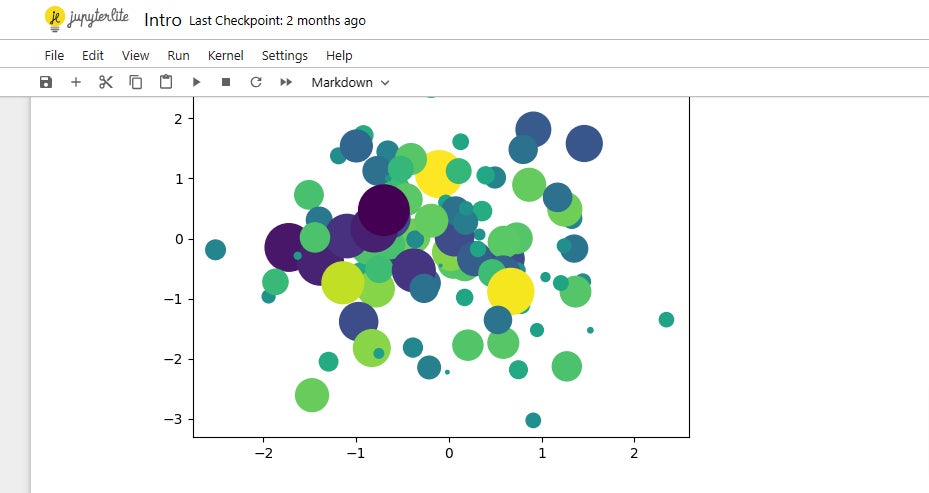
- Jupyter Notebook: An open-source browser application that is best for interactive data analysis and visualization.
- Alteryx: An automated analytics platform that is best for its ease of use and comprehensive data preparation and blending features.
- Python: A programming language that is best for its versatility at every stage of the data science process.
For a more detailed and expanded version of this topic, check out TechRepublic Premium’s downloadable PDF.
This article was originally published in May 2024. It was updated by Antony Peyton in June 2025.