Cryptography may make you think of cypher-cracking supercomputers or WWII bombe diffusers, but the truth is, codebreaking is almost as old as lying itself. Ancient Egyptians carved ciphers into stone to conceal information.
Nowadays, tycoons are just as likely as war strategists to use cryptography, but they may not appreciate just how cool the practice is.
Here are 14 books that’ll make a cryptography enthusiast out of just about anybody.
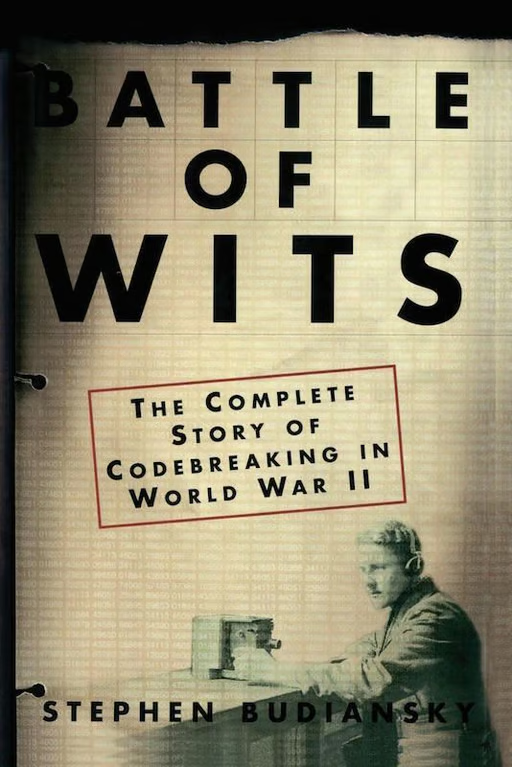
Codebreaking reached new heights during World War II, and Stephen Budiansky’s work chronicles the impressive Allied efforts to crack German and Japanese encryption engines.
Using newly declassified documents as the basis for his work, Budiansky does a great job explaining how critical codebreakers were to the Allied victory, and explains, in great detail, the cryptographic methods used to create so-called “unbreakable” codes.
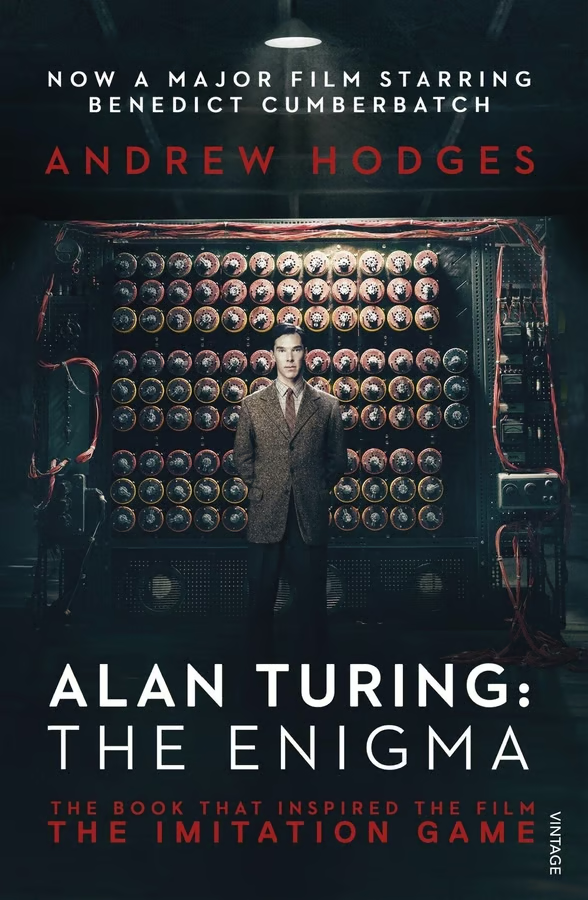
If you’ve seen The Imitation Game, then you’re going to love this biography, which was the inspiration for the 2014 Academy Award-winning movie about Alan Turing. Author Andrew Hodges recounts how the British mathematician came to conquer the previously unbreakable Enigma cipher used by the Germans during World War II. The book also details Turing’s criminal conviction for “gross indecency” (he was gay) and how he posthumously received a royal pardon in 2013.
Ever wonder how the black hats live? Malicious Cryptography exposes the practices of cyber criminals and details solutions for staying safe against cyberattacks like Trojan horses, password theft, and brute force hacking.
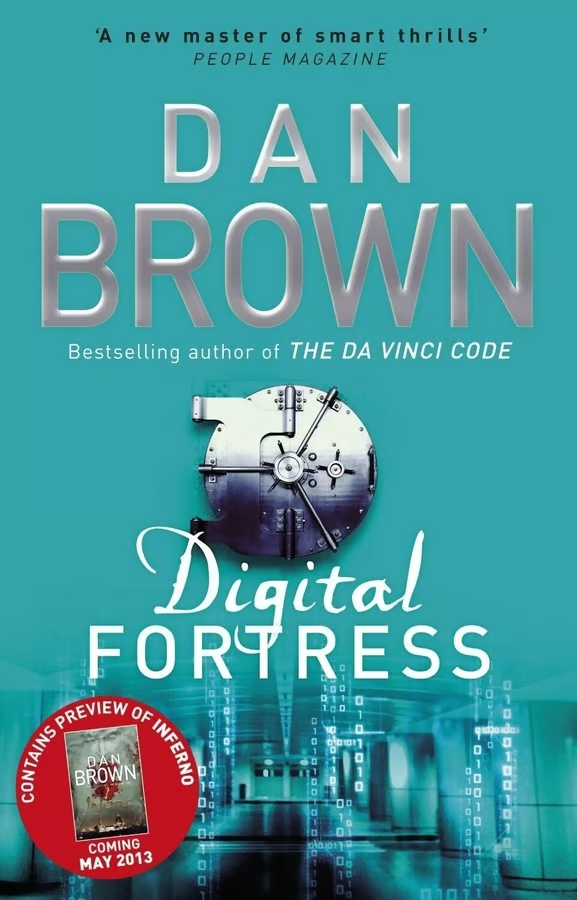
Everybody knows about The Da Vinci Code, that blockbuster novel-turned-movie about a Catholic conspiracy. But author Dan Brown has something to say about contemporary codes, too. Digital Fortress presents this scenario: What if the National Security Agency’s best computer came across a code it could not crack? Throw in one brilliant and beautiful mathematician (because, of course) and you have one addictive beach read.
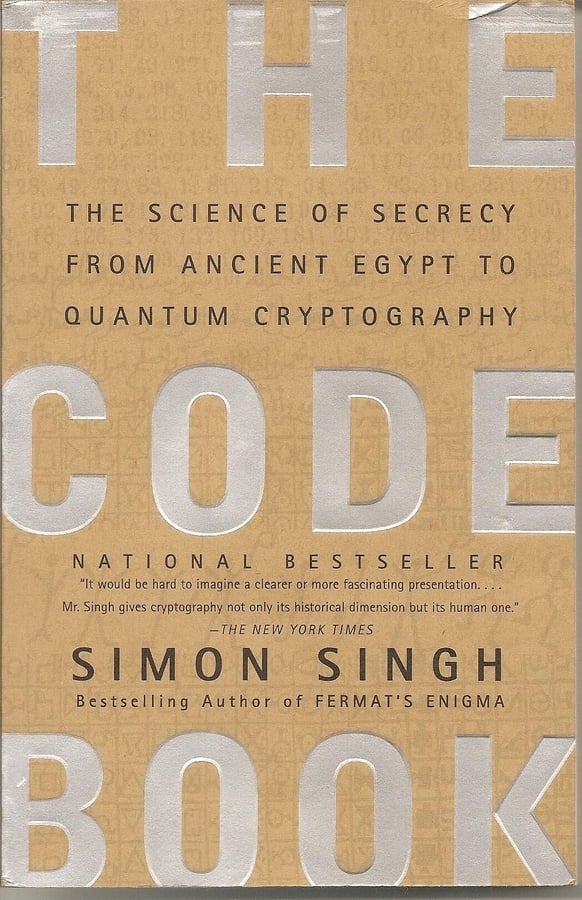
If you’re looking for a history of cryptography that’s as exciting as it is complete, this is the book for you. Through clear, compelling language, Simon Singh explains the technical and mathematical process behind the most difficult codes, and how they were broken.
Singh’s work concludes with his thoughts on the future of cryptography and its implications for modern communications.
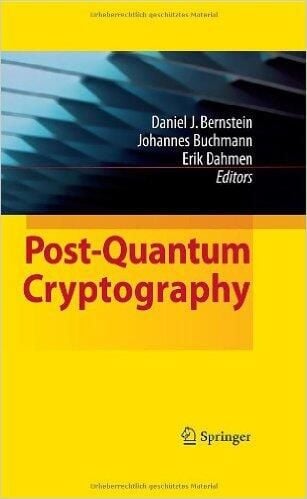
Not for the faint of heart, Post-Quantum Cryptographywarns that tomorrow’s quantum computers will be able to obliterate even the most advanced encryption methods of today. This horror book for sys-admins also provides a foundation for next-generation cryptography that can resist quantum-computer attacks.
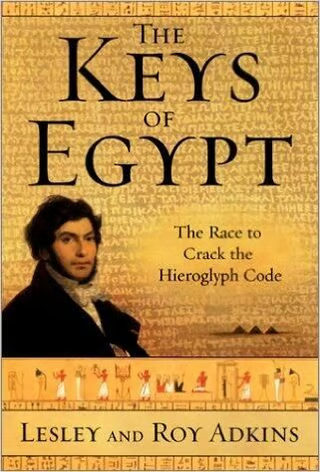
Everybody knows about Turing. But comparatively few people know of Jean-Francois Champollion, a Frenchman who rose from poverty to crack one of the most evocative codes of all time: Egyptian hieroglyphics. His road wasn’t easy – the Christian church had banned hieroglyphics generations ago, causing the meaning of the writings to be lost – and anyone who has ever pondered the meaning of an ancient Egyptian artifact has him to thank.
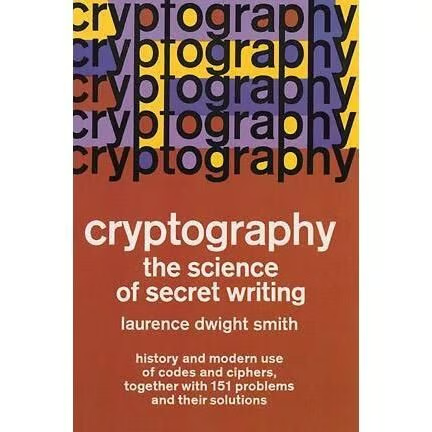
If you’ve ever wanted to dabble in your own spycraft, here you go. In Cryptography: The Science of Secret Writing, you’ll find an account of both historical and modern uses of cryptography, as well as 151 problem sets that will test your codebreaking chops.
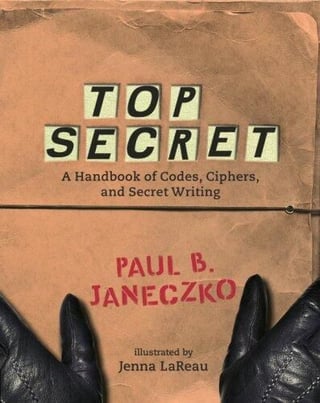
Another fun book for the budding cryptologist, Top Secret provides a useful resource for learning about codes, ciphers, and experimenting with secret writing. The handbook includes practice sets, instructions for creating a code-making kit, and an overview of popular code writing methods. While written primarily for middle schoolers, this book offers plenty of material for newbies.
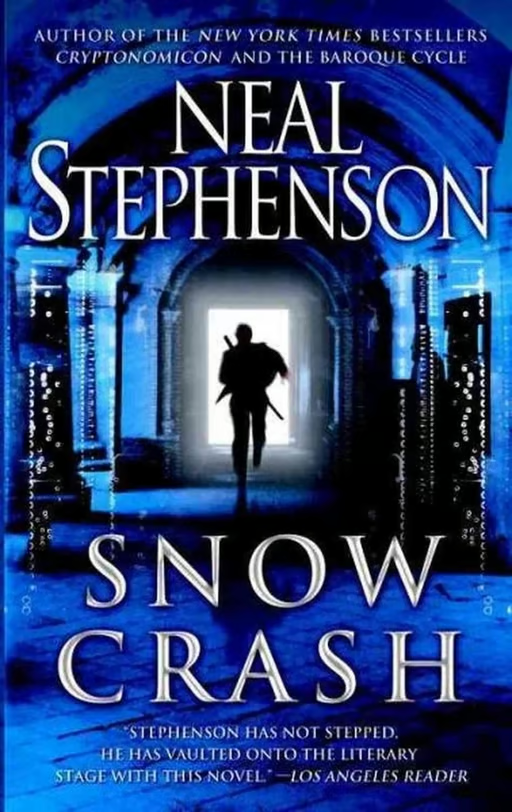
Virtual villains. Viruses that can strike down hackers. Drugs that are viruses…and vice versa.
That’s the world that Neal Stephenson has created in Snow Crash. We won’t spoil anything else. If you liked Cryptonomicon, you’ll love this.
Sometimes the most effective and elegant codes are hiding in plain site. In fact, sometimes those codes aren’t even really codes at all.
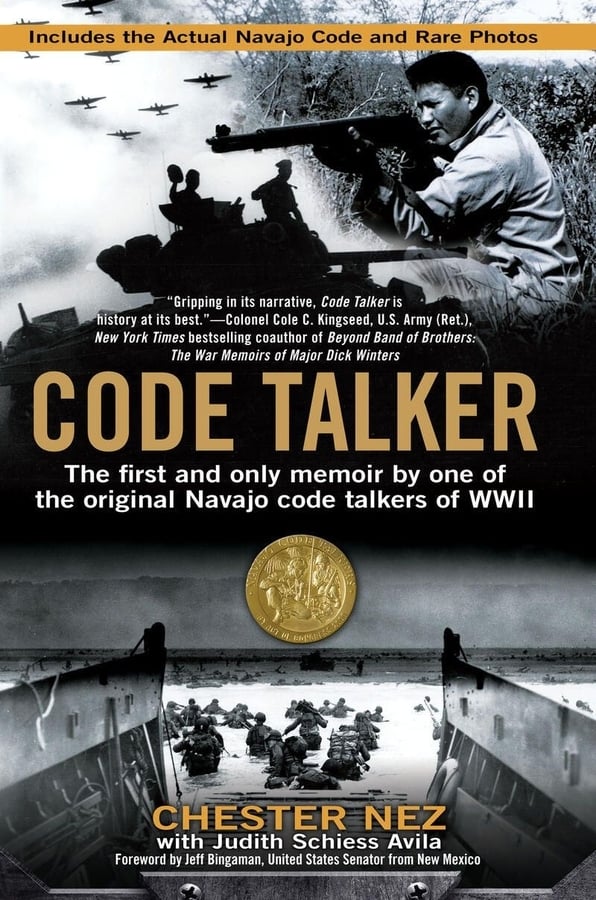
If you love war intrigue and, of course, code, this memoir will have you hooked. It’s about Chester Nez, the last of the 29 Navajos who developed an unbreakable code that helped win World War II.
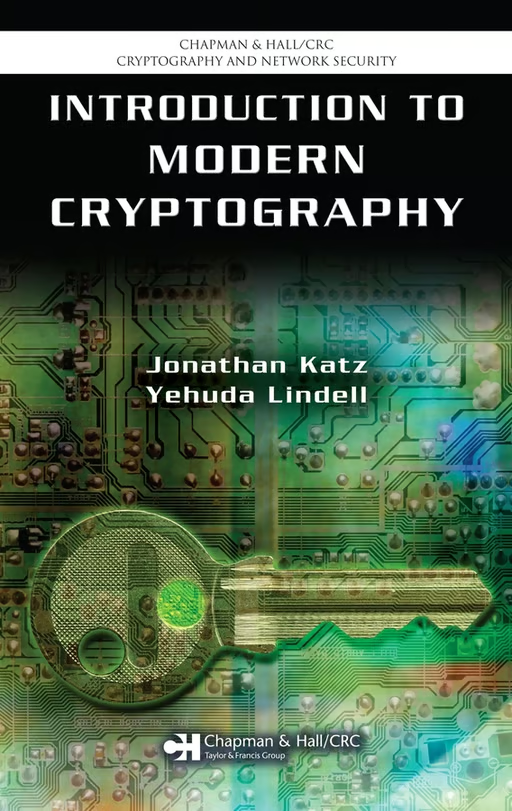
If there’s a bible of cryptography, this is it. Modern Cryptography is often considered to be one of the most essential texts in the field. Jonathan Katz and Yehuda Lindell provide a thorough treatment of modern applications of cryptography, including private-key encryption, message authentication codes, and hash functions. Plus, the book comes with exercises geared to help you build your own security system.
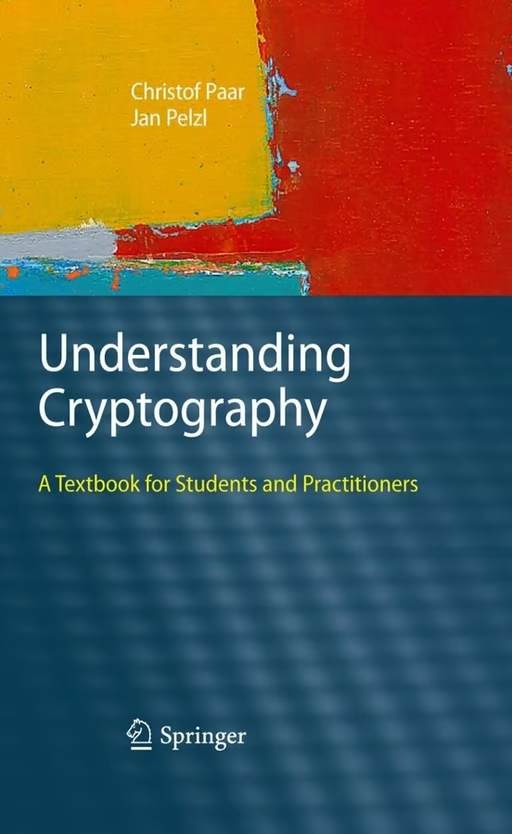
If you’re itching to get sized for a red hat, try Understanding Cryptography. Covering advanced topics like block ciphers, elliptic-curve cryptography, and public-key infrastructure, this book will take your knowledge of cryptography to the next level.