From self-assembling furniture to curving racing car wings, seven GIFs that show the future of 4D printing - TechRepublic

From self-assembling furniture to curving racing car wings, seven GIFs that show the future of 4D printing

  • programmable-table-hd336-423.gif


    The Programmable Table

    Today building something means getting our hands dirty – hammering wood, welding metal and cementing bricks.

    But what if everyday objects could build themselves? If tables could snap into shape when you got them home, or pipes could contract and expand to alter the flow of water.

    This is what the fields of “4D printing” and programmable matter are aimed at accomplishing, creating objects capable of self-assembly or repair.

    At MIT’s Self-Assembly Lab researchers are exploring ways to build items that can reshape themselves, thanks to the specially-treated materials they’re built from.

    As the lab’s founder Skylar Tibbits put it in his TED talk: “This is like robotics without wires or motors. You print this part, and it can transform into something else.”

    Above is a very practical example of the field’s benefits, and one that could spell the end of flat-pack furniture and inscrutable instructions.

    Dubbed The Programmable Table, this is a piece of furniture made using the Wood-Skin process. The approach embeds a pre-stressed textile into the wooden structure to allow it to transform itself into predictable shapes – like this table for instance.

    Unlike existing foldable furniture, this prototype made by between MIT’s Self-Assembly Lab and Wood-Skin doesn’t rely on hinges or other complex parts to reshape itself. If the furniture needs to be transported it can be flattened again to make it easier to move.

  • 4dprinting-wood.gif

    Warping wood

    While wood has historically been a tricky material to bend into \r\nshape, requiring expertise and complex steaming equipment, new \r\ntechniques are overcoming these limitations.

    The Self-Assembly Lab\r\n and its partners at the Institute for Computational Design at the \r\nUniversity of Stuttgart have found ways of inducing specially-treated \r\nwood composite to bend itself into preset shapes.

    In experiments the researchers used water to trigger the wood to reshape itself.

    The\r\n MIT lab suggests this property could be useful to allow items built \r\nfrom wood composites to adapt to extreme environmental conditions.

    Image: Self-Assembly Lab, MIT, Christophe Guberan, Erik Demaine, Autodesk Inc
  • bending-carbon-fibre360-554.gif

    Flexible fiber

    Carbon fiber is known for its stiffness, high-tensile strength and light weight.

    While these characteristics make the material suited to a wide range of applications, it also makes carbon fiber difficult to mould into curved shapes.

    However, the MIT lab and its partners found a way to make carbon fiber-based materials bend more easily.

    The lab and its partners printed active material onto cured, flexible carbon fiber. Heating the material causes it to change its shape.

    The bendable carbon fiber was used to form a wing on the Briggs Automotive Company (BAC) Morphing Supercar and for a flap inside an Airbus plane engine.

    The novel approach brings practical benefits. By making a car wing from such a malleable substance, BAC is able tune the aerodynamic performance of its Morphing Supercar.

    Image: Self-Assembly Lab, MIT, Briggs Automotive Company, Carbitex LLC, Autodesk Inc
  • Tumultuous textiles

    Traditionally, stretching fabric over a solid frame, for instance when building furniture, required molding and purpose-built machinary.

    The Self-Assembly Lab and its partners have been experimenting with 3D printing onto stretched fabric and then releasing that fabric to let it form itself into new shapes.

    The pattern and the thickness of the 3D printed layers can be altered to change the shape the fabric forms when relaxed.

    Image: Self-Assembly Lab, MIT, Christophe Guberan, Erik Demaine, Autodesk Inc
  • self-folding177-511.gif

    Writing the future


    Here a strand fold itself into the letters MIT when placed into water.

    It is a demonstration of how printed materials can be treated to arrange themselves into specific shapes.

    One potential use the lab forsees for materials able to exhibit such “robotics-like behaviour”, without the need for complex electro-mechanical devices, is to give products and clothes the ability to react to user needs and the environment.

    Image: Self-Assembly Lab, MIT, Stratasys
  • cube-folding274-876.gif

    Self-building cube

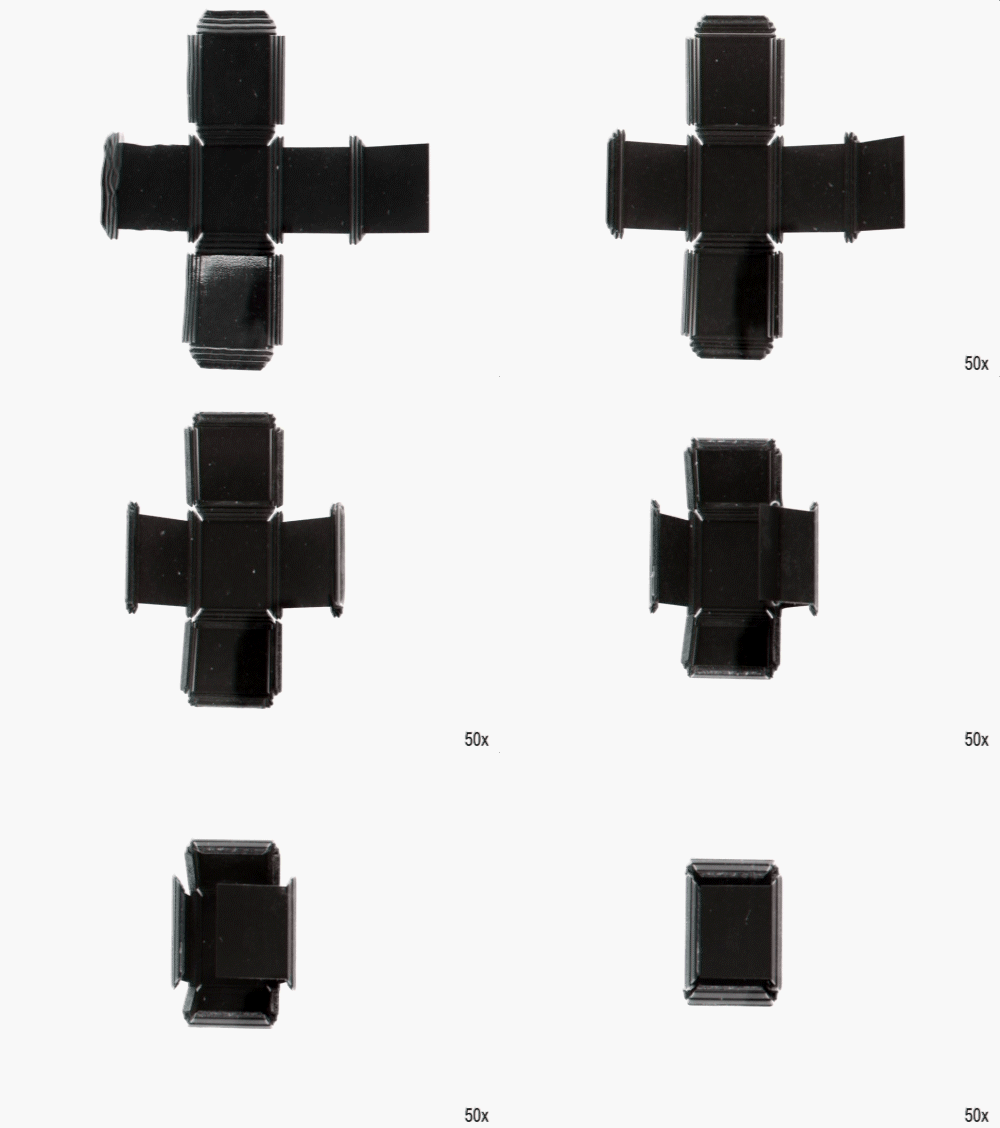
    This flat arrangement of 2D squares folds itself into a cube.

    Image: Self-Assembly Lab, MIT, Stratasys
  • curve-crease519-723.gif

    3D printing goes full circle



    This flat circle warps itself to raise itself up when placed in water.

    Image: Self-Assembly Lab, MIT, Stratasys
  • 3d-structure-4.jpg

    Pop-up electronics

    MIT’s Self-Assembly Lab isn’t the only research centre experimenting with materials that can reshape themselves.

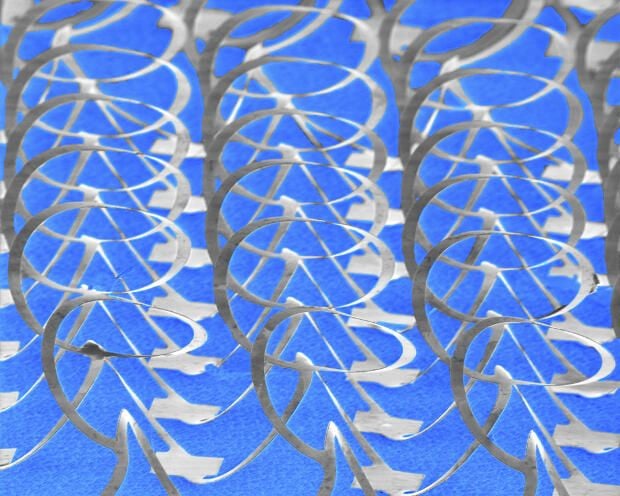
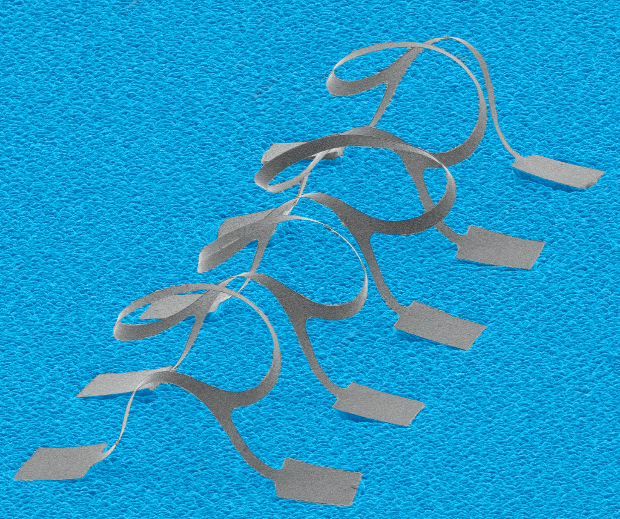
    The University of Illinois at Urbana-Champaign has developed a similar technique for generating 3D circuits that could underpin new medical implants, solar cells and other electronics.

    The team devised a process for transforming 2D micro- and nano-structures into 3D, using concepts they described as similar to those used to create children’s 3D pop-up books.

    Image: University of Illinois at Urbana-Champaign
  • 3d-structure-1.png

    Creative circuits

    The process could allow complex 3D structures to be built using materials only a few microns thick. Because the process can be used to create silicon structures, it could be used to help make circuitry for range of electronic devices – from battery anodes, to solar cells, and biomedical devices.

    Researchers hope the structures will have a use in microelectromechanical components, photonics and optoelectronics and metamaterials.

    Image: University of Illinois at Urbana-Champaign
  • 3d-structure-2.png

    Under pressure

    The team at Illinois claim this method bypasses some of the constraints on existing methods for building 3D structures at this scale, which limits the classes of materials that can be used and the complexity of the geometries that can be built.

    The technique, called compressive buckling, works by printing a 2D structure onto a layer of material that has been compressed. The 2D printed structure is bound to the compressed substrate at several points and when the substrate is released and expands back into its original shape, the 2D structure sat on top rises up into a 3D form.

    See the rest of the images of the Illinois university’s work here.

    Image: University of Illinois at Urbana-Champaign
1 of 10
Nick Heath

Nick Heath is a computer science student and was formerly a journalist at TechRepublic and ZDNet.