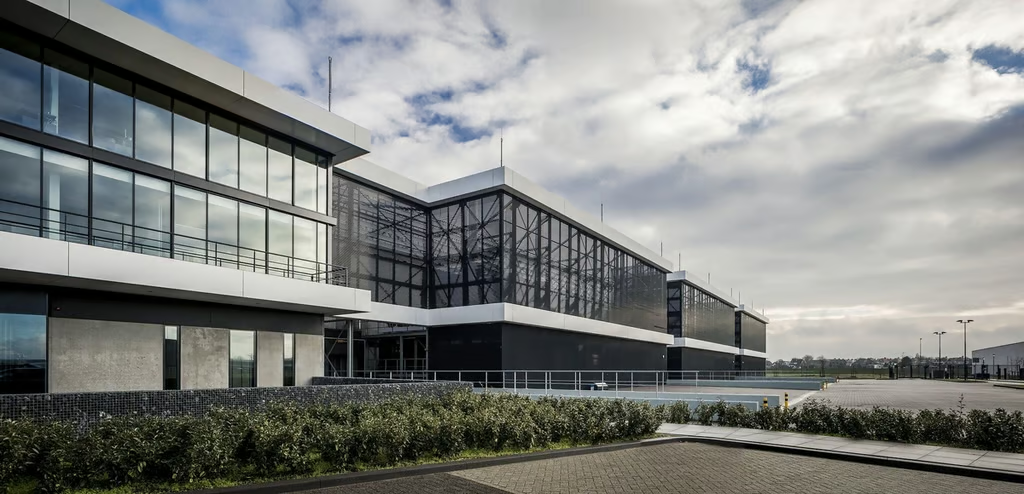
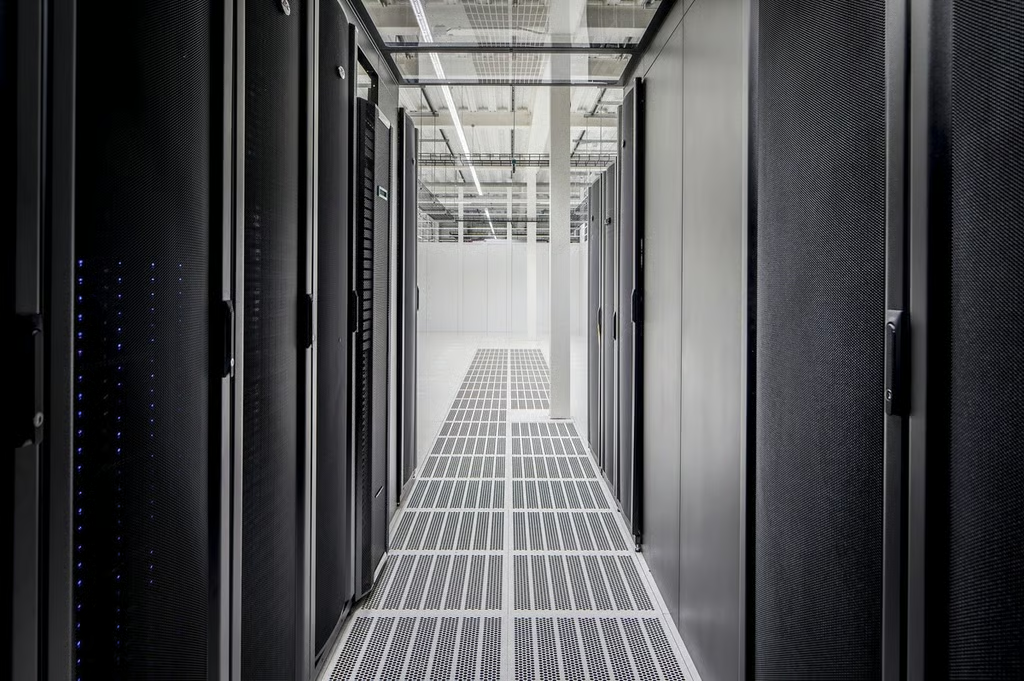
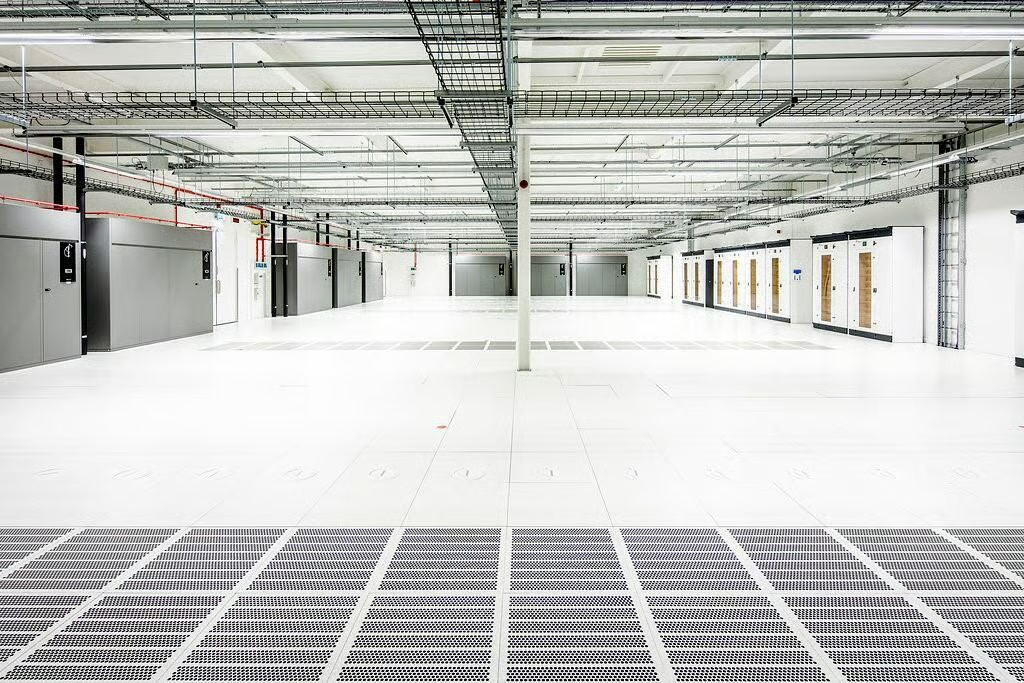
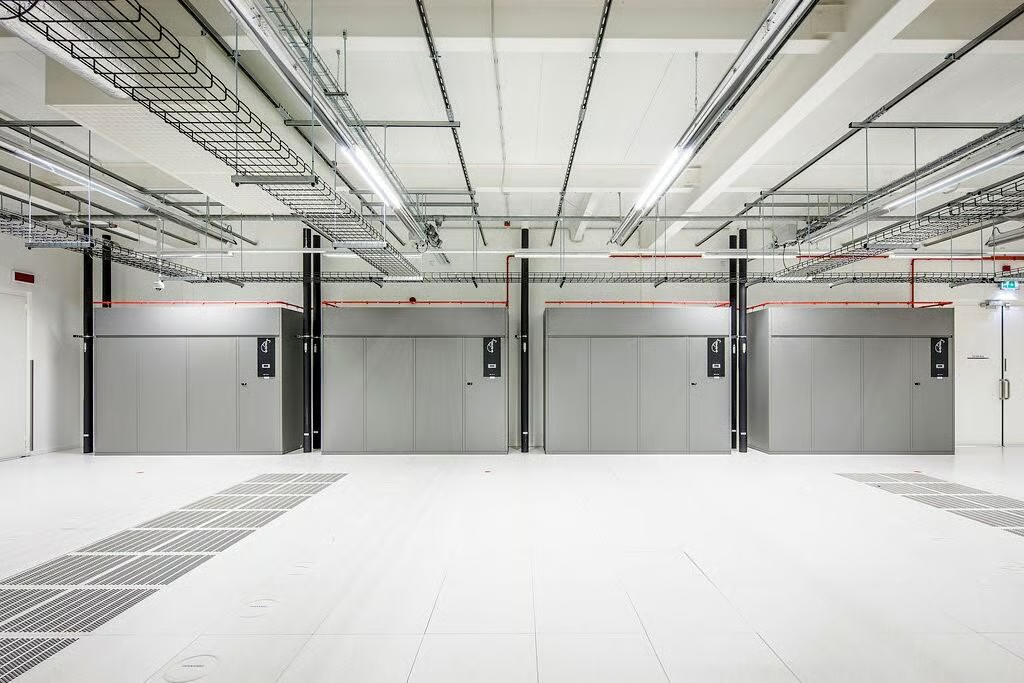
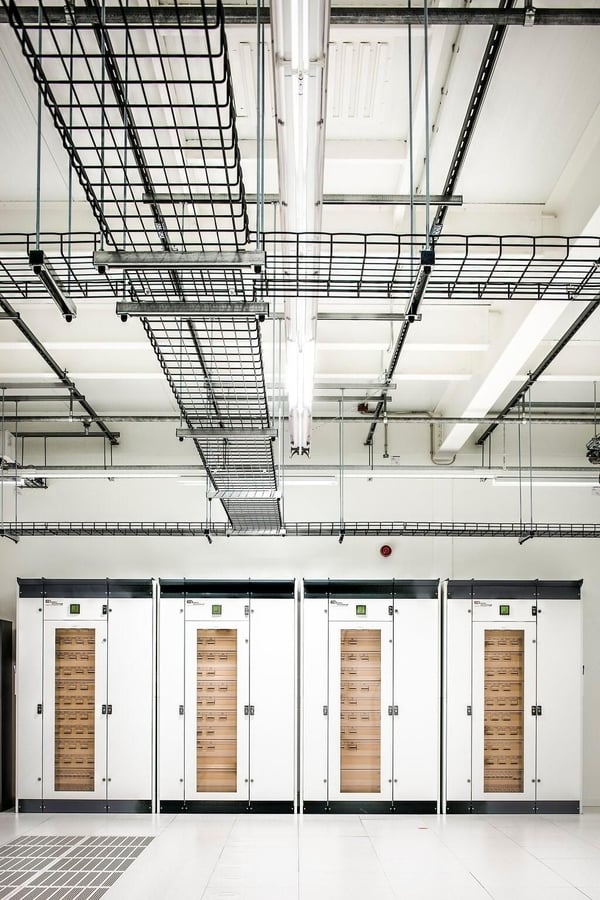
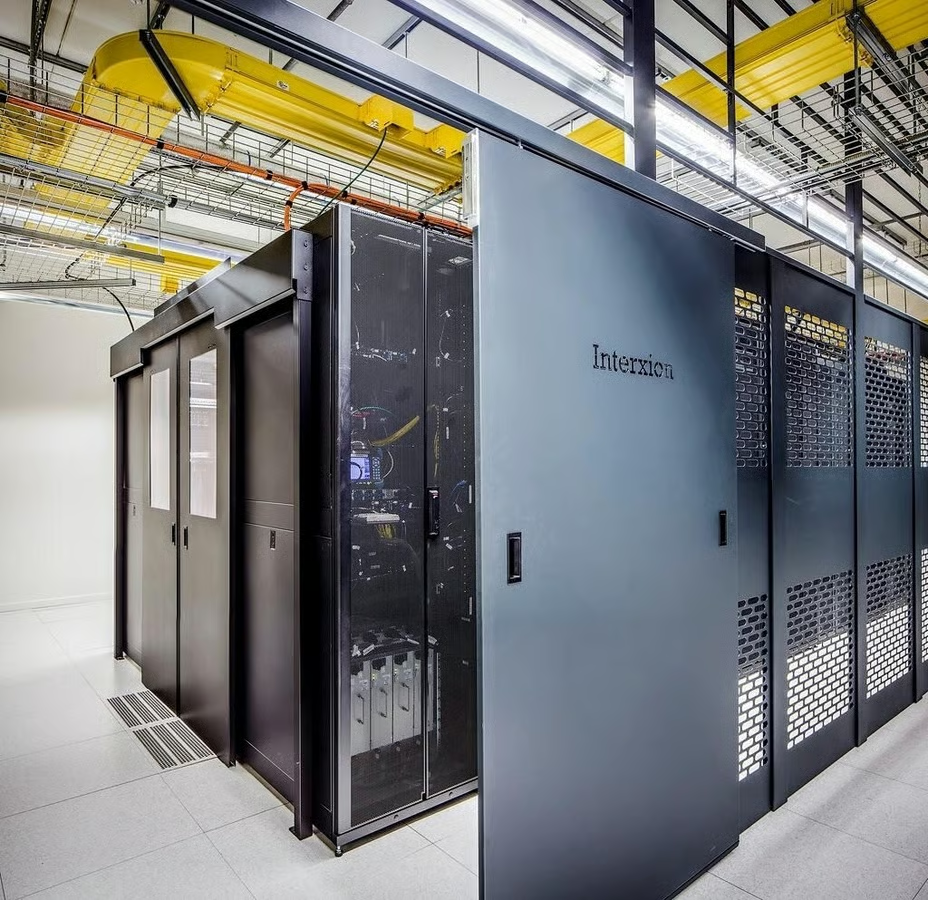
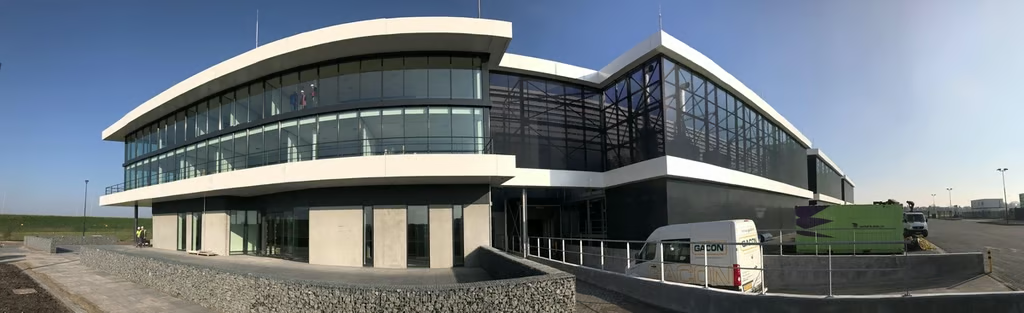
This is Interxion’s new 8,000 square-meter datacenter, a 15MW facility on a campus near Schiphol Airport in Amsterdam that will eventually house thousands of servers.
The center is a multi-tenant, co-location facility, which hosts servers for third-party companies, with customers ranging from cloud-service and content providers to enterprises to financial companies.
Due to customers supplying their own servers, the machines used vary, although they tend to be modern servers from the major manufacturers.
The raised-floor datacenter is being built out in three stages, and currently can support servers consuming up to 5MW–with customers already in place.
Interxion is working on the final two phases of the buildout and by the center is finished it will support 15MW-worth of servers.
Interxion managing director Michael van den Assem anticipates the center will be full within two to three years.
Datacenter customers include BAMTech, which provides streaming services for MLB, HBO, NHL, WWE, and will support a major new platform for Disney, and Rubicon, a large adtech company.
Customers are separated from each other by cage walls or have dedicated rooms within the server hall.
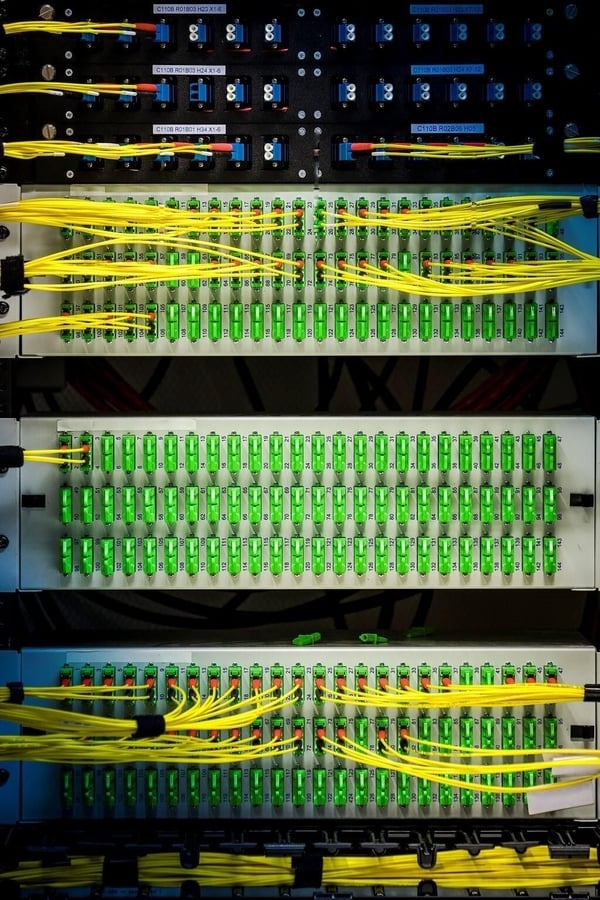
The center is situated on the main Amsterdam fiber ring, allowing Interxion’s customers to connect their servers to their carriers.
To ensure servers never go down and always have a network connection, each server has a dual power supply and two different connections to the fiber network ring.
“Every component, even the cameras recording the data, is in a redundant setup, all fed from different power feeds” says van den Assem.
“We’re continually thinking about ‘What if?’, and trying to find a solution to that.”
There is extensive physical security on-site, designed to control who has access which parts of the building and to track where people go once inside.
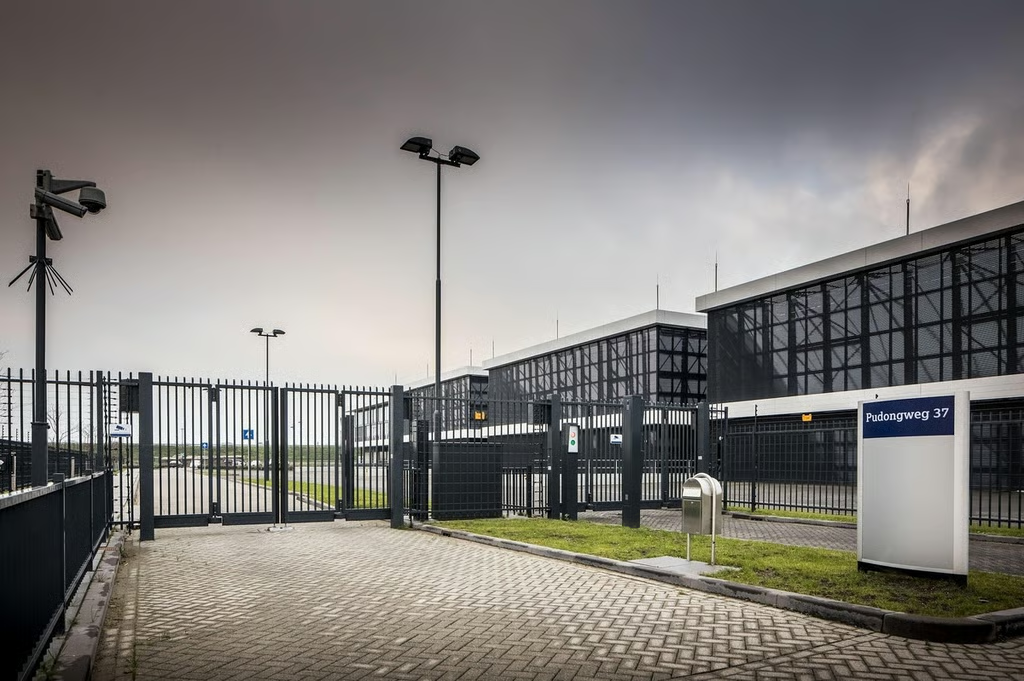
These measures begin with this external security checkpoint.
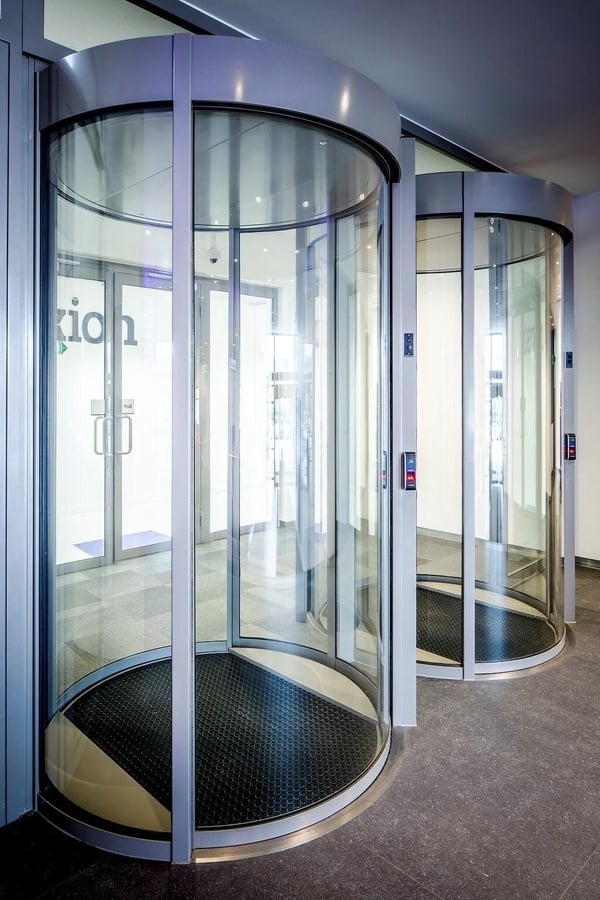
Once inside the campus building, access to the main datacenter is controlled by biometric scanners and one-person mantraps.
Even when inside the main datacenter hall, visitors are routed so they only have access to their specific room or cabinet, with access badges required at multiple locations throughout the datacenter.
“We can track and trace every movement of every person throughout the datacenter,” says van den Assem.
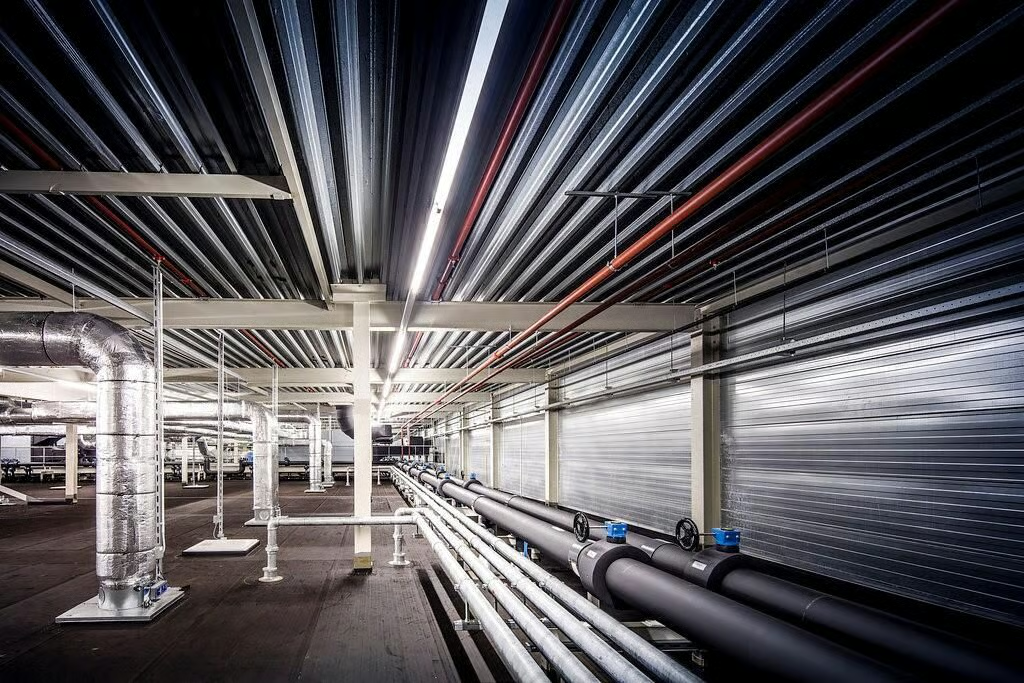
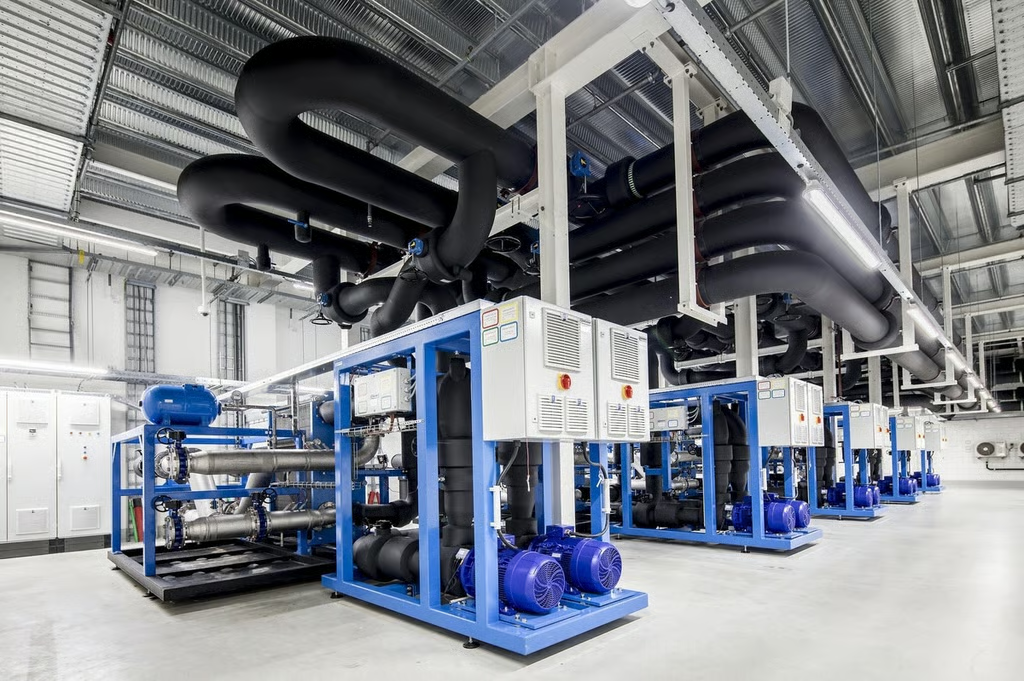
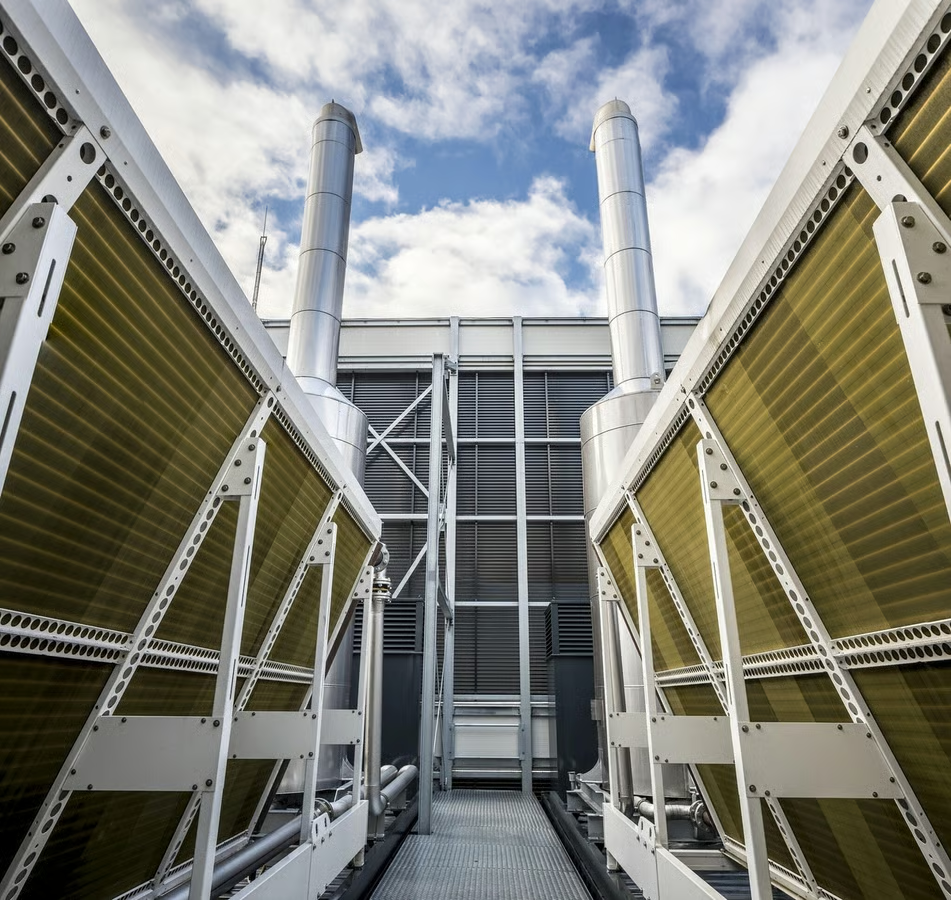
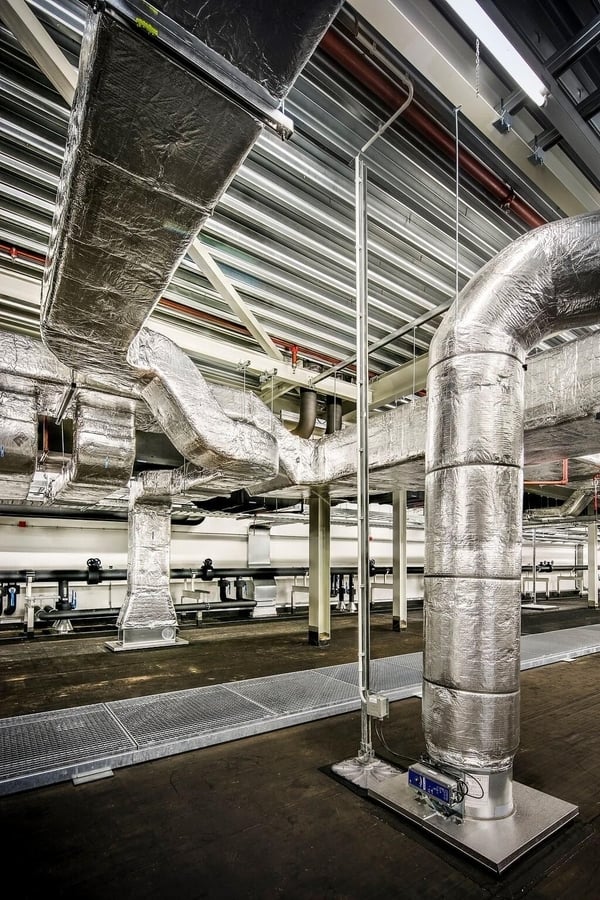
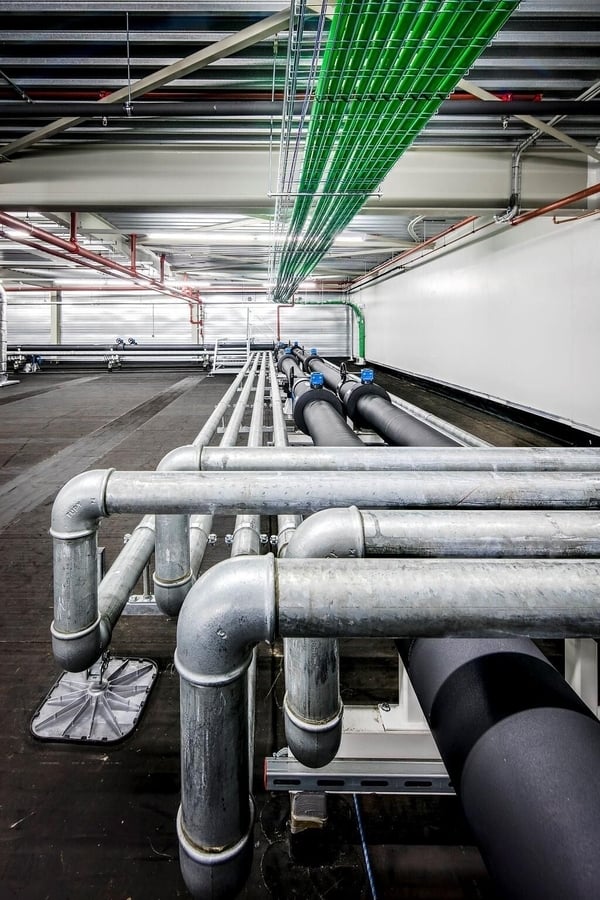
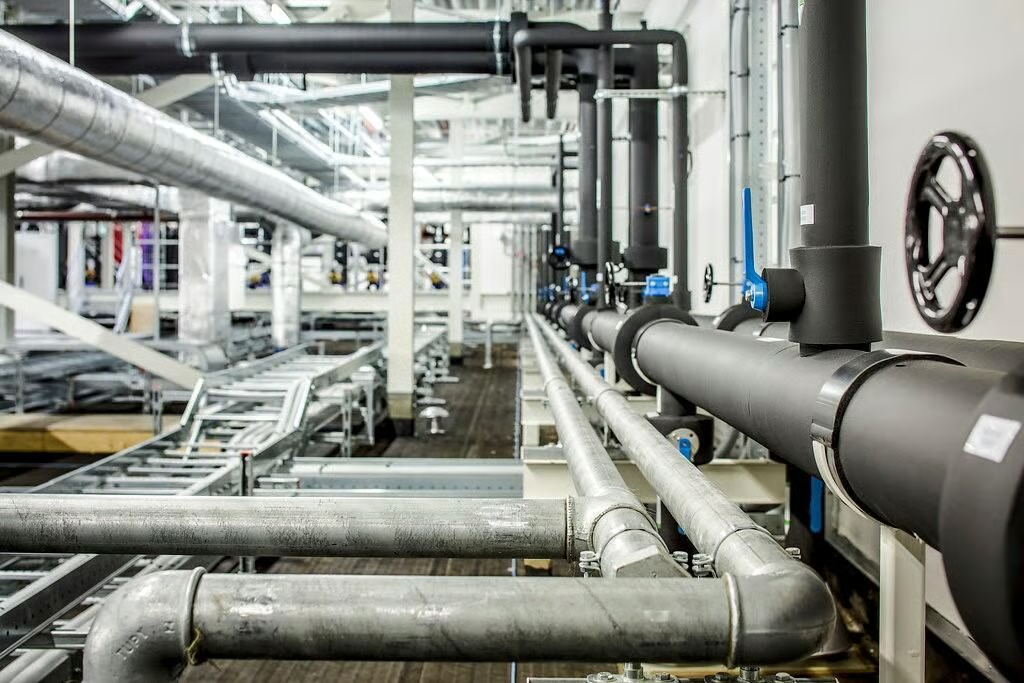
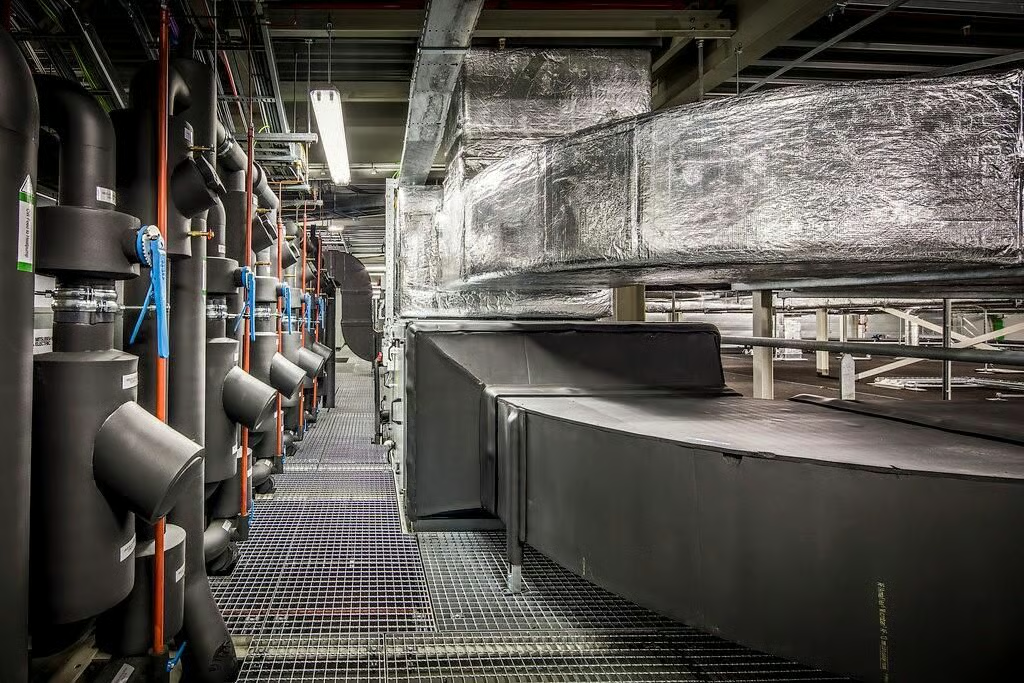
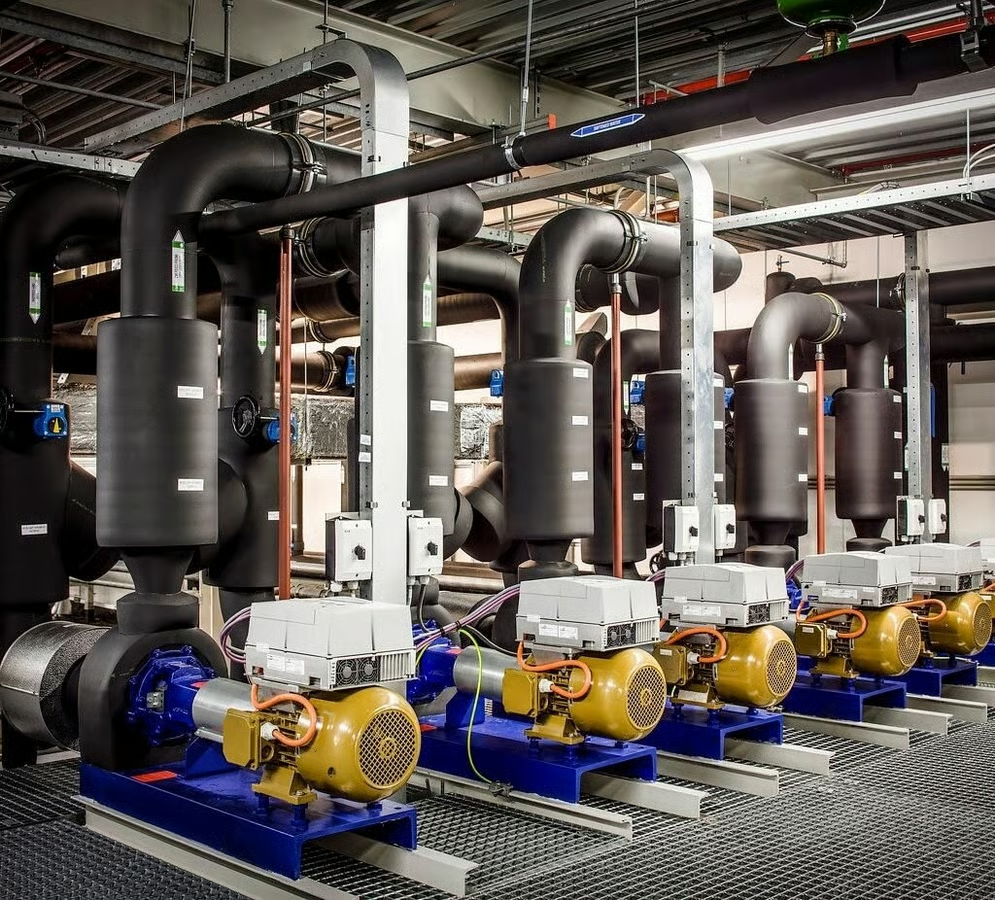
To control temperatures, a closed-circuit, air-cooling system is used.
The system sucks hot air from the servers and cools it using cold water from an aquifer 170-meters below the site, before the cold air is returned to server halls, and is pumped through the raised floor in front of the servers, and the process starts again.
During the winter, fresh-air coolers on the roof are also used to bring the temperature of the water back down after it’s been heated up.
The closed-circuit, air cooling system doesn’t pump any outside air inside the datacenter, to avoid contamination.
Due to the efficiency of its Aquifer Thermal Energy cooling system, the datacenter is able to achieve a PUE of 1.2, better than the industry average.
PUE is a measure that reflects how much of the electricity used by a facility ends up powering the servers, rather than driving associated infrastructure handling cooling and power distribution.
The use of aquifer water for cooling, complements Interxion’s commitment to sustainability, with 100% of the energy for its datacenters sourced from renewables.
The cooling system keeps the temperature inside the datacenter from going over 24C.
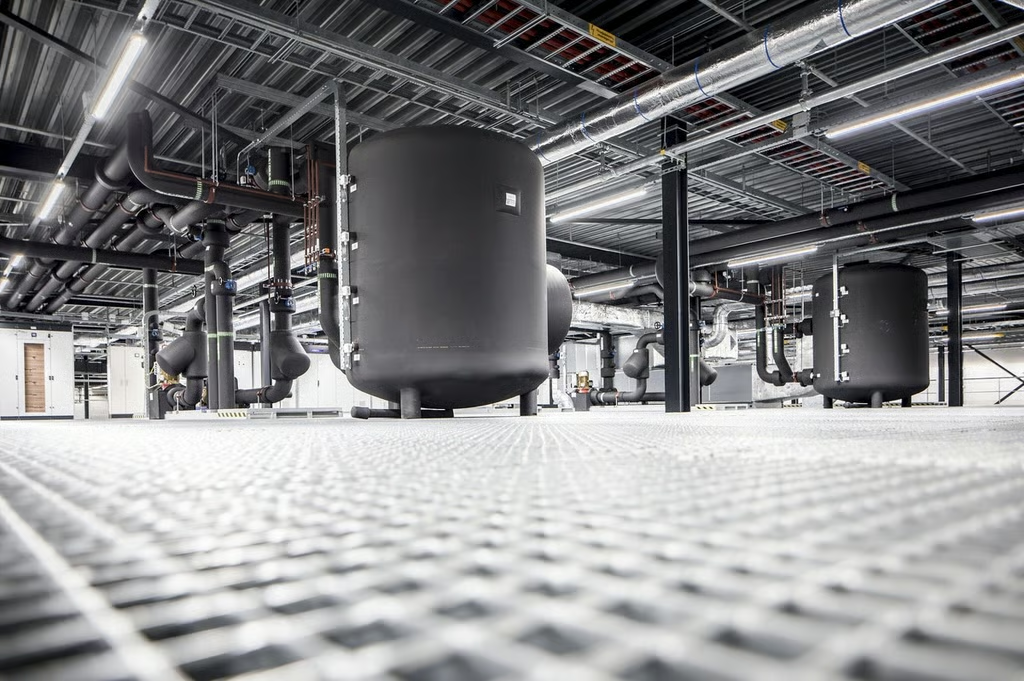
One of the many tanks used in the cooling system.
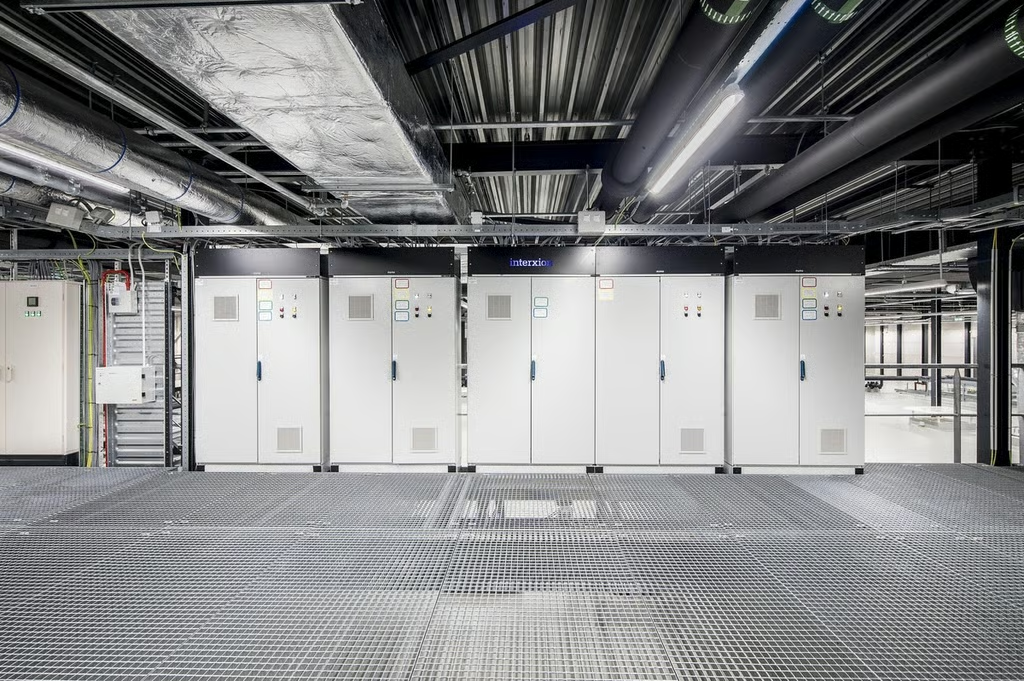
The control panel for the cooling system.
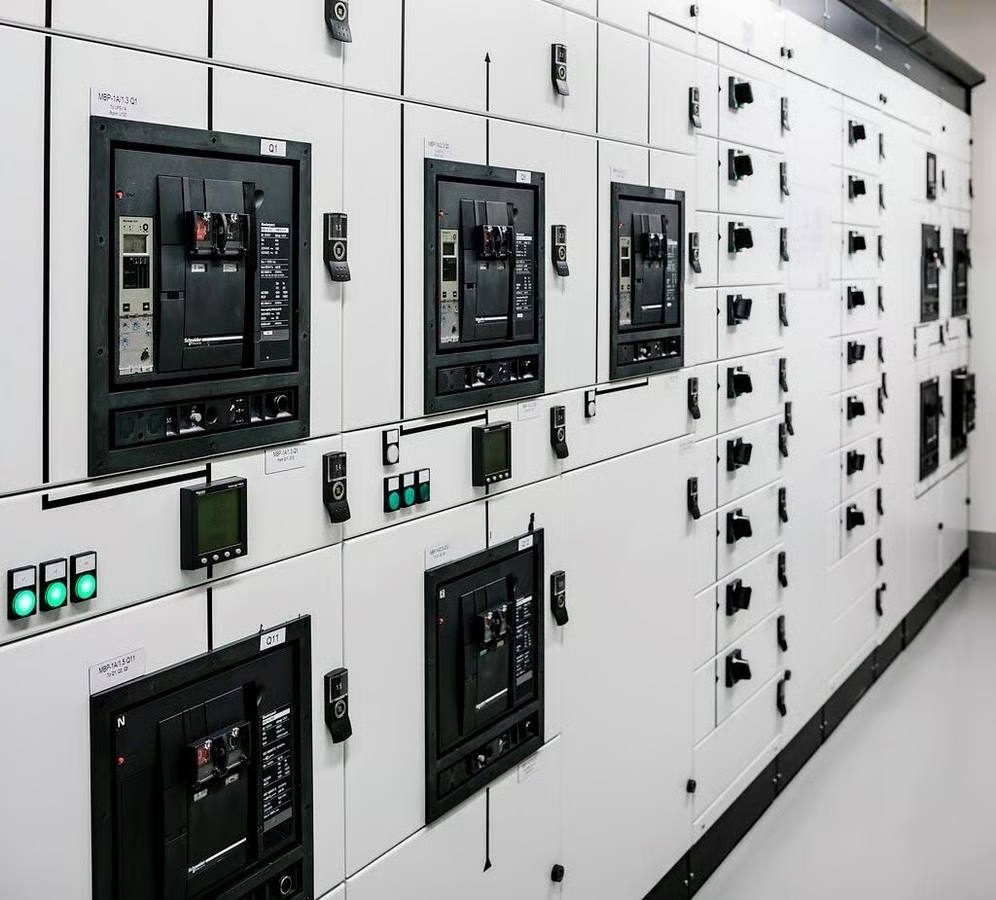
In the event of a power outage the uninterruptible power supply (UPS) will cut in, keeping the servers on until the on-site generators start producing electricity.
The generators can produce enough electricity to keep the center running for 24-hours, and the center has deals with local fuel providers to refill the generators indefinitely, should it be required.
“The processes behind how we run the datacenter is that we should be prepared for any major issue and guarantee ongoing operation to our customers,” says van den Assem.
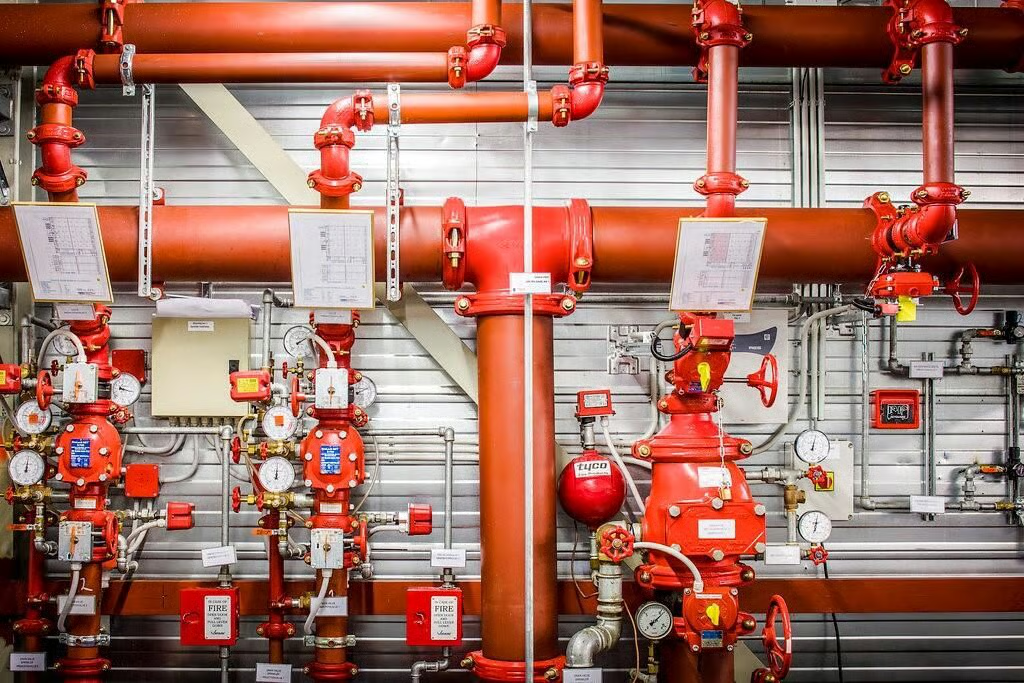
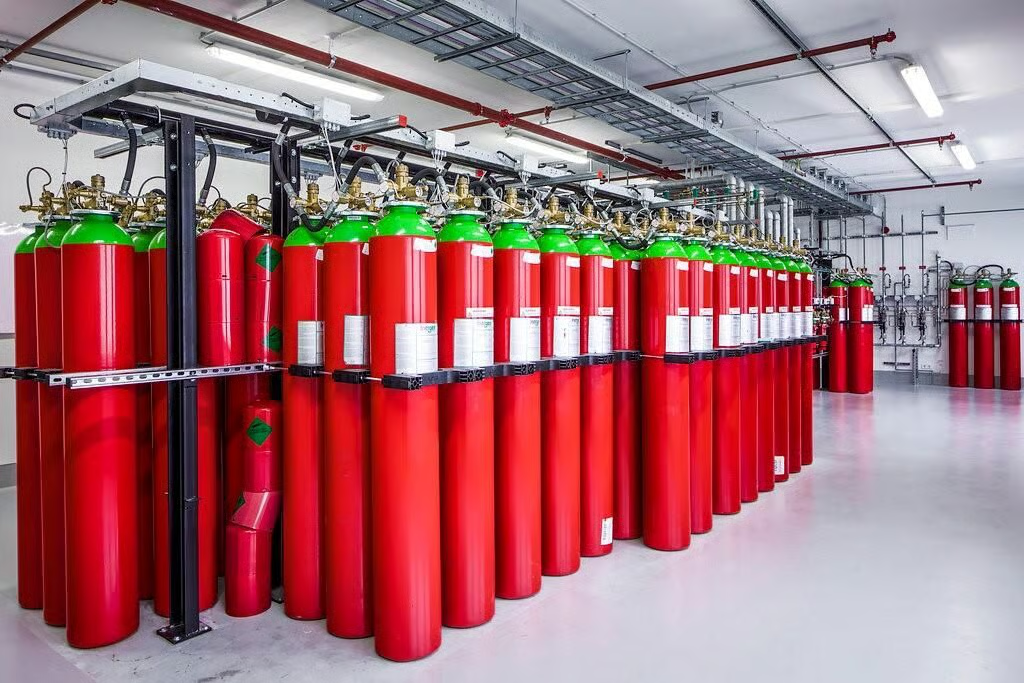
A multi-layer fire suppression system uses a laser-based system to detect smoke particles in the air.
If a fire is detected then gas is pumped into the room, which has the effect of reducing the oxygen to a level where the fire cannot continue burning.
An alarm goes off to let anyone in the room know to leave before the gas is pumped in, but even if someone is in the room “you won’t appreciate it, but you will survive” says van den Assem, saying the worst effect would be making your ears pop.
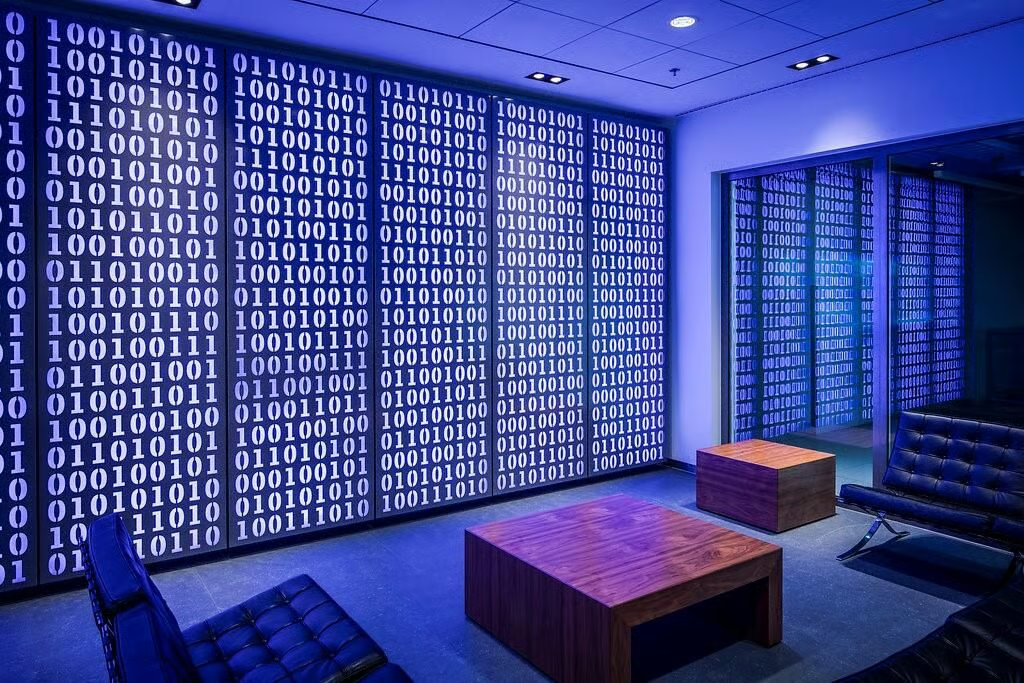
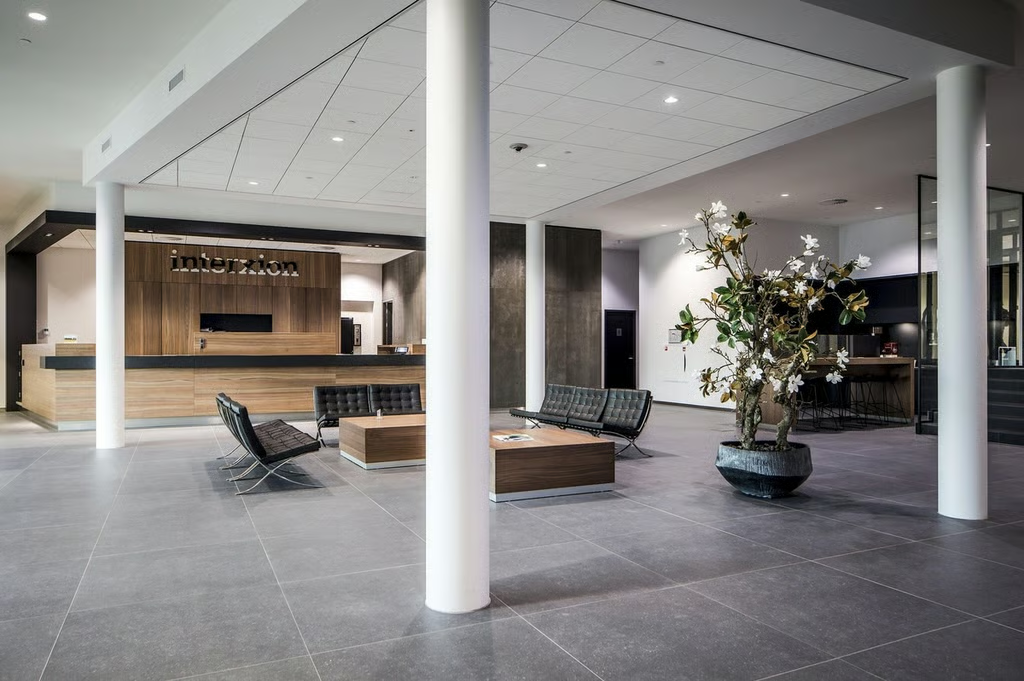
Inside the reception at the datacenter.
This is the eighth datacenter built by Interxion in Amsterdam.