For three seasons, Mr. Robot has showcased the gritty world of cybersecurity. And star Rami Malek has put a pop-culture face on hacktivism. But how close does the show get to the realities of hacking?
Actually, the USA series gets more right than you might expect…
In the sixth episode of Season 1, several USB keys are dropped in a parking lot as a kind of bait, and it works. It gives Elliot Alderson access to a prison’s systems. That’s pretty basic Hacking 101, though the success rate is typically around 50 percent.
In theory, this hack from Season 1, Episode 4 is possible. But it’s pretty unlikely. Its success depends on nobody in the world’s “most impenetrable” datacenter paying attention to suddenly-sweltering temperatures.
In Season 2, Elliot gets his hands on a “Pwn Phone,” which he uses to hack into other devices. He calls it “a dream device for pentesters and hackers,” and it was actually real. The phones were created by Pwnie Express, though the company has since removed them from the market.
Sure, Mr. Robot is a one-hour drama, so showing hacks in real time would be tough. Still, hacking ain’t that quick. For instance, it would take as long as long as 11 hours for a computer to crack an iPhone passcode.
Elliot breaks laws and invades people’s privacy, but his overall motive is justice, not greed. That makes fsociety similar to that of Anonymous members, who, whether you agree with them or not, consider themselves artists, with the goal of righting wrongs.
In the Mr. Robot series premiere, Elliot uses his hacking skills to bring down a child pornographer. And right then: Voila! The police arrive. No hacker’s timing is that good.
It’s revealed in Season 1 that Elliot attend court-ordered therapy after a hacking arrest. In the real world, hackers aren’t often given that option. But one very famous hacker — Kevin Mitnick — sure was.
It would be simple for Mr. Robot writes to create their own jargon, but instead the series relies on actual hacker terms — everything from rootkit to Tor to daemons.
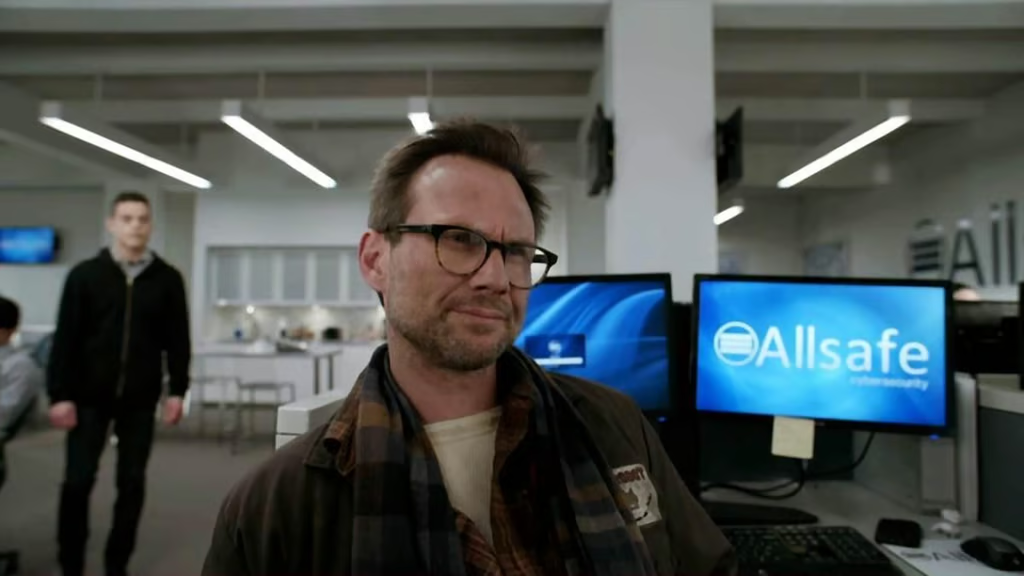
In the first season, E-Corp officials joined the FBI and the US Cyber Command to learn what Elliot learned from hacking Allsafe. In reality, US Cyber Command is mostly tasked with military support.
Mr. Robot characters hack everything from laptops to cellphones to police cars to air conditioners. Some hacks may be more difficult than others, but it’s generally agreed that almost anything with a computer in it can be taken over.
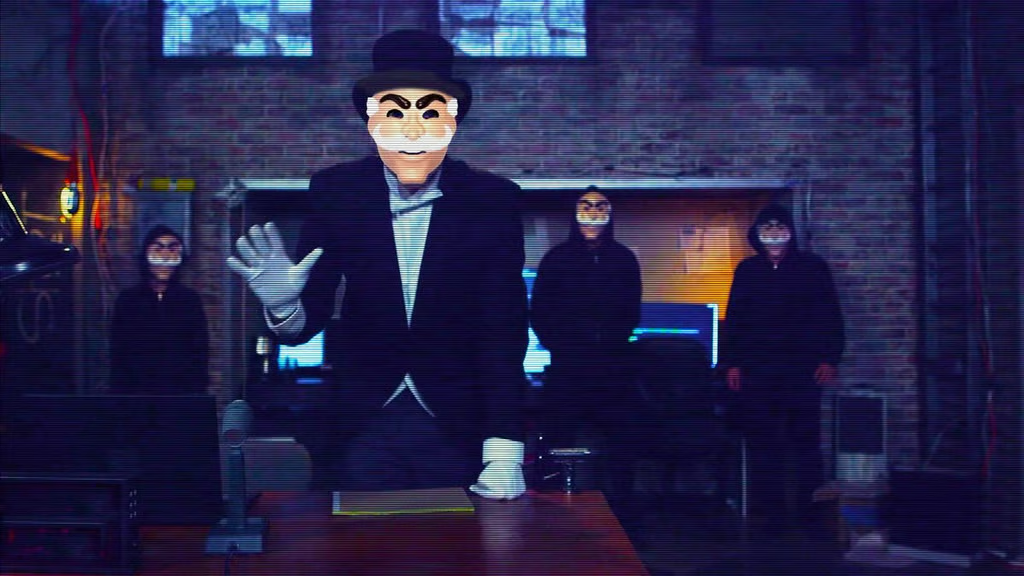
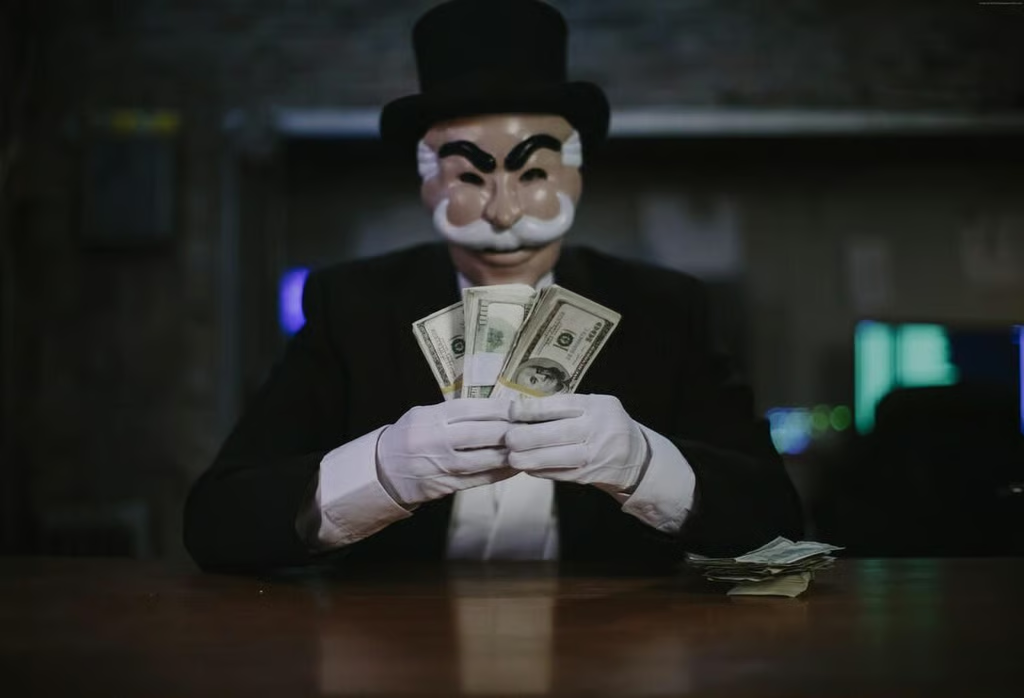
Fsociety is a fictional hacker collective, but the group is inspired by real-life hacktivists Anonymous. The fsociety mask is an easy-to-spot tribute to Anonymous members, who often wear Guy Fawkes masks to conceal their identities.
Hackers on Mr. Robot, including Elliot, create fake personas, backed up with faux documentation online, to access forbidden places. In real life, it’s called social engineering, of course, and it’s been around for decades.
One of Mr. Robot’s earliest hacks is also one of the most common in the real world. The DDoS (distributed denial-of-service) attack overloads servers, causing them to crash.
Every episode’s title is a filename, complete with an extension. The series premiere, for example, is called “eps1.0_hellofriend.mov.” The series has yet to repeat a file extension type, and they’re all real, from .r00 to .sme.
In the show, a hacking collective known as the Omegas gets busted after members get a little too sloppy online — a fate eerily similar to that of IRL Sony hacking collective LulzSec.
The idea of hackers bringing down financial institutions and governments isn’t unique to Mr. Robot; it’s a real worry in real life. It’s debatable whether such a thing could actually happen, but it is a popular topic among hackers.