


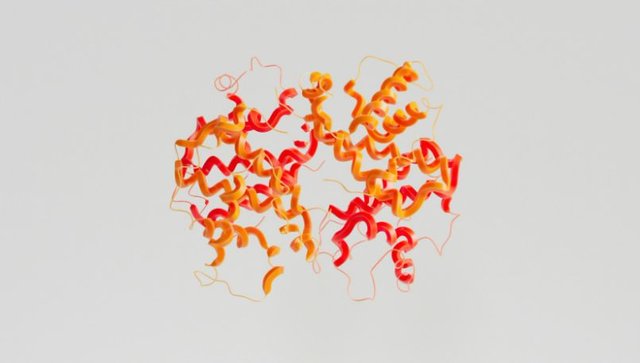
Thirty-five of the 322 small proteins selected for lab testing showed evidence of binding to their intended targets. A general-purpose AI model helped design them.
OpenAI reported the results on Nov. 24 in a preprint based on work with its research partner Onava. An early version of GPT-6.2 generated the initial protein shapes. Specialized models supplied the amino acid sequences and helped select candidates for lab testing.
OpenAI released a version of GPT-6.2 to ChatGPT Plus and Pro users on Nov. 23. The research announcement describes lab tests with an early build, so the results leave open how the released version would perform on the same tasks. For research teams, the study raises a practical question about what the model they can access could take off their hands.
How GPT-6 could help researchers design proteins
In the first experiment, each of the five targets had at least one protein show evidence of binding. The 10.9% binding rate applies to the candidates selected for lab testing. The full breakdown of the lab results shows how much the counts varied across targets.
In a separate experiment, GPT-6.2 proposed new sequences for existing small proteins. In initial lab screens, 75 of 88 candidates showed evidence of binding in the strongest result, followed by 26 of 42 and 8 of 59 for the other two targets. Those tests measured whether the redesigned proteins still bound to the original target.
OpenAI also tested how well GPT-6.2 could predict where small molecules fit on proteins and how they were oriented. The model closely matched experimentally observed positions and orientations in 93% of scored predictions on the PoseBusters benchmark. That figure came from a separate computational test.
Researchers still need specialized models
In OpenAI’s study, GPT-6.2 lagged behind a specialized model at predicting a complete protein structure from its sequence. That’s a different task from proposing a new protein shape. Research tools can also address different questions entirely. Google DeepMind’s AlphaGenome 2, for example, predicts the effects of changes in DNA.
Lab testing answers a different question. A positive binding result leaves open whether the protein produces the intended biological effect.
More must-read AI coverage
- SS&C Intralinks DealCentre AI vs. Datasite: Which platform is built for the future of dealmaking?
- SS&C Intralinks FundCentre AI vs. Juniper Square: Which platform better supports modern private markets fund managers?
- Why Data, Not Models, Determines AI Success
- The Rise of the AI-Native Factory: How Physical AI Is Transforming Manufacturing
What biotech IT teams should check before adding GPT-6.2
For research leads and the IT teams that support them, the immediate decision is whether GPT-6.2 is worth adding to the systems they already manage. The preprint shows where a general-purpose model contributed to the study. It leaves open how much work a research team would save with the version it can access.
- Check which version and workspace your team can use. Start with the options in your ChatGPT plan, then confirm which workspace your organization has approved for research. Check who can open or share a project and how long the workspace retains files before anyone uploads unpublished material.
- Check whether it saves staff time. Pick a task your team already tracks. Compare how long staff spend preparing inputs, moving files between tools, and reviewing outputs. Include specialist software and lab work in the cost comparison.
If the biggest delay is waiting for lab results, saving time at a computer may make little difference to the project’s deadline. Use that distinction when deciding whether another AI subscription is worth the cost.
Read more: Isomorphic Labs raised $5 billion to expand its AI drug design platform and move its first drug candidates toward human trials.