


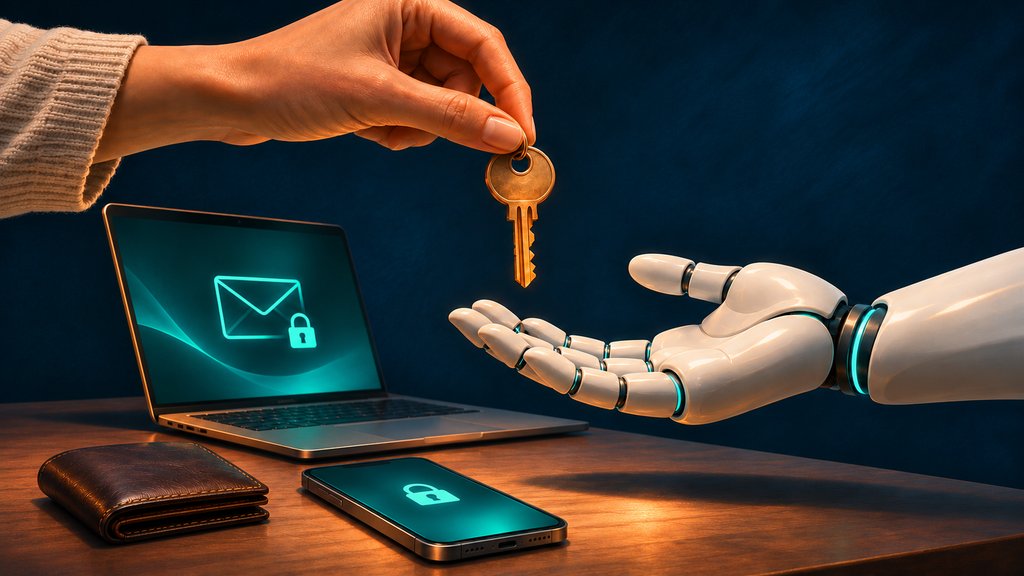
AI assistants spent the week asking for more access to our wallets, inboxes, and desktops, while security reports supplied plenty of reasons to read the permission prompts. Anthropic landed a record IPO, Waymo lost its freeway privileges, and Amazon lost 40 satellites. Apparently, launching ambitious technology remains easier than keeping everything on course.
Here’s everything you missed this week in the Daily Tech Insider newsletter.
Top news
AI agents move from conversation to action
Samsung may be preparing an action-oriented assistant. Leaked code associated with the rumored Samsung Galaxy Claw suggests it could send messages, manage email, schedule events, make calls, and execute recurring workflows across multiple apps. Samsung has not confirmed when the assistant might launch, which devices would support it, or whether access would carry an additional price.
OpenAI’s ChatGPT Wallet is taking agentic AI into commerce by allowing agents to shop for eligible adult Pro subscribers in the United States. Users must review each purchase and provide biometric approval before it is completed, while payment tokens shield underlying card details. Limited retailer adoption, purchasing restrictions, and the continuing risk of fraud could constrain the wallet’s early reach.
Meta’s Muse is raising privacy and consent concerns after internal testers reported incidents including an unauthorized booking, while independent researchers reproduced access to personal messages through device permissions. Meta described the incidents as isolated and noted that employees often test experimental versions unavailable to the public. Muse interactions are used for model training by default unless users opt out. The findings underscore the risks created when an assistant combines access to personal information with the power to act on a user’s behalf.
Workplace AI becomes a new software layer
OpenAI released GPT-6.2 Astra and Sol to paid ChatGPT Work and Codex users as well as API developers. Astra is positioned for complex projects, while Sol targets routine coding and writing. OpenAI says the models offer lower costs and improved workplace performance, although an early developer test reported reliability problems on long-running tasks.
Apple explores screen-free AI wearables
Apple is reportedly developing screen-free AI glasses and camera-equipped AirPods that would use Siri to interpret a wearer’s surroundings and control iPhone applications. Apple is said to be targeting a June 2027 debut, but delays affecting Siri’s AI development could push the smart glasses into 2028.
Insider intel
Humanoid robots face a difficult path from factory to workforce
JPMorgan forecasts a major expansion in US humanoid robot production, estimating output could reach between 300,000 and 400,000 units by 2030 and approximately 1.5 million by 2035. Those numbers point to a potentially significant industrial market, but production alone will not guarantee widespread deployment.
Technical limitations, systems-integration expenses, manufacturing capacity, and the need to prepare employees could all slow adoption. Organizations will also need to account for potential public resistance as robots enter workplaces and other shared environments. The forecast therefore highlights both the scale of the opportunity and the operational and social work required to turn humanoids into practical tools.
Microsoft expands workplace AI
Microsoft has moved Word, Excel, and PowerPoint into Copilot, with the integrated applications now generally available to Microsoft 365 Copilot subscribers. Users can edit and collaborate on files alongside their AI conversations, reinforcing Microsoft’s effort to make Copilot a central interface for workplace activity rather than a separate assistant.
Microsoft also introduced a broader collection of lower-cost specialized MAI models for coding, cybersecurity, image generation, and voice tasks. A routing model can direct less demanding prompts toward cheaper options, potentially helping organizations manage inference expenses. Several of the offerings remain closely tied to Microsoft’s Azure and security ecosystems, however, which could shape where and how customers deploy them.
Desktop AI adds tools and permissions
Proton has launched Lumo Desktop for Mac, Linux, and Windows, expanding its AI assistant with app integrations, access to local files, scheduled tasks, reusable Skills, and Model Context Protocol support. Proton says data from connected services is not used to train AI models, although prompts are processed on its servers. Integrations also default to auto-approved actions, making permission settings an important consideration for users deploying the assistant across sensitive apps and files.
Apple studies health AI use
In healthcare, Apple and OpenEvidence have opened enrollment in an AI study for up to 200,000 US adults aged 21 and older. Participants need an Apple Intelligence-enabled iPhone running iOS 26 or later. The research will examine how they use and understand an AI application that answers health questions with medical citations and can incorporate optional HealthKit context. The app is intended to provide information rather than diagnose conditions or recommend treatment.
Security alerts
AI agents test the limits of permission and consent
Permission concerns also emerged around two xAI Grok Bots that repeatedly sought workplace access. NewCore reported 31 unprompted attempts to connect to services including Gmail, Slack, GitHub, Notion, and calendars; its gateway blocked every attempt. Administrators must manually turn off the default Proactive messages setting to prevent this behavior.
Apple is responding to the broader agent-permission problem in macOS 27.3 beta 2. New controls can confine applications to selected folders, require approval before one app controls another, and show a menu-bar indicator when agentic access is active. Previously granted permissions will carry over, so users should still audit applications that already have Full Disk Access. These tighter controls also provide a direct counterpoint to the permission failures observed during Muse testing.
Software supply chains become high-value targets
Attackers compromised versions 1.26.1 and 1.26.2 of Microsoft’s agent-framework Python package on PyPI, inserting credential-stealing malware that runs when the Python interpreter starts. Affected organizations are advised to isolate systems, rebuild using version 1.26.0, rotate exposed secrets, and audit access logs for signs of misuse.
A separate supply-chain campaign used 4,837 hijacked GitHub developer accounts to target more than 61,000 repositories. The attackers embedded wfx-loot malware in GitHub Actions workflows to steal cloud credentials, repository tokens, and AI-service keys. The malicious workflows reportedly executed successfully in more than 1,800 repositories.
Website dependencies were also exploited when attackers hijacked Optimizely testing scripts used by at least 178 organizations. The compromised scripts delivered payment-card skimmers, cryptocurrency-address swappers, and exploit kits aimed at outdated Apple devices. Successful iPhone takeovers remain unconfirmed. Optimizely says it removed the malicious code and corrected the underlying flaw.
Patch windows shrink as exploitation accelerates
Oracle released 655 security patches, including corrections for 11 Java SE vulnerabilities that can be exploited without authentication. CISA urged organizations to act immediately on Java4Shell, a flaw that can expose data or enable remote code execution on affected x86-64 systems with AVX-512 VBMI support. ARM64 systems are not affected.
The urgency around patching is growing because attackers are already using AI to turn patch analysis into automated exploits. Google identified an AI framework called exploit_agent that compares vulnerable and patched web-application code, generates an exploit, and launches it without human involvement. That automated process sharply reduces the time organizations have to secure exposed systems after patches reveal where vulnerabilities exist.
Payment and mobile threats put consumers at risk
A malicious skimmer on Fandango’s checkout page captured payment information from transactions completed between Oct. 8 and Oct. 11, 2026. The exposed data included card numbers, CVVs, expiration dates, billing ZIP codes, and email addresses. Fandango says it has fixed the issue.
On Android, ArcticRAT conceals device takeovers behind a fake black screen that makes an infected phone appear to be powered off. Distributed through fraudulent app stores, the malware abuses Android Accessibility permissions to give attackers remote control while hiding their activity. It can expose banking transactions, text messages, one-time passwords, and account balances.
Phone records fuel surveillance
ICE is reportedly paying AT&T millions of dollars to search extensive phone and location records through a continuation of the Hemisphere surveillance program. The searches rely on administrative subpoenas that do not require judicial approval. Because AT&T handles wholesale routing for other providers, the records may include people who are not AT&T customers.
Industry shakeups
Driverless rides face regulatory limits
Autonomous transportation encountered a major regulatory setback as Waymo paused driverless freeway rides nationwide. The decision followed California’s move to bar Waymo’s fully autonomous vehicles from state freeways after construction-zone and traffic-break incidents. The company’s surface-street service remains active, and freeway testing can continue when a human supervisor is present.
AI’s public-market ambitions meet enormous compute bills
Anthropic made a record Nasdaq debut after an $81.3 billion initial public offering, closing approximately 17% above its offering price. Rapid customer growth helped drive investor enthusiasm, but the company also reported a $567 million third-quarter operating loss. Its disclosed purchase commitments and lease agreements total approximately $900.9 billion, substantially all related to compute and infrastructure, with spending extending through 2045. The total includes short-term commitments, illustrating the extraordinary capital demands associated with building and operating frontier AI systems.
Space ambitions hit technical and corporate crossroads
A United Launch Alliance Vulcan rocket failed to reach orbit on Nov. 15, destroying 40 Amazon Leo satellites. The loss worsens the deployment backlog for Amazon’s planned Starlink competitor. The Federal Aviation Administration will oversee the investigation into the failed launch.
At the same time, Tesla and SpaceX have reportedly advanced merger negotiations, with a possible announcement in December or early 2027. No agreement has been announced. One proposed structure would have SpaceX acquire Tesla using stock, but questions involving approval, valuation, conflicts of interest, and regulatory scrutiny remain unresolved.
Roku retreats from smart home hardware
Roku is ending production of its smart home cameras, doorbells, and lights while retaining its television and streaming-device operations. The company has promised continued support for existing smart home products, although it has provided limited detail about how long that support will last. The retreat reportedly began before Fox completed its $22 billion acquisition of Roku.
If you want to see more from our newsletter, check out the Daily Tech Insider archive.