Discussion Locked
Chris Mosby at myITforum.com
0 helpful
576 replies
Closed to new repliesThis discussion is closed. It stays readable, but it takes no new replies.
This is page 2 of the discussion. Read the opening post

After Hours
This is page 2 of the discussion. Read the opening post
by mozbe
Hey, it wasn’t me, I don’t drive Fords.
Monitor Duty: Has Anyone Checked On The Joker's Whereabouts?
September 29, 2005
Has Anyone Checked On The Joker's Whereabouts?
Last week during a trip thru Ohio NASCAR Nextel Cup driver Mark Martin's #6 Batman Begins Ford show car was stolen. The show car (worth around $250,000), along with the truck and trailer it was being transported in, was stolen from a hotel parking lot. The police have no leads.
by mozbe
I got an e-mail last night from one of the victims of the Katrina disaster that just really got to me. I have replied so I could find out where he is at and see what I find out for him. In the meantime if anyone knows any information that might be of help, please contact me.
Here is the e-mail, with the name removed.
How about some info on temporary housing. Such as where do I go to apply. Please don't say FEMA as I registered a month ago and still haven't heard from them for an appointment. MSEMA gives me a number that no one answers. I keep getting the runaround from every agency I call, if I am lucky enough to get thru. No One seems to know anything about anything except to pass the buck. As long as they don't have to answer with any kind of intelligent information. You seem to have access to more info than the Feds or the State. So, some info on how and where to go about housing would sure be appreciated.
I am aware that all the agencies are very busy, but surely someone must know something.
Thanks
[name removed]
I can only guess how this obviously and justifiably frustated person ended up on my blog looking for information. Maybe Google searches zeroed in on all the news info I was posting when the destruction was first coming to light. This is a very sad thing, and the government has seemed to really fail to help the people that really need it.
by mozbe
I got an e-mail back from the person that I had posted about earlier, that was having trouble getting information on temporary housing after hurricane Katrina. His luck must have changed, as this new e-mail is a lot more positive.
Hello Chris,
I hope this helps someone in need. I went down to Bay St Louis. If a person needs a trailer, they must go to Bay St Louis to register. It cannot be done over the Internet or by phone. I'm sure there must be other FEMA sites to register, but this is the one I was sent to. It is located close to the Waveland Police Dept. I wish I could give better directions. I was told where to go by FEMA, but when I got there I had to ask some of the relief workers where it was. There are no signs to indicate where it is. I couldn't find the PD either. Once found, it only took about 10 minutes to register. No real wait involved. If one has a private site available to them, with running water, electricity and sewage, delivery time for a trailer can be as little as 2 to 3 days I was told. Community parks can be a little longer. This timetable is according to FEMA and we know how that goes.
Another thing I found while there.At the FEMA tent in the KMart parking lot, if someone doesn't mind waiting a half hour or so, they can check on the status of their FEMA claim. Also, the SBA has a tent next to FEMA where one can apply for a SBA Loan. It was at the FEMA tent that I was given directions to the trailer registration bldg.
It seems like water, ice and food are being distributed everywhere a person looks. So food and etc shouldn't be hard to find.
Again, I hope this helps someone else who may be as frustrated as I am. If I find out anything else, I'll pass it along.
Thanks,
[name removed]
Looks like help is coming, but it is just as slow as it was when this whole mess started.
by mozbe
Mitglieder hell
Published: 2005-10-03,
Last Updated: 2005-10-03 23:13:31 UTC by William Salusky (Version: 1)
I have been very recently (and still am) investigating the business end of a very active Mitglieder proxynet. In my experience, these proxy botnets are traditionally used to relay spam, but I have over time witnessed other uses of proxy botnets including and not limited to advertising click-thru fraud, fraudulent email and IM registration/creation, http based web attacks, and all manner of authentication brute force attacks.
I am currently a witness to the receiving end of a large scale brute force attack leveraged by a decently sized proxy botnet consisting of anywhere from 8k-12k nodes attacking at any time on any given day. I'm somewhat frustrated by the ongoing success of these botnet variants due to this particular variant's HTTP based phone home method to register the client IP and socks proxy listner port. Why oh Why does it have to be so hard to kill these international web servers dead. The specific Mitglieder variant I have been looking at lately has at least 42 unique HTTP phone home destinations that are still DNS resolvable. The bots phone home with the following HTTP GET patterns which result in the target HTTP server logging the client IP address including the socks proxy port number as a query string argument. Even though many of these servers are obviously virtual hosting environments that return 404 errors or other status codes, it is still possible that they are involved in this mess since the HTTP server will still continue to gladly log the pertinent client IP and port number of infected nodes via error logging.
In the following list, the tpoint.ru host is currently THE WORST of them and possibly the primary node in masterminding the aggregation and distribution of the active botnet list to other top level proxy abusers to be used for bulk mailer and other abuse types that benefit from an additional hop of anonymous connectivity. This is absolutely organized big business. Within minutes of sending a fake connection to tpoint.ru you would see inbound socks proxy abuse. Try it, you'll see. Whether you like it is another matter altogether.
Here's a snort signature that can help identify not only Mitglieder proxy infections on your networks, but just about any other proxy bot variant when they are abused for bulkmailing purposes. Apologies for the snort signature line wrap. Yes, the rule should be one single line.
alert tcp $EXTERNAL_NET any -> $HOME_NET any (msg: "BLEEDING-EDGE Spambot Proxy Control Channel"; flow: established; content:"|04010019|"; offset: 0; depth: 4; classtype: trojan-activity; sid: 2001814; rev:4; )
After you've completed your own personal investigations, I myself recommend blocking access to the following host names from your networks.
http://www.lowenbrau.ru/manager_old/images/scr5.php?p=$PORT&id=#######
http://www.gasterixx.de/gfx/scr5.php?p=$PORT&id=#######
http://www.deadlygames.de/DG/BF/BF-Links/clans/scr5.php?p=$PORT&id=#######
http://www.eurostretch.ru/scr5.php?p=$PORT&id=#######
http://mir-auto.ru/scr5.php?p=$PORT&id=#######
http://artesproduction.com/scr5.php?p=$PORT&id=#######
http://www.hhc-online.de/home/links/pics/scr5.php?p=$PORT&id=#######
http://www.komandor.ru/sessions/scr5.php?p=$PORT&id=#######
http://www.mirage.ru/sport/omega/pic/omega/scr5.php?p=$PORT&id=#######
http://avistrade.ru/prog/img/proizvod/scr5.php?p=$PORT&id=#######
http://service6.valuehost.ru/images/scr5.php?p=$PORT&id=#######
http://pvcps.ru/images/scr5.php?p=$PORT&id=#######
http://monomah-city.ru/vakans/scr5.php?p=$PORT&id=#######
http://mir-vesov.ru/p/lang/CVS/scr5.php?p=$PORT&id=#######
http://promco.ru/sovrem/panorama/scr5.php?p=$PORT&id=#######
http://www.13tw22rigobert.de/_themes/kopie-von-fantasie-in-blau/scr5.php?p=$PORT&id=#######
http://die-cliquee.de/inhalt/mitglieder/foto/scr5.php?p=$PORT&id=#######
http://plastikp.ru/img/scr5.php?p=$PORT&id=#######
http://www.levada.ru/htmlarea/images/scr5.php?p=$PORT&id=#######
http://www.levada.ru/mitglieder.html?p=$PORT&id=#######
http://www.metzgerei-gebhart.de/pic/scr5.php?p=$PORT&id=#######
http://www.ferienwohnung-in-masuren.de/bochmann/images/scr5.php?p=$PORT&id=#######
http://www.admlaw.ru/new/translations/scr5.php?p=$PORT&id=#######
http://egogo.ru/lj/0223/scr5.php?p=$PORT&id=#######
http://investexpo.ru/banners/scr5.php?p=$PORT&id=#######
http://www.etype.hostingcity.net/mysql_admin_new/images/scr5.php?p=$PORT&id=#######
http://tpoint.ru/sys/include/QuestionClasses/scr5.php?p=$PORT&id=#######
http://blackwidow.nsk.ru/group/zlyeyazyki/photos/scr5.php?p=$PORT&id=#######
http://inetra.ru/?p=$PORT&id=#######
http://www.emil-zittau.de/karten/scr5.php?p=$PORT&id=#######
http://www.ordendeslichts.de/intern/scr5.php?p=$PORT&id=#######
http://stroyindustry.ru/service/construction/scr5.php?p=$PORT&id=#######
http://vladzernoproduct.ru/control/sell/t/scr5.php?p=$PORT&id=#######
http://hannes-wacker.de/galerie/util/scr5.php?p=$PORT&id=#######
http://schiffsparty.de/bilder/uploads/scr5.php?p=$PORT&id=#######
http://sound-cell.de/prosite/pics/scr5.php?p=$PORT&id=#######
http://shop-of-innovations.de/media/scr5.php?p=$PORT&id=#######
http://bernlocher.de/cms/img/scr5.php?p=$PORT&id=#######
http://www.progame.de/newtexte/_notes/scr5.php?p=$PORT&id=#######
http://st-agnes.de/geschichte/scr5.php?p=$PORT&id=#######
http://gnet30.gamesnet.de/photogallery/photo25939/scr5.php?p=$PORT&id=#######
http://roszvetmet.com/images/scr5.php?p=$PORT&id=#######
Give 'em hell.
William Salusky
Handler on Duty (heh heh)
Future homepage for the above handler.
by mozbe
Western Digital: Microcode virus attacks that destroy hard drives possible | Computerworld Blogs
By Robert L. Mitchell
Oct 4 2005 - 9:08am
In a conversation I had with hard drive maker Western Digital, vice president Gary Meister acknowledged that it's possible to create a virus that attacks the microcode in drives from Western digital and other brands. The idea that viruses could attack microcode and essentially destroy a machine formed the basis of my Awaiting the PC Killers column as well as a previous blog posting.
I asked Meister if it is possible to access the firmware area of a hard drive from the regular IDE channel. "Yes, if you knew the secret sauce, yes. There are back doors if you will that allow us to get into places that the operating system can't go through the IDE connector," he replied.
So is it only a matter of time before a virus comes out that destroys a hard drive by attacking the firmware area? "With enough time and energy they could figure out how to get into the drive." he says. Doing so requires hacking through the operating system and the disk drive, which would be challenging. But he adds, "Since it's just a bunch of digital logic they could probably figure out a way to get through it."
So what has saved us from such calamities so far? Difficulty is one reason. Another is the fact that a virus would have to figure out how to do this for each brand of drive out there - no easy task. But there is a third reason: increasingly, hackers would rather commandeer a computer and use it to steal information than to simply destroy it.
by mozbe
I am a little behind on my RSS feeds. The virus writers are getting sneakier everyday.
Wednesday, September 21, 2005
First Symbian trojan that tries to attack PC
Now as the Bagle situation has calmed down we have time to blog about other interesting case we got yesterday.
SymbOS/Cardtrap.A is otherwise unremarkable Symbian trojan, except that it also tries to infect users PC if user inserts the phone memory card to PC.
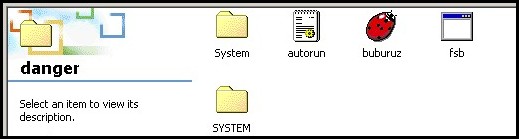
When infecting Symbian phone the Cardtrap.A copies two Windows worms (Win32/Padobot.Z and Win32/Rays) to the memory card of the phone. Padobot.Z is copied with autorun.inf file in attempt to start automatically if the card is inserted to PC using windows. Rays is copied with filename SYSTEM.EXE and same icon as the System folder, this is done as social engineering attempt so that user would click on Rays instead of System folder.
To our knowledge, no Windows version supports autorun from a memory card, but it still might work with some Windows version and third party driver combination.
The goal of the trojan is most likely to cause user to infect his PC when he is trying disinfect his phone. A typical reaction of more advanced user who would encounter trojan like Cardtrap, would be to insert the phone memory card to PC to copy file manager or disinfection tool to the card. Only this time a careless user might to get his PC infected in process.
Both Padobot.Z and Rays are detected by F-Secure Anti-Virus, and we have added detection and disinfection for them also for F-Secure Mobile Anti-Virus
by mozbe
Now this is really cool!
A different look at Bagle
Posted by Gergo @ 13:59 GMT
"Okay, I hear a lot about these computer viruses but what do they actually look like?" - goes one of the most freqently asked questions we get. We have been working on some visualizations projects trying to answer that. We have mentioned our efforts in graphing malware earlier. The latest attempt is a 3D animation that visualizes the structure and execution of the W32/Bagle.AG@mm worm.
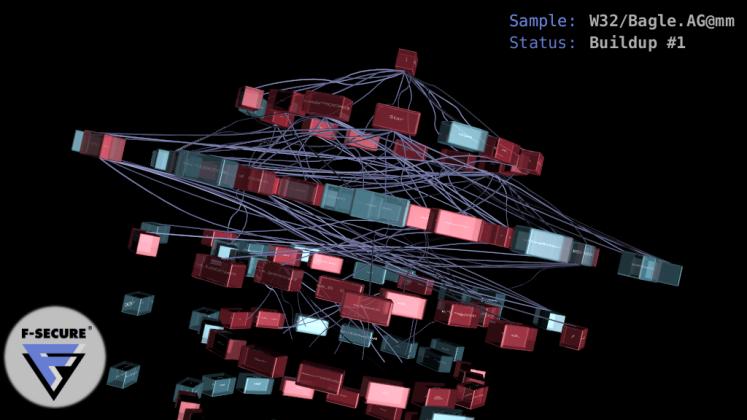
The boxes in the picture are functions of the worm. The one on the top is the 'main' where the execution starts. The first ring contains all the functions that 'main' calls. The second all the functions that the ones on the first ones call and so on. All connecting lines represent the calls from one function to the other. Red boxes belong to the virus code while the blue ones are API calls library code that do not belong to the malicious code.
For the curious minded, the animation was created using IDA Pro, IDAPython, Blender and some custom scripts.
The animations can be downloaded in the following formats:
Windows Media 9 (9.7 MiB)
Quicktime (9.3MiB)
by mozbe
ZDNet - Microsoft to provide security strategy update
| By Joris Evers URL: http://news.zdnet.com/2100-1009_22-5888907.html
Microsoft Chief Executive Steve Ballmer and Mike Nash, corporate vice president of Microsoft's Security Business & Technology Unit, are scheduled to discuss the company's "security strategy and product road map" at an event in Munich, Germany, on Thursday morning, a source close to Microsoft said Tuesday. The event is expected to include more details on Microsoft's upcoming tools to fight spyware in the enterprise, sources familiar with the company's plans said. A Microsoft representative declined to comment for this report. Microsoft has been testing a consumer version of Windows AntiSpyware since January and has said it would also deliver a version of the product for corporate users that would support enterprise needs such as management and deployment. The company has not yet provided a delivery time for the product. Spyware is software that is often installed surreptitiously on computers. Typically, spyware generates pop-up ads or keeps track of people's Web-surfing habits. Microsoft acquired spyware-fighting technology with its purchase of security software maker Giant Software in December. Another closely watched Microsoft product is Windows OneCare, a subscription antivirus and anti-spyware service for consumers. OneCare marks Microsoft's entry into the antivirus space--until now, the domain of specialized vendors such as Symantec, McAfee and Trend Micro. As with Windows AntiSpyware, however, Microsoft has not committed to a delivery date for the final OneCare product. A broad public beta is planned in the United States later this year, Microsoft has said. The company might provide more details Thursday. Microsoft has been building its security muscle since launching its Trustworthy Computing Initiative three years ago. The software giant has made several security-related acquisitions, including ID management company Alacris last month and hosted e-mail security provider FrontBridge in July. While the deals show Microsoft's commitment to security, analysts have criticized the company for not having a clearer and more productive strategy. The company should turn the technologies it picked up into products that customers can use, critics have said. |

by mozbe
Thanks to JD for posting this info on the forums. What I have looked at so far seems pretty impressive. Maybe the “Virus Name Game” is over now.
Common Malware Enumeration (CME) - News & Events
US-CERT and MITRE Corporation Issue Press Release Announcing CME
US-CERT and MITRE Corporation issued a press release entitled "Common Malware Enumeration Initiative Now Available" on October 5, 2005 formally announcing the launch of the CME initiative. The release describes what CME is and isn't, discusses the CME Editorial Board, and mentions the address of the CME Web site. A CME Press Q&A is also available.
The release includes the following quote from Jerry Dixon, Deputy Director at US-CERT , who states: "The recent Zotob worm highlights the need for a common identification system to ensure a rapid response by computer security teams. Within just a couple of hours there were several variants released. Analysis had to be done to determine if they were the same variant with a different name, or a new variant. In these situations, time is of the essence."
CME is sponsored by US-CERT at the U.S. Department of Homeland Security. MITRE maintains CME and provides neutral guidance to the CME Sample Redistribution Group and CME Editorial Board throughout the process to ensure that CME serves the public interest.
by mozbe
From the new Common Malware Enumeraton (CME) website’s “Other Documents” section:
An open letter from an anti-virus customer to anti-virus vendors was posted to the SANS Internet Storm Center calling for the vendors to solicit the help of a neutral 3rd party like SANS or US-CERT to help solve the malware identification problem. The CME Team drafted a response that was co-signed by MITRE's CME Team, US-CERT/DHS representatives, and the vendors participating on the CME Preliminary Editorial Board. The response letter was posted by the SANS Internet Storm Center on November 23, 2004 at http://isc.sans.org/diary.php?date=2004-11-23.
Nice to be remembered :-)
by mozbe
The CME list as it is today,last updated on Sept. 30th 2005
|
|||||||||||||||||||||||||||||||||||||||||||||||||||||||||||||||||||||||||||||||||||||||||||||
| Page last updated: September 30, 2005 | |||||||||||||||||||||||||||||||||||||||||||||||||||||||||||||||||||||||||||||||||||||||||||||
by mozbe
I just read Matt’s post on blogging etiquette, and I have to say that I am sorry you feel that way.
I make posts the way I do, because I look at my blog as a consolidation of sources of information that I find during any given day. That way, people can just look at my blog and maybe see some info they may have missed.
I am usually too busy do more than just cut and paste things I find interesting. If I had time to write a summary for everything that I found interesting out there, then I would try to be the one to be writing the news in the first place.
Just my opinion, but that is how I run my blog. If the info I post is something you have already seen or is too long to hold your interest, you have my permission to just skip on by and read something else.
by mozbe
Matt posted an apology about his post on blogging etiquette, and I have to say that I am sorry too. I should have talked to him offline instead of posting a snippy reply. Just a big misunderstanding all the way around.
Thanks again Matt for your enthusiasm!
by mozbe
As has been noted in Harry’s blog this morning, there is a new Sober variant running around the net.
The new Common Malware Enumeration gives this virus the CME-151 identifier.
So far, McAfee, Trend Micro, and Secunia have this rated at Medium risk. McAfee has also updated their Stinger tool to clean this threat as well.
Here are some links to more information, note that threat levels may change and I will update when I can:
Secunia (Medium)
http://secunia.com/virus_information/22235/sober.r/
McAfee (Medium Risk)
W32/Sober.r@MM: http://vil.nai.com/vil/content/v_136390.htm
Stinger Cleaning tool: http://vil.nai.com/vil/stinger
Symantec (Level 2 Risk)
W32.Sober.Q@mm: http://securityresponse.symantec.com/avcenter/venc/data/w32.sober.q@mm.html
Trend Micro (Medium-behavior diagram included)
WORM_SOBER.AC: http://www.trendmicro.com/vinfo/virusencyclo/default5.asp?VName=WORM%5FSOBER%2EAC&VSect=P
Panda Software (Level 2 out of 4)
Sober.Y: http://www.pandasoftware.com/virus_info/encyclopedia/overview.aspx?IdVirus=92673&sind=0
Sophos (Low)
W32/Sober-O: http://www.sophos.com/virusinfo/analyses/w32sobero.html
F-Secure (Radar Level 2)
Sober.S: http://www.f-secure.com/v-descs/sober_s.shtml
Computer Associates (Medium)
Win32.Sober.P: http://www3.ca.com/securityadvisor/virusinfo/virus.aspx?id=47434
by mozbe
See what happens when people don’t try to get along!!
Network feud leads to Net blackout | CNET News.com
Network feud leads to Net blackout
By John Borland
http://news.zdnet.com/2100-1009_22-5889592.html
Story last modified Wed Oct 05 17:00:00 PDT 2005
Two major Internet backbone companies are feuding, potentially cutting off significant swaths of the Internet for some of each other's customers.
On Wednesday, network company Level 3 Communications cut off its direct "peering" connections to another big network company called Cogent Communications. That technical action means that some customers on each company's network now will find it impossible, or slower, to get to Web sites on the other company's network.
William Steele, a senior network engineer for Syncro Services, said his company noticed the problem Wednesday morning.
"There are some people I can't send an e-mail to," Steele said. "At home, I have Road Runner as an ISP, and wasn't even able to remotely connect in order to manage our servers."
"Peering" arrangements are maintained by network companies that agree to connect their networks directly together to exchange traffic more efficiently. When the companies are of roughly equal size, money rarely exchanges hands.
Level 3 contends that its arrangement with Cogent is no longer financially viable, since it is larger than the other company. It has asked Cogent to seek other arrangements, possibly including paying for the traffic exchange, a Level 3 representative said.
Cogent CEO Dave Schaeffer contested that claim, saying that its network is at least as big as Level 3's, and that it makes no sense to pay for the connection. Cogent is offering any Level 3 user who can't get to Cogent sites free Internet service for a year, in an attempt to attract its rival's customers.
"Our goal is to have this problem go away, whether through Level 3 reconsidering or their customers coming to us," Schaeffer said.
The Level 3 representative said the company was unlikely to reconsider its position, however.
The problem is likely to affect only a small number of each company's customers. Many network company customers have several connections to the Internet and can use an alternate connection to reach a site that might otherwise be blocked.
A similar Net blackout happened in 2001, when Cable & Wireless and PSINet were embroiled in a billing dispute.
Copyright ©1995-2005 CNET Networks, Inc. All rights reserved.
by mozbe
I just noticed descriptions of a new Bagle variant on McAfee’s and Trend Micro’s site. Trend Micro has little info so far. More info as it comes in
McAfee (Low)
W32/Bagle.df@MM: http://vil.nai.com/vil/content/v_136392.htm
Trend Micro (Low)
WORM_BAGLE.BT: http://www.trendmicro.com/vinfo/virusencyclo/default5.asp?VName=WORM%5FBAGLE%2EBT
by mozbe
Well that didn’t take long. Symantec has this listed as Trojan.PSPBrick: http://www.sarc.com/avcenter/venc/data/trojan.pspbrick.html
|
PlayStation Portable Trojan
|
Posted by Gergo @ 12:05 GMT |
Older versions of the PSP firmware (eg. 1.50) have a vulnerability that allows easy execution of custom code on the device. Every since Sony has fixed the flaw in newer versions, the firmware downgrade to 1.50 became the "Holy Grail" of PSP homebrew development. After the discovery of a buffer overflow in version 2.0 of the PSP firmware, many rushed to be the first to release a working firmware downgrader.
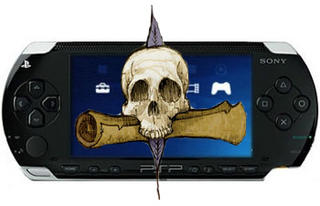
Soon, one of these firmware dowgrade tools turned out to be a trojan that renders the PSP unusable. The infamous patcher from PSP Team removes a few important system files from the flash which makes the system unbootable. Our analysis confirmed these reports.
This tool has been reported to be the first "PSP virus" by many sources. Since it does not replicate in any way, by our definition we can call it a trojan at most. It definitely falls under the malware umbrella term, however.
It is worth mentioning here that, according to Sony, running any unauthorized code on the PSP will immediately void the warranty.
PSP Updates has details on the story.
by mozbe
Secunia - Advisories - Microsoft Windows XP Wireless Zero Configuration Wireless Profile Disclosure
Microsoft Windows XP Wireless Zero Configuration Wireless Profile Disclosure
Secunia Advisory: SA17064 Print Advisory
Release Date: 2005-10-06
Critical: Less critical
Impact: Exposure of sensitive information
Where: Local system
Solution Status: Unpatched
OS: Microsoft Windows XP Home Edition
Microsoft Windows XP Professional
Description:
Laszlo Toth has discovered a security issue in Windows XP, which can be exploited by malicious, local users to gain access to certain sensitive information.
The security issue is caused due to the Wireless Zero Configuration service allowing a non-privileged user to retrieve the configured wireless profiles using the "WZCQueryInterface()" API. The retrieved profile includes the configured SSIDs and WEP keys, or the PMK (Pairwise Master Key) that is used for pre-shared key authentication in WPA (Wi-Fi Protected Access).
The security issue has been confirmed in Windows XP SP2 with KB893357 installed.
Solution:
The security issue reportedly will be fixed in Longhorn.
Grant only trusted users access to affected systems.
Provided and/or discovered by:
Laszlo Toth
Original Advisory:
http://www.soonerorlater.hu/index.khtml?article_id=62
Other References:
KB893357:
http://support.microsoft.com/kb/893357

by mozbe
McAfee has info on this dropper variant as well: http://vil.nai.com/vil/content/v_136391.htm
Two New Sober Viruses on the Loose Today (NEW)
Published: 2005-10-06,
Last Updated: 2005-10-06 18:31:58 UTC by Deborah Hale (Version: 1)
It never fails somehow it seems that whenever I am to be the Handler On Duty we have another little Smurf pop out of the closet. Today's little Smurf is Sober.R or Sober.Q or Worm_Sober.AC or ...., well you get the drift. (What's in a name anyway. ) However, I am pleased to say that the official CME has been released for this little fella'. Nothing to report there yet - says Not Currently Available. You'll have to keep checking back to see what the update brings.
We do however believe that we are working with at least two different versions.
FSecure has an interesting write up on this and is calling the second one a Dropper. Take a look at the info in F-Secures writeup.
http://www.f-secure.com/v-descs/sober_s.shtml
Our malware team is looking at the code as we speak. It appears that this one is picky about who is blessed to receive a copy. It appears to be a self mailer. Our malware team is hard at work attempting to identify evaluate this thing and will update us as soon as possible.
It looks like the attachment name may have changed as well. The one that I just received had the attachment name
regis.info.zip
and appears to be according to the subject my "Registration Confirmation".
The program is packed with some pretty nasty stuff. It looks like it may scan the hard drive to see what additional mischief it can create. It appears to create a file services.exe and sets itself up to run in the registry.
We will keep you updated on any additional info that we get on this.
by mozbe
Microsoft Forms Security Alliance
October 6, 2005
By Elizabeth Millard
Microsoft Corp. is at the helm of a new industry consortium aimed at uniting security vendors to work on products standardized on the Microsoft platform.
The SecureIT Alliance is comprised of a group of industry partners, including Symantec Corp., Trend Micro Inc., McAfee Inc., RSA Security Inc., F-Secure Corp., VeriSign Inc. and a number of other security firms.
The consortium is aimed at expanding Microsoft's security partnerships within the industry, as well as boosting its efforts with government and law enforcement agencies.
"The point of the SecureIT Alliance is to work with our industry partner community to create the best solutions possible," said Mike Nash, corporate vice president of the Microsoft Security Business & Technology unit, in a release. Our customers will benefit because they'll get better security products from a wide range of vendors."
Nash added that Microsoft's industry partners will also benefit, since they'll have better information regarding how to integrate their products with the Microsoft platform.
Several of the alliance's 30 founding members expressed optimism that the consortium can create a more coordinated effort in fighting security threats like spyware and phishing.
With the increasing sophistication of online criminal activity, the need for security vendors to work together is paramount, noted Chad Kinzelberg, vice president of VeriSign Security Services. He added, "The SecureIT Alliance will provide a platform for security vendors to work in concert to confront online crime, improve security responses and meet customer needs."
But not everyone is so enthusiastic about the alliance and its potential to effect change. "This is a move by Microsoft to dominate the security market and cut everyone else in the industry off at the knees," said Richard Williams, an analyst with Garban Institutional Equities.
Because the security vendors in the consortium will have to standardize to Microsoft's platform, Williams believes it will give Microsoft near-total control of its competitors and allow the company to set whatever direction for security in the industry that it chooses.
Vendors had little choice to join the alliance, Williams believes, because if they had resisted, it is likely that Microsoft could have made products that competed with their applications directly.
"This consortium is analogous to taking a herd of wild horses and forcing them into a single stall," said Williams. "You control how they behave. Microsoft is forcing competitors to become its pets."
Check out eWEEK.com's Security Center for the latest security news, reviews and analysis. And for insights on security coverage around the Web, take a look at eWEEK.com Security Center Editor Larry Seltzer's Weblog.
Copyright (c) 2005 Ziff Davis Media Inc. All Rights Reserved.
by mozbe
System failures and hacking hitting the balance sheet, says EIU survey
By Andy McCue
Published: Thursday 6 October 2005
Almost two-thirds of companies have suffered "significant" financial damage as a result of IT systems failures in the last year, according to research by the Economist Intelligence Unit (EIU).
The Digital Risk survey of 218 senior risk managers found 60 per cent have incurred losses due to systems failure, while a third suffered financial damage as a result of hacking and phishing attacks.
More than half (55 per cent) said the biggest challenge companies face in tackling IT risks is the growing sophistication of hackers and cyber criminals, and slightly less than half (48 per cent) said IT and security problems pose a high risk to their business operations.
Responsibility for IT risk lies primarily with the CIO in most organisations but it is coming under increasing scrutiny from other executives such as the emerging position of chief risk officer (CRO). Nearly half of respondents said one of the main difficulties in managing risk is over-reliance on IT management to control digital risks.
Remote working is also a worry for businesses with 57 per cent of the executives saying the trend significantly increases their firm's exposure to electronic threats.
Daniel Franklin, editorial director at the EIU, said IT risk is now too big an area to be handled by the CIO and IT department alone.
"Digital risk has become too big an issue to leave exclusively to IT managers," he said in the report. "Risk managers need to ensure IT threats are addressed as part of their wider strategy for enterprise risk management."
The EIU report was sponsored by ACE, Cisco Systems, Deutsche Bank, IBM and KPMG, and 40 per cent of respondents were from the financial services sector.
by mozbe
Steve Ballmer and Mike Nash detail security strategy.
Hi everyone, Stephen Toulouse here. Back from a nice vacation and wanted to stop and just jot a quick note about Steve Ballmer and Mike Nash's respective speeches today where they detailed a number of new products and partnerships relating to security. You can get the full details here.
Specific Q&A's around Microsoft Client Protection and the SecureIT Alliance are available here and here.
Check 'em out!
S.
*This posting is provided "AS IS" with no warranties, and confers no rights.*
posted on Thursday, October 06, 2005 6:26 PM by stepto
by mozbe
On 11 October 2005 Microsoft is planning to release:
Security Updates
. 8 Microsoft Security Bulletins affecting Microsoft Windows. The highest Maximum Severity rating for these is Critical. Some of these updates will require a restart. These updates will be detectable
using the Microsoft Baseline Security Analyzer (MBSA) and the Enterprise Scanning Tool (EST).
. 1 Microsoft Security Bulletin affecting Microsoft Windows and Microsoft Exchange. The highest Maximum Severity rating for this is Important. These updates will require a restart. These updates will
be detectable using the Microsoft Baseline Security Analyzer (MBSA).
Microsoft Windows Malicious Software Removal Tool
. Microsoft will release an updated version of the Microsoft Windows Malicious Software Removal Tool on Windows Update, Microsoft Update, Windows Server Update Services and the Download Center.
Note that this tool will NOT be distributed using Software Update Services (SUS).
Non-security High Priority updates on MU, WU, WSUS and SUS
. Microsoft will release NO new NON-SECURITY High-Priority Updates for Windows on Microsoft Update (MU), Windows Update (WU), Windows Server Update Services (WSUS) and Software Update Services (SUS).
Although we do not anticipate any changes, the number of bulletins, products affected, restart information and severities are subject to change until released.
Microsoft will host a webcast next week to address customer questions on these bulletins. For more information on this webcast please see below:
. TechNet Webcast: Information about Microsoft's Security Bulletins
(Level 100)
. Wednesday, 12 October 11:00 AM (GMT-08:00) Pacific Time (US &
Canada)
http://msevents.microsoft.com/CUI/WebCastEventDetails.aspx?EventID=1032282125&EventCategory=4&culture=en-US&CountryCode=US
At this time no additional information on these bulletins such as details regarding severity or details regarding the vulnerability will be made available until 11 October 2005.
by mozbe
Symantec has updated their Beagle removal tool to include the following
October 10th, 2005: Updated removal tool to version 1.13.0 to support W32.Beagle.CL@mm.
October 7, 2005: Updated removal tool to version 1.12.0 to support W32.Beagle.CK@mm.
At this point, this tool covers the following:
by mozbe
Symantec has updated their Mytob removal tool to include the following:
?October 7, 2005: Published version 1.24.1, which supports removal of W32.Mytob.KE@mm.
?
?At this point, this tool now covers the following:
?
by mozbe
Chris Mosby, a very talented security moderator in My IT Forums commented on this need in an “Open Letter to Anti-Virus Software Companies” in November 2004. This new system won't be perfect, but it's a step in the right direction. It'll help companies like the one I work for which uses corporate McAfee VS 8.0i on the desktop and SAV for email filtering.
Thanks Harry!!
by mozbe
Microsoft has updated the Extended Security Update Tool to include detection/deployment of MS05-044 and MS05-050 that came out today.
Download details: Extended Security Update Inventory Tool
The SMS Extended Security Update Inventory tool is a scan tool built for the sole purpose of helping customers determine SMS client computers that may need security updates that are not detectable using the existing SMS Security Update Inventory Tool built on MBSA. Like the SMS Software Update Inventory tool, this tool also has the instructions for locating each applicable update, downloading it from Microsoft, and deploying it using SMS . The SMS Extended Security Update Inventory Tool is built on Enterprise Scan Tool (EST) detection technology. For more information about the exact detection capabilities of EST and how it differs from MBSA, see Microsoft Knowledge Base Article 894193. For more information on the SMS Extended Security Update Inventory Tool, please see the included user guide and release notes.
The security bulletins that are currently covered by this tool are as follows:
Note for users of previous versions of the tool: This download can be used to upgrade previous versions of the Extended Update Inventory Tool so that additional security update detection can be added for a given month's security updates.
by mozbe
Glad to see Symantec step up to the plate.
Bloodhound.Exploit.46: Bloodhound.Exploit.46 is a heuristic detection for the Vulnerabilities in Windows Shell Could Allow Remote Code Execution (as described in Microsoft Security Bulletin MS05-049).
Bloodhound.Exploit.47: Bloodhound.Exploit.47 is a heuristic detection for the vulnerability in AVI Processing Could Allow Remote Code Execution (as described in Microsoft Security Bulletin MS05-050).
Bloodhound.Exploit.48: Bloodhound.Exploit.48 is a heuristic detection for the Web View Script Injection Vulnerability (as described in Microsoft Security Bulletin MS05-049).
by mozbe
Handler's Diary October 12th 2005
VERITAS NetBackup Vulnerability - remote (NEW)
Published: 2005-10-12,
Last Updated: 2005-10-12 11:50:01 UTC by Patrick Nolan (Version: 1)
Veritas has announced a vulnerability, Document ID: 279085, describing a remotely exploitable "format string overflow vulnerability in the Java authentication service, bpjava-msvc, running on NetBackup servers and clients" that is "known to affect the application server for the NetBackup Java GUI."
"The vulnerable daemon listens on port 13722 on both NetBackup servers and clients."
Affected products:
NetBackup 4.5, all versions, all platforms.
NetBackup 5.0, all versions, all platforms.
NetBackup 5.1, all versions, all platforms.
NetBackup 6.0, all versions, all platforms.
Their suggested workaround;
Block external network access on TCP port 13722
by mozbe
CA iGateway debug mode HTTP GET request bo vulnerability/exploit
Published: 2005-10-11,
Last Updated: 2005-10-11 10:28:31 UTC by Patrick Nolan (Version: 1)
Computer Associates has an announcement concerning an "iGateway debug mode HTTP GET request buffer overflow vulnerability" that says "Remote attackers can execute arbitrary code." Exploit code is publicly available. Their is no patch available at this moment, the recommended workaround is "do not run iGateway in debug mode." Computer Associates announcement references CA iGateway 3.0, and CA iGateway 4.0.
by mozbe
Donna’s post show links to the eEye advisories, and how to make exploits. Thanks again eEye…
I would expect viruses based on these any day now. Get to patching!!
Published advisories by eEye Digital Security
Posted on Wednesday, October 12, 2005 3:23 PM
Below are the list of advisories published by eEye Digital Security. The advisories were patched by Microsoft on Oct. 11th.
As always keep a patch system. Visit Microsoft Update website to check for security updates. Find out if you are missing important Microsoft product updates by using MBSA
by mozbe
Symantec has updated their Mytob removal tool to include the following:
October 11, 2005: Published Version 1.25.0, which supports removal of minor variants of W32.Mytob.EE@mm.
At this point, this tool now covers the following:
by mozbe
Almost wish I thought of this one... :-)
Schneier on Security: $5M Bank Con
October 12, 2005
Great crime story:
An ingenious fraudster is believed to be sunning himself on a beach after persuading leading banks to pay him more than €5 million (£3.5 million) in the belief that he was a secret service agent engaged in the fight against terrorist money-laundering.
The man, described by detectives as the greatest conman they had encountered, convinced one bank manager to leave him €358,000 in the lavatories of a Parisian bar. “This man is going to become a hero if he isn’t caught quickly,” an officer said. “The case is exceptional, perfectly unbelievable and surreal.”
Moral: Security is a people problem, not a technology problem
by mozbe
Here is some good news for everyone…
Spyware vendor Mindset Interactive shuts down their business Posted by Stefan @ 11:19 GMT
Favoriteman and NetPal nuisances have after several years stopped. The company behind it has closed and we can report they have moved out of their company offices. All related web servers are unreachable and the already distributed Spyware no longer functions.
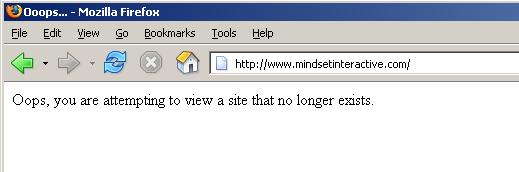
Like many Spyware vendors, Mindset Interactive has used multiple names to distribute their Spyware. That is why termination of the company behind it is such a positive turn.
Mindset Interactive was behind Favioriteman also known as F1Organizer, ATPartners, SpyAssult and Window Help 4 Smart Browsing. They also constructed NetPal, which had a massive numbers of games as distribution channels.
F-Secure will keep Favoriteman and NetPal in detection to clean out the final filth.
.
by mozbe
Here we go…
MS05-051 exploit info and rumors (NEW)
Published: 2005-10-12,
Last Updated: 2005-10-12 20:57:07 UTC by Patrick Nolan (Version: 1)
Patch yesterday folks. So far we're aware that an MS05-051 exploit is in the hands of immunitysec Canvas customers - "October 11, 2005: MS05-051 (MS DTC) Trigger for the bug in MS DTC on Windows 2000"
In addition we're seeing reports of non-specific exploit warnings from managed security service providers to their customers. And some rumors.
ISS says they have protection out for an exploit, it's announcement is
here. I hope other vendors follow suit.
Here's some pre-vuln announcement facts, see the DShield data. ymmv
We'll post anything else that's specific and critical when we get it.
by mozbe
Revisions on patches that came out this week, make sure to take a look.
********************************************************************
Title: Microsoft Security Bulletin Minor Revisions
Issued: October 12, 2005
********************************************************************
Summary
=======
The following bulletins have undergone a minor revision increment. Please see the appropriate bulletin for more details.
* MS05-052
* MS05-050
Bulletin Information:
=====================
* MS05-052
- http://www.microsoft.com/technet/security/bulletin/ms05-052.mspx
- Reason for Revision: Bulletin updated to revise the log file name, uninstall directory name, and install registry key name
for the Internet Explorer Service Pack 1 security update.
- Originally posted: October 11, 2005
- Updated: October 12, 2005
- Bulletin Severity Rating: Critical
- Version: 1.1
* MS05-050
- http://www.microsoft.com/technet/security/bulletin/ms05-050.mspx
- Reason for Revision: Bulletin updated to provide additional clarity around DirectX versions in the "Affected Software" section.
- Originally posted: October 11, 2005
- Updated: October 12, 2005
- Bulletin Severity Rating: Critical
- Version: 1.1
********************************************************************
by mozbe
I see that Rod and Ron took the time to post something about inflated Firefox usage numbers.
I didn’t have time to read the entire posts, because I too busy getting security patches for Windows and Internet Explorer ready for deployment.
What little I did read, I read from Firefox. ;-)
by mozbe
Schneier on Security: Domestic Spying in the U.S.
Domestic Spying in the U.S.
There are two bills in Congress that would grant the Pentagon greater rights to spy on Americans in the U.S.:
The Pentagon would be granted new powers to conduct undercover intelligence gathering inside the United States -- and then withhold any information about it from the public -- under a series of little noticed provisions now winding their way through Congress.
Citing in part the need for “greater latitude” in the war on terror, the Senate Intelligence Committee recently approved broad-ranging legislation that gives the Defense Department a long sought and potentially crucial waiver: it would permit its intelligence agents, such as those working for the Defense Intelligence Agency (DIA), to covertly approach and cultivate “U.S. persons” and even recruit them as informants—without disclosing they are doing so on behalf of the U.S. government.
[...]
At the same time, the Senate intelligence panel also included in the bill two other potentially controversial amendments—one that would allow the Pentagon and other U.S. intelligence agencies greater access to federal government databases on U.S. citizens, and another granting the DIA new exemptions from disclosing any “operational files” under the Freedom of Information Act (FOIA).
Bloggers Note: Big Brother could be watching.
I wondered when this was going to happen. Our civil liberties will be chipped away gradually all in the name of fighting a war that can never be completely won.
How much of your privacy are you willing to give up so you can feel safe?
by mozbe
Handler's Diary October 13th 2005
Increased activity on TCP port 5250 (NEW)
Published: 2005-10-13,
Last Updated: 2005-10-13 18:58:16 UTC by Jim Clausing (Version: 2(click to highlight changes))
Folks, we're seeing a tremendous increase in activity on port 5250, but we're not sure what it is, so we're asking for your help. If you have captures of any of this traffic, please upload them via the contact page. Thanks in advance.
by mozbe
Handler's Diary October 13th 2005
MS05-044 Folder View for FTP Sites - mailbag item (NEW)
Published: 2005-10-13,
Last Updated: 2005-10-13 19:14:24 UTC by Patrick Nolan (Version: 1)
This is my slightly edited email response to a great point about Microsoft's MS05-044 Security Bulletin, it is a result of email exchanges with a contributor who wishes to remain anonymous;
Hi,
Well, Microsoft makes "Folder View for FTP Sites" a complex subject and certainly one I may be able to post "Workaround" information on in a Diary post.
AFAICT there are many variables involved in OS and IE "installation" (oem settings, etc) that can affect FTP Folder views. I did read a ton of MS KB's and the two best on the specific issue are referenced below. And I really appreciate your polite persistence in pushing me to read up on this important item. Thank you!.
You're right that MS is misleading in it's Security Bulletin presentation. Because so many factors like OEM and customer installation settings can enable the FTP folder view the Security Bulletin should state a clear workaround on how to look for it in IE advanced tab and clearly state that you can disable it by unchecking/clearing it.
In the
bulletin, in the "Mitigating Factors for FTP Client Vulnerability - CAN-2005-2126:" section MS says;
"By default, the "Enable Folder View for FTP Sites" Internet Explorer setting is disabled on all affected operating system versions. An attacker would only be successful if the user manually enables the "Enable Folder View for FTP Sites" Internet Explorer setting on the affected system." This is clearly misleading!
And in the "Workarounds for FTP Client Vulnerability - CAN-2005-2126:" section they only say "Do not download files from un-trusted FTP servers" when they should ADD;
"YOU CAN DISABLE FTP FOLDER VIEW;
To disable FTP Folders, follow these steps:
1. Click Start, point to Settings, click Control Panel, and then double-click Internet Options.
2. Click the Advanced tab.
3. Under Browsing, to disable FTP Folders, CLEAR/UNCHECK the Use Web Based FTP or Enable Folder View for FTP sites check box.
NOTE: When you CLEAR/UNCHECK the Use Web Based FTP or Enable Folder View for FTP sites check box, you are disabling FTP Folder functionality.
So let me try and work something up on that end and see if I can get it into the diary.
Highest regards,
Pat
No option to install Web Folders when you install Internet Explorer 6
Article ID : 298637
Last Review : June 20, 2005
Revision : 5.0
How to Install and Use FTP Folders
Article ID : 217888
Last Review : September 28, 2004
Revision : 3.1
by mozbe
Handler's Diary October 13th 2005
Increased activity on TCP port 5250 (NEW)
Published: 2005-10-13,
Last Updated: 2005-10-13 19:57:16 UTC by Lorna Hutcheson (Version: 3(click to highlight changes))
As an update, we have had some readers (thanks Dr. Neal Krawetz, Thomas Schmitzer and Brian Porter) point us to an exploit against the iGateway service. This exploit was released on October 10 by FrSIRT and appears to be what is causing the traffic. It allows for a telnet session to port 1711, which also shows a one day increase. Thanks for all the input and if someone happens to grab packets, we'd still like to see them to confirm. Also a thanks to Greg Holmes for bringing this to our attention!
If you have captures of any of this traffic, please upload them via the
contact page. Thanks in advance.
by mozbe
Fun for the whole family…. 
Handler's Diary October 14th 2005
FrSIRT exploits for MS05-044, MS05-045, and MS05-048 (NEW)
Published: 2005-10-14,
Last Updated: 2005-10-14 04:57:02 UTC by William Stearns (Version: 1)
Within two days, we already have proof-of-concept exploit code for MS05-044, MS05-045, and MS05-048. The three can be found at:
http://www.frsirt.com/exploits/20051013.ms05-048.c.php
Microsoft Collaboration Data Objects Buffer Overflow PoC Exploit (MS05-048)
http://www.frsirt.com/exploits/20051013.ms05-045.c.php
Microsoft Windows Network Connection Manager Local DoS Exploit (MS05-045)
http://www.frsirt.com/exploits/20051013.ms05-044.c.php
Microsoft Windows FTP Client File Location Tampering Exploit (MS05-044)
Many thanks to John Otterson for noticing this.
by mozbe
I check my Bulk mail folders on Yahoo every once in a while, just in case gets sent over there by mistake. This morning, it looks like I might have possibly found a new Mytob variant. Here is what the e-mail looked like:
From: administrator@yahoo.com
To: me@yahoo.com
Subject: Important Notification
Date: Fri, 14 Oct 2005 17:46:14 +0800Dear Yahoo Member,
We have temporarily suspended your email account me@yahoo.com.
This might be due to either of the following reasons:
1. A recent change in your personal information (i.e. change of address).
2. Submiting invalid information during the initial sign up process.
3. An innability to accurately verify your selected option of subscription due to an internal error within our processors.
See the details to reactivate your Yahoo account.Sincerely,The Yahoo Support Team
+++ Attachment: No Virus (Clean)
+++ Yahoo Antivirus - www.yahoo.com
The attachment to the e-mail was named account_details.zip. This obiviously fit the Mytob pattern, but Yahoo (who uses Symantec) didn’t detect any virus in the file and neither did my desktop antivirus; which is Symantec as well. To verify my suspicons, I sent the file to www.virustotal.com and this is what they had to say.
This is a report processed by VirusTotal on 10/14/2005 at 13:07:43 (CET) after scanning the file "account_details.zip" file.
| Antivirus | Version | Update | Result |
| AntiVir | 6.32.0.6 | 10.14.2005 | Worm/Mytob.KN |
| Avast | 4.6.695.0 | 10.13.2005 | no virus found |
| AVG | 718 | 10.13.2005 | no virus found |
| Avira | 6.32.0.6 | 10.14.2005 | Worm/Mytob.KN |
| BitDefender | 7.2 | 10.14.2005 | Win32.MyTob.FD@mm |
| CAT-QuickHeal | 8.00 | 10.14.2005 | (Suspicious) - DNAScan |
| ClamAV | devel-20050917 | 10.14.2005 | Worm.Mytob.IT-2 |
| DrWeb | 4.32b | 10.14.2005 | no virus found |
| eTrust-Iris | 7.1.194.0 | 10.14.2005 | no virus found |
| eTrust-Vet | 11.9.1.0 | 10.14.2005 | Win32.Mytob!ZIP!generic |
| Fortinet | 2.48.0.0 | 10.14.2005 | suspicious |
| F-Prot | 3.16c | 10.14.2005 | W32/Mytob.MY@mm |
| Ikarus | 0.2.59.0 | 10.13.2005 | Net-Worm.Win32.Mytob.DE |
| Kaspersky | 4.0.2.24 | 10.14.2005 | Net-Worm.Win32.Mytob.dc |
| McAfee | 4604 | 10.13.2005 | Generic Malware.a!zip |
| NOD32v2 | 1.1254 | 10.14.2005 | Win32/Mytob.LF |
| Norman | 5.70.10 | 10.14.2005 | no virus found |
| Panda | 8.02.00 | 10.14.2005 | no virus found |
| Sophos | 3.98.0 | 10.14.2005 | W32/Mytob-EX |
| Symantec | 8.0 | 10.13.2005 | no virus found |
| TheHacker | 5.8.2.123 | 10.13.2005 | W32/Generic!zip-dobleextension |
| VBA32 | 3.10.4 | 10.13.2005 | no virus found |
VirusTotal is a free service offered by Hispasec Sistemas. There are no guarantees about the availability and continuity of this service. Although the detection rate afforded by the use of multiple antivirus engines is far superior to that offered by just one product, these results DO NOT guarantee the harmlessness of a file. Currently, there is not any solution that offers a 100% effectiveness rate for detecting viruses and malware.
> Go to: Home
Contact En español
www.virustotal.com :: @ Hispasec Sistemas 2004 :: e-mail
info@virustotal.com
I found it a little disturbing that 61% of the vendors listed above detected this file to be at the very least suspicious, and Symantec wasn’t one of them. Maybe they need to work on their heuristics engine.
by mozbe
I made a post earlier today about a new Mytob variant and Symantec not detecting it.
I guess I wasn’t patient enough this morning, because they put a description of it up while I was on my way to work (identified by the Sophos variant name, which was listed on the virustotal report: http://securityresponse.symantec.com/avcenter/venc/data/w32.mytob.kp@mm.html
I still think Symantec could work on their heuristic engine anyway ;-)
by mozbe
Good thing I wasn’t planning on going anywhere this weekend…
Handler's Diary October 14th 2005
Published: 2005-10-14,
Last Updated: 2005-10-14 14:18:58 UTC by Johannes Ullrich (Version: 1)
Remember Zotob? In Internet-Security time, it was a long long time ago. Almost 2 months now. The Friday before Zotob hit the news we went to infocon yellow, in order to warn people about the upcoming storm.
Now this week started in a very similar way, with a large number of microsoft patches. In particular the MS DTC vulnerability (MS05-051) has a lot of promisse. Like the PnP vulnerability used for Zotob, it could target Win2k quite efficiently. At this point, the only thing missing is a widely available exploit, but given that there are a number of private/commercial exploits, a public one is probably right around the corner.
So what should you do today before you head home for the weekend:
The obvious thing is to apply patch MS05-051 on at least your Win2k systems. We do know the port 3372 scanning started in full force, likely in order to acquire target lists. If you can't patch, at least make sure port 3372 is closed. Windows 2000 does not come with its own host based firewall. But you can use IPSec policies to acchive the same effect. See this
paper by David Taylor for details.
What will happen this weekend? I invited other handlers to add their own opinions/predications to this story. In my opinion, we will not see widespread exploits. This can change quickly, but is also dangerous in its own way. Zotob showed very nicely how an exploit will not get too much attention until it hits a couple of high profile targets. The scenario I am most afraid of is the use of an exploit by a small group to attack high value targets. Remember the "russian key logger" episode (
Berbew)? A group exploited a number of well known web sites using the IIS ssl vulnerability, and came back months later to plant an Internet Explorer exploit. We are "ripe" for a repeat of this scenario, in particular the rich selection of new client exploits released.
What should you do this weekend? Stay close to your pager. In particular, don't consider yourself safe as long as CNN isn't reporting about it. Make sure your IDS is setup with MS05-051 signatures, see if you can just log all port 3372 traffic. Use the rest of today to collect some data so you have a baseline if things turn bad. I don't like to recommend to turn systems off. but well, there is nothing more secure then a system diconnected from power.
Please use our
forum to share your own opinions and predictions.
.
by mozbe
I haven’t seen any of these problems here so far in testing.
Handler's Diary October 14th 2005
Published: 2005-10-14,
Last Updated: 2005-10-14 14:31:49 UTC by Lorna Hutcheson (Version: 1)
We have had a report of problems with MS05-051. Here is what we have received. If anyone else is experiencing problems, please let us know.
A number of people have reported weird problems with one of the MS patches released yesterday, specifically MS05-051 Vulnerabilities in MSDTC and COM+ Could Allow Remote Code Execution (902400).
Symptoms include, but are not limited to:
- Inability to visit Windows Update
- Inablility to use the Search tool off the Start Menu
- blank screen (no icons) upon login
- Symantec LiveUpdate stops working
- SpySweeper stops working
- problems with Office apps
Uninstalling patch 902400 seems to do the trick for most folks. You may need to check the "Show Updates" box under Add/Remove Programs to see the hotfixes.
by mozbe
Patch it!! Patch it NOW!!
Windows exploit already doing the rounds
Posted on Friday, October 14, 2005 2:07 PM
An exploit for the Windows 2000 patch issued by Microsoft on October 11, 2005 has already been published by security firm Immunity Security. The exploit release has raised fears of an attack like that of the Zotob worm in August 2005. The vulnerabilities are in Microsoft Distributed Transaction Coordinator (MSDTC) and COM+, which were reported in Microsoft's bulletin MS05-051. Also affected are later versions of Windows, but only relatively minor attacks can result with them. Symantec has sent an alert to customers of its DeepSight Threat Management System in response, warning that a worm outbreak could be immanent.
http://www.techworld.com/security/news/index.cfm?NewsID=4576
See response of Microsoft Security Response Center in http://msmvps.com/donna/archive/2005/10/14/70667.aspx
by mozbe
To: undisclosed-recipients
Subject: Announcement - KNOWLEDGE BASE ARTICLE 909444 RELEASED
Microsoft is aware of reports of isolated deployment issues with security update, MS05-051, and is working with a limited amount of customers affected to help resolve the issue.
Based on feedback from those customers, Microsoft has published Knowledge Base article 909444 to address the issue. More information is available at
http://support.microsoft.com/?kbid=909444.
We continue to strongly urge customers to deploy MS05-051 and all recent security updates.
More information about the security updates can be found at http://www.microsoft.com/security/default.mspx.
If you have any questions regarding this alert please contact your Technical Account Manager.
by mozbe
Just in case you haven’t seen this yet:
********************************************************************
Title: Microsoft Security Bulletin Minor Revisions
Issued: October 14, 2005
********************************************************************
Summary
=======
The following bulletins have undergone a minor revision increment.
Please see the appropriate bulletin for more details.
* MS05-051
Bulletin Information:
=====================
* MS05-051
- http://www.microsoft.com/technet/security/bulletin/ms05-051.mspx
- Reason for Revision: Bulletin revised to advise customers of the availability of Microsoft Knowledge Base Article 909444 which describes a potential issue which may be encountered after installing this update.
- Originally posted: October 11, 2005
- Updated: October 14, 2005
- Bulletin Severity Rating: Critical
- Version: 1.1
********************************************************************
by mozbe
Symantec has updated their Mytob removal tool to include the following:
by mozbe
Trend Micro has a description for a POC Trojan Horse that uses the vulnerability that is patched by MS05–051. If you haven’t deployed this patch yet, it may be too late.
TROJ_SSPLOIT.A - Technical details
Details:
This proof-of-concept Trojan may arrive on a system as a component of other malware. A remote malicious user may also use this as a stand-alone application in order to execute an arbitrary code or program (usually a malicious file) without the affected user's knowledge or permission.
It takes advantage of the MSDTC/COM+ vulnerability to perform the abovementioned routine. For more information about this vulnerability, please refer to the following Microsoft page:
When executed, this Trojan is also capable of adding a new user to the administrators group of the affected system. This routine enables the said user to gain elevated privileges on the machine, such as the ability to install or uninstall programs, among others.
It runs in the command prompt via the following command and parameters:
SSExploit "{application to uninstall}" "{command}"
Below are sample commands that can be executed by this Trojan:
SSExploit "c:\windows\system32\webfldrs.msi" "cmd.exe"
(Note: CMD.EXE only runs interactively on Windows 2000 systems.)
SSExploit "c:\windows\system32\webfldrs.msi" "net localgroup administrators /add {user name}"
This Trojan is compiled using Microsoft Visual Basic. It affects the following Windows versions:
Note, however, that systems running Windows XP Service Parck 2, Windows Server 2003, and Windows Server 2003 Service Pack 1 have default settings that require the remote malicious user or malware to have valid login credentials in order to perform the exploit employed by this Trojan.
by mozbe
MS05-012 not MS05-051 exploit found (NEW)
Published: 2005-10-18,
Last Updated: 2005-10-18 05:18:40 UTC by Johannes Ullrich (Version: 4(click to highlight changes))
Update:
Later this evening Trend updated their webpage concerning the TROJ_SSPLOIT.A virus to show that it was not MS05-051, but was MS05-012 instead. Thanks Microsoft for updating us on this as well.
Original Message:
Trend Micro
reports that they spotted a POC for MS05-051 in the wild. They found it included as a new exploit in other malware. We don't have any details yet beyond what can be found in at Trend Micro. If you find a copy of this malware, please forward it.
Trend Micro states that the malware was written in Visual Basic, which usually indicates some low skilled bot-kid. Kind of odd to see it surface this way, but having it included as a new warhead in existing malware matches past patterns.
Trend Micros virus statistics do not report any "captures" of this exploit in the wild. Not exactly sure if this is just a lab sample, or if it was actually seen in the "wild".
We will update this diary as we learn more.
e.
by mozbe
Handler's Diary October 19th 2005
Infocon Yellow: Snort BO Vulnerability (NEW)
Published: 2005-10-19,
Last Updated: 2005-10-19 12:36:48 UTC by Johannes Ullrich (Version: 1)
After some deliberation, we feel that the Snort Back Orifice pre-processor vulnerability could become a big problem very fast. As a result, we turned the Infocon status to 'yellow'.
Why do we think this is a big deal:
The quick fix is to disable the BO preprocessor. Please do so NOW (if you haven't already). Worry about upgrading snort later, after you have done your testing. But going through this myself, its not that hard.
Please let us know if you see exploits posted, or have other details to share. We expect to stay on 'yellow' for about 12-24 hrs unless there are any new developments.
Blogger’s Note: For more on this vulnerability, go here: http://isc.sans.org/diary.php?storyid=770
by mozbe
Well this is good to know…
Schneier on Security: Secret Forensic Codes in Color Laser Printers
Many color laser printers embed secret information in every page they print, basically to identify you by. Here, the EFF has cracked the code of the Xerox DocuColor series of printers.
The DocuColor series prints a rectangular grid of 15 by 8 miniscule yellow dots on every color page. The same grid is printed repeatedly over the entire page, but the repetitions of the grid are offset slightly from one another so that each grid is separated from the others. The grid is printed parallel to the edges of the page, and the offset of the grid from the edges of the page seems to vary. These dots encode up to 14 7-bit bytes of tracking information, plus row and column parity for error correction. Typically, about four of these bytes were unused (depending on printer model), giving 10 bytes of useful data. Below, we explain how to extract serial number, date, and time from these dots. Following the explanation, we implement the decoding process in an interactive computer program.
Because of their limited contrast with the background, the forensic dots are not usually visible to the naked eye under white light. They can be made visible by magnification (using a magnifying glass or microscope), or by illuminating the page with blue instead of white light. Pure blue light causes the yellow dots to appear black. It can be helpful to use magnification together with illumination under blue light, although most individuals with good vision will be able to see the dots distinctly using either technique by itself.
Posted on October 19, 2005 at 08:12 AM
by mozbe
Schneier on Security: U.S. Regulators Require Two-Factor Authentication for Banks
Two-factor authentication is coming to U.S. banks:
Federal regulators will require banks to strengthen security for Internet customers through authentication that goes beyond mere user names and passwords, which have become too easy for criminals to exploit.
Bank Web sites are expected to adopt some form of "two-factor" authentication by the end of 2006, regulators with the Federal Financial Institutions Examination Council said in a letter to banks last week.
Here's more details.
This won't help. It'll change the tactics of the criminals, but won't make them go away. I've written about that already (the short version is that two-factor authentication won't mitigate identity theft, because it's not an authentication problem -- it's a problem with fraudulent transactions), and also about what will solve the problem.
by mozbe
List of Unpatched Windows Flaws Grows
October 18, 2005
By Ryan Naraine
The list of unpatched security vulnerabilities in products embedded in the Microsoft Windows operating system just got longer.
Researchers at eEye Digital Security have flagged another high-severity flaw affecting users of two widely used Microsoft Corp. products—the Internet Explorer browser and the Windows Media Player application.
The company released an advisory with basic details of the flaw, which is described as a "code execution" bug in default installations of IE and WMP.
eEye reported the issue to the MSRC (Microsoft Security Response Center) on Oct. 17 and confirmed that an exploit would affect users of Windows NT, Windows 2000 (all versions), Windows XP (Service Pack 2 included) and Windows Server 2003.
Click here to read more about viruses and worms that target Windows.
Mike Puterbaugh, senior director of product marketing at eEye, said the bug was rated critical because of the risk of remote code execution attacks.
However, he noted that the flaw is not wormable, a hint that some user action would be required for an exploit to be successful.
"Any time you're talking about an application that attempts to connect to the Internet by default, a flaw in that application causes concern. For these two, that's definitely the case," Puterbaugh said.
A spokesperson for Microsoft confirmed receipt of eEye's flaw warning.
"Since details of the vulnerability have not been made public, we are not aware of attacks that try to use the reported vulnerabilities or of customer impact at this time," she said.
The newest eEye discovery adds to the known list of potentially dangerous Windows holes that remain unpatched.
In all, eEye's "upcoming advisories" page lists seven unfixed flaws, all carrying a high-severity rating because of the remote code execution possibilities.
Read more here about a Trojan that targeted a security vulnerability in the Microsoft Jet Database Engine.
Two of the seven vulnerabilities are more than 100 days overdue and affect the dominant IE browser.
According to security alerts aggregator Secunia Inc., there have been 70 advisories posted for IE flaws since 2003. Almost 30 percent of those remain unpatched.
A vulnerability in the Microsoft Jet Database Engine that was reported to Microsoft more than five months ago is also on the list of unpatched bugs.
Virus writers are already exploiting the Jet DB hole with a mail-borne Trojan horse identified as "Backdoor.Hesive."
The Trojan camouflages itself as a Microsoft Access file and targets users of Windows products that use the database engine.
Check out eWEEK.com's Security Center for the latest security news, reviews and analysis. And for insights on security coverage around the Web, take a look at eWEEK.com Security Center Editor Larry Seltzer's Weblog.
by mozbe
Summary
=======
The following bulletins have undergone a minor revision increment.
Please see the appropriate bulletin for more details.
* MS05-050
* MS05-052
Bulletin Information:
=====================
* MS05-050
- http://www.microsoft.com/technet/security/bulletin/MS05-050.mspx
- Reason for revision: Bulletin updated for the following: Caveats and FAQ were updated to reflect the available Microsoft
Knowledge Base Article 909596 and to clarify a known issue that affected Windows 2000 SP4 customers who were running DirectX. In
the "Frequently asked questions (FAQ) related to this security update" section, updated the "What updates does this release
replace" question to make it clearer with regards to DirectX and Windows 2000. Added information about Windows XP Professional
x64 Edition to the "File Information" section under "Windows XP (all versions)". Revised the "DirectX Standalone" "Registry Key
Verification" for all versions.
- Originally posted: October 11, 2005
- Updated: October 19, 2005
- Bulletin Severity Rating: Critical
- Version: 1.2
* MS05-052
- http://www.microsoft.com/technet/security/bulletin/MS05-052.mspx
- Reason for revision: Bulletin updated to revise the install registry key name for the Windows Server 2003 security update.
- Originally posted: October 11, 2005
- Updated: October 19, 2005
- Bulletin Severity Rating: Critical
- Version: 1.2
by mozbe
Handler's Diary October 20th 2005
Published: 2005-10-20,
Last Updated: 2005-10-20 05:27:33 UTC by Kyle Haugsness (Version: 1)
Here is an update regarding the Snort Back Orifice pre-processor vulnerability...(Kyle Haugsness Oct. 20 05:30 UTC)
When this vulnerability was announced yesterday, I was curious to see how difficult this would be to exploit due to the widespread nature of Snort. After doing a little research on the encryption method in Back Orifice, I was able to develop working exploit code in 2 hours. Bad news!! Of course, we aren't in the business of releasing exploits, so this code is staying private. Now, it appears that HD Moore is very close to having exploit code working as a plugin to metasploit. If we haven't said it loudly enough already, PLEASE UPGRADE your Snort sensors or disable the BO pre-processor if running the vulnerable versions of Snort 2.4 series. I checked the 2.3.2 source tree today and it is not vulnerable.
How about defensive measures? If you are running Snort and are able to upgrade, then the new version should detect the exploit attempt. But I am working on two additional defensive tools. The first is a Snort signature that should catch the exploit attempt. This should be available real soon now (tm).
The second tool may prove to be much more valuable. This tool is necessary because of the fact that the exploit can be triggered on any UDP port (except 31337) and that all Back Orifice traffic is encrypted. I don't want to give away more information at this point, since it will help the exploit writers. The tool is a standalone program that utilizes libpcap to sniff traffic and decode UDP traffic looking for the exploit. It will be useful to folks that can't upgrade their Snort daemon to get the new detection it provides, but still want to see if they are being attacked. Secondly, this will be useful to people running a different IDS system that can't decode the Back Orifice encryption. Third, it will probably be very useful in identifying a global worm outbreak.
Since time is of the essence here, I am hoping to have this tool available very shortly. It will require libpcap and is being developed on Debian Linux. It will not require Snort to be running. Since code portability isn't my strong suit, we may be looking for people to test and port the code to FreeBSD, Solaris, etc. Please drop us an e-mail if you would be willing to help in this area. The source code is currently about 800 lines.
by mozbe
Symantec has updated their Mytob removal tool to include the following:
October 19, 2005: Published version 1.28.0, which supports an additional W32.Mytob.KU@mm variant
To date this cleaner now covers the following:
by mozbe
I was looking at the CME site today and noticed that they now have a RSS feed for new CME identifiers.
http://cme.mitre.org/data/xml/cme.xml

by mozbe
In case you haven’t noticed already, I have included a new “Virus Removal Tools” category so you can go right to the latest info on them if you want to.
Enjoy.
by mozbe
Handler's Diary October 20th 2005
Back to Green on the Snort BO Buffer Overflow (NEW)
Published: 2005-10-20,
Last Updated: 2005-10-20 12:47:35 UTC by Ed Skoudis (Version: 1)
We've decided to go back to green on the Snort Back Orifice pre-processor buffer overflow vulnerability. The reason for ratcheting down to green is primarily this: if you haven't shut off the Back Orifice preprocessor by now or come up with another work around, you probably aren't going to in the near future. This is still a hugely important issue, but our infocon status is designed to reflect changes in the threat level. So, we're back at green, but reserve the right to go to Yellow or higher if a worm starts to spread using this vulnerability. From our internal deliberations, such a worm would be highly problematic. BTW, as Kyle Haugsness pointed out last night in this article, HD Moore has recently released some piece-parts of a sploit for this flaw in Metasploit. We're very close to full exploitation, so shut off that darn preprocessor ASAP. Also, check with your vendors if you suspect your commercial product may have Snort code in it. Several IDS and IPS tools do, so watch out!
by mozbe
Link-based RXBot seeding
Somebody has lately been seeding emails like the one pictured below.
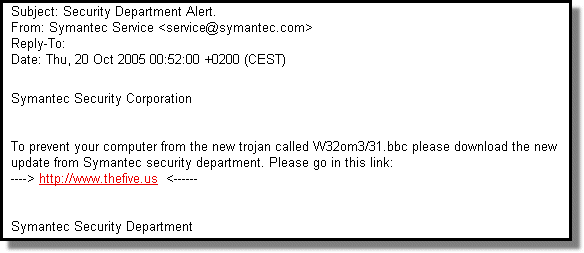
Obviously, they are not from Symantec. And when you click the link, you end up getting redirected to a web page which will initiate an autodownload of a file called "rxBot.exe", which is - you guessed it - a variant of the RXBot family.
A mail like this will pass most corporate email filters. There's no attachment. There's no masked link either, so phishing filters probably won't detect it.
It all goes down to whether the end user can be tricked to click on the link and accept the download or not.
If you're a sysadmin, you might want to block access to www.thefive.us at your firewall right about now (abuse messages have been sent).
...and a trojan called W32om3/1.bbc? Oh come on, give me a break!
by mozbe
| Playstation Portable Trojan...the demo | Posted by Dan @ 12:04 GMT |
|
|
We blogged a story a couple weeks ago about the PSP trojan disguised as firmware for modified PSPs. A good story in its own right, but we wanted to see it in action. So what happens when a group of geeks gets an itch to destroy an expensive toy but nobody in the AVR lab is willing to pony up their own personal PSP? You make a call, get someone to donate a PSP, fire up the video camera & record it for posterity.
The result looks like this: bricking_psp.wmv (14427k file)
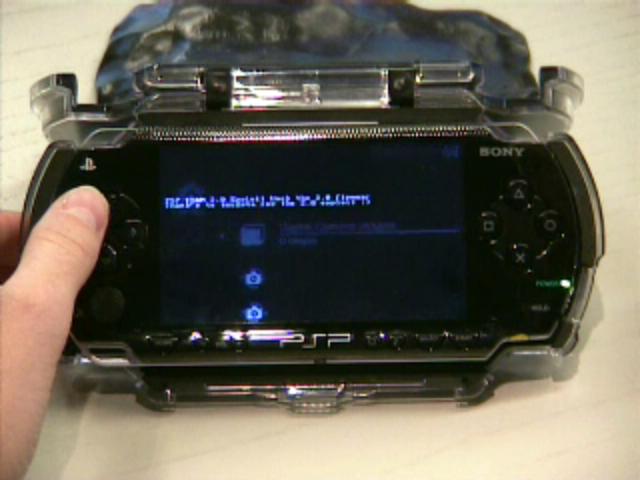
by mozbe
Caught this on Donna’s SecurityFlash.
Those guys must have hacked somebody off… ;-)
F-Secure News: F-Secure was under denial of service attack
F-Secure was under denial of service attack
Helsinki, Finland - October 19, 2005
On October 18, F-Secure's external web site www.f-secure.com experienced a denial of service attack. There were no intrusions into F-Secure's systems but the company's servers experienced heavy traffic.
To some extent, the attack also affected other Internet services at the company headquarters. The attack lasted for a few hours but F-Secure was succesfully able to control it.
For more information, please contact
Ari Hypp?nen, CTO, tel. +358 (0)40 517 4511
by mozbe
Sploits Du Jour: Veritas NetBackup & Ethereal. Watch Oracle and Snort! (NEW)
Published: 2005-10-20,
Last Updated: 2005-10-20 21:04:21 UTC by Ed Skoudis (Version: 1)
Lots of new exploits today in the wild, so patch away, patch away, patch away all.
In particular, patch Veritas NetBackup (more info
here). Working exploits have been released.
Also, patch Ethereal (more info
here). Again, working exploits are available.
Also, as we said the other day, don't forget to check out the crucial
And, for goodness sakes, patch Snort or shut off the Back Orifice preprocessor! A fully working exploit is likely very near.
Also, a kind reader emphasized the importance of hardening systems today, in light of this Snort vulnerability, mentioning the great
Grsecurity package for Linux, as well as the importance of chroot environments. Also, this reader requesting anonymity points out that the Stack-Smash-Protector (SSP) extensions for gcc from IBM makes it harder to exploit buffer overflows, and can be compiled into various executables. It's essentially an update of the venerable StackGuard tool, but more carefully integrated with the compiler itself. As we say in Jersey... "Noice".
by mozbe
Handler's Diary October 21st 2005
Outage on Verio and Level3 (NEW)
Published: 2005-10-21,
Last Updated: 2005-10-21 07:40:23 UTC by Daniel Wesemann (Version: 1)
We are getting reports that Level3 and Verio networks are flakey or down at the moment. We'll update this entry if we get any news. 07:40 UTC: Things are slowly going back to normal. Rumour has it that a software upgrade at Level3 went awry.
by mozbe
Symantec has updated their Mytob removal tool to include the following:
October 20, 2005: Published version 1.29.0, which supports removal of W32Mytob.LE@mm
To date this cleaner now covers the following:
You can download this tool here: Symantec Security Response - W32.Mytob@mm Removal Tool
by mozbe
I get e-mails from people from time to time who need help getting this nasty little Trojan off of their computer. This tool is the first thing I point them to.
I also have them run spyware scans on their computer after that, as this is usually how this Trojan gets installed on a computer, and provide them with links with three free spyware scanning tools.
http://www.microsoft.com/athome/security/spyware/software/default.mspx
http://www.safer-networking.org/microsoft.en.html
http://www.lavasoft.de/ms/index.htm
Symantec has updated their Trojan.Vundo removal tool to include the following:
To date this cleaner now covers the following major variants of this Trojan:
You can download a copy of this tool here: Symantec Security Response - Trojan.Vundo Removal Tool
by mozbe
Handler's Diary October 21st 2005
Published: 2005-10-21,
Last Updated: 2005-10-21 15:27:53 UTC by Daniel Wesemann (Version: 1)
There's a new variant of SDBOT making the rounds, arriving via IM as a link to a file called parishilton.scr . Those few AV that already detect it, seem to call it Sdbot.XD. Maybe a good moment to check your proxy logs to see who of your IM users clicked on it..
by mozbe
********************************************************************
Title: Microsoft Security Bulletin Minor Revisions
Issued: October 21, 2005
********************************************************************
Summary
=======
The following bulletins have undergone a minor revision increment.
Please see the appropriate bulletin for more details.
* MS05-050
* MS05-045
Bulletin Information:
=====================
* MS05-050
- http://www.microsoft.com/technet/security/bulletin/ms05-050.mspx
- Reason for Revision: Bulletin updated to revise file version under the "Frequently asked questions (FAQ) related to this
security update" section for "I've installed the DirectX (KB904706) security update, what version of quartz.dll should
I have installed?" DirectX Windows 2000 Service Pack 4 versions 7.0 and 9.0.
- Originally posted: October 11, 2005
- Updated: October 21, 2005
- Bulletin Severity Rating: Critical
- Version: 1.3
* MS05-045
- http://www.microsoft.com/technet/security/bulletin/ms05-045.mspx
- Reason for Revision: Bulletin updated to revise the install registry key name for the Windows Server 2003 security update.
- Originally posted: October 11, 2005
- Updated: October 21, 2005
- Bulletin Severity Rating: Moderate
- Version: 1.1
by mozbe
Looks like I passed the 25,000 mark for unique hits today.
Thanks Google!!
by mozbe
Handler's Diary October 22nd 2005
Exploit Code for MS05-047 (NEW)
Published: 2005-10-22,
Last Updated: 2005-10-22 17:22:21 UTC by Koon Tan (Version: 1)
We have received several emails from our readers on the exploit code of MS05-047 (Microsoft Windows Plug and Play "Umpnpmgr.dll" Remote Exploit). By now I hope you have gotten all your system patch.
by mozbe
Handler's Diary October 22nd 2005
Possible Problem with MS05-050 Patch (NEW)
Published: 2005-10-22,
Last Updated: 2005-10-22 17:25:56 UTC by Koon Tan (Version: 1)
If you have manually downloaded and installed the patch for MS05-050, you may want to check again to make sure you have the correct patch. Microsoft has recently released a Knowledge Base article on "The computer may not be updated after you install the "Security Update for DirectX 7.0 for Windows 2000 (KB904706)" on a Windows 2000-based computer that is running DirectX 8 or DirectX 9".
According to the Microsoft, this only applies to:
• You are running Microsoft Windows 2000
• Microsoft DirectX 8.0 or DirectX 9.0 is installed on the computer
This is likely due to the incorrect patch that you have manually downloaded and installed. If you have installed using Microsoft Windows Update website, you should be protected and free from this problem.
To check whether your system is correctly updated, you can verify the version number of Quartz.dll. The steps are detailed in
by mozbe
I first saw the report on a MS04–047 virus on Harry Waldron’s blog:
——————————————————————————————————————————————————————————————————————————
MS05-047 -- Mocbot IRC Worm in the wild
 A new attack based on October's security bulletin MS05-047 surfaced overnight. This new threat remains at low risk currently.
MS05-047 -- Mocbot IRC Worm in the wild
http://secunia.com/virus_information/22746/irc-mocbot/
http://www.f-secure.com/v-descs/mocbot.shtml
http://vil.nai.com/vil/content/v_136637.htm
This botnet client was spread using the MS05-047 vulnerability in October 2005. This threat appears to be the first of its kind to exploit the recent MS05-047 Microsoft Windows vulnerability.
This trojan installs itself in the WINDOWS SYSTEM directory as wudpcom.exe. It creates a service called "wudpcom". Once instructed, the bot scans the class A subnet addresses, sending SYN packets via TCP 139 (netbios), and 445 (microsoft-ds).
SYMPTOMS
1. Heavy netbois and microsoft-ds network traffic
2. Presense of the file wudpcom.exe in the WINDOWS SYSTEM directory
3. TCP 18067 connections to hostile websites
FrSIRT has also published POC code for ms05-047 exploit
—————————————————————————————————————————————————————————————————————————
He has since then updated the info on this in the MyITfourm message boards:
————————————————————————————————————————————————————————————————————————-
Thankfully, we have a little more time, but with at least 4 published exploits in the wild, it's critical to test and patch all PCs and Servers quickly.
quote:
-- AVERT/McAfee Update Oct 23, 2005 -- After further analysis, AVERT has confirmed that this threat does not exploit MS05-047, but rather MS05-039. Initial analysis suggested the MS05-047 was being exploited due to similarities between those exploits (including overlapping code between publicly available source code), field infection reports where administrators incorrectly stated that machines were patched from MS05-039, and similarities between an earlier MS05-039 exploiting bot, where the only significant change was the exploit code being used.
Additionally, AVERT has confirmed that automated propagation has/had been configured on remote IRC servers, such that infected systems that are able to connect to the remote IRC server are immediately instructed to seek out vulnerable systems to infect them. This threat exploits the MS05-039 Microsoft Windows vulnerability.
————————————————————————————————————————————————————————————————————————
Thanks for keeping on top of things this weekend Harry!!
by mozbe
Handler's Diary October 24th 2005
Exploit circulating for newly patched Oracle bug
Published: 2005-10-24,
Last Updated: 2005-10-24 01:13:13 UTC by Deborah Hale (Version: 3(click to highlight changes))
We also received an email from our very own handler Koon Yaw Tan with a link to an article at Computer World regarding an exploit circulating for the Oracle Bug.
http://www.computerworld.com/securitytopics/security/story/0,10801,105615,00.html
Those of you who use Oracle may want to take a look at the article and consider getting your systems patched.
by mozbe
No'>http://feedster.com/claimfeed.php?key=20dcd903f30a78c81a5a9bd6becce515">No Need to Click Here - I'm just claiming my feed at Feedster feedster:20dcd903f30a78c81a5a9bd6becce515
by mozbe
Cabir.AA and other mobile news
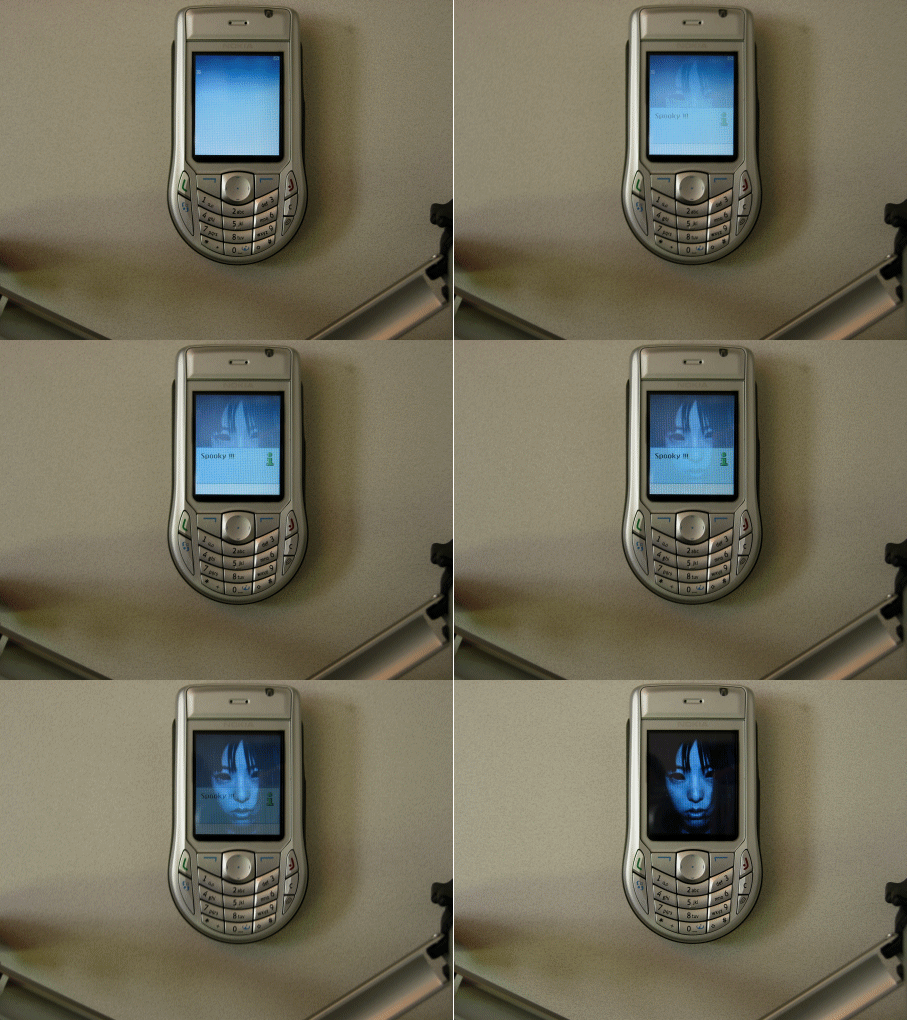
Today we got a sample of new Cabir variant SymbOS/Cabir.AA. Unlike most other Cabir variants, Cabir.AA is not hex edited minor variant of Cabir.A or Cabir.B. Instead, this variant has been recompiled from source code of original Cabir (which has been floating around in the underground). Otherwise Cabir.AA is very similar to other Cabir variants with the exception that it shows a scary bitmap image when the worm starts.
We shot a video in our RF lab of a phone getting infected with Cabir.AA. The video shows two phones being infected, one infected over USB cable and another over Bluetooth from the infected phone. In this video we also have one phone that has F-Secure Mobile Anti-Virus installed, which shows the Anti-Virus detecting and blocking the Cabir, so that user cannot get infected even if he would accept the Blutooth file transfer from infected phone.
We also have news on Commwarrior front.
In the past couple weeks, we have seen increasing amount of stories in media about people who have had their phones infected with Commwarrior.A or Commwarrior.B. In many cases Commwarrior infection has caused large phone bills due to the amount of MMS messages it sends.
Many new operators have posted warnings about the Commwarrior spreading among users, for example recent warning from TDC mobile.
We also have updated our free F-Commwarrior tool so that now it can also handle Commwarrior.C. Commwarrior.C has quite efficient self protection, and disinfecting it without special tool is rather difficult for normal user
by mozbe
Handler's Diary October 25th 2005
Exploit for Snort BO available! (NEW)
Published: 2005-10-25,
Last Updated: 2005-10-25 13:08:58 UTC by Pedro Bueno (Version: 1)
So, looks like finally there is an exploit public available for the Snort BO preprocessor vulnerability.
Our good reader Juha-Matti sent a note about an exploit published by FrSIRT, formely known as K-Otik.
On the good side, our Handler Kyle Haugsness created a tool and some snort signatures that can detect them!
I just tested it against the exploit and it really works! ;-) You can find it here .
If you didnt patch yet or applied the workarounds, do you need more reasons?
by mozbe
Always glad to see a antivirus vendor be proactive.
Bloodhound.Exploit.50 is a heuristic detection for the Vulnerability in Plug and Play Could Allow Remote Code Execution and Elevation of Privilege (as described in Microsoft Security Bulletin MS05-039).
Bloodhound.Exploit.51 is a heuristic detection for the Vulnerability in Plug and Play Could Allow Remote Code Execution and Elevation of Privilege, as described in Microsoft Security Bulletin MS05-047.
by mozbe
TITLE:
Skype Multiple Buffer Overflow Vulnerabilities
SECUNIA ADVISORY ID:
SA17305
RELEASE DATE:
2005-10-25
VERIFY ADVISORY:
http://secunia.com/advisories/17305/
CRITICAL:
Highly critical
WHERE:
From remote
IMPACT:
DoS
System access
SOFTWARE:
Skype for Linux 0.x
Skype for Linux 1.x
Skype for Mac OS X 0.x
Skype for Mac OS X 1.x
Skype for Pocket PC 1.x
Skype for Windows 1.x
DESCRIPTION:
Some vulnerabilities have been reported in Skype, which can be exploited by malicious people to cause a DoS or to compromise a user's system.
1) A boundary error exists when handling Skype-specific URI types e.g. "callto://" and "skype://". This can be exploited to cause a buffer overflow and allows arbitrary code execution when the user clicks on a specially-crafted Skype-specific URL.
The vulnerability is related to:
SA13191
2) A boundary error exists in the handling of VCARD imports. This can be exploited to cause a buffer overflow and allows arbitrary code execution when the user imports a specially-crafted VCARD.
Vulnerability #1 and #2 has been reported in Skype for Windows Release 1.1.*.0 through 1.4.*.83.
3) A boundary error exists in the handling of certain unspecified Skype client network traffic. This can be exploited to cause a heap-based buffer overflow.
Successful exploitation crashes the Skype client.
The vulnerability has been reported in the following versions:
* Skype for Windows Release 1.4.*.83 and prior.
* Skype for Mac OS X Release 1.3.*.16 and prior.
* Skype for Linux Release 1.2.*.17 and prior.
* Skype for Pocket PC Release 1.1.*.6 and prior.
SOLUTION:
Update to the fixed version.
http://www.skype.com/download/
Skype for Windows:
Update to Release 1.4.*.84 or later.
Skype for Mac OS X:
Update to Release 1.3.*.17 or later.
Skype for Linux:
Update to Release 1.2.*.18 or later.
Skype for Pocket PC:
No patch is yet available.
REPORTED BY CREDITS:
1-2) Mark Rowe, Pentest Limited.
3) Imad Lahoud, EADS Corporate Research Center.
ORIGINAL ADVISORY:
http://www.skype.com/security/skype-sb-2005-02.html
http://www.skype.com/security/skype-sb-2005-03.html
OTHER REFERENCES:
SA13191:
http://secunia.com/advisories/13191/
by mozbe
TITLE:
Symantec Discovery Database Accounts Null Password
SECUNIA ADVISORY ID:
SA17302
RELEASE DATE:
2005-10-25
VERIFY ADVISORY:
http://secunia.com/advisories/17302/
CRITICAL:
Moderately critical
WHERE:
From local network
IMPACT:
Manipulation of data
Exposure of sensitive information
SOFTWARE:
Symantec Discovery 6.x
Symantec ON Command Discovery Standard Edition 4.x
Symantec ON Command Discovery Web Edition 4.x
DESCRIPTION:
A security issue has been reported in Symantec Discovery, which potentially can be exploited by malicious people to gain access to, or to manipulate certain information.
The security issue is caused due to two database accounts, "DiscoveryWeb" and "DiscoveryRO", being created with no passwords during installation. Assigning a password to the "DiscoveryWeb" account will affect the proper functioning of Symantec Discovery.
The security issue has been reported in the following products:
* ON Command Discovery Standard Edition version 4.5.x
* ON Command Discovery Web Edition version 4.5.x
* Symantec Discovery version 6.0
SOLUTION:
Apply updates.
The vendor recommends that the "DiscoveryRO" account be removed unless it is being used in conjunction with the heat interface.
ON Command Discovery Standard Edition:
http://www.symantec.com/techsupp...oncmd/cmd_dis_std_45x/files.html
ON Command Discovery Web Edition:
http://www.symantec.com/techsupp...oncmd/cmd_dis_web_45x/files.html
Symantec Discovery 6.0:
http://www.symantec.com/techsupp...products/sdis/sdis_6x/files.html
REPORTED BY CREDITS:
Reported by vendor.
ORIGINAL ADVISORY:
http://securityresponse.symantec...security/Content/2005.10.24.html
by mozbe
Handler's Diary October 25th 2005
New Skype vulnerabilities (NEW)
Published: 2005-10-25,
Last Updated: 2005-10-25 14:05:20 UTC by Adrien de Beaupre (Version: 1)
Our avid reader and contributor Juha-Matti let us know that there are two new vulnerabilities in the free IP telephone software Skype.
http://www.skype.com/security/skype-sb-2005-02.html
and
http://www.skype.com/security/skype-sb-2005-03.html
CVE entries: CVE-2005-3265
CVE-2005-3267
Secunia advisory: http://secunia.com/advisories/17305/
Please upgrade to the new version ASAP, they have been rated highly critical by Secunia, and high by Skype.
Download here: http://www.skype.com/download/
Cheers,
Adrien de Beaupre
http://www.cinnabar.ca
by mozbe
********************************************************************
Title: Microsoft Security Bulletin Minor Revisions
Issued: October 26, 2005
********************************************************************
Summary
=======
The following bulletins have undergone a minor revision increment.
Please see the appropriate bulletin for more details.
* MS05-051
* MS05-044
Bulletin Information:
=====================
* MS05-051
- http://www.microsoft.com/technet/security/bulletin/ms05-051.mspx
- Reason for Revision: Security update replacement revised for MS04-012 on Microsoft Windows 2000. Additionally, mitigating
factors for MSDTC Vulnerability (CAN-2005-2119) have been updated to advise customers that that the Microsoft
Distributed Transaction Coordinator is not started by default on Windows 2000 Professional.
- Originally posted: October 11, 2005
- Updated: October 25, 2005
- Bulletin Severity Rating: Critical
- Version: 1.2
* MS05-044
- http://www.microsoft.com/technet/security/bulletin/ms05-044.mspx
- Reason for Revision: Bulletin updated to revise the mitigating factors section.
- Originally posted: October 11, 2005
- Updated: October 26, 2005
- Bulletin Severity Rating: Moderate
- Version: 1.1
********************************************************************
by mozbe
|
Removal tool link: http://securityresponse.symantec.com/avcenter/SymcMTRT.sis |
This tool is designed to remove the infections of the following threats:
Note: This removal tool is designed to run on Nokia Series 60 mobile phones.
How to download and run the tool
Follow these steps to download and run the tool:
http://securityresponse.symantec.com/avcenter/SymcMTRT.sis
Note:
Issuer:
Symbain Limited
Owner:
Symantec Corporation
Expires:
10/25/2015
Serial number:
13B23FA037151AE9524B0F90C9ECBD
Valid from:
10/25/2005
Install Symantec Mobile Threats Removal Tool?

Would you like to create a log file as C:\Nokia\SymcMTRT.LOG?

Scanning Completed!
The removal was successful.
Directories deleted:[NUMBER OF DIRECTORIES]
Files deleted:[NUMBER OF FILES]

Scanning Complete!
No threat has been found on your device
The log file
When the tool has finished running, and you chose to create a log file, it saves the log file to the device's C:\Nokia directory. This log file contains the following results:
You can download the tool here: Symantec Security Response - Symantec Mobile Threats Removal Tool
by mozbe
First time I did this, it was a big fat 0. But now I have something to show…

My blog is worth $6,774.48.
How much is your blog worth?

by mozbe
SANS - Internet Storm Center - Cooperative Cyber Threat Monitor An Alert System
Handler's Diary October 30th 2005
Microsoft attacks Zombi Masters. (NEW)
Published: 2005-10-30,
Last Updated: 2005-10-30 06:43:57 UTC by donald smith (Version: 1)
If your an average user something like 50% of the spam you get comes from an infected home computer that has been turned into a spam zombie. These spam zombie's are used by spammers to send spam without revealing their actual network address. The spammers provide the spam content to the zombies and the zombies send the spam to the victims.
From http://spamkings.oreilly.com/archives/2005/10/microsofts_decoy_zombie.html
Microsoft said it has filed "John Doe" lawsuits against the operators of 13 spam organizations that use illegal "zombie" computers to send their spam. The company held a press conference today with officials from the Federal Trade Commission to announce the lawsuits, filed in Washington State's King Country court on August 17.
From an interview with Tim Cranton http://spamkings.oreilly.com/cranton.mp3
Microsoft has taken a new approach to security in particular in the enforcement side. They took a clean computer. Infected it with a common malicious code. That code turned the computer into a Spam zombie. A Spam zombie is a computer that is connected to the Internet that has been infected and checks in with the zombie controllers to let them tell it what to do. Microsoft documented 5 Million connections used to send over 18 million Spam messages in less then 3 weeks. This was just one computer. There are reported to be thousands of Spam zombies out there. Microsoft cordoned their Spam zombie off the net so it could not be used to actually send the Spam. Microsoft filed a lawsuit and contacted ISP's to try to discover who is really sending the Spam.
The SANS news bites letter has additional information on this.
http://www.sans.org/newsletters/newsbites/newsbites.php?vol=7&issue=48
by mozbe
SANS - Internet Storm Center - Cooperative Cyber Threat Monitor And Alert System
Handler's Diary October 31st 2005
Published: 2005-10-31,
Last Updated: 2005-11-01 12:38:49 UTC by Patrick Nolan (Version: 1)
A news fwiw, there is a great analysis and commentary on a rootkit made to run in safemode today at Mark's Sysinternals Blog today. Thanks very much for the great rootkit detection work and writing Mark!
F-Secure is also covering this in their
blog.
by mozbe
Supreme Court won't review Microsoft patent appeal | Tech News on ZDNet
By Declan McCullagh
URL: http://news.zdnet.com/2100-9588_22-5923978.html
The U.S. Supreme Court will not hear Microsoft's appeal in a lawsuit that has resulted in a preliminary jury verdict of more than $500 million for alleged patent infringement in Internet Explorer.
The court's decision not to hear the case involving Eolas Technologies, announced without comment on Monday, clears the way for proceedings to continue before a federal district judge.
The August 2003 decision from a federal jury in Chicago sent shock waves across the Internet. If Eolas and its business partner, the University of California, eventually prevail, the effects could force a redesign of Web pages that use plug-in applications like Macromedia Flash and Adobe Acrobat that run inside a Web browser.
In subsequent attempts to convince Congress to reform federal patent laws, Microsoft has cited the Eolas case as an example of "abusive litigation" that should be curbed by legislative action.
A federal appeals court in March partially reversed the original decision and sent it back to the district judge for a new trial.
Microsoft hopes that this time it will be able to show evidence about an early Web browser, called Viola, created by a computer programmer and artist named Pei Wei and demonstrated to other researchers a year before the University of California filed for its patent. The university and its spinoff company, Eolas, share the rights to a patent that they claim covers plug-ins and applets that are invoked through a Web browser.
Eolas' patent, numbered 5,838,906 and granted in November 1998, discusses a way to execute a program on a remote server and send data back to a Web browser, "thus providing the user of the client computer with interactive features."
by mozbe
SANS - Internet Storm Center - Cooperative Cyber Threat Monitor And Alert System
Handler's Diary November 1st 2005
Oracle Worm Proof-of-concept (NEW)
Published: 2005-11-01,
Last Updated: 2005-11-01 17:25:01 UTC by Joshua Wright (Version: 1)
On Monday (31-OCT-2005), an anonymous developer on the Full-Disclosure mailing list contributed a post titled "Trick or Treat Larry", disclosing a proof-of-concept worm that targets Oracle databases with default user accounts and passwords.
The worm uses the UTL_TCP package to scan for remote Oracle databases on the same local network. Upon finding another database, the SID is retrieved and the worm uses several default username and password combinations to attempt to login to the remote database. Currently, the default/username password list includes:
When the worm discovers a default username and password, it creates a table "X" in the current user's schema with a date column called "Y". This could easily be changed to a more dramatic payload.
In its current state, the worm isn't a terribly significant threat. However, is can be treated as an early warning sign for future variants of the worm that include additional propagation methods. Oracle DBA's can take several actions to mitigate the effect of this worm and possible future variants:
More information is available at the following resources:
http://www.red-database-security.com/advisory/oracle_worm_voyager.html
http://www.petefinnigan.com/weblog/archives/00000606.htm
If you are concerned or interested about Oracle security issues, a wonderful resource for keeping current is Pete Finnigan's blog at www.petefinnigan.com/weblog/. I make it a point to check Pete's blog every day and I'm never disappointed.
by mozbe
I have heard some talk of a new Beagle\Bagle variant going around, one source said that they were getting several thousand at a time.
McAfee and Trend Micro currently have descriptions of a new Bagle variant, but they have conflicting information so far.
McAfee
W32/Bagle.dk
http://vil.nai.com/vil/content/v_136751.htm
W32/Bagle.dl
http://vil.nai.com/vil/content/v_136752.htm
TROJ_BAGLE.AB
http://www.trendmicro.com/vinfo/virusencyclo/default5.asp?VName=TROJ%5FBAGLE%2EAB&VSect=P
by mozbe
This is Symantec’s name for new Bagle\Beagle variants that were reported here and in Harry Waldron’s Blog.
Apparently Symantec considers it a new virus family.
Symantec Security Response - W32.Lodear.A@mm

When W32.Lodear.A@mm is executed, it performs the following actions:
Note: %System% is a variable that refers to the System folder. By default this is C:\Windows\System (Windows 95/98/Me), C:\Winnt\System32 (Windows NT/2000), or C:\Windows\System32 (Windows XP).
"auto__hloader__key" = "%System%\hloader_exe.exe"
to the registry subkey:
HKEY_LOCAL_MACHINE\SOFTWARE\Microsoft\Windows\CurrentVersion\Run
HKEY_CURRENT_USER\Software\Microsoft\Windows\CurrentVersion\Run
so that it runs every time Windows starts.
%System%\hleader_dll.dll
Note: At the time of writing, the remote file was not available for analysis.
%Windir%\exefld
The email has the following characteristics:
From: [SPOOFED SENDER]
Subject: ID [RANDOM NAME]
Body: [RANDOMLY COMPOSED EMAIL BODY]
Attachment:
The attached ZIP file contains an executable file with the following name: LOADER.EXE.
by mozbe
SANS - Internet Storm Center - Cooperative Cyber Threat Monitor And Alert System
Published: 2005-11-01,
Last Updated: 2005-11-01 23:04:43 UTC by Bojan Zdrnja (Version: 2(click to highlight changes))
We have received numerous reports of new Bagle variants being spammed. They look typical for this family of worms – empty message body with a ZIP file in the attachment.
Some of them don't have any subject and the sender name will be same as the recipient name with (sometimes) random domain appended.
Some names that have been used are:
Max.zip
Business_dealing.zip
Text_sms.zip
Health_and_Knowledge.zip
The_new_prices.zip
Info_prices.zip
MD5 sums of some variants are:
8275444ac2caac4b90bfd07d0b2b17be t_535475.exe
18ae7a2fa4dbbf703c3ae157f224186a text.exe
In the archive there is an executable which, when executed, copies itself to %sysdir%\hloader_exe.exe and drops another DLL header_dll.dll. It also creates an entry in the registry key HKLM/Software/Microsoft/Windows/CurrentVersion/Run named auto__hloader__key.
Thanks to Mike S, Sean K and others for submitting samples and information about these worms.
Mark Tombaugh sent us Snort sigs which can help protect from these new Bagle variants:
alert tcp $EXTERNAL_NET any -> $HOME_NET 25 (msg:"BLEEDING-EDGE VIRUS Bagle.dk SMTP Inbound"; flow:to_server,established; content:"UEsDBBQA"; content:"YT"; distance:8; within:11; content:"AAAA"; distance:8; within:13; reference:url,vil.nai.com/vil/content/v_136751.htm; sid:2002665; rev:1;)
alert tcp $HOME_NET 25 -> $EXTERNAL_NET any (msg:"BLEEDING-EDGE VIRUS Bagle.dk SMTP Outbound"; flow:to_server,established; content:"UEsDBBQA"; content:"YT"; distance:8; within:11; content:"AAAA"; distance:8; within:13; reference:url,vil.nai.com/vil/content/v_136751.htm; sid:2002666; rev:1;)
by mozbe
SANS - Internet Storm Center - Cooperative Cyber Threat Monitor And Alert System
Handler's Diary November 2nd 2005
Sample needed - of Spybot.ZIF, which scans for vulnerable Cisco Routers (NEW)
Published: 2005-11-02,
Last Updated: 2005-11-02 00:20:39 UTC by Patrick Nolan (Version: 2(click to highlight changes))
According to Symantec, W32.Spybot.ZIF "allows a remote attacker" to, among other things, "Scan a specified network range for Cisco routers that may have vulnerable Telnet or HTTP servers running and report results back to IRC."
If anyone catches a sample of this one please upload it through our
contact page. Thanks!
by mozbe
More on the names\descriptions as info comes in.
SANS - Internet Storm Center - Cooperative Cyber Threat Monitor And Alert System
Handler's Diary November 2nd 2005
6 bagle versions in 1 day (NEW)
Published: 2005-11-02,
Last Updated: 2005-11-02 13:23:08 UTC by Pedro Bueno (Version: 1)
According to viruslist.com
:"The Bagles are continuing to come in. We've detected 6 new variants so far, and just released an urgent update. The first 2 - 3 variants were agressively spammed. The others have been placed on sites and will be downloaded to victim machines. It's the latest move to keep the botnet up and running."
So, check your virus def and try to get the newest one asap.
--------------------------------------------------------------
Handler On Duty: Pedro Bueno ( pbueno //%// isc. sans. org)
by mozbe
News from last night.
 During past 18 hours we have found 3 different Bagle-related droppers/downloaders. They were spammed to a large amount of people as e-mail attachments named LOADER.EXE, TEXT.EXE and T_535475.EXE. All these droppers contained a differently packed downloader DLL that was programmed to download and run a file from a website (the list of websites is located in the downloader's body).
We have added detection for these droppers and downloaders as Bagle.EE, Bagle.EF and Bagle.EG.
by mozbe
I am still sorting everything out about the new Beagles (or whatever you want to call them), there is a lot of chaos going on with what variants are discovered by who and what they are named. So much for the end of the “Virus Name Game” .
I hope to get a post together linking descriptions sometime today.
In the meantime, something everyone should note; if you haven’t seen this already. A lot of the new Beagle variants that I have read about all seem to do something to the machines that are infected, which is noted in the Lodear.B description:
Creates the following .dll file and injects it into the EXPLORER.EXE process:
%System%\hleader_dll.dll (5632 bytes)
Considering that this virus\Trojan also has the capability to download files from the web, in my opinion a wipe and reload is the only real way to clean this virus of an infected PC.
Hopefully most people are all ready blocking zip files at the gateway.
Enjoy!
by mozbe
As I said in an earlier post, I am going to try to link virus descriptions to these new variants that have been causing all the fun for IT people everywhere today.
Now this is what I call a mess. Not only are the virus variant names different, but so are the virus family names in some cases for some vendors.
OK, here we go in no certain order.
Trojan.Lodear (Symantec, formerly known as W32.Lodear.A@mm ) lists the following as aliases:
McAfee lists different virus descriptions due to the file contained in the zip file attachment of the virus. These are loader.exe, t_535475.exe, and text.exe respectively for the dk, dl, and dm variants listed on McAfee’s site.
With that in mind you can link those McAfee descriptions to the following on F-Secure:
W32/Bagle.dl [McAfee] = Bagle.EG [F-Secure]
W32/Bagle.dm [McAfee] = Bagle.EF [F-Secure]
All of the above could possibly be considered minor variants of the same Trojan. Ahhh but wait, there is more.
Trojan.Lodear.B [Symantec] lists the following as its aliases:
This Trojan has the TEXT5546.EXE file in the attached zip file, according to F-Secure’s description.
Lets not forget this variant however, Bagle.EI [F-Secure]. This looks like another variant that uses the 1.EXE file in its attachment.
All of the above variants, as far as I can determine, drop the previously mentioned hloader_exe.exe and add it to the registry to load on startup. After that, the hleader_dll.dll is created and injects itself into explorer.exe. This dll has the code to contact websites for other files to download, which are usually placed with a random file name in the %Windir%\exefld folder. (%Windir% is a variable that refers to the Windows installation folder. By default, this is C:\Windows or C:\Winnt, for those that haven’t seen this before). The file sizes of the two dropper files vary between each variant, as does the websites that are being contacted for more malicious files.
Last but not least, there is W32.Beagle.CN@mm [Symantec], that seems to be at least the one spamming out Trojan.Lodear
Does all that make sense? Good, because I need some aspirin…
by mozbe
Title: Microsoft Security Bulletin Minor Revisions
Issued: November 2, 2005
********************************************************************
Summary
=======
The following bulletins have undergone a minor revision increment.
Please see the appropriate bulletin for more details.
* MS05-052
* MS05-038
Bulletin Information:
=====================
* MS05-052
- http://www.microsoft.com/technet/security/bulletin/ms05-052.mspx
- Reason for Revision: Bulletin revised due to new issues discovered with the security update: Microsoft Knowledge Base
Article 909889: ActiveX controls may not load as expected in Internet Explorer due to defense in depth changes introduced
in cumulative security update 896688 (MS05-052) and Microsoft Knowledge Base Article 909738: A Web page that contains a
custom ActiveX control may not load as expected in Internet Explorer due to defense in depth changes introduced in
cumulative security update 896688 (MS05-052).
- Originally posted: October 11, 2005
- Updated: November 2, 2005
- Bulletin Severity Rating: Critical
- Version: 1.3
* MS05-038
- http://www.microsoft.com/technet/security/bulletin/ms05-038.mspx
- Reason for Revision: Bulletin revised due to a new issue discovered with the security update: Microsoft Knowledge Base
Article 906294: The use of monikers is no longer supported in Internet Explorer after installing the security updates
provided by cumulative security update 896727 (MS05-038).
- Originally posted: August 9, 2005
- Updated: November 2, 2005
- Bulletin Severity Rating: Critical
- Version: 2.2
by mozbe
Looks like Trend Micro now has descriptions of two new Bagle variants that are responsible for spamming the Trojans that we have been seeing the last few days.
WORM_BAGLE.BS (This appears to be the same virus as W32.Beagle.CN@mm [Symantec])
Installation and Autostart Technique
Upon execution, this memory-resident worm drops a copy of itself in the Windows system folder as WINDLL2.EXE. It then creates the following registry entries to attempt to ensure its automatic execution at every system stsrtup:
HKEY_LOCAL_MACHINE\SOFTWARE\Microsoft\Windows\CurrentVersion\Ru1n
erthegdr = "%System%\windll2.exe"
HKEY_CURRENT_USER\Software\Microsoft\Windows\CurrentVersion\Ru1n
erthegdr = "%System%\windll2.exe"
(Note: %System% is the Windows system folder, which is usually C:\Windows\System on Windows 98 and ME, C:\WINNT\System32 on Windows 2000, or C:\Windows\System32 on Windows XP and Server 2003.)
The abovementioned registry entries, however, do not perform their autostart routine because instead of the word Run, this worm uses the string Ru1n.
Furthermore, this worm checks if the system date is not later than September 23, 2009. After doing so, it attempts to delete the following registry entries:
HKEY_CURRENT_USER\Software
ewrt
HKEY_CURRENT_USER\Software\Microsoft\Windows\CurrentVersion\Ru1n
erthegdr
Note that ewrt and erthegdr are the names this worm looks for in the registry entries it targets to delete.
Propagation via Email
This worm propagates via email messages. The email it sends out has the following details:
From: {Spoofed}
Subject: {Blank}
Message body (any of the following):
• texte
• info
• Password:
• The password is
Attachment (any of the following):
• Business.zip
• Business_dealing.zip
• Health_and_knowledge.zip
• Info_prices.zip
• max.zip
• sms_text.zip
• text_sms.zip
• The_new_prices.zip
It gathers target recipients from the contacts listed in the Windows Address Book of an affected system.
The .ZIP file attached to this worm's mass-mailed email is a copy of TROJ_BAGLE.AB. This Trojan, in turn, downloads a copy of this worm from several malicious Web sites onto the affected systems.
Since this worm uses email addresses that are familiar to an affected user, the said user is more likely to open its malicious emails because they are from trusted sources. The said action ensures the success of this worm's propagation.
WORM_BAGLE.BQ (I have personally seen this one in the wild)
Installation and Autostart Technique
Upon execution, this memory-resident worm drops two copies of itself in the Windows system folder as ANTIAV_ EXE.EXE and ANTIAV_DLL.DLL. It then creates the following registry entries to ensure its automatic execution at every system stsrtup:
HKEY_LOCAL_MACHINE\SOFTWARE\Microsoft\Windows\
CurrentVersion\Run
auto__antiav__key = "%System%\antiav_exe.exe"
HKEY_CURRENT_USER\Software\Microsoft\Windows\
CurrentVersion\Run
auto__antiav__key = "%System%\antiav_exe.exe"
(Note: %System% is the Windows system folder, which is usually C:\Windows\System on Windows 98 and ME, C:\WINNT\System32 on Windows 2000, or C:\Windows\System32 on Windows XP and Server 2003.)
Propagation via Email
This worm propagates via email messages. The email it sends out has the following details:
From: {Spoofed}
Subject: {Blank}
Message body (any of the following):
• texte
• info
• Password:
• The password is
Attachment (any of the following):
• Business.zip
• Business_dealing.zip
• Health_and_knowledge.zip
• Info_prices.zip
• max.zip
• sms_text.zip
• text_sms.zip
• The_new_prices.zip
It gathers target recipients from the contacts listed in the Windows Address Book of an affected system.
The .ZIP file attached to the email it sends is a copy of TROJ_BAGLE.AB. The said Trojan, in turn, downloads a copy of this worm from several malicious Web sites onto the affected systems.
Since this worm uses email addresses that are familiar to an affected user, the said user is more likely to open its malicious email messages because they are from trusted sources. The said action ensures the success of this worm's propagation.
Sort by Trending
