Discussion Locked

What are the most used email encryption methods to keep sensitive data safe

0 helpful
8 replies
Closed to new repliesThis discussion is closed. It stays readable, but it takes no new replies.
With the increasing need to protect sensitive data in email communications, which encryption methods do you rely on most—S/MIME, PGP/GPG, TLS, or secure email services like ProtonMail? Have you found one approach to be more effective or practical in enterprise environments, especially when balancing security with user adoption? Would love to hear what the community recommends and why.
8 replies

by birdmantd edited

I still use AOL for my email and I don't sweat the details on how it works. I just know that most of the time it works just fine for me.

Bottom line, I don't open unknown attachments if I don't know and trust the sender or if the source looks suspicious.

by kees_b edited

It's a good question. E-mail is usually sent unencrypted, meaning that anybody who can intercept the message on its long way from your PC to the e-mailserver (or the other way around) can read it. So encryption can be useful if you want the message to stay secret.

It's like using https: in stead of http:, or ftps: or sftp: instead of using ftp:. That is standardised, Alas, there only is mailto:, no mailtos: or smailto:

That's why it a good idea to never send somebody a username and a password in one mail, and preferably not even both via mail. If you want to use e-mail to send it to somebody, send only the username in the mail, and the password via SMS or Whatsapp.
Or put your secret document or picture in an encrypted zip-file and send the key to open it via SMS or Whatsapp, or at least in a separate mail.

by marketing852 edited

When it is about protecting sensitive data we need to make sure that we have choseen the best methods for email encryption.

Here are some of the menthoda that I would recommend -

TLA(Transport Layer Security) - This is a very baseline secrity. It is most commonly used and is essential. Once the email lands on server, is is typically encrypted, so it's not ruly end-to-end.

S/MIME (Secure/Multipurpose Internet Mail Extensions): This is mostly used for businesses for compliance needs. This mehtod uses digital certificates which helps encrypt and digitally sign individua emails. This confirms confidentiality and authenticity.

PGP/GPG (Pretty Good Privacy/GNU Privacy Guard): It is a a type of method which provides end-to-end encryption. This means it is encrypted from sender to receiver.

Secure Email Services (e.g., ProtonMail): There also are services that are built up from ground and they have sepcifically targeted privacy. They're excellent for indivdual users who are seeking simplicity and strong default security.

by rproffitt edited

And then Secure Email? You're dreaming!

Read https://en.wikipedia.org/wiki/Lavabit

"Lavabit is an open-source encrypted webmail service, founded in 2004. The service suspended its operations on August 8, 2013, after the U.S. Federal Government ordered it to turn over its Secure Sockets Layer (SSL) private keys, in order to allow the government to spy on Edward Snowden's email."

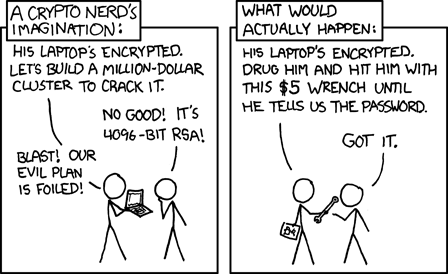
There is no secure service in the US.

by aryadeep.das edited

Top email encryption methods include S/MIME, PGP/GPG, TLS, and end-to-end encryption via services like ProtonMail. These protect data in transit and at rest.

For enhanced protection, many organizations combine encryption with Extended Detection and Response (XDR). XDR tools offered by brands like Sangfor, CrowdStrike, and SentinelOne, add real-time threat detection and response across email, endpoints, and networks, helping prevent breaches even if encryption is bypassed.

by rproffitt edited

None of these work today. Consider what DOGE is doing.

Read https://en.wikipedia.org/wiki/Lavabit

“Lavabit is an open-source encrypted webmail service, founded in 2004. The service suspended its operations on August 8, 2013, after the U.S. Federal Government ordered it to turn over its Secure Sockets Layer (SSL) private keys, in order to allow the government to spy on Edward Snowden’s email.”

There is no secure service in the US.

The threats in the USA mean that you can't count on data being secure.

by oceantattoospiercings edited

Most common email encryption methods include TLS for securing in-transit data, S/MIME for authenticating certificate-based business emails, PGP/GPG for strong end-to-end protection, and user-friendly secure services like ProtonMail offering default encryption.

This discussion is closed to new replies.