


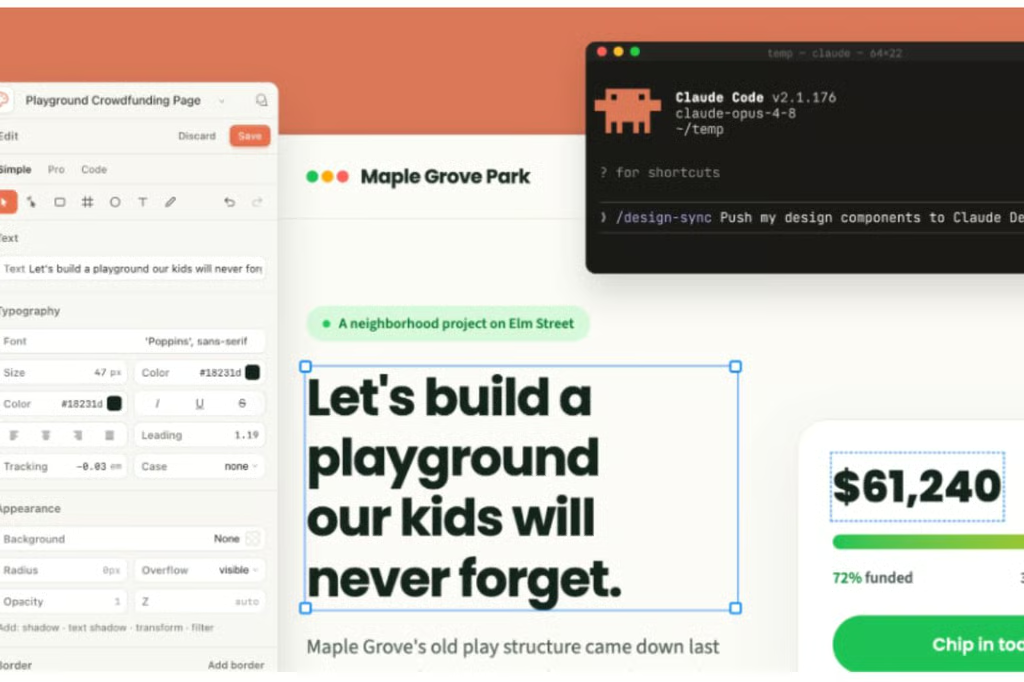
AI-generated designs can move fast, but businesses still need them to adhere to brand rules, align with approved components, and survive the handoff to development.
Anthropic announced a major Claude Design update on June 17 that adds design system imports, tighter Claude Code integration, direct canvas editing, and more export options. The beta product is available to Claude Pro, Max, Team, and Enterprise customers.
The update could make it more useful for teams that need AI-generated assets to fit existing workflows and move from prototype to production with less rework. It moves Claude Design closer to a governed workspace for design, product, and development teams, rather than a tool for quick mockups alone.
Claude Design adds design system imports
Anthropic said Claude Design can now import one or more design systems from GitHub repositories, design files, or raw uploads. Once imported, Claude builds with those components, checks its output against the design system, and makes corrections before users see the result.
“Our goal remains the same as before: letting you explore more directions than a deadline usually allows and making the handoff to polish or build as seamless as possible,” Anthropic wrote in its announcement.
The company also noted that more than one million people used Claude Design in its first week after launch.
For larger organizations, the most important change may be governance. A new admin role can approve one standard design system and lock down edits, helping marketing, product, and design teams keep AI-generated work aligned with approved typography, colors, spacing, and component rules.
CNET reported that Anthropic built the update to help users keep AI-generated content aligned with the company’s brand guidelines.
Claude Code integration targets design handoffs
Anthropic also improved the connection between Claude Design and Claude Code. Developers can use /design-sync to pull a design system into Claude Design, while /design lets them create, edit, and sync design projects from the terminal.
The goal is to make prototypes easier to move into software without rebuilding from screenshots or static mockups. This could help developers and designers avoid one of the most common product workflow problems, the gap between what a design shows and what eventually ships.
Alex Lieberman, cofounder of Morning Brew and Tenex, said Claude Design had become a core part of his tech stack. “The hand-off between Claude Design and Claude Code makes the process of prototype to production seamless,” he added.
More must-read AI coverage
- SS&C Intralinks DealCentre AI vs. Datasite: Which platform is built for the future of dealmaking?
- SS&C Intralinks FundCentre AI vs. Juniper Square: Which platform better supports modern private markets fund managers?
- Why Data, Not Models, Determines AI Success
- The Rise of the AI-Native Factory: How Physical AI Is Transforming Manufacturing
Usage limits and exports could affect rollout
Anthropic also addressed usage constraints.
Claude Design now shares usage limits with chat, Claude Cowork, and Claude Code, which the company said should give most users more room to work. Anthropic also said the average turn now uses fewer tokens, and errors are down sharply.
The change matters because generative design can be expensive to run.
VentureBeat reported that early testers raised concerns about Claude Design quickly burning through usage limits, including a PCWorld review that used 80% of a weekly Claude Pro allowance in about 25 minutes.
Claude Design also gained more export and integration options. Users can export to PDF and PowerPoint or send work to Adobe, Base44, Canva, Gamma, Lovable, Miro, Replit, Vercel, and Wix.
For enterprise teams, the update makes Claude Design look less like a standalone creative experiment and more like a governed workspace for brand, design, and development work. The test will be whether its design-system controls, Claude Code syncing, and usage-limit changes reduce rework without adding new approval or security concerns.
For a deeper look at Claude, see our Claude cheat sheet, which covers features, access, pricing, and available models.