
Big Tech’s AI agenda is no longer confined to glowing rectangles. It now bleeds into humanoid frames, shirt‑pocket discs, and assistants that rummage through your apps to get work done.
Apple stunned watchers by outsourcing Siri’s long‑overdue evolution into a Gemini‑powered chatbot, even as Cupertino prototypes an AirTag‑sized “AI pin” that could turn every lapel into an input device. Elon Musk counterprogrammed with fresh Optimus timelines, while Norwegian startup 1X let its Neo robot binge YouTube tutorials so you don’t have to.
And the models powering it all keep evolving: OpenAI’s rumored GPT‑5.3 “Garlic” release teases smarter code and more reliable context windows in a leaner package. Bottom line: whether you’re a consumer, sysadmin, or warehouse worker, AI just moved a little closer to your side of the screen.
Read the previous week’s AI assistant recap or visit these quick links:
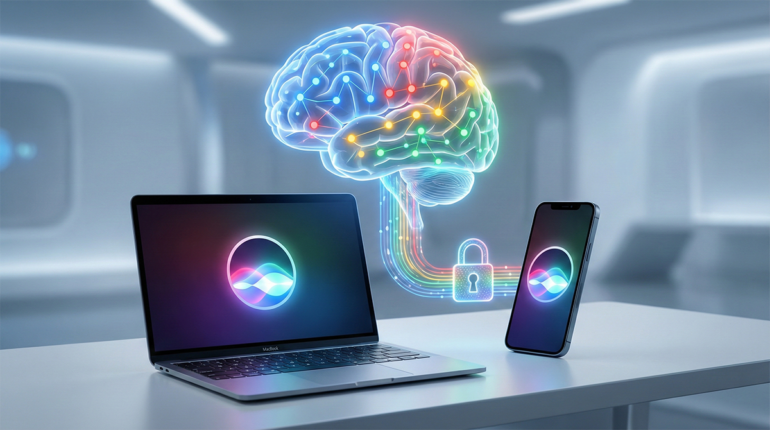
Siri’s becoming a Gemini-powered chatbot
Apple is finally swapping Siri’s canned one‑liners for real dialogue, courtesy of Google’s Gemini.
A spring iOS 26.4 tune‑up sprinkles Apple Intelligence over the old assistant, but the September iOS 27 reveal goes further: a Gemini‑powered chatbot dubbed Campos that rummages through Mail, Photos, and Settings to execute voiced or typed commands.
Apple will reportedly pay Google about $1 billion a year and even run some queries on TPU clusters — an eyebrow‑raising privacy trade-off it’s considering offsetting by limiting long‑term memory.
For over 2.4 billion active devices, “Hey Siri” may soon feel like a real conversation instead of a web‑search shrug.
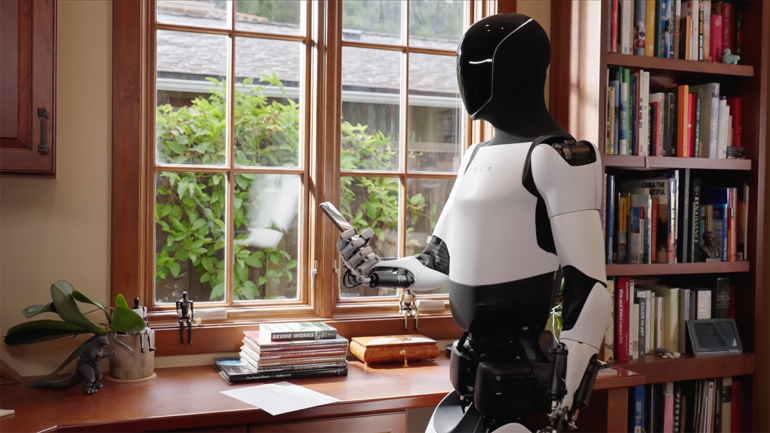
Tesla sets 2027 timeline for home robots
Elon Musk told the World Economic Forum that Tesla’s Optimus humanoid should ship to consumers by late 2027 after proving “very high” reliability and skill on factory floors this year. Prototypes are already performing simple tasks, and Musk says future bots will tackle household chores and lift warehouse crates before eclipsing Tesla’s car revenue.
Musk envisions an eventual $20K–$30K price tag, but ramping to his goal of one million units by 2035 demands an exponential production curve — historically not Musk’s strong suit. Labor economists warn that the timeline, if real, could rewrite labor markets.
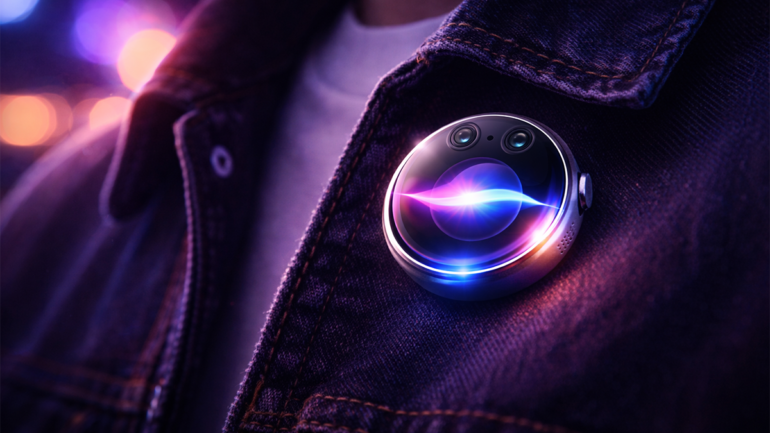
Apple’s prototyping AirTag‑sized AI device
Apple is tinkering with a screen‑free “AI pin” the size of an AirTag but thicker, stuffed with twin cameras, three mics, a speaker, and a side button. Affixed to a shirt, the disc-shaped gadget would beam scene snapshots and voice commands to the same Gemini‑powered brain set to upgrade Siri later this year.
Launch whispers point to 2027, yet Cupertino has shelved splashier experiments before. Still, an internal forecast of 20 million units suggests real intent and a brand‑new accessory category for AppleCare to upsell.
More must-read AI coverage
- SS&C Intralinks DealCentre AI vs. Datasite: Which platform is built for the future of dealmaking?
- SS&C Intralinks FundCentre AI vs. Juniper Square: Which platform better supports modern private markets fund managers?
- Why Data, Not Models, Determines AI Success
- The Rise of the AI-Native Factory: How Physical AI Is Transforming Manufacturing
1X robot trains on internet video
Norwegian-American startup 1X gave its $20K Neo humanoid the binge‑watching job of the century.
Instead of human tele‑ops, a 14‑billion‑parameter World Model gorges on YouTube how‑to clips, then imagines a physics‑correct video of itself ironing, packing lunches, or brushing hair. An inverse‑dynamics module converts each dream frame into motor commands, so the bot copies its own daydream in real life.
Initial demos nail chores, but physics glitches still happen, keeping remote safety pilots in the loop. Early access starts this year at $499 a month — privacy not included.

Rumored GPT‑5.3 could boost efficiency
Rumors claim GPT‑5.3 (codenamed “Garlic”) will ditch pure parameter bloat for smarter pre‑training that trims redundant data while retaining GPT-5.2’s 400K‑token context window.
Leaked scorecards boast a speculated 94.2% on the automated HumanEval+ coding benchmark and include inline code‑editing tools like the upcoming “Salute” project manager.
Insider chatter pegs a ChatGPT Pro preview for late January, with wider API access in February — if the leaks hold. Until then, take these spicy specs with a grain of salt: OpenAI hasn’t confirmed a date, price, or whether garlic really repels hallucinations.