


The next camera you point at your mouth may not be your phone — it could be your toothbrush.
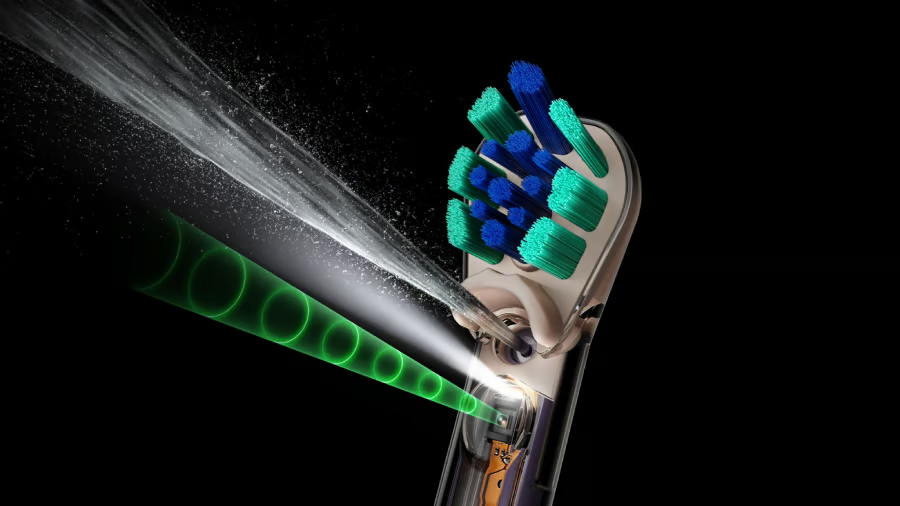
Dyson has built a camera into its new CameraJet toothbrush, but the camera isn’t there just to give users a disturbing close-up of their teeth. It feeds live images into a machine-learning system that identifies gaps between teeth and triggers a targeted burst of mouth rinse when the brush reaches those gaps.
The device analyzes images of the mouth using a 100,000-pixel camera, enabling its Gap Optical Targeting system to detect, track, and predict interdental gaps in real time.
That makes CameraJet more than a toothbrush with a camera attached. It can see part of the mouth, interpret what it sees, and change how it cleans based on that information.
The CameraJet went live on Sep. 1. It costs $499, with Ceramic Ultra Blue and Ceramic Pink available. Dyson recommends its non-foaming toothpaste and mouth rinse, claiming they are formulated to keep the camera’s view clear. That costs £8.50 ($11.48), according to The Guardian.
Users can order the brush on Dyson’s website, which comes with a two-year guarantee.
How Dyson turned the toothbrush into a vision system
Traditional toothbrushes relied almost entirely on the user to decide where and how to brush. Electric models automated the motion, while newer smart toothbrushes added sensors to track things such as pressure, coverage, and brushing time.
Dyson’s CameraJet is part of the newer smart models and adds computer vision to its system. The Independent says the camera and targeting system were developed over six years by 661 engineers and are backed by 38 patents.
In simple terms, the system works as a loop: the camera sees, machine learning identifies the gap, and the toothbrush responds.
More must-read AI coverage
- SS&C Intralinks DealCentre AI vs. Datasite: Which platform is built for the future of dealmaking?
- SS&C Intralinks FundCentre AI vs. Juniper Square: Which platform better supports modern private markets fund managers?
- Why Data, Not Models, Determines AI Success
- The Rise of the AI-Native Factory: How Physical AI Is Transforming Manufacturing
What a camera inside your toothbrush could mean for your teeth
Some toothbrushes already know how long you brush and, on some models, how much pressure you apply and which areas you may have missed. CameraJet introduces a different capability: the toothbrush can visually detect part of the mouth and respond to what it sees.
That shifts smart oral care from simply measuring user behavior toward devices that can adapt their actions in real time.
A camera can capture visual information about the teeth and gums. At the same time, the addition of AI could help analyze that information for changes such as plaque buildup, gum redness, discoloration, or other abnormalities.
For users, that could mean a future where your toothbrush does more than tell you where you missed during brushing. It could tell you what looks different and provide clues as to why, just like many wearables now do. That would move oral care from simply tracking your brushing habits to continuously monitoring changes in your mouth.
CameraJet does not diagnose dental conditions, and Dyson has not positioned it as a replacement for professional dental care. For now, the camera is used to identify interdental gaps and guide targeted cleaning.
But the broader direction is notable. As cameras, sensors, and machine learning move into everyday health devices, products such as toothbrushes may increasingly do more than track habits — they may begin adjusting their behavior based on what they detect.
Other news: Brain-monitoring earbuds are pushing wearables deeper into health tracking, using EEG sensors to estimate states such as focus, fatigue, and sleep while raising new questions about accuracy and brain-data privacy.