


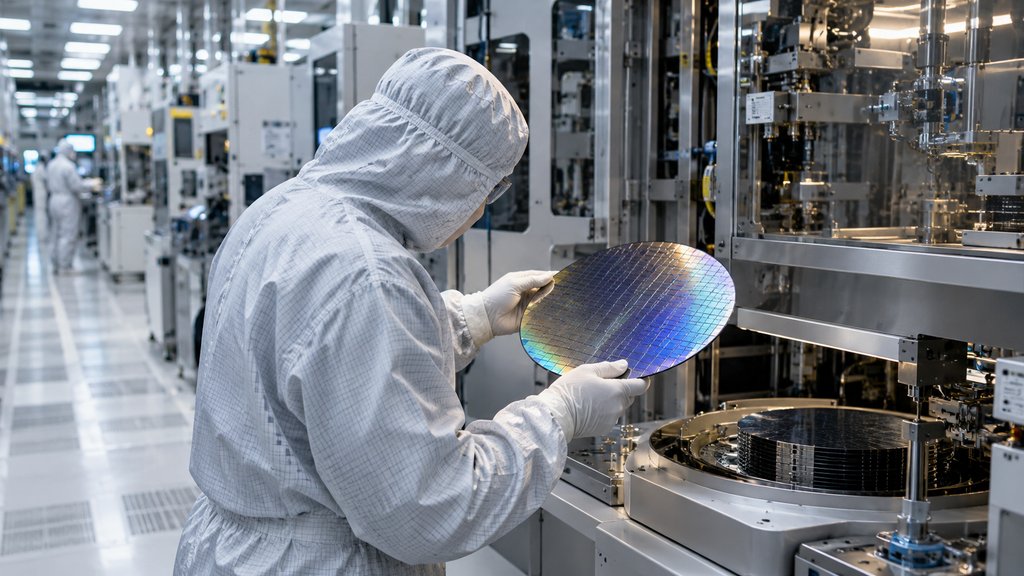
More than €33 billion in semiconductor investment has gained regulatory backing in Europe, with projects spanning chip factories, specialized materials, and manufacturing equipment. The European Commission announced Nov. 17 that it had approved more than 20 state-aid decisions supporting new and upgraded facilities across the European Union.
The investments combine public funding and private capital under the European Chips Act, which aims to strengthen the region’s semiconductor industry and reduce reliance on overseas suppliers. They cover everything from power electronics to advanced packaging and testing.
For chip buyers, the distinction is between approved investment and available manufacturing capacity. New facilities must still complete construction, install equipment, and qualify production processes before they can supply customers.
Where the EU’s €33 billion semiconductor investment is going
According to the European Commission, more than 20 state-aid decisions have supported over €33 billion in combined public and private semiconductor investment.
That figure isn’t a new €33 billion subsidy package. It represents investment associated with approved projects, including government assistance and private spending.
The facilities span semiconductor wafers, chips, packaging, testing, assembly, specialized materials, and power electronics.
Germany approves €659 million for four semiconductor projects
In July, the Commission approved €659 million in German state aid for four facilities covering different parts of the semiconductor supply chain.
The grants include:
- Element 3-5: €353 million for a silicon-carbide epitaxial wafer plant in Baesweiler, serving applications such as automotive systems, industrial equipment, telecommunications, and energy.
- Vishay: €214 million for next-generation silicon power MOSFET manufacturing in Itzehoe.
- KLA: €74.4 million for advanced optical metrology equipment and components in Weilburg.
- KETEK: €17.9 million for specialized detector chips and graphene radiation entry windows in Munich.
The Commission’s July decision identified these as its 15th through 18th approvals under the relevant state-aid framework.
The projects concentrate on industrial semiconductor technologies and manufacturing equipment, rather than leading-edge AI processors.
Austria backs Infineon’s gallium nitride expansion
Austria received approval on Oct. 27 to provide €319 million in state aid for upgrading Infineon’s existing semiconductor facility in Villach.
The project will expand manufacturing capabilities for gallium nitride (GaN) power semiconductors, moving from existing 200 mm wafer production toward larger 300 mm wafers.
GaN technology supports applications including electric vehicles, robotics, energy infrastructure, and power systems used in AI applications.
The Commission’s approval describes the project as a first-of-a-kind facility in the EU because comparable 300 mm power GaN manufacturing capacity isn’t currently available in the bloc.
Infineon is also investing outside Europe. TechRepublic previously covered the company’s Thailand chip hub, illustrating how semiconductor manufacturers spread production and investment across different regions.
What the approvals mean for Europe’s chip supply chain
The European Chips Act entered into force in September 2023 following semiconductor shortages that disrupted automotive production, electronics manufacturing, and other industries.
The law aims to strengthen research, expand manufacturing capacity, and improve Europe’s resilience against future supply disruptions.
The EU is also pursuing a follow-up initiative. TechRepublic previously examined the Chips Act 2.0 proposal, introduced in June 2026 to support strategic semiconductor projects and reduce supply-chain dependencies.
The new investment milestone gives that strategy a measurable funding component, although it doesn’t establish how much additional production is already available.
Why €33 billion doesn’t mean €33 billion in new chip production
State-aid approval allows national governments to support qualifying projects under EU competition rules. It doesn’t guarantee that facilities have been completed or that new production capacity is operating.
An academic commentary published Oct. 14 in the Weizenbaum Journal of the Digital Society identified 18 approved investments totaling approximately €36 billion, including €14.8 billion in public subsidies.
The commentary uses an earlier project list and its own accounting of investment commitments. Its totals shouldn’t be treated as directly interchangeable with the Commission’s November announcement.
Construction and delivery risks also remain.
Intel’s cancellation of its planned semiconductor factory in Magdeburg, Germany, in 2025 demonstrated that major manufacturing plans can be abandoned before production begins.
Meanwhile, other regions continue expanding their manufacturing bases. TechRepublic reported on Singapore’s $7.8 billion semiconductor facility, including its planned monthly wafer output.
For companies buying chips, supplier production schedules and qualification milestones offer a clearer picture of future availability than investment announcements alone.
What comes next for the European Chips Act?
The Chips Act 2.0 proposal seeks to strengthen Europe’s position in semiconductor design, manufacturing, and supply-chain coordination.
The region remains dependent on overseas suppliers for several critical technologies, particularly leading-edge logic chips used in advanced AI systems.
Investments in power semiconductors, materials, and manufacturing equipment can strengthen individual parts of the supply chain without eliminating those dependencies.
The next milestones will come as approved facilities complete construction, qualify manufacturing processes, and begin supplying commercial customers.
Europe’s €33 billion investment milestone establishes the scale of regulatory backing for its semiconductor expansion. Actual production and delivery schedules will determine how much additional capacity reaches the market.
Also read: New US rules targeting overseas access to advanced AI chips introduce another set of restrictions for technology suppliers and data center operators.