


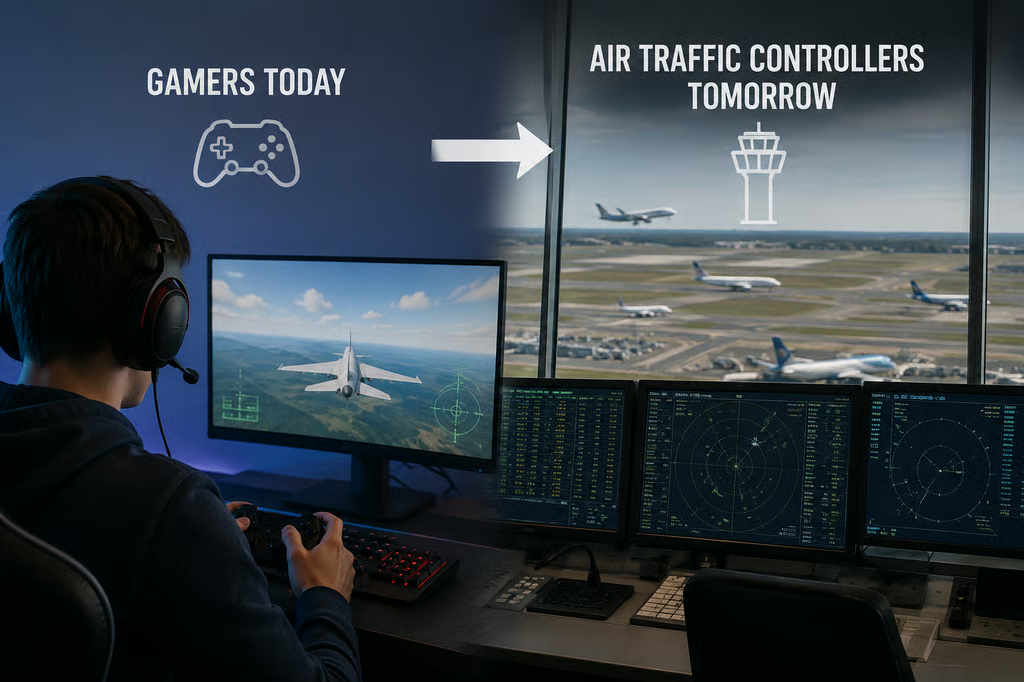
Video games were supposed to be entertainment. For more than 2,000 people, they may now be a path toward controlling America’s skies.
The U.S. Department of Transportation (USDOT) and the Federal Aviation Administration (FAA) say they have added more than 2,000 candidates after deliberately targeting gamers in their latest air traffic controller recruitment campaign, helping them reach 94% of their fiscal-year hiring target. The result comes as the FAA tries to rebuild a controller workforce that has remained below its staffing needs for years.
The reasoning behind the campaign is that experienced gamers may already possess several abilities that controllers need. The FAA still has to turn those abilities into professional competence through its testing, academy training, and on-the-job certification process, so the latest hiring figure is a sign that the campaign is finding candidates — not that the staffing problem has been solved.
What gamers can actually bring to the control room
According to Fast Company, the FAA’s argument starts with the skills gamers use, not the games themselves. It says gaming can help develop abilities such as multitasking, spatial awareness, strategy, problem-solving and rapid decision-making — all useful when controllers have to track aircraft, process information and respond quickly to changing conditions.
That connection is not entirely based on the agency’s own recruiting pitch, either.
According to Quartz, during exit interviews, the FAA said some controllers credited gaming with helping them think quickly, stay focused and manage complex situations. And with around 200 million Americans playing video games, the FAA had a large pool of potential candidates to target, with skills that could be useful in a job already severely understaffed.
That is where its hiring push stems from. Despite a median salary of around $144,580 per year, according to 2024 data, the job still has a shortage of about 14,500, which can be dangerous for a technically life-and-death role.
The hardest part starts after the hiring
Getting people interested in air traffic control is one thing; turning them into qualified controllers is another. The FAA’s latest hiring figures show that its gamer-focused campaign can attract candidates, but those candidates still must complete training before they are fully certified.
That is because the skills that make someone a promising candidate are only a starting point. The candidates must pass the FAA’s recruitment exercises before they can work independently.
That creates a gap between the number of people the FAA hires and the number it can actually add to its operational workforce.
More than 2,000 new candidates is a significant recruitment result. But given the process between the gamer push and actual deployment — where roughly one in three trainees reportedly drop out — the agency still has a long way to go before those hires translate into fully qualified controllers.
The FAA’s approach could serve as a broader model
The more interesting part of the FAA’s campaign may not be the fact that it targeted gamers. It is the decision to focus on what people can do rather than simply on where they studied or what job they held before, especially for roles where core competencies often overlap with many sectors.
If enough of these gamer candidates complete training and become certified controllers, the campaign could offer a useful lesson for other employers dealing with talent shortages.
Sometimes the people who can fill a difficult role are already developing relevant skills elsewhere. That could create a hiring challenge for employers, who may need to cast their net wider during recruitment.
Other News: AI is reshaping Australia’s job market, creating new roles and changing the skills employers value as businesses integrate the technology into everyday work.