


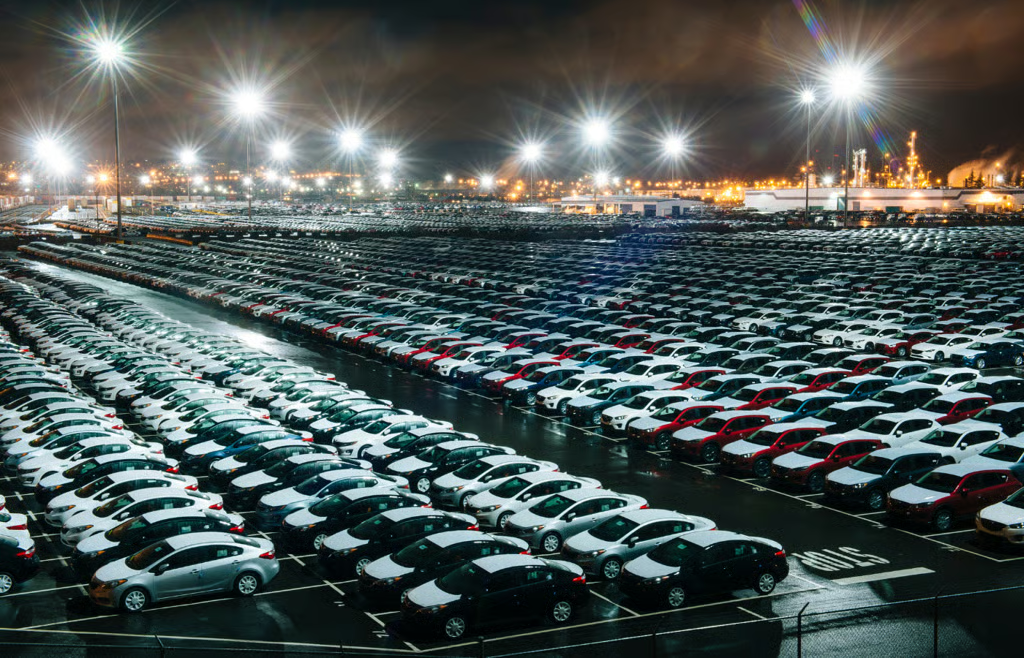
U.S. tariffs on automobiles and other products from Japan will be set at 15% after the conclusion of negotiations with President Donald Trump’s administration.
“Japan and the US have been conducting close negotiations with our national interests on the line,” said Prime Minister Shigeru Ishiba. “The two nations will continue to work together to create jobs and good products.”
While the final legal proclamation of the agreement is pending, the core terms have been outlined, according to Bloomberg. One key element is Japan’s role as a supplier of semiconductors, which means any impact on it may ripple through the tech industry. August 1 is the deadline the U.S. set for deciding the “corrective” tariffs calculated by the U.S. administration for its trading partners.
The terms of the deal include Japanese investments in America
Many aspects of the deal remain hypothetical and unofficial. Bloomberg said Japan will have a “safety clause” for forthcoming sectoral tariffs, including those on semiconductors and pharmaceuticals. This step effectively puts Japan on a level playing field with any other nation negotiating for trade with those goods.
Under the agreement, Japan committed to:
- Establishing a $550 billion fund to invest in U.S. projects
- Purchasing 100 Boeing aircraft
- Buying $8 billion in U.S. agricultural and other products
- Increasing defense spending with U.S. firms from $14 billion to $17 billion annually
- Contribute to a liquefied natural gas project in Alaska
Bloomberg’s source said the fund could be used for semiconductor projects in which Japan provides capital, leases the infrastructure to U.S. firms, and shares 90% of profits with the U.S. in a hypothetical 90-10 revenue split. Trump reportedly crossed out part of the negotiations by hand, changing “$400 billion” to the agreed-upon $550 billion.
Stocks rose after the deal reduced tariffs
Automobile stocks were up in both the U.S. and Japan on Wednesday following the announcement. The Trump administration has paused many of its initially-proposed high tariff rates for countries across the world. Now, the U.S. is in the process of negotiating a new normal for global trade.
Despite fears that increased prices for consumers would damage the U.S. economy, pass-through costs remain low, Goldman Sachs economist David Mericle told the Associated Press. However, some companies are feeling the pinch in their stock and profits.
Trump previously delayed a deadline for a blanket 10% import tariff and individual “reciprocal” tariffs, leading to the current deadline of Aug. 2.