
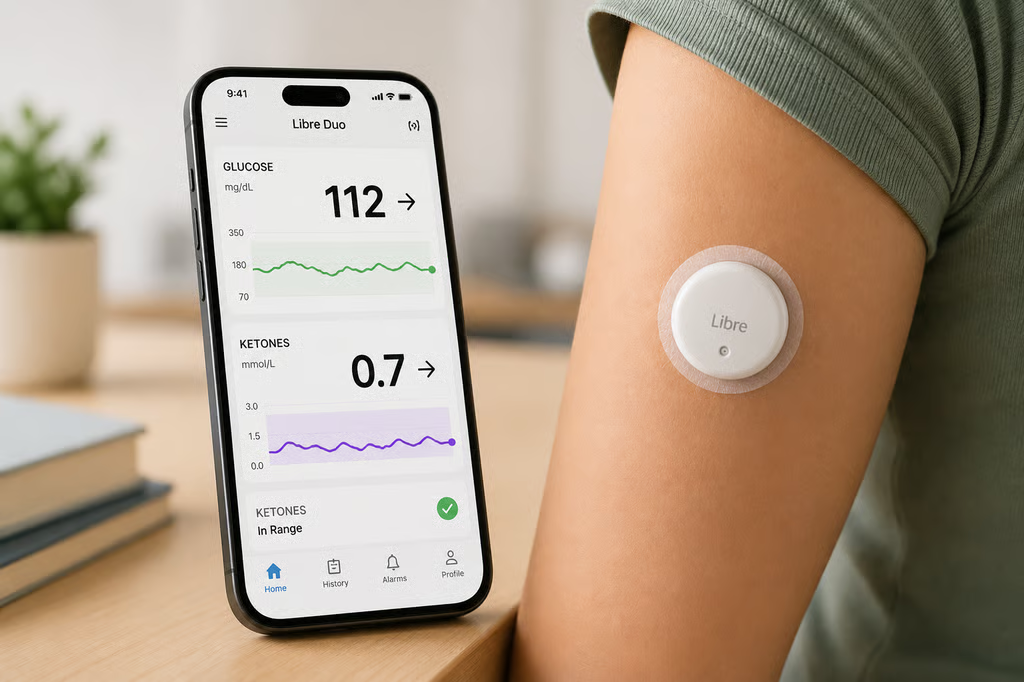


Abbott’s Libre Duo 10 Day has become the first wearable authorized in the US to continuously monitor ketones and the first device in the world to continuously track both ketones and glucose from a single sensor.
The FDA authorized the system on August 25, 2026, for people ages 2 and older living with diabetes. Abbott plans to launch it in the US later this year, but the company has not announced a specific release date or price.
How Libre Duo 10 Day tracks glucose and ketones
The FDA says Libre Duo measures glucose and ketone levels in the fluid beneath the skin every minute, day and night. Readings are sent wirelessly to a compatible smartphone, where users can see current levels, follow trends, and receive alerts when ketones reach a concerning threshold.
That separates it from existing wearables used for blood sugar tracking, which generally depend on a separate continuous glucose monitor and do not measure ketones themselves.
Ketones can rise when the body does not have enough insulin and begins breaking down fat for energy. If levels become dangerously high, diabetic ketoacidosis, or DKA, can develop quickly. Continuous ketone monitoring adds a trend line that traditional blood and urine tests cannot provide because those tests capture only a single point in time.
Libre Duo also moves beyond research devices such as the CHARM smart ring prototype, which has demonstrated glucose and ketone sensing through sweat but remains an experimental system rather than an authorized medical product.
The FDA granted Libre Duo marketing authorization through the De Novo pathway under record DEN250049 after previously giving it Breakthrough Device designation. The agency reviewed six clinical studies involving more than 600 participants ages 2 and older and said the device accurately tracked clinically meaningful differences in ketone levels across its 10-day wear period.
Abbott says the system is particularly intended to help people at higher risk of elevated ketones, including people with Type 1 or Type 2 diabetes who use insulin or glucose-lowering drugs such as SGLT2 inhibitors.
One practical limitation is whether the sensor lasts the full advertised period. According to Abbott’s product data, 84.1% of adult sensors and 68.8% of pediatric sensors lasted all 10 days in its wear-duration study.
Price, launch timing, and pump support remain open
Libre Duo 10 Day will use Abbott’s current Libre app and is designed to connect with the wider Libre ecosystem, including LibreView for healthcare providers and LibreLinkUp for caregivers.
Automated insulin delivery support will arrive in stages. Abbott says it expects compatibility with Beta Bionics’ iLet and Sequel Med Tech’s twiist systems by the end of 2026. Integrations with Insulet and Tandem are planned for 2027, while Abbott and MiniMed are also targeting a 2027 integration.
Those timelines mean buyers should not assume every insulin pump will support Libre Duo when the sensor first reaches the market.
The system also has important safety limits. Abbott warns that its Urgent High Ketones alarm may not detect every instance in which ketones exceed 3.0 mmol/L. Ketone readings should be interpreted alongside glucose readings and symptoms rather than used as a standalone signal.
If sensor readings or alarms do not match symptoms or expectations, Abbott advises using a fingerstick glucose test for treatment decisions. Smartphone compatibility and notification settings can also affect whether alerts arrive, an issue already familiar to people using blood sugar alerts on wearables.
Libre Duo’s biggest change is straightforward: it combines continuous glucose and ketone monitoring in one FDA-authorized sensor rather than requiring separate ketone tests. Price, exact US availability, and the full rollout of pump integrations are still pending.
Also read: Garmin patents suggest blood sugar tracking could become a much larger part of future smartwatch health features.