


As artificial intelligence becomes the new foundation of global innovation, it’s no longer just talent or ideas that matter. It’s also the hardware.
And right now, that hardware is far from evenly spread around the globe.
A mere 32 nations worldwide, predominantly in the Northern Hemisphere, possess specialized AI data centers, leaving the vast majority of countries without this crucial technological infrastructure, according to a recent report by Oxford University researchers.
Key takeaways from the report include:
- The United States and China alone operate over 90% of specialized AI data centers.
- US tech giants, including Amazon, Microsoft, and Google, operate 87 major AI computing hubs globally, while Chinese firms operate 39. European companies operate only six.
- Africa and South America are nearly absent from the map.
- More than 150 countries lack such infrastructure altogether.
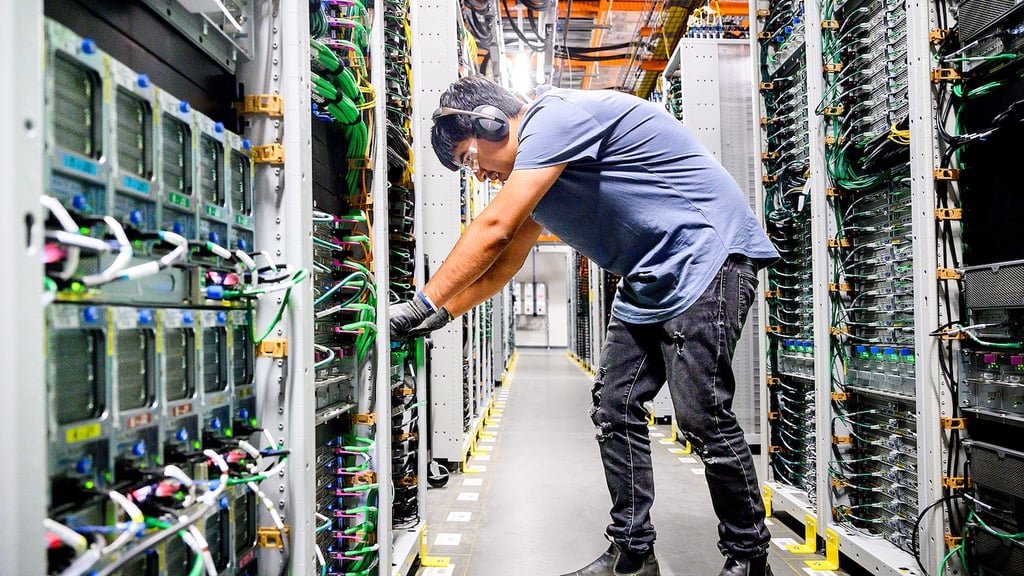
Inside these facilities are high-powered chips, made mainly by NVIDIA, that power the most advanced AI tools. Without access to them, countries fall behind in AI development, scientific research, and even economic competitiveness.
The power gap
The divide isn’t just about infrastructure, it’s about sovereignty.
Without their own AI data centers, many countries are forced to rely on foreign tech giants for computing power. Renting access to data centers overseas is expensive, often slow, and governed by foreign laws. For start-ups and researchers in regions such as Africa, South America, and parts of Southeast Asia, this presents a significant challenge.
“The A.I. era runs the risk of leaving Africa even further behind,” said Microsoft President Brad Smith, according to The New York Times.
In Kenya, startups like Qhala are developing large language models in African languages. However, without local data centers, they are compelled to rent time on servers located far away. “Proximity is essential,” said Shikoh Gitau, Qhala’s founder.
Kate Kallot, founder of another Kenyan startup, Amini, added, “If you don’t have the resources for compute… you can’t go anywhere.”
More must-read AI coverage
- SS&C Intralinks DealCentre AI vs. Datasite: Which platform is built for the future of dealmaking?
- SS&C Intralinks FundCentre AI vs. Juniper Square: Which platform better supports modern private markets fund managers?
- Why Data, Not Models, Determines AI Success
- The Rise of the AI-Native Factory: How Physical AI Is Transforming Manufacturing
The cost of falling behind
Powerful computing chips, especially those made by US firm Nvidia, are the lifeblood of these centers. They’re in such high demand that countries and companies are scrambling just to get in line. According to a survey cited by The New York Times, Harvard’s Kempner Institute alone holds more computing power than all African-owned AI facilities combined.
It’s led to real consequences. In Argentina, Professor Nicolás Wolovick runs what is considered one of the country’s most advanced AI hubs. His top students routinely leave for the US or Europe to access better computing environments.
“Sometimes I want to cry, but I don’t give up,” he said. “I keep talking to people and saying: ‘I need more GPUs. I need more GPUs.’”
This isn’t just a tech problem; it’s a national development issue. Without access to computing power, many countries are losing out on innovation, investment, and talent.
The divide has also introduced a new kind of global dependency. Countries without data centers often rely on renting computing power from American or Chinese firms, which comes with costs, delays, and even political strings.
In the Middle East, for instance, The New York Times reported that an Emirati firm agreed to avoid using Chinese tech in exchange for access to NVIDIA chips. Meanwhile, in Africa, policymakers are reportedly negotiating with Huawei to convert existing data centers to accommodate Chinese-made chips.
Vili Lehdonvirta, an Oxford researcher involved in the study, told The New York Times: “Oil-producing countries have had an oversized influence on international affairs; in an A.I.-powered near future, compute producers could have something similar since they control access to a critical resource.”
Efforts to bridge the gap
Facing the risk of exclusion, several countries are fighting back.
India is subsidizing AI infrastructure, Brazil has pledged $4 billion, and the European Union plans to invest €200 billion. In Africa, a $500 million project led by Zimbabwean billionaire Strive Masiyiwa aims to build five data centers, though even that will meet only a fraction of demand.
The digital divide once referred to access to phones or the internet. Today, it’s about who controls the machines that shape AI. The gap is not just technological, it’s economic and political.
While the richest countries invest in shaping AI’s future, many others are left trying to catch up, with limited resources, shrinking time, and a growing sense of urgency.