\n\tThink the patent field is dry? Not so much. Take a gander at these 10 wild, weird, and wacky tech patents and published patent applications from the United States Patent and Trademark Office (USPTO). Many of them are owned by the tech companies you work with most. Avancept’s Thomas E. Ewing, who is an IP attorney, forensics specialist, and World Intellectual Property Organization (WIPO) author, came along for the ride to add some juicy additional commentary for your reading pleasure. Enjoy!
\n
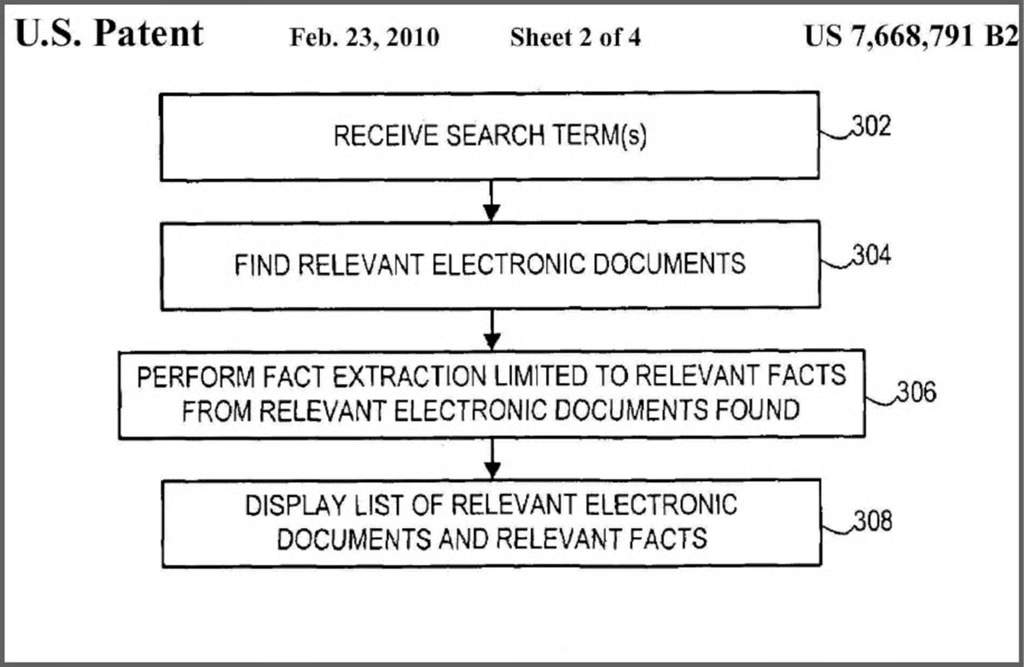
\n\tWith the deluge of news and opinion from blogs and more traditional media, it is difficult even for expert analysts to distinguish between what’s true and what some pundits just say is true. Now Microsoft owns a patent that covers the issue. Essentially, it’s a method of detecting fact versus opinion via computer. Titled \u201cDistinguishing Facts from Opinions Using a Multistage Approach,\u201d an inventor sold this patent to Microsoft in 2010 as you can see from the filing here on said patent 7,668,791.
\n
\n\tImage credit: USPTO
\n
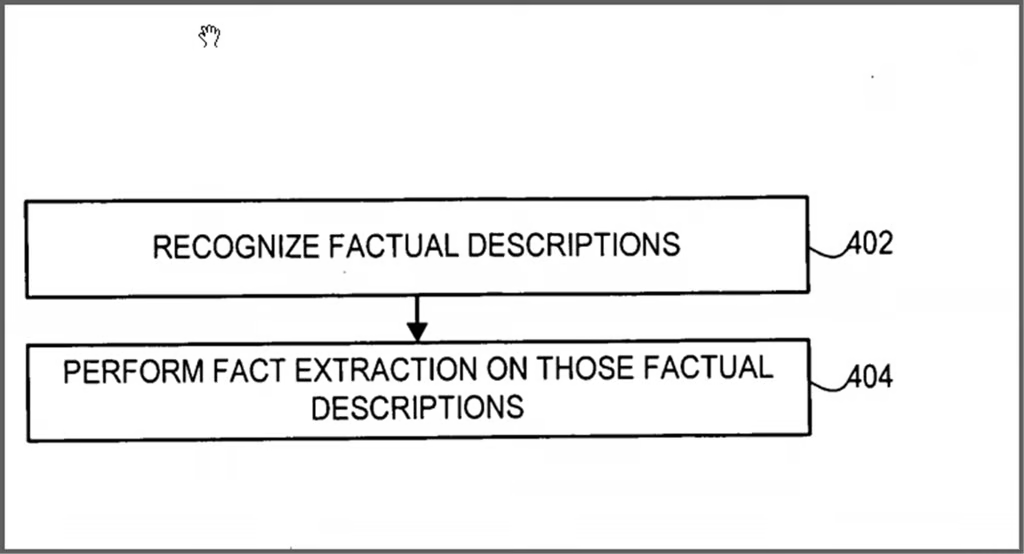
\n\tTwo steps and you’re there, according to this image embedded within the Microsoft patent (7,668,791) and included in the original application. \u201cNo need to rely on your own judgment anymore if you have the right app,\u201d quips Ewing.
\n
\n\tImage credit: USPTO
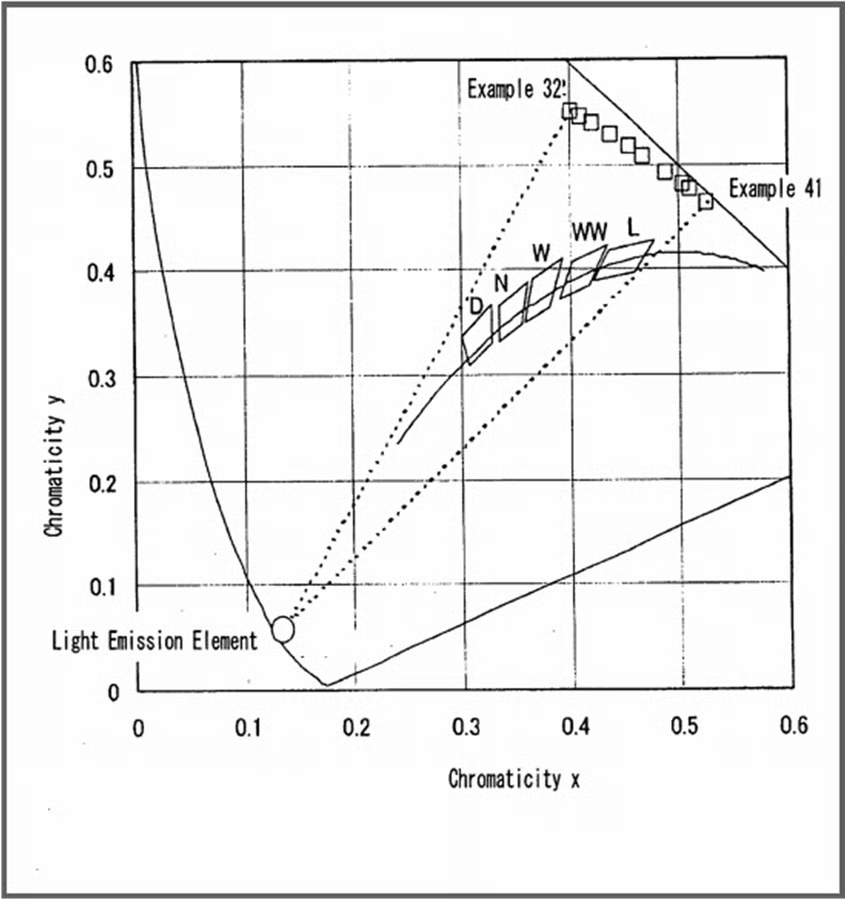
\n\tTo be fair, Mitsubishi U.S. patent number 8,062,549 doesn’t mention making Japanese women look great on camera in the abstract for its \u201cPhosphor and Manufacturing Method … and Light Emission Device Using the Phosphor\u201d patent. But buried within is the only example it provides of a use of its patent, which basically describes how Japanese women should be best displayed on video. Japanese men, not mentioned, apparently aren’t of much concern. The unusual claim includes: \u201cThen, the device can be regarded to be a very excellent omission device when a special color rendering index R15, which is an index showing a skin color component of Japanese women, is preferably 80 or more, and when a special color rendering index R9 is more preferably 60 or more. However, the aforementioned index is not required to be satisfied, depending on differing purposes and applications that do not require color rendering properties.\u201d
\n
\n\tImage credit: USPTO
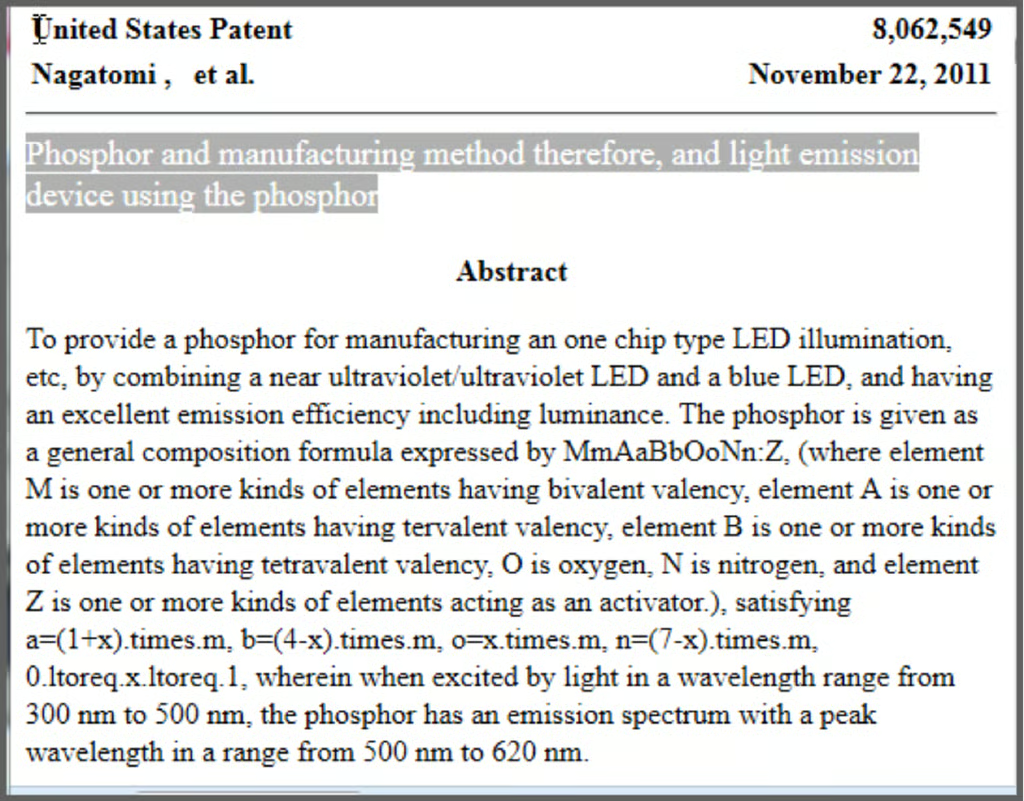
\n\tHere is the tech that Mitsubishi holds the patent for that purportedly makes Japanese women look even more gorgeous on camera. Notice there’s no mention of the women in the abstract.
\n
\n\tImage credit: USPTO
\n
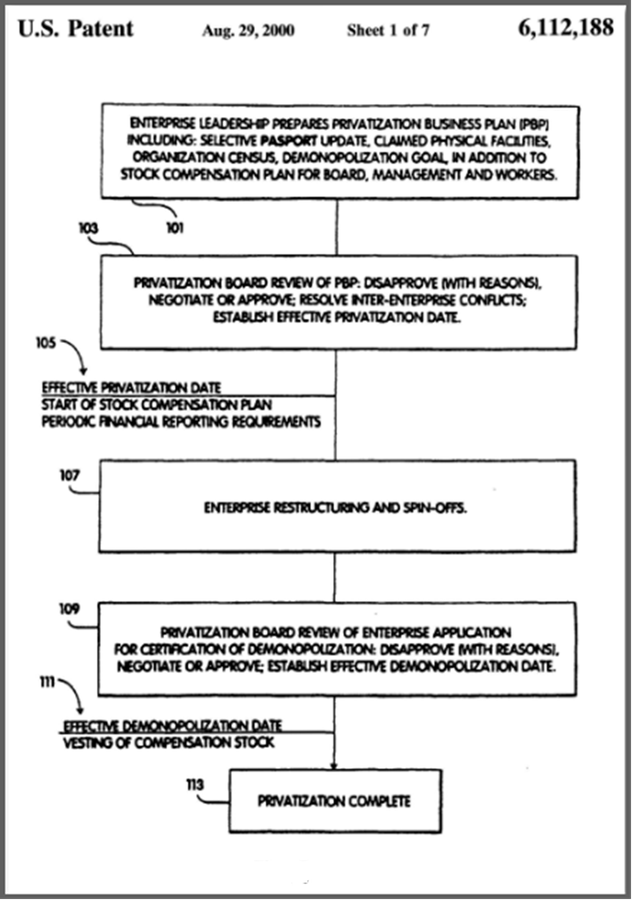
\n\tA computerized method for auctioning off state-owned assets from former Communist countries is a U.S. patent owned by an independent Pasadena, CA inventor, who likely will be safe from the patent wars raging now. It’s a good bet he won’t find a lot of companies challenging this one in court. \u201cYou have to wonder who is going infringe a U.S. patent covering the commoditization of communist state assets,\u201d says Ewing. It’s U.S. patent 6,112,188.
\n
\n\tImage credit: USPTO
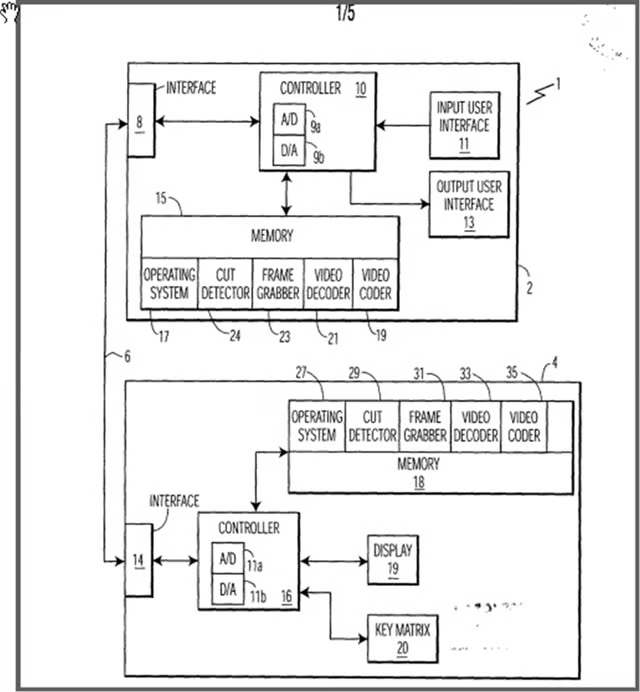
\n\tAnd in the What Will Happen Next Cliffhanger Patent Grant department, we bring you this from consumer electronics TV and set top box giant Philips. It owns a patent on a method of skipping commercials from programs among other claims. Really? You’ve got to wonder how Philips thinks it will use this one. Ever skipped commercials on TiVo or another DVR? Hmm. We have a call out to Philips on this issued patent 7,337,455, which dates back to the 1980s. It’s titled, \u201cMethod, apparatus, and program for evolving algorithms for detecting content in information streams.\u201d
\n\n
\n\tImage credit: USPTO
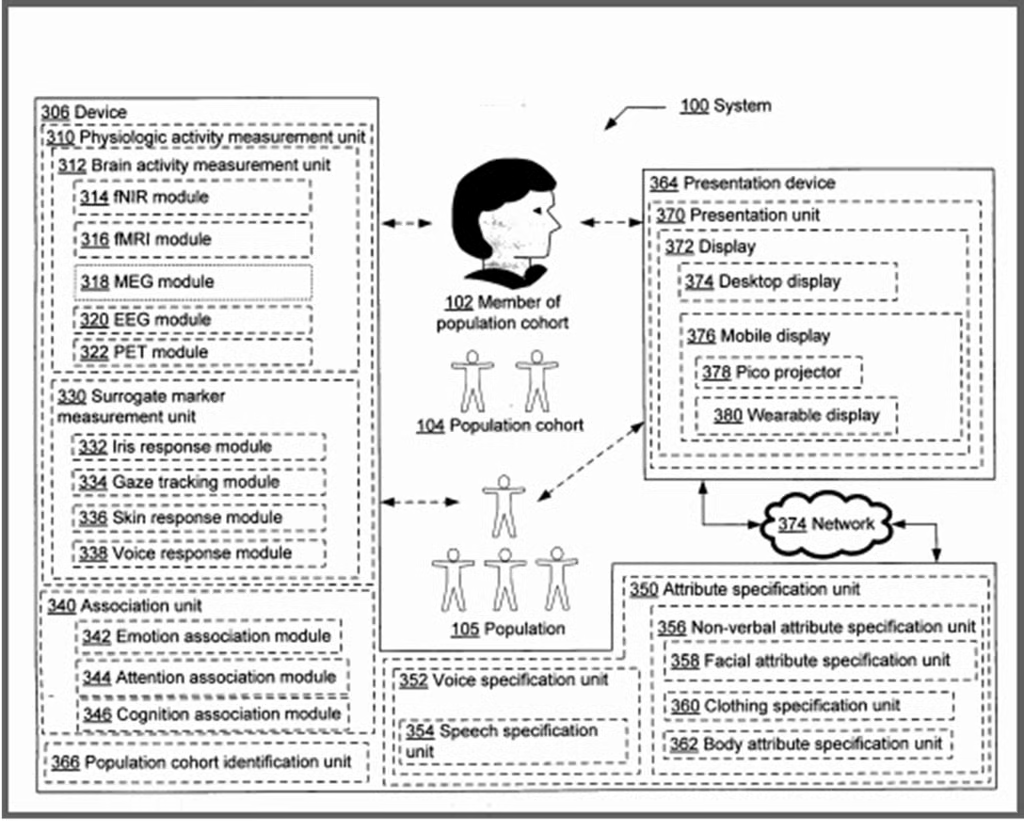
\n\tOwned and invented by patent aggregator and oft-accused patent \u201ctroll\u201d Intellectual Ventures co-founder Ed Jung, a patent titled \u201cMethods and System for Indicating Behavior in a Population Cohort\u201d purports to examine large groups of people with similar interests for similar behaviors. Among other claims, the patent includes one embodiment to \u201cprotect avatars, methods, apparatuses, computer program products, devices and systems are described that carry out identifying a member of a population cohort; and indicating at least one behavior in the member of the population cohort based on an association between the population cohort and at least one cohort-linked avatar.\u201d World of Warcraft folks, they’re watching you! It’s U.S. patent 8,195,593.
\n\n
\n\tImage credit: USPTO
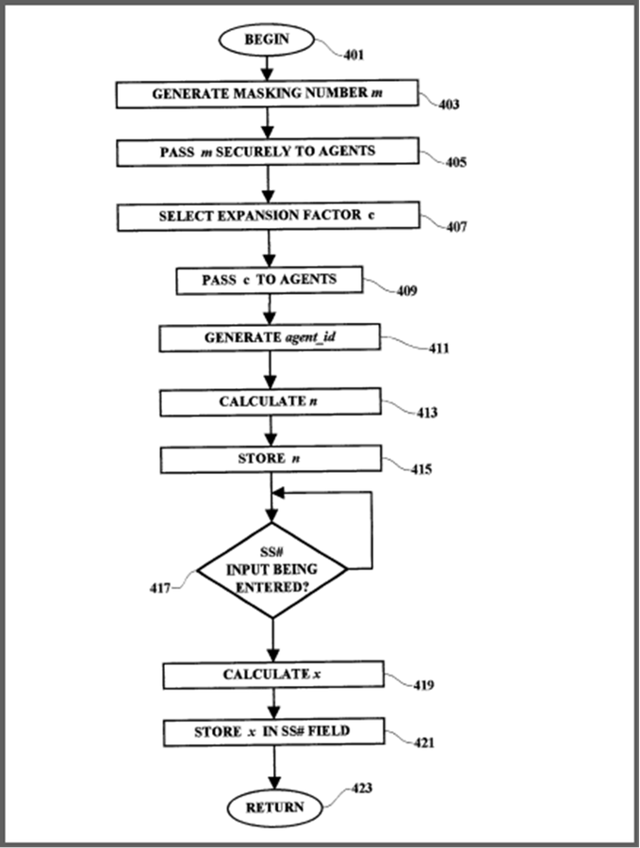
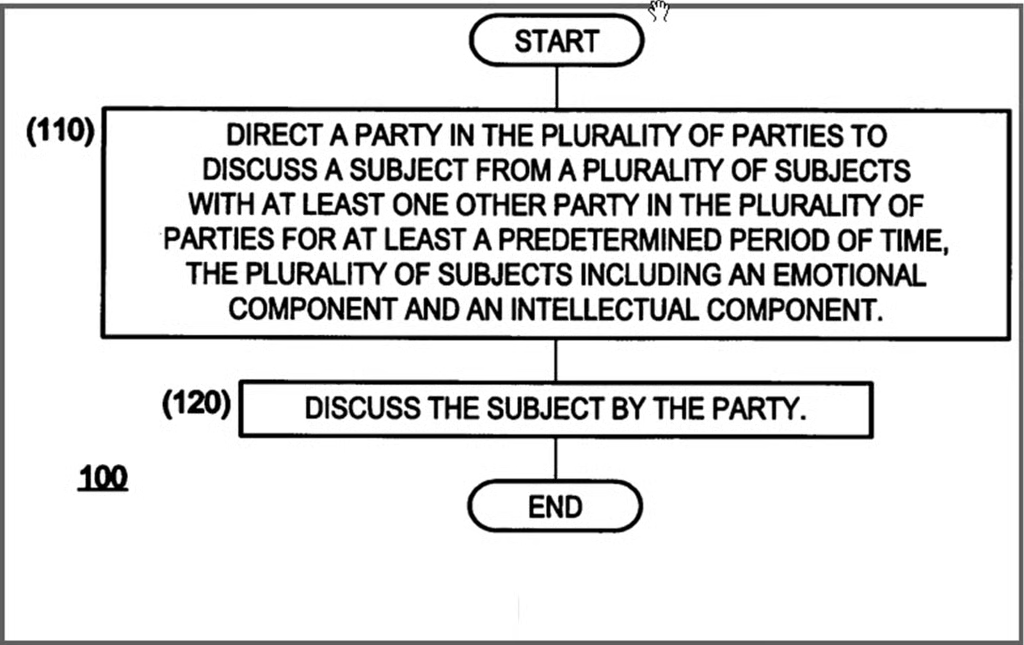
\n\tThere are also anti-divorce tech patents out there. Here’s US Patent 8,128,409, \u201ca method and system for improving interpersonal communication\u201d between couples in order to prevent breakups. The claim mentions computer tech as a possible way of enabling using logic like this.
\n
\n\tImage credit: USPTO
\n
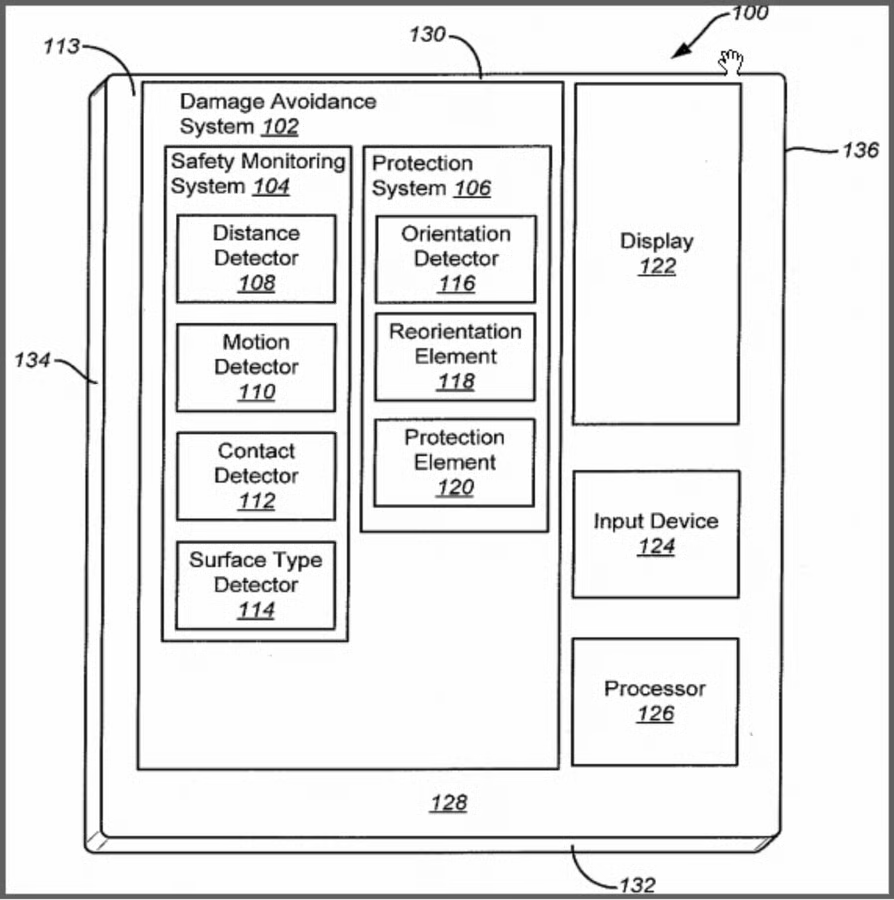
\n\tJeff Bezos has filed many a patent, and this one is particularly interesting. US patent application 20110194230 covers \u201cProtecting Devices from Impact Damage in Flight.\u201d Too bad the erstwhile whiz kid isn’t protecting passengers, too.
\n
\n\tImage credit: USPTO
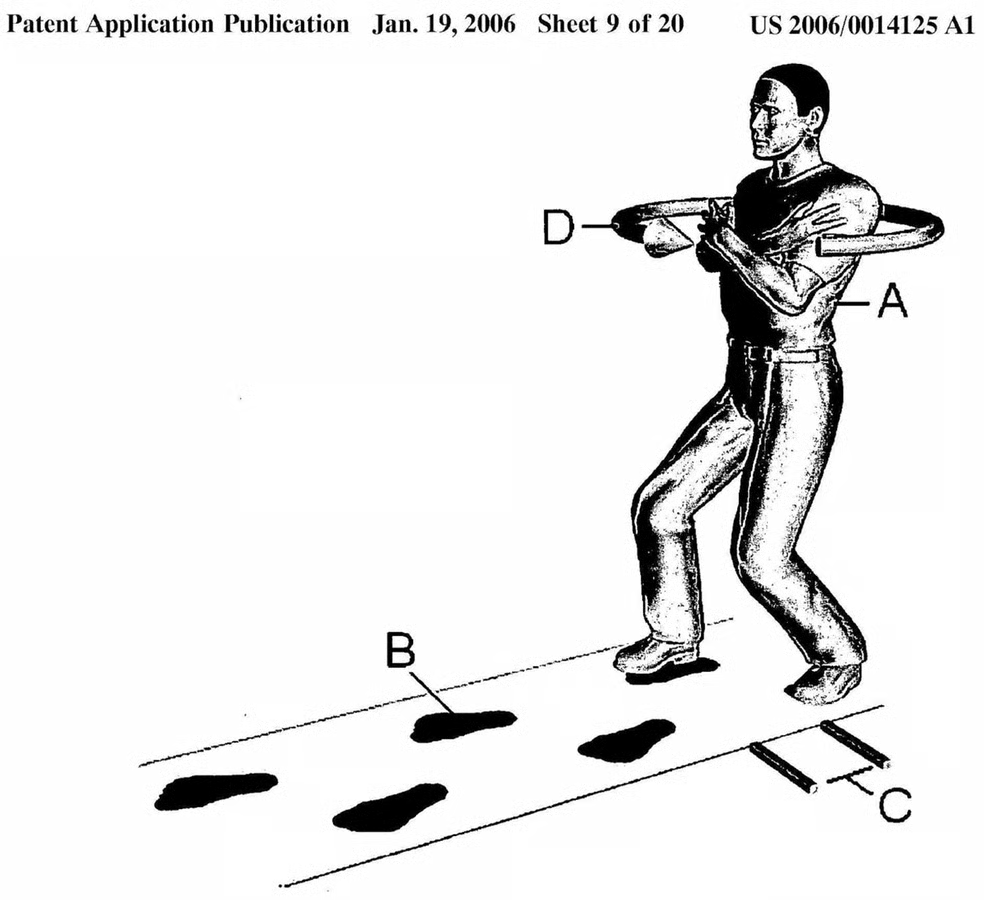
\n\tAfter 18 months, the Patent Office typically publishes patent applications — such publications are in no way an endorsement by the USPTO but simple adherence to a law. This patent, which covers Walking Through Walls, is published application 20110194230. Thankfully, for the sake of all the world’s sanity, the inventor finally abandoned it. \u201cThe patent office rejected the claims to this application, and when the patent applicant didn’t respond to the rejection, the application eventually went abandoned,\u201d explained Ewing.
\n
\n\tImage credit: USPTO
\n

\n\tIn this patent for a \u201cdevice for perfusing an animal head\u201d that would keep it alive, in theory, inventor Chet Fleming refers to his severed head device as a \u201ccabinet.\u201d Fleming later wrote a book about the philosophical implications of keeping severed heads alive. The book is still available on Amazon, and the reader comments on the site seem mostly favorable. It is patent application number 20110194230.
\n
\n\tImage credit: USPTO
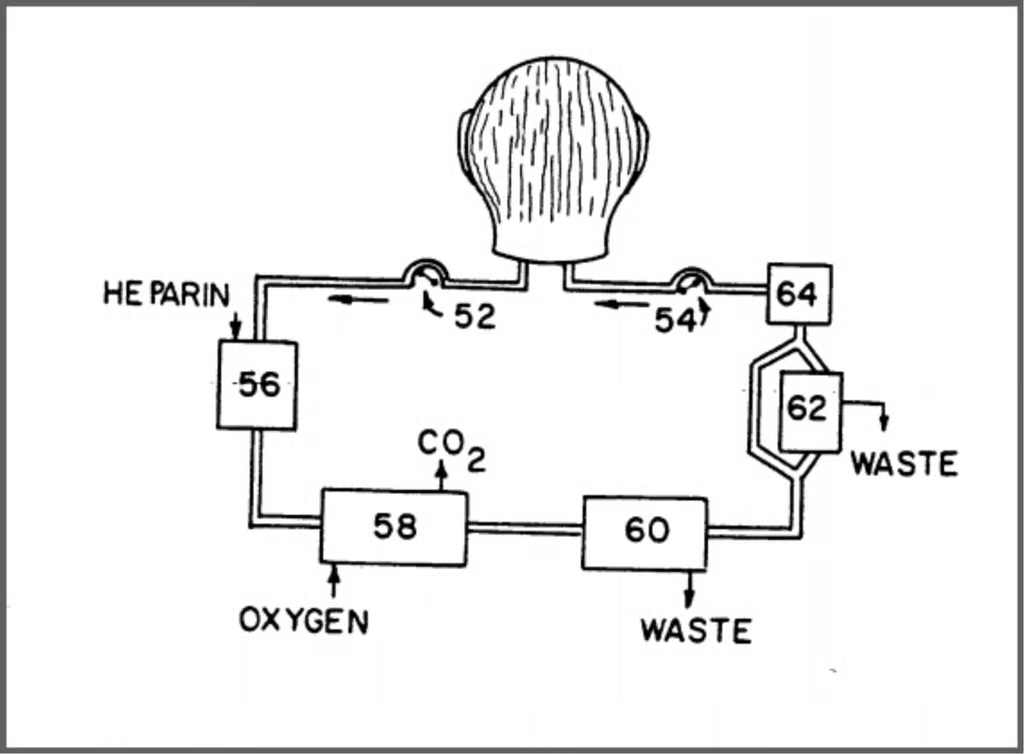
\n\tHere’s an image from Fleming’s patent application (number 2006/0014125) so you can get the full idea. It sure puts a whole new meaning on the term \u201ctech head.\u201d Wa, wa, wa.
\n
\n\tImage credit: USPTO
\n
\n
\n
\n
\n\t
\n\t
\n\t
\n\t
\n\t
\n\t
\n

Gina Smith is a NYT best-selling author of iWOZ, the biography of Steve Wozniak. She is a vet tech journalist and chief of the geek tech site, aNewDomain.net.


