The 1980s was a decade when cool cops patrolled the streets of Miami and Reaganomics drove US fiscal policy. It was also the decade when PCs went mainstream. This gallery showcases several 1980-1983 machines from Steven Stengel\u2018s vintage computer collection. Steven has graciously allowed us to republish his photos and descriptions. You can find a much more detailed description of each machine and additional photos of Steven\u2018s collection on his Web site oldcomputers.net.
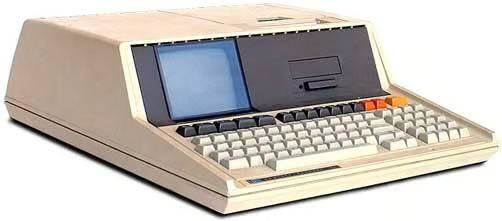
Similar in appearance to the IBM 5100 from five years earlier in 1975, the Hewlett-Packard HP-85 is an all-in-one portable computer system with a built-in keyboard, 5″ screen, thermal printer, tape storage unit, and the BASIC programming language.
Reprinted with permission from Oldcomputers.net
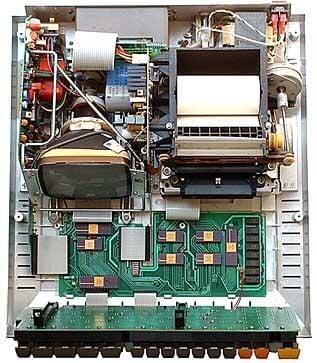
With its top off, it can be seen that the HP-85 has a clean and simple layout. On the left is the monitor and display circuitry, on the right is the thermal printer and tape storage mechanism. The main motherboard is beneath the keyboard, shown here folded up. Except for the eight memory chips, all of the chips are custom HP designed.
Reprinted with permission from Oldcomputers.net
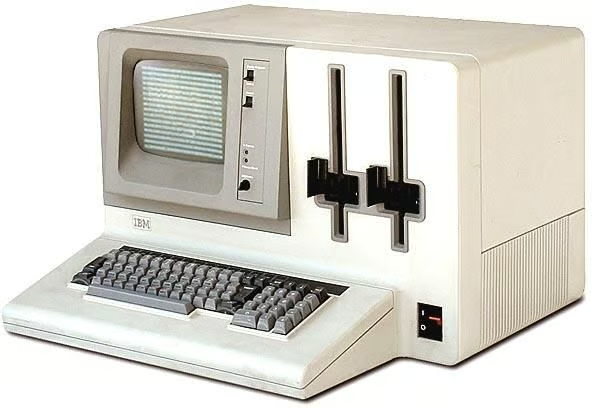
BM\u2018s lowest-priced computer to date–in 1980, that is! Also the heaviest desktop computer ever – 105 pounds (48 kg)!
Reprinted with permission from Oldcomputers.net
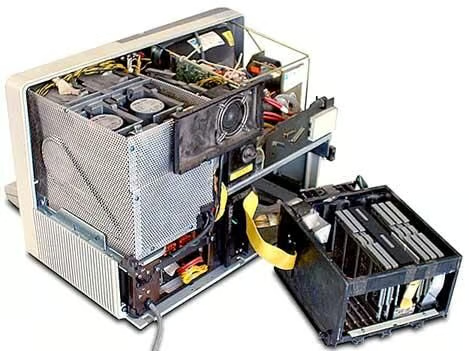
The card-cage is removed from the back of the system – the computer logic is contained on eight cards installed here.
Reprinted with permission from Oldcomputers.net
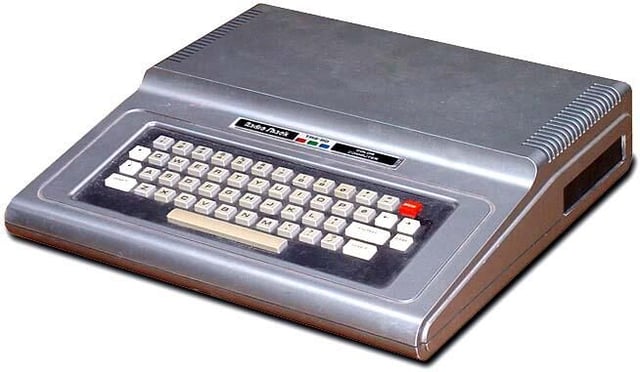
The gray/silver color scheme was fetching for the original TRS-80 Model I computer, but it just doesn\u2018t work on the Color Computer – it has to be one of the ugliest computers ever.
While the “CoCo” is Radio Shack\u2018s first color computer, it is not the first color computer ever. There were others, the first being the Apple II from three years earlier.
Reprinted with permission from Oldcomputers.net
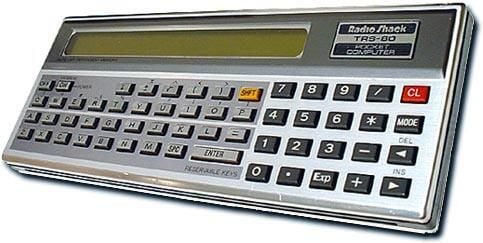
This new TRS-80 Computer is another “first” from the company which brought you the best-selling, world renowned TRS-80. A truly pocket-sized Computer (not a programmable calculator). Of course it is an ultra-powerful calculator too… And it “speaks” BASIC – – the most common computer language, and the easiest to learn.
You\u00e2\u20ac\u02dcll soon be impressed by the phenomenal computing power of this hand-held TRS-80 – – ideal for mathematics, engineering and business application.
Reprinted with permission from Oldcomputers.net
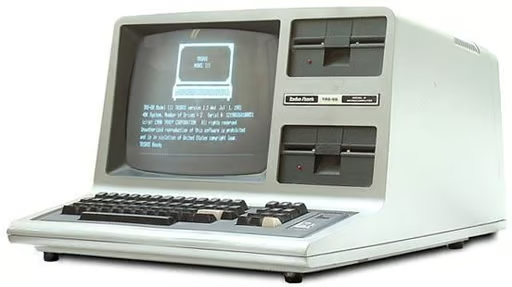
The Model III is basically an upgrade of the Model I, which was released three years earlier. It has the same CPU, but it is faster, has more memory, and the floppy drives hold twice as much data, although the Model I could be upgraded to some of these features.
But the major reason for developing the Model III was because the FCC had just instituted new regulations about RF emissions generated by computers and other electronic devices. The Model I was completely unshielded and was unable to pass the emission restrictions.
Reprinted with permission from Oldcomputers.net
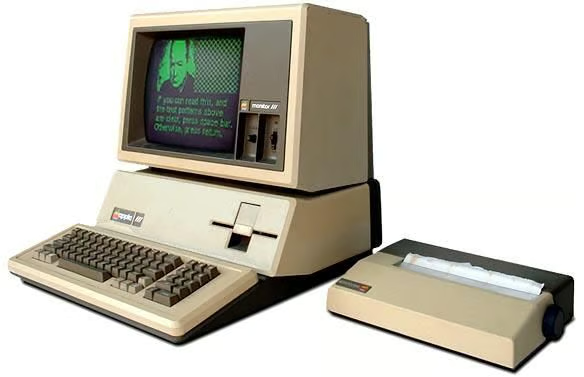
Since 1977, Apple had been making millions of dollars on their Apple II line of computers. They sold hundreds of thousands of them, and it was the primary money maker for the company.
But Apple didn\u2018t expect the Apple II to continue to be so successsful, so they set out to design an even better system, the Apple III, specifically for the business environment.
Reprinted with permission from Oldcomputers.net
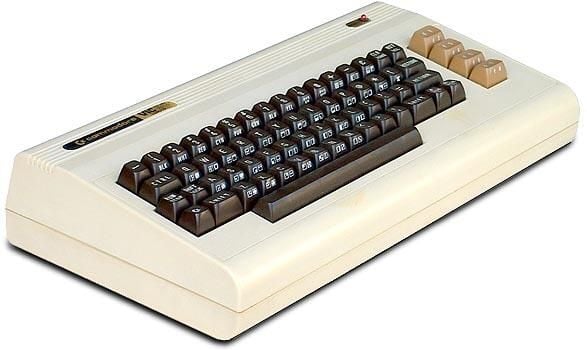
The VIC-20 was the first inexpensive color computer available, costing less than $300. It can only display 22 characters of text per line, so its use for business applications is minimal, but people loved it for games – it has good color, a joystick port, and it was cheap.
The VIC-20 is also the first computer ever to sell over 1 million units, just a few months ahead of the Apple II 1 million mark, and production of the VIC-20 was up to 9000 units a day, with sales reaching $305 million. The price of a VIC-20 eventually dropped to less than $100, the first color computer to do so.
Reprinted with permission from Oldcomputers.net
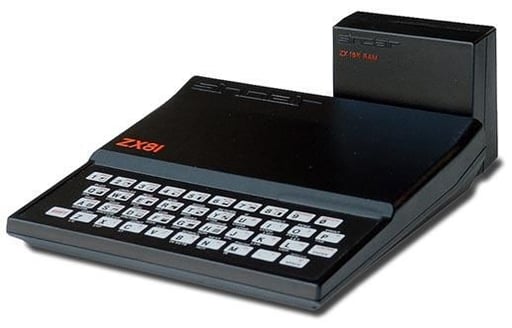
In 1980, British company Sinclair released their ZX80 computer for $199.95.
One year later, they released the new and improved ZX81. Compared to the ZX80, the ZX81 was much cheaper, at only $99.95, the first computer for under $100. The ZX81 has the same microprocessor and runs at the same speed as the ZX80, but it has a better BASIC programming language and is cheaper to produce, due to having fewer chips and a simpler design.
Reprinted with permission from Oldcomputers.net
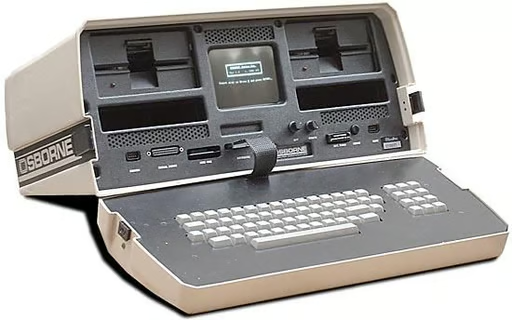
Released in 1981 by the Osborne Computer Corporation, the Osborne 1 is considered to be the first true portable computer – it closes-up for protection, and has a carrying handle. It even has an optional battery pack, so it doesn\u2018t have to plugged into the 110VAC outlet for power.
Reprinted with permission from Oldcomputers.net
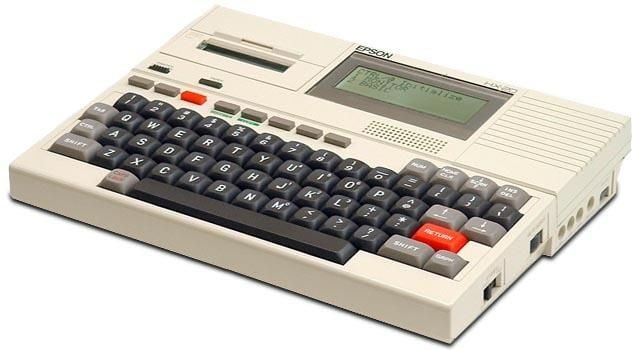
If you\u2018re interested in “firsts”, this is one of them. The Epson HX-20 can be considered the first so-called laptop computer.
Everything is included for a real portable computer – a full-size keyboard, an LCD screen, printer, storage device, built-in rechargeable batteries.
Harkening back to the old-days, the HX-20 has a built-in Monitor application for direct manipulation of the system memory.
Reprinted with permission from Oldcomputers.net
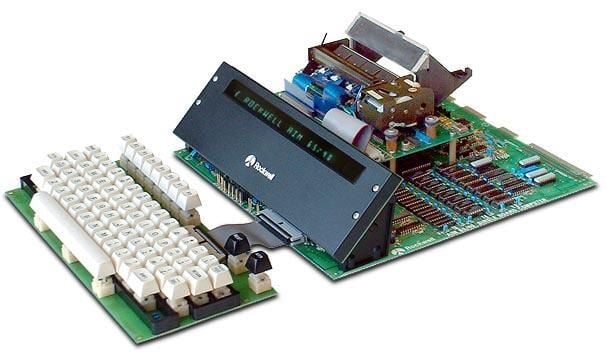
Rockwell AIM 65/40 computer:
AIM = Advanced Interactive Microcomputer.
65= Rockwell 6502 processor.
40= 40 column display.
An upgrade of the original Rockwell AIM-65 which was released in 1976, this model has a larger display, among other features.
Reprinted with permission from Oldcomputers.net
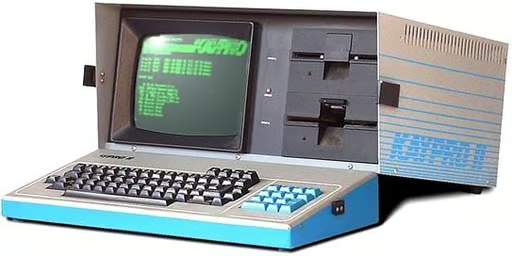
The Kaypro II was the first computer released by Non-Linear Systems, in 1982. Non-Linear Systems was founded by Andy Kay in 1952. But they didn\u2018t make computers back then, they made digital multimeters. You see, Andy Kay is the inventor of the digital multimeter.
Reprinted with permission from Oldcomputers.net
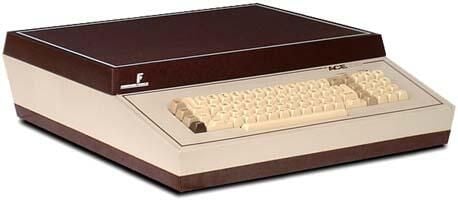
The Apple II series of computers were very popular – so popular in fact, that other computer companies released “clone” computers based on the Apple design.
The Franklin Ace 100 is one such clone of the original Apple II computer.
Reprinted with permission from Oldcomputers.net
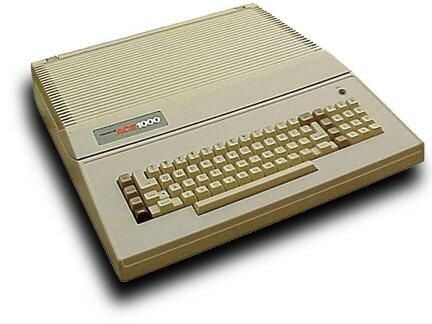
The Apple II series of computers were very popular, so popular in fact, that numerous clones were manufactured by other computer manufacturers.
The Franklin Ace 1000 is clone of the Apple II Plus computer. Franklin made numerous Apple clones, the first being the Franklin Ace 100, a clone of the original Apple II.
Reprinted with permission from Oldcomputers.net
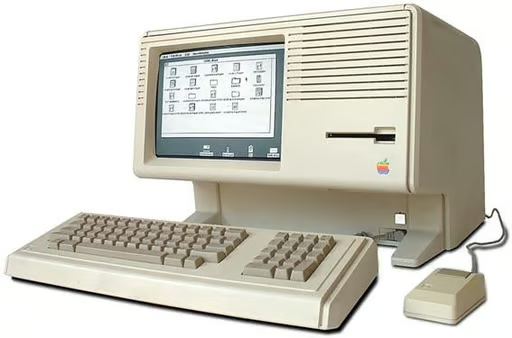
Officially, “Lisa” stood for “Local Integrated Software Architecture”, but it was also the name of Apple co-founder Steve Jobs\u2018 daughter.
The Lisa is the first commercial computer with a GUI, or Graphical User Interface. Prior to the Lisa, all computers were text based – you typed commands on the keyboard to make the system respond. Now, with the Lisa, you just point-and-click at tiny pictures on the screen with a small rolling device called a \u2018mouse\u2018.
Reprinted with permission from Oldcomputers.net
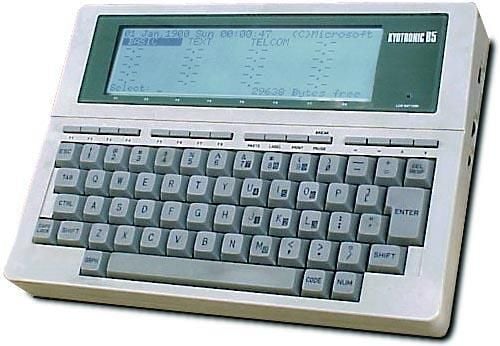
n the early 80\u2018s, Kyocera (Kyoto Ceramics) of Japan designed an excellent portable computer based on the 80C85 CPU. This computer was so great in fact, that Tandy, NEC, and Olivetti all licensed the design from Kyocera and released their own computers with similar features.
These can be considered the world\u2018s first laptop computers, and were very popular due to their full size keyboard, great portablility, and large display. Newspaper reporters loved them!
The Tandy TRS-80 model 100 “Micro Executive Workstation” was by far the most popular, due to the Radio Shack chain of electronics stores throughout America.
From the KC-85 BASIC Reference Manual: “The large LCD screen gives it extremely advanced graphics capabilities for a portable computer (240 X 64 dots).”
Reprinted with permission from Oldcomputers.net
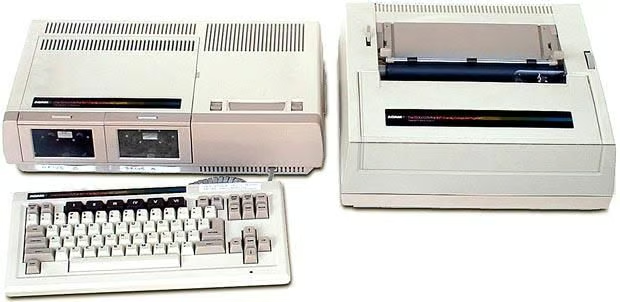
Ah, finally, “The first, complete, single-package family computer that includes all necessary hardware and software”, at least in Coleco\u2018s eyes.
Released in October 1983, the Adam was available in two versions, as an add-on to the very popular ColecoVision game system, or as a stand-alone home computer system, as seen above.
At $600, the Adam was a great deal, including a letter-quality printer, high speed built-in storage, and 64K of user RAM.
Reprinted with permission from Oldcomputers.net
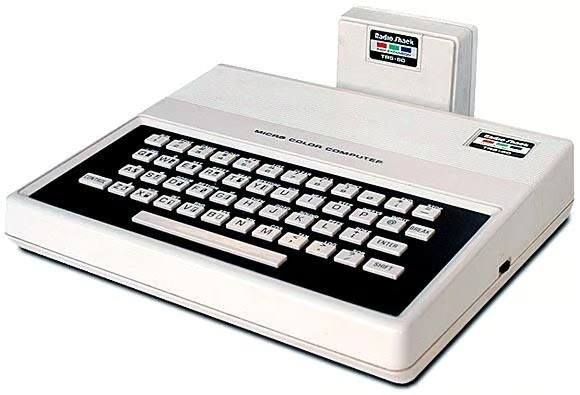
The TRS-80 MC-10 (MC=Micro Color) is a scaled-down version of the original TRS-80 Color Computer computer from 1980. The reason for this is apparently because cheap, simple computers seem to be popular, and the MC-10 has a few things going for it which most of the Sinclairs lacked – a better keyboard, and a color display.
Reprinted with permission from Oldcomputers.net
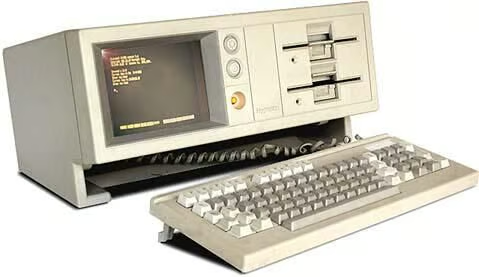
As one of the few computers from Canada, the Hyperion is a portable computer system similar to the Compaq Portable. Both were designed to be IBM compatible, but only the Compaq is said to be 100 percent accurate. The Hyperion fails to run many software titles reliably.
Oldcomputers.net
Bill Detwiler is the Editor for Technical Content and Ecosystem at Celonis. He is the former Editor in Chief of TechRepublic and previous host of TechRepublic's Dynamic Developer podcast and Cracking Open, CNET and TechRepublic's popular online show. Previously, Bill was an IT manager in the social research and energy industries. He has bachelor's and master's degrees from the University of Louisville, where he has also lectured on computer crime and crime prevention.


