\n\tMilitary and police forces across the world are investing in unmanned aircraft to spot threats and hunt down targets.
\n
\n\tThese spies in the sky, small craft that operate under remote control or autonomously navigate waypoints, come in all sizes – from silent planes no bigger than a bird to substantial craft packed with surveillance and measurement equipment or munitions.
\n
\n\tA variety of drones were on display at the UK’s Farnborough International Airshow, and TechRepublic went along to check them out.
\n
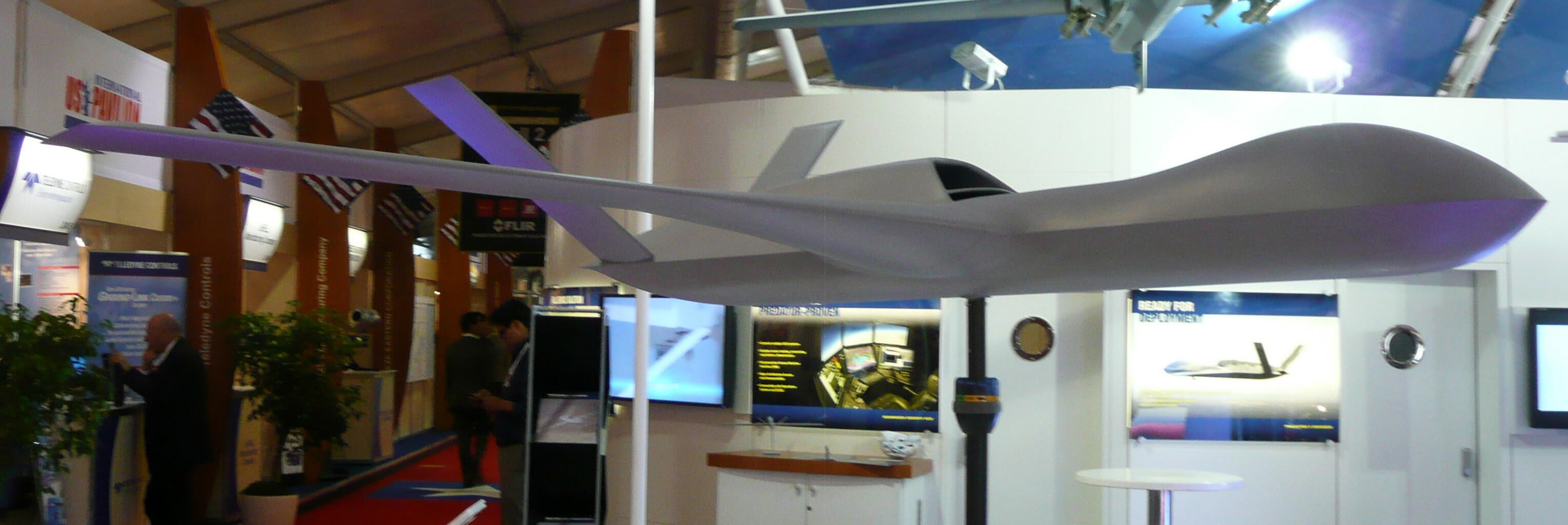
\n\tThe distinctive shape of this Predator C Avenger drone is designed to make it harder for electronic systems to spot by reducing the craft’s electromagnetic and thermal emissions.
\n
\n\tDesigned to stay in the air for a maximum of 20 hours, the drone operates at an altitude of 53,000 feet with a cruising speed of 400 knots – 460 mph.
\n
\n\tThe Avenger’s manufacturer, General Atomics, says the craft can perform wide-area surveillance and time-sensitive strike missions over land or sea, as well as other military roles.
\n
\n\tThe drone’s payload enables it to carry multiple sensors, while its internal weapons bay can house 3,000lb of precision munitions.
\n
\n\tPhoto: Nick Heath/TechRepublic
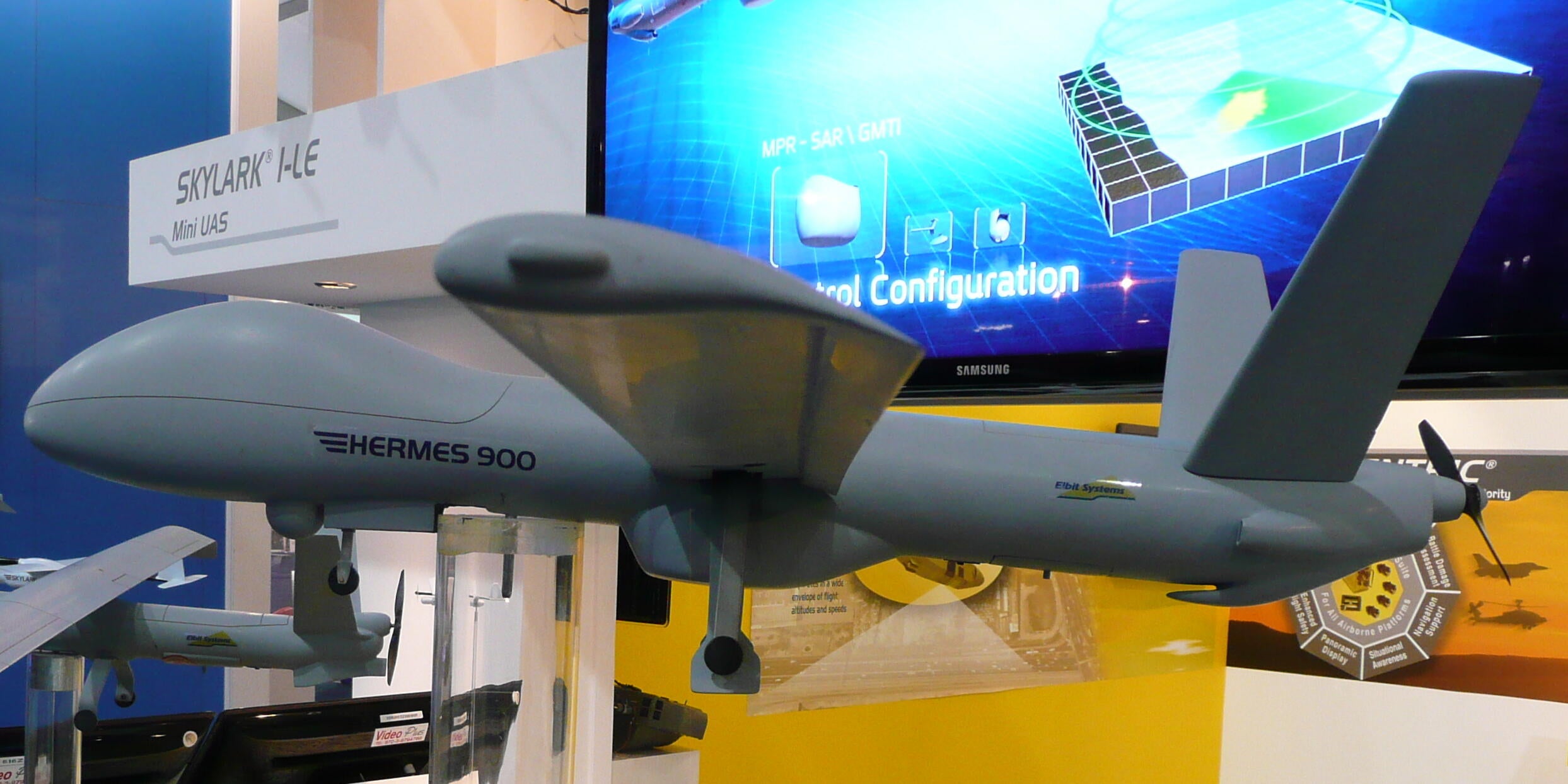
\n\tThe Hermes 900 drone can fly as high as 30,000 feet and stay in the air for 36 hours.
\n
\n\tMade by Israeli defence firm Elbit Systems, the drone can carry a payload of 350kg and is suited to use with a wide range of sensing and surveillance equipment – from infrared and optical video cameras to radar and laser rangefinders.
\n
\n\tThe autonomous vehicle is typically used to carry out intelligence, surveillance, target acquisition and reconnaissance. Elbit says it can mount constant surveillance of specific locations as well as scan large areas.
\n
\n\tThe system can be linked to two ground data terminals to allow it to carry out two concurrent missions during a single flight.
\n
\n\tPhoto: Nick Heath/TechRepublic
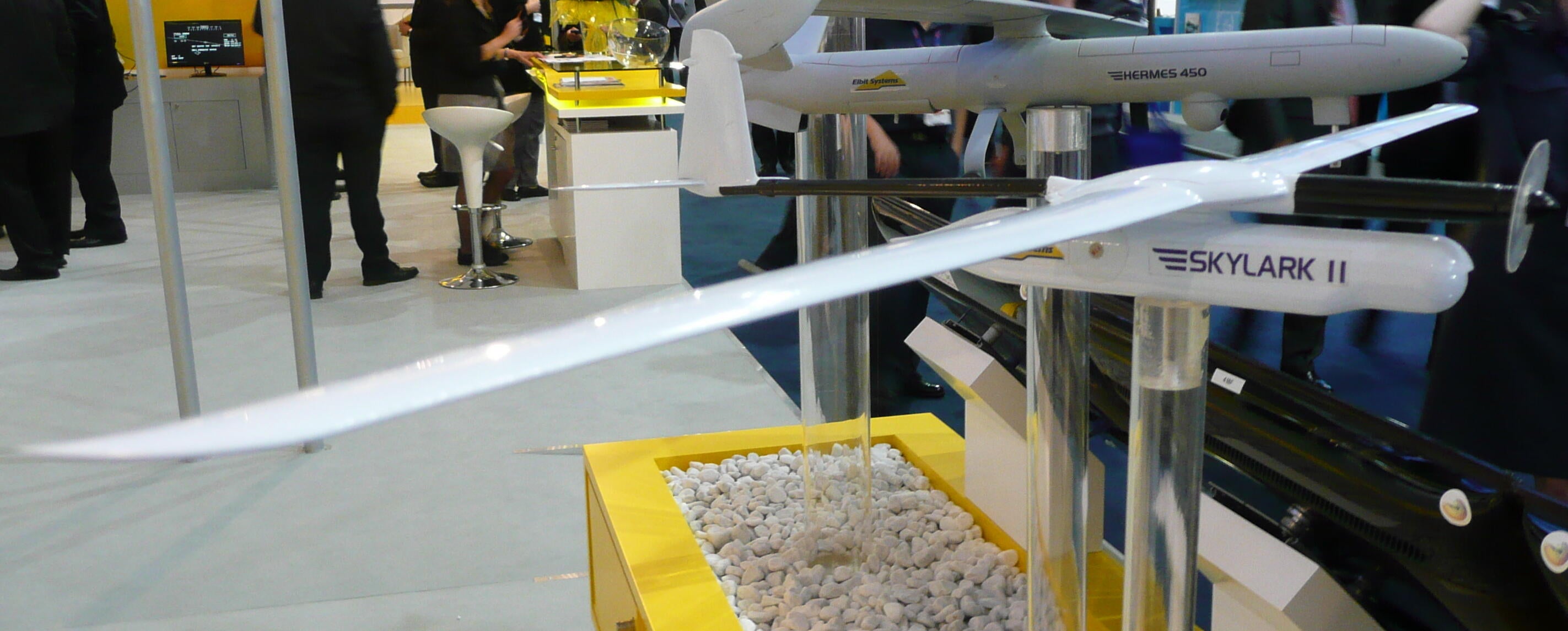
\n\tDesigned to be an unseen eye in the sky, the tiny Skylark II is a silent machine suited to covert surveillance at low altitudes.
\n
\n\tIts maker, Elbit Systems, says it can be used to provide day and night target detection, identification and continuous tracking.
\n
\n\tThe drone can carry out operations in the field, as it can be controlled from a vehicle and trailer, and can carry out optical and infrared surveillance and laser range-finding.
\n
\n\tThe aircraft can stay in the air for four hours and flies at a maximum height of 15,000 feet, with a range of 60km.
\n
\n\tPhoto: Nick Heath/TechRepublic
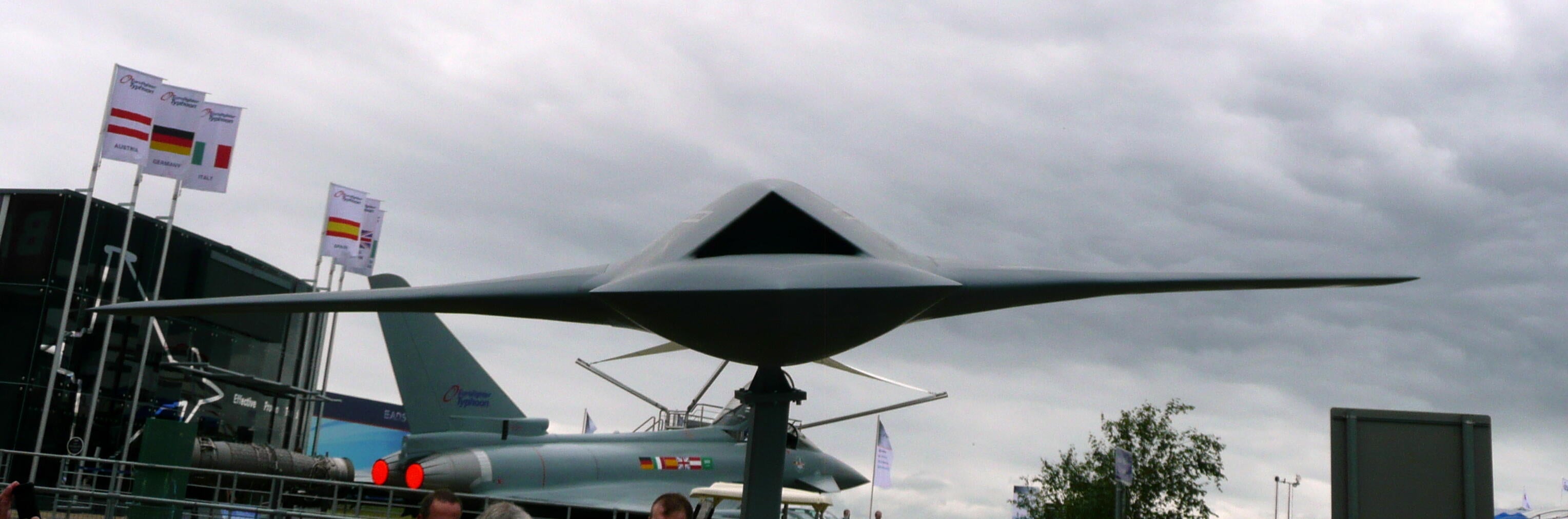
\n\tThis is a concept model of a future drone by aerospace firm BAE Systems.
\n
\n\tPhoto: Nick Heath/TechRepublic
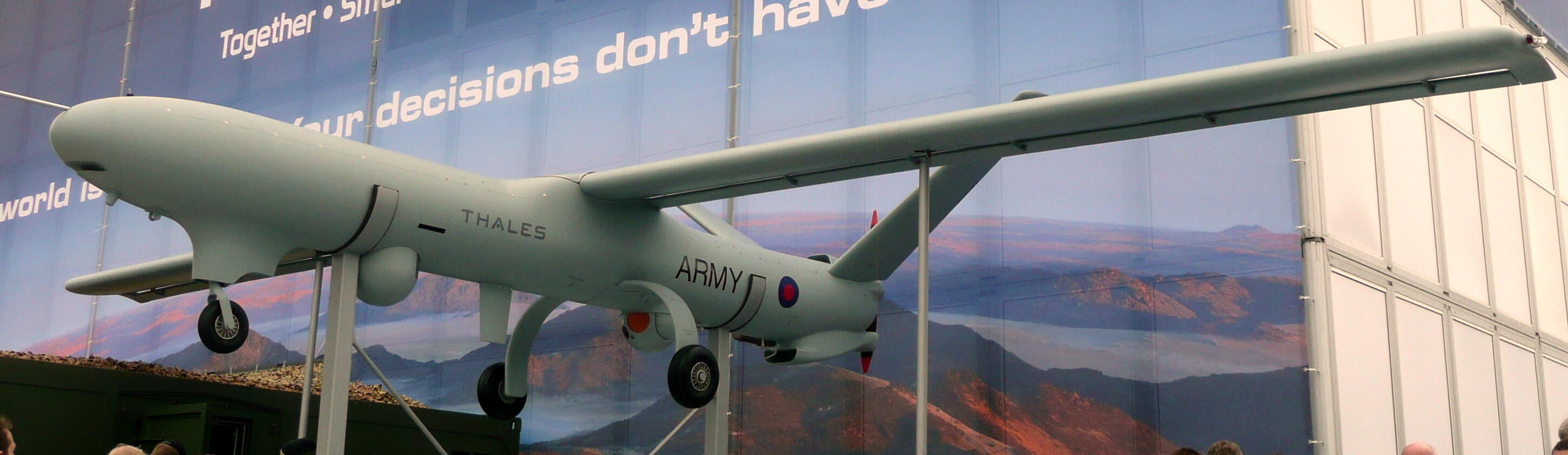
\n\tThe Watchkeeper drone is an autonomous aircraft, which the British army says can be fitted with radar sensitive enough to detect footprints left in the dirt.
\n
\n\tThe UK’s Ministry of Defence (MoD) has bought drones of this type to provide forces with the ability to carry out surveillance, target acquisition and reconnaissance 24/7 in all weathers.
\n
\n\tThe MoD will use Watchkeeper as part of a system made up of unmanned air vehicles, sensors, data links and ground control stations.
\n
\n\tThe drone, a modified version of the Israeli Hermes 450 craft, was due to be deployed by the UK military in February this year.
\n
\n\tPhoto: Nick Heath/TechRepublic
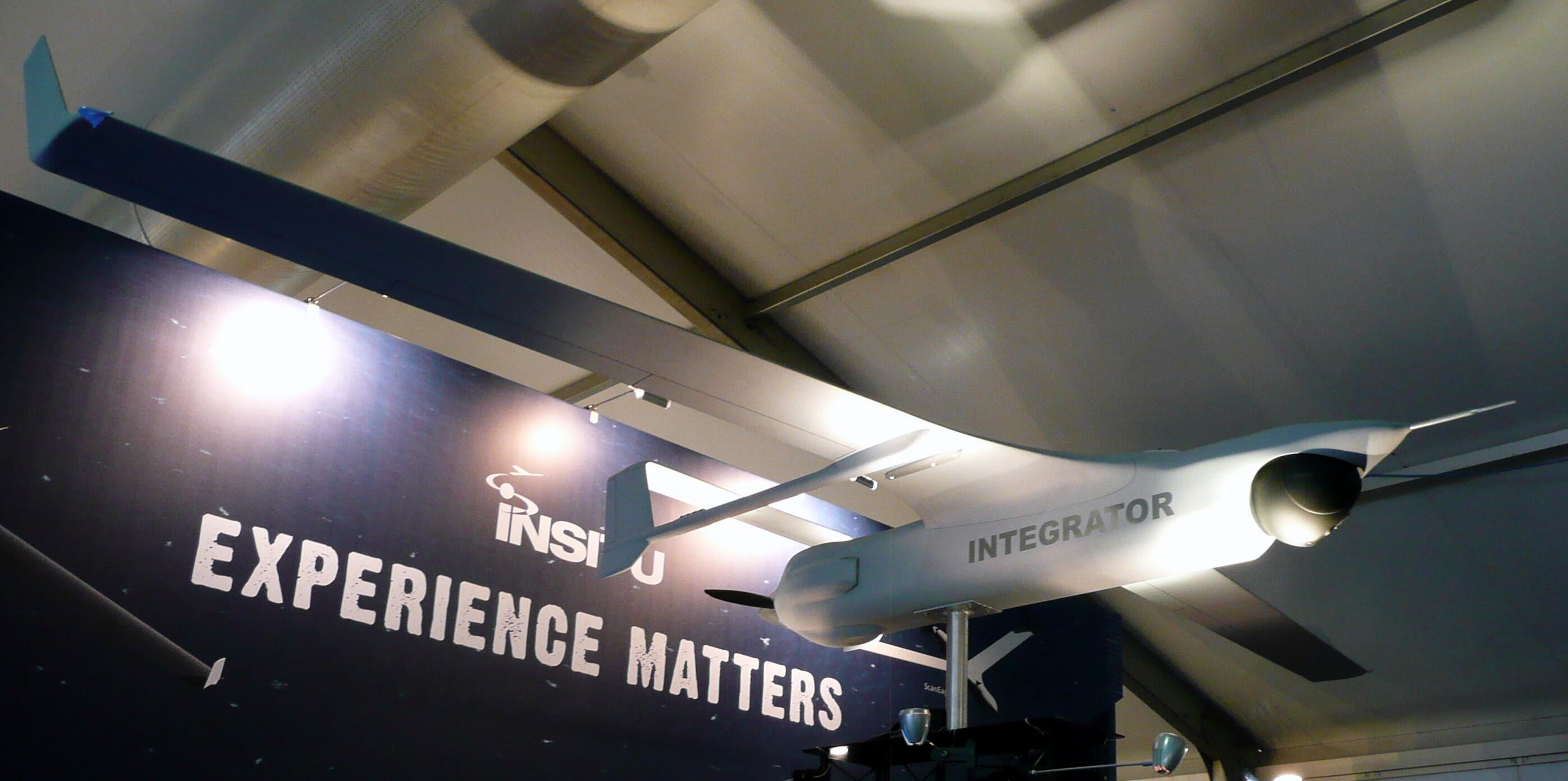
\n\tThe Insitu Integrator is an unmanned air vehicle that is suited to optical and infrared surveillance and laser range-finding.
\n
\n\tCapable of flying at a height of more than 15,000 feet and at a maximum speed of 55 knots, the Integrator can stay in the air for up to 24 hours.
\n
\n\tThe drone is completely autonomous and can be directed using a drag-and-drop interface designed for simple operation.
\n
\n\tPhoto: Nick Heath/TechRepublic
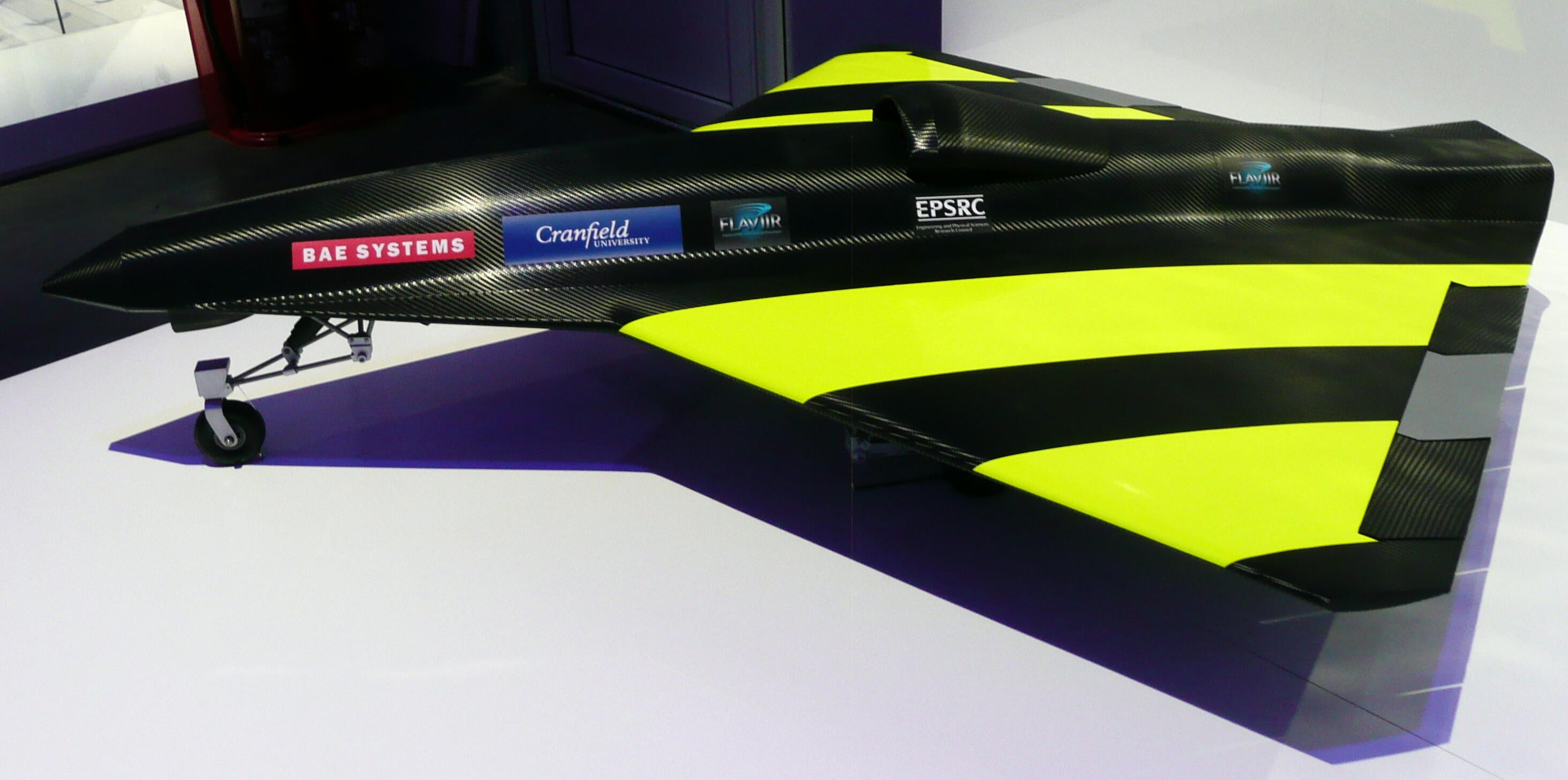
\n\tThe Demon UAV generated a stir in the aviation world by being the world’s first aircraft to fly without flaps.
\n
\n\tConventional planes use flaps, slats and other surfaces to manipulate the flow of air over their wings and alter the amount of lift generated.
\n
\n\tThe diamond-shaped Demon UAV generates lift using a different system known as fluidic control. The system employs small jets at the back of the Demon UAV’s wings to change the direction of the engine’s thrust and to deflect the airflow over the wings.
\n
\n\tThe drone was developed by BAE Systems and engineers from UK universities during a five-year research project known as FLAVIIR, Flapless Air Vehicle Integrated Industrial Research.
\n
\n\tPhoto: Nick Heath/TechRepublic
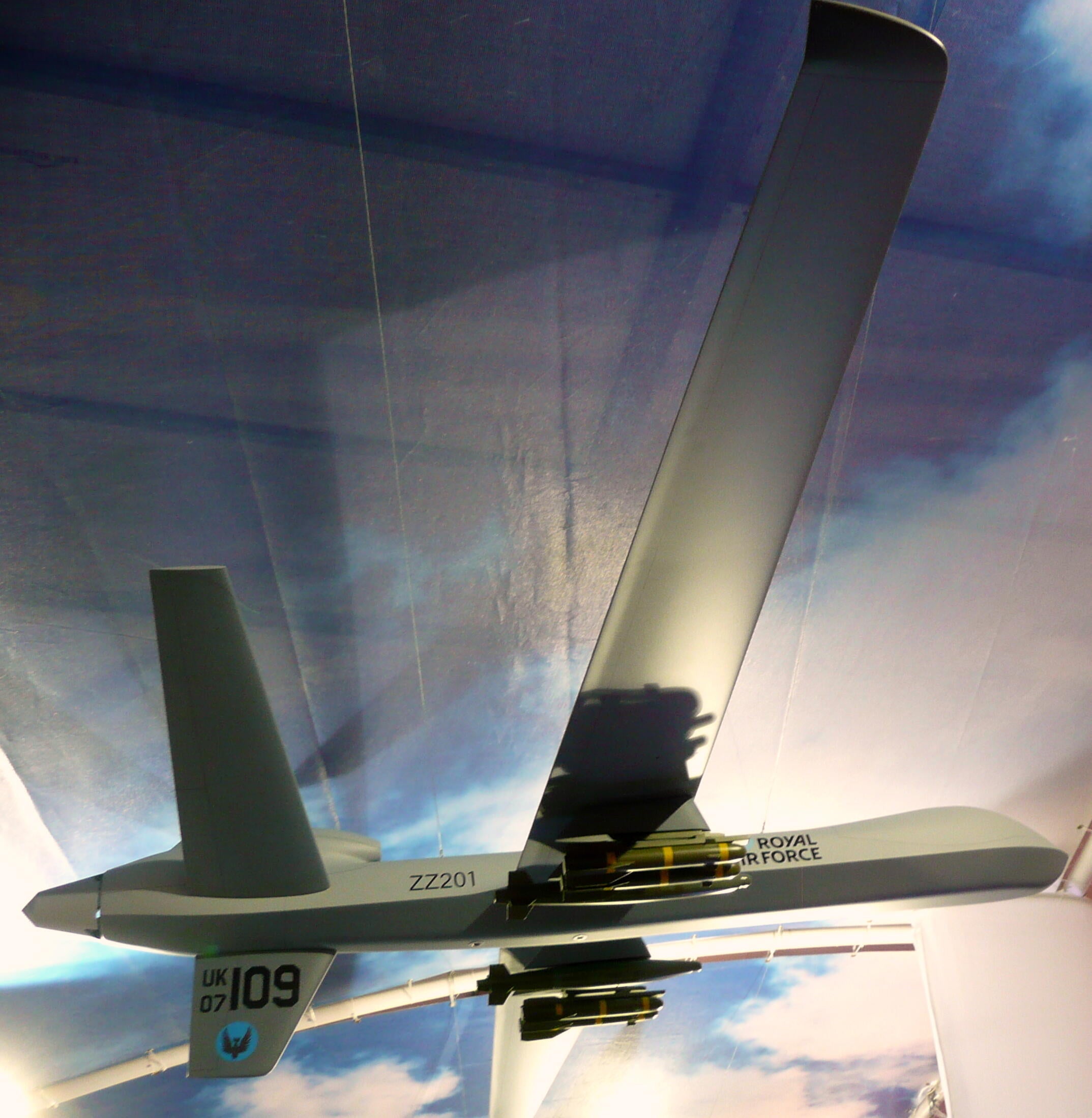
\n\tThe Predator B Reaper unmanned aerial system has served as an eye in the sky for the US Air Force, the UK’s RAF and other military forces worldwide.
\n
\n\tThe drone can be used for a range of offensive and surveillance missions, including optical, infrared and radar monitoring, painting weapon targets with lasers and as an attack aircraft armed with missiles or laser-guided bombs.
\n
\n\tThe craft can operate at up to 50,000 feet, can carry a 1,746kg payload, travel at 240 knots – 276 mph – and stay in the air for more than 30 hours.
\n
\n\tThe Predator B’s Honeywell turboprop engine is integrated with a digital electronic engine control, which improves engine performance and fuel efficiency – particularly at low altitudes.
\n
\n\tPhoto: Nick Heath/TechRepublic
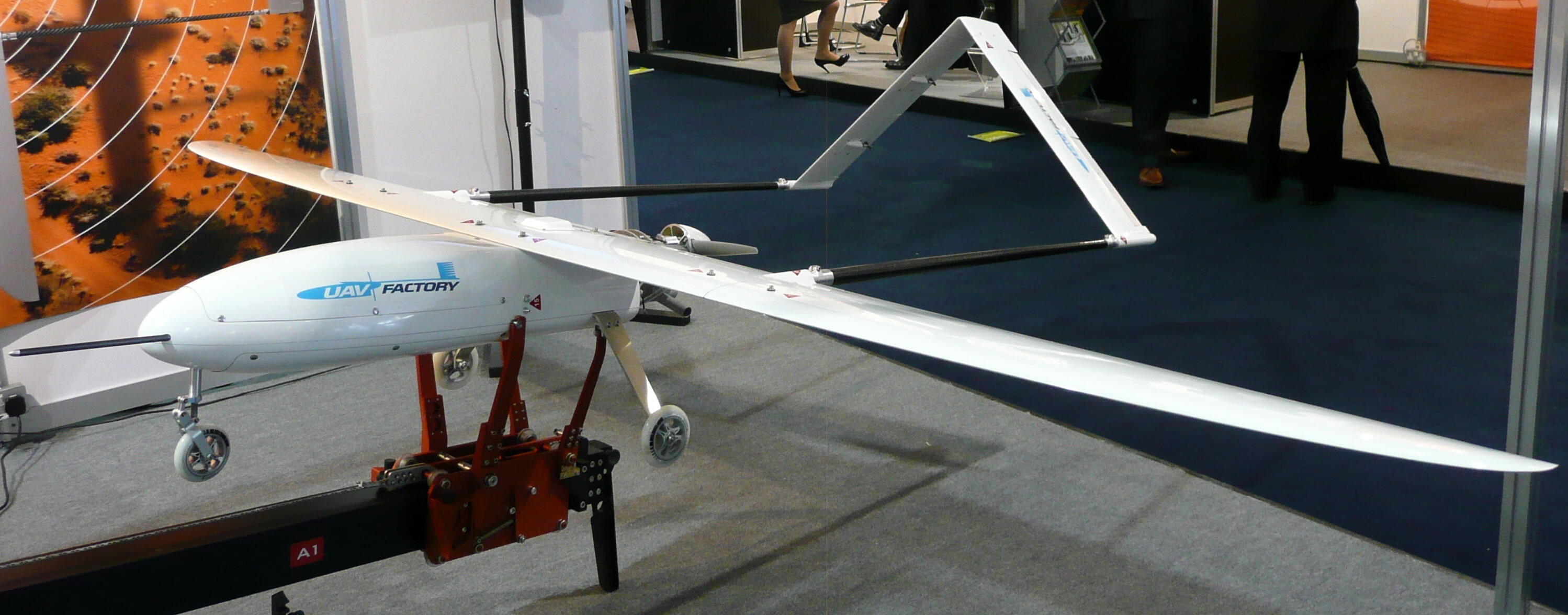
\n\tThe Penguin B is designed to be a high-performance unmanned aircraft – capable of staying in the air for more than 20 hours.
\n
\n\tThe drone – which can be launched from catapult, runway or car top – recently set a world endurance record by performing a non-stop flight of 54 hours and 27 minutes, the longest recorded flight for a mini-class unmanned aircraft.
\n
\n\tIt is able to carry up to 11.5kg of combined fuel and payload and can be commanded by an optional portable control station.
\n
\n\tThe craft, made by UAV Factory, is used by universities and research organisations in the US.
\n
\n\tPhoto: Nick Heath/TechRepublic

Nick Heath is a computer science student and was formerly a journalist at TechRepublic and ZDNet.

