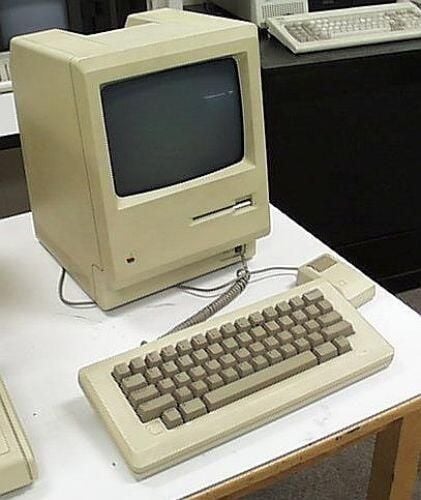
Twenty-five years ago, Apple released the Macintosh, and the world was never the same. The model pictured here is actually the Macintosh 512k, which was almost exactly the same as the original Macintosh introduced in January 1984, but Apple increased the memory from the 128K shipped on the original model, earning it the nickname “Fat Mac.”\r\n
\r\nCaptions by CNET News.com’s Tom Krazit. Click here for CNET’s complete coverage of the Mac anniversary.\r\n
\r\nPhoto: Courtesy of Computer History Museum
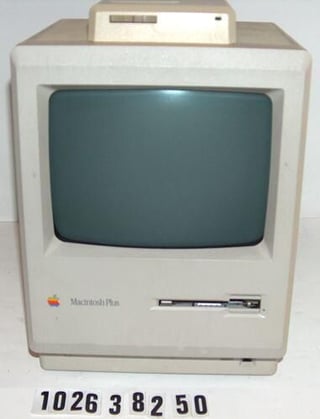
The Macintosh Plus made its debut in 1986 with 1MB of memory and a SCSI (small computer system interface) port for adding peripherals like hard drives or printers. Note the color change on this particular model from the Macintosh 512k’s beige to gray.\n
\nPhoto: Courtesy of Computer History Museum
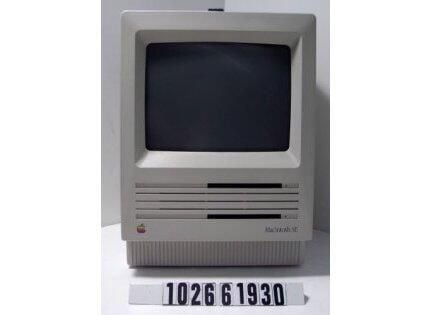
The next evolution to the Macintosh form factor was the Macintosh SE, which brought dual floppy disk drives to the Mac and dropped that phone cord port on the lower front panel in 1987. A later revision to this design, the SE/30, was voted as the “Best Mac Ever” by a panel of Macworld contributors this week.\n
\nPhoto: Courtesy of Computer History Museum
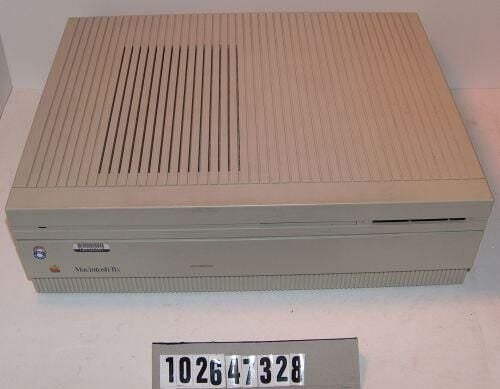
The Macintosh II series, introduced in 1987, dropped the all-in-one monitor and computer design in favor of a desktop look. Shown here is the IIx model, which cost $7,800 in 1988 with 1MB of RAM.\n
\nPhoto: Courtesy of Computer History Museum
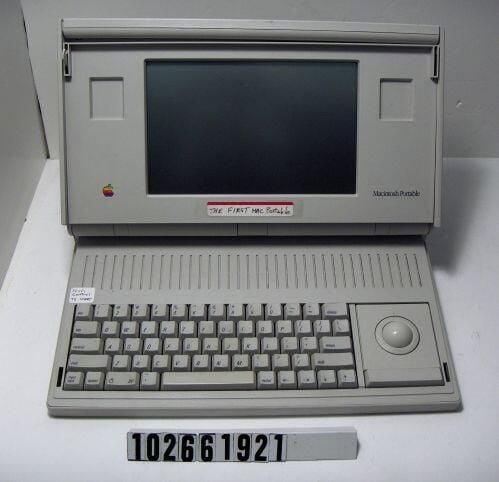
Apple’s first attempt at a notebook was not a commercial success, but it is noteworthy for its historical significance to the company. The Macintosh Portable came out in 1989 weighing in at almost 16 pounds. It cost about $400 a pound.\n
\nPhoto: Courtesy of Computer History Museum
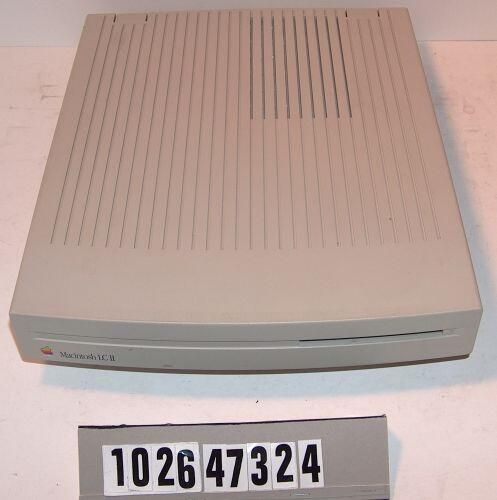
Apple decided to get back into the low-cost computer market around 1990, hence the introduction of the LC line. This is the LC II, which ushered in an era of smaller chassis for Apple and would eventually be replicated under the Performa brand later in the decade.\n
\nPhoto: Courtesy of Computer History Museum
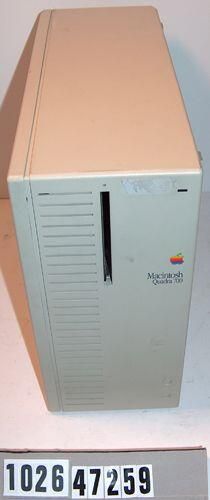
The company didn’t take its eye off the high-end market, however, introducing the Quadra series in 1991. One notable feature on this Quadra 700 was the introduction of an Ethernet jack, which would come to be the standard for cable networking.\n
\nPhoto: Courtesy of Computer History Museum
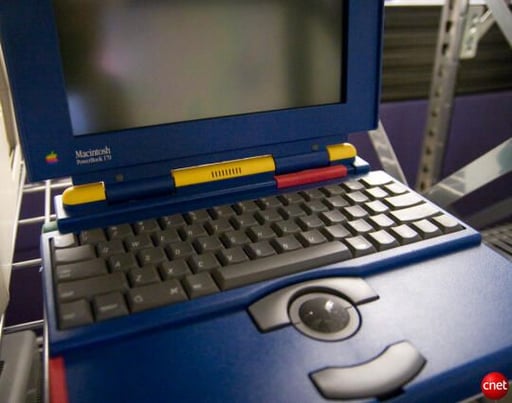
Portable computing inside Apple got a little more serious with the introduction of the PowerBook 100 series. This model, the PowerBook 170, was the high-end version of Apple’s first PowerBook models introduced in late 1991, and much easier to tote than the Macintosh Portable at around 7 pounds.\n
\nPhoto by James Martin/CNET News
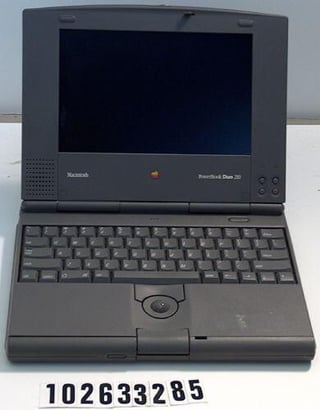
PowerBooks got even smaller in 1992 with the introduction of the PowerBook Duo series (the 210 model is shown here). These notebooks weighed just 4 pounds and used docking stations in order to eliminate as many ports as possible from the notebooks themselves. Former Apple employee and current blogger Chuq Van Rospach called this model one of his favorite Macs of all time.\n
\nPhoto: Courtesy of Computer History Museum
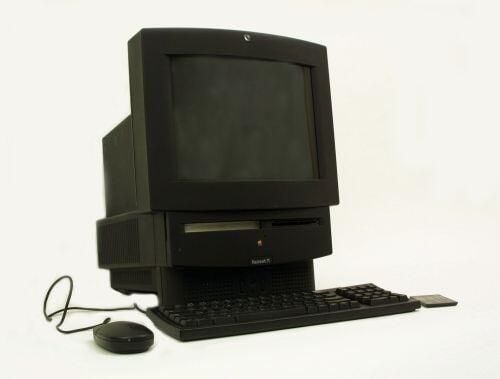
Long before Apple experimented with Apple TV as a hobby, it introduced Macintosh TV as an attempt to blend a computer and a television. It didn’t work out so well after being introduced in October 1993 which, coincidentally or not, was around the time Apple’s market share started to head south for a decade.\n
\nPhoto: Courtesy of Computer History Museum
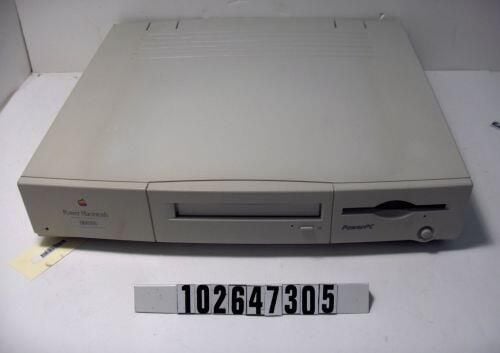
Introduced in 1994, the Power Macintosh 6100 was the first Mac to use a PowerPC chip in the first historic processor architecture switch Apple would make in 25 years of the Mac. It was designed as a high-end desktop to replace the Quadra and set the stage for a decade of computers designed around the PowerPC architecture.\n
\nPhoto: Courtesy of Computer History Museum
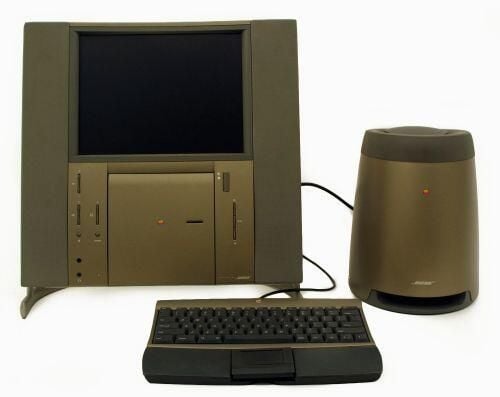
Just before Steve Jobs returned to Apple to rescue the struggling company, Gil Amelio unveiled this Mac to celebrate Apple’s 20th anniversary as a company in 1997. Few were made, and at $9,000 to start, few were sold. Apple eventually dropped the price more in line with the rest of the Macintosh lineup and sales picked up, but this computer appeared to be more about design than profit.\n
\nPhoto: Courtesy of Computer History Museum
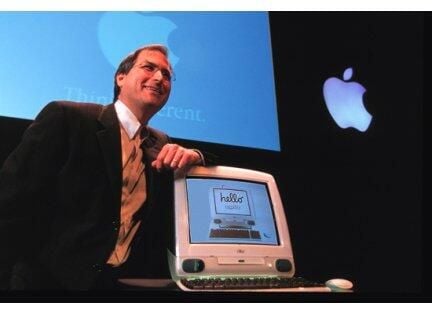
Perhaps the most significant computer introduced by Apple during the 1990s, the original iMac all-in-one design made its debut in 1998 alongside a beaming Steve Jobs. The multicolored design, introduction of USB ports, and emphasis on simplicity brought a lot of buzz back to Apple, and this model set the stage for the company’s desktop computing design strategy that persists today.\n
\nPhoto by Courtesy of Apple Computer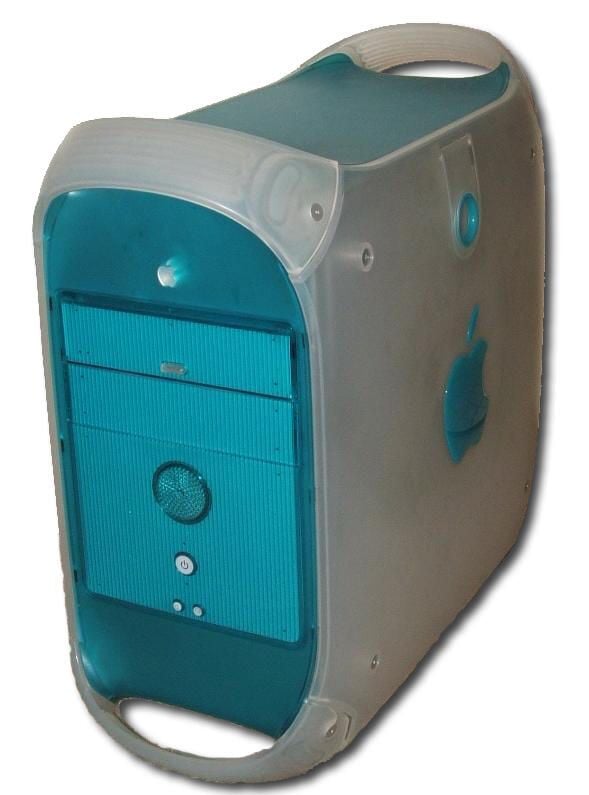
Jobs’ design influence was clearly being felt as the 1990s came to a close, with this Power Macintosh G3 Blue and White replacing a very drab model of the same name as Apple’s high-end desktop product. The side of this machine swung down for easy access to the innards of the system.\n
\nPhoto by Public domain, via Wikipedia
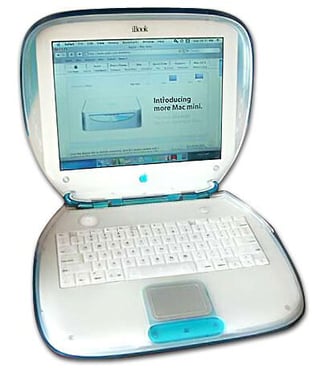
This colorful design, clearly inspired by the original iMac, was Apple’s consumer laptop product for 1999: the iBook 3G. It resembles later student-laptop designs such as the XO Laptop and Intel’s Classmate PC and came with integrated wireless networking, which would eventually become ubiquitous but was a rare thing in 1999.\n
\nPhoto by Public domain, via Wikipedia
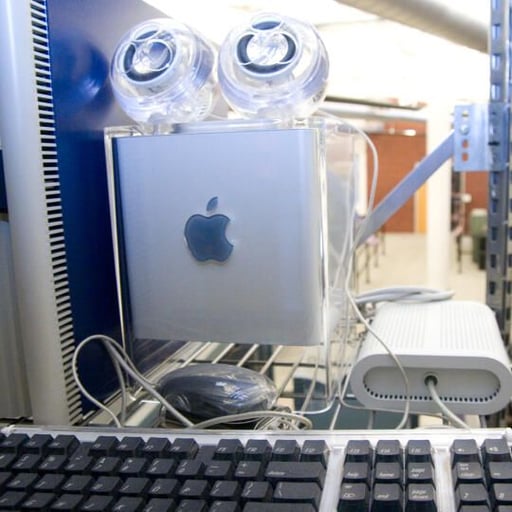
In 2000, Apple introduced one of its most distinctive designs ever: the Power Mac G4 Cube. “Cube,” for short, was one of the more beloved and bedeviled Macs ever made. It had a huge following among many Mac fans but was plagued by faint lines on the exterior that some felt were cracks and others felt were blemishes. Apple discontinued the Cube in 2001 after noting that buyers seemed to prefer the slightly cheaper Power Mac G4 minitower.\n
\nPhoto by James Martin/CNET News
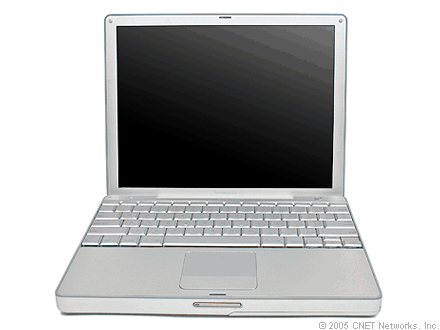
Apple’s design philosophy started to change around 2001, when it shifted away from multicolor hues with the introduction of the PowerBook G4. Various metals were introduced as the basis for the chassis, with the titanium PowerBook arriving first, followed by this aluminum model.\n\n
Photo by CNET Networks
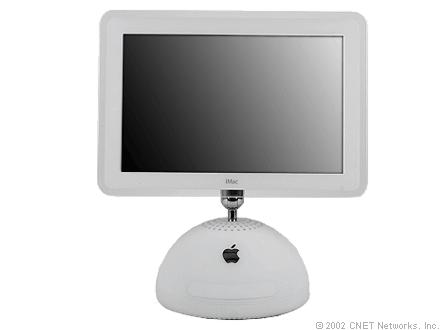
At the same time, Apple eschewed multicolor designs in the consumer desktop category with the introduction of the white plastic iMac G4 in January 2002. This model also introduced the concept of a flat-panel display atop a flexible arm and base, which held the electronics.\n
\nPhoto by CNET Networks
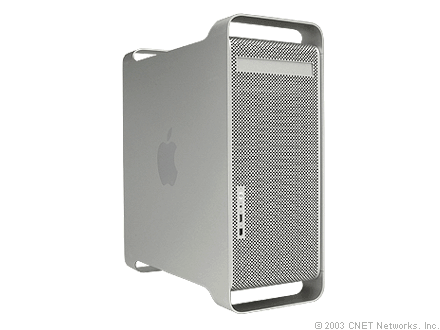
This striking design holds the most powerful computer Apple had ever made at the point it was introduced in 2003. That design was required, however, because of the significant heat thrown off by the G5 processor. Apple and IBM were unable to crank the G5 processor up to 3GHz as Jobs had promised, setting the stage for Apple’s second great architecture shift.\n\n
Photo by CNET Networks
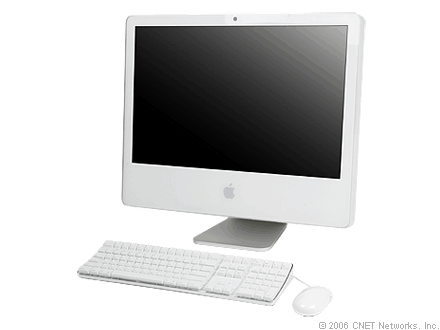
The modern era of the Mac officially began in January 2006, when Apple introduced its first Intel-based computer. The iMac (Intel) was essentially the same design as the iMac G5, which dropped the flexible arm from the iMac G4 in favor of an all-in-one design in which the circuitry was placed directly behind the display.
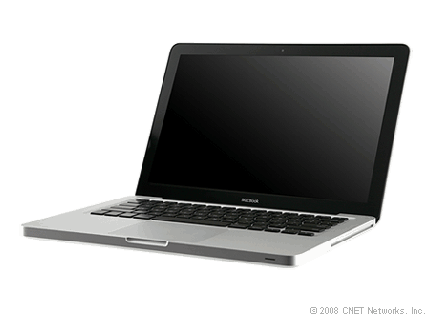
The current crop of Apple’s MacBook lineup is based on a new unibody design cut from a single block of aluminum. Also noteworthy is the single-button trackpad, in which the trackpad itself is the mouse button.

Nick Heath is a computer science student and was formerly a journalist at TechRepublic and ZDNet.


