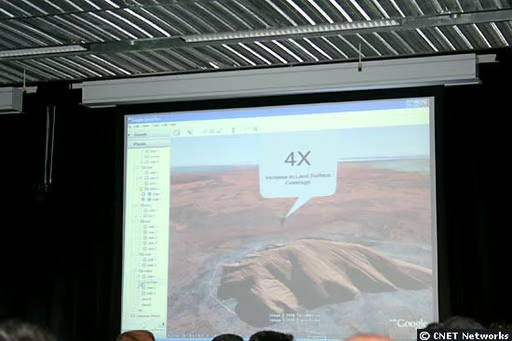
Google Earth 4.0, unveiled on Monday, shows a high-resolution version of Uluru, also known as Ayers Rock, in Australia.
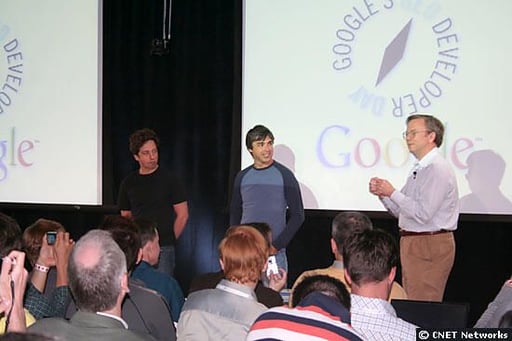
Google co-founders Sergey Brin (left) and Larry Page join Chief Executive Eric Schmidt onstage before the unveiling of Google Earth 4.0 at Google Geo Developer Day.
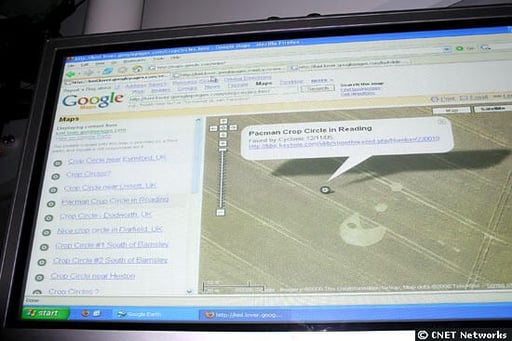
Google shows a page with links to crop circles, including the Pac-Man crop circle, on Google Earth.
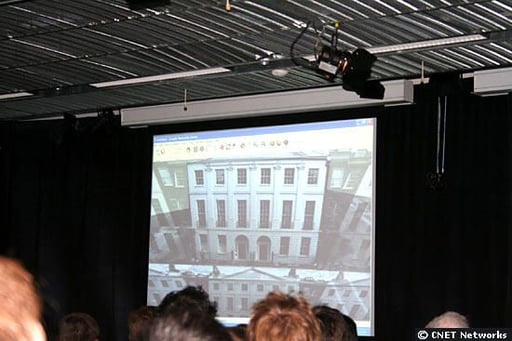
Google product managers demonstrate how to use the SketchUp 3D modeling tool to create buildings from scratch and insert them into Google Earth.
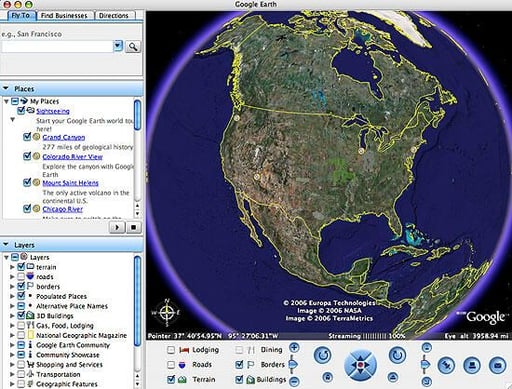
In the current version of Google Earth, the navigation and other controls, such as the zoom feature, are located in a frame under the main\r\nimage.
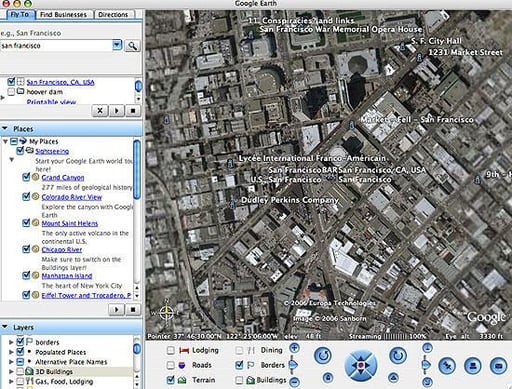
This image of downtown San Francisco taken from Google Earth 3.1 shows how the details become fuzzy around the edges.
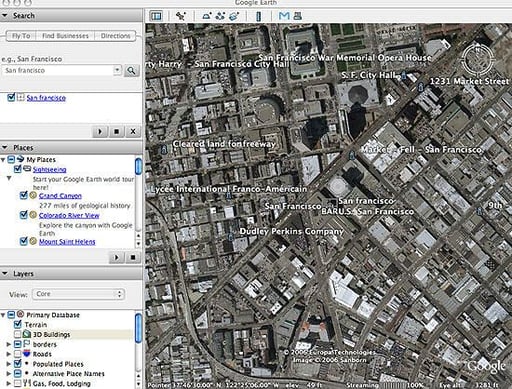
Details remain sharp from corner to corner in the same image as the previous slide taken from Google Earth 4.0. Also, the bottom frame is\r\neliminated and some controls are moved to the upper right corner of the main image. They are not visible until you move your mouse into the area.
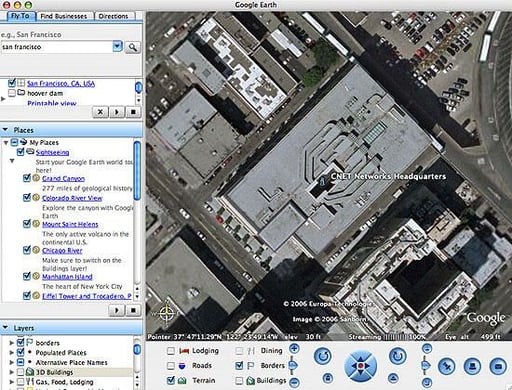
Notice the blurring of the white car in the intersection in the middle left portion of this image from Google Earth 3.1. Now, compare with the clarity of the same car as seen in Google Earth 4.0.
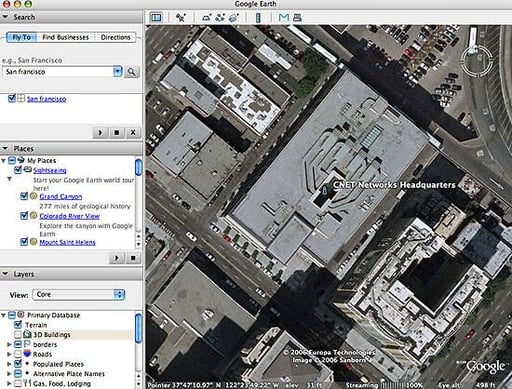
The clarity of the car as seen here in the intersection in the middle left portion of this image from Google Earth 4.0 is an improvement over the blurring of the car as seen from Google Earth 3.1.
Bill Detwiler is the Editor for Technical Content and Ecosystem at Celonis. He is the former Editor in Chief of TechRepublic and previous host of TechRepublic's Dynamic Developer podcast and Cracking Open, CNET and TechRepublic's popular online show. Previously, Bill was an IT manager in the social research and energy industries. He has bachelor's and master's degrees from the University of Louisville, where he has also lectured on computer crime and crime prevention.


