Inside the touchscreen cockpit of the future - TechRepublic

Inside the touchscreen cockpit of the future

  • 6373497.jpg

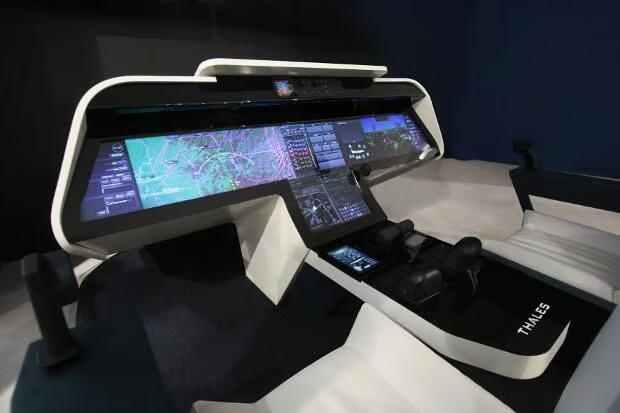
    Touchscreen cockpit of the future

    \n\tBy 2030, enormous touchscreens will dominate aircraft cockpits – if one research group’s vision of the future of aviation comes true.

    \n

    \n\tThis concept cockpit is a single touchscreen dashboard known as One Display for a Cockpit Interactive Solution (ODICIS).

    \n

    \n\tThis concept, on display at the Farnborough International Airshow this week, has been developed by a consortium of European companies and universities, led by French aerospace and defence firm Thales.

    \n

    \n\tThe system is able to reconfigure itself to show the information most relevant to the pilot at any given moment.

    \n

    \n\tFor instance, when the plane is taking off and landing, the pilot needs to know the status of the aircraft’s slats and flaps. However for the rest of the flight this information is generally not useful, so the system can be configured to remove that data automatically when it is not needed.

  • Touchscreen cockpit flags up key data

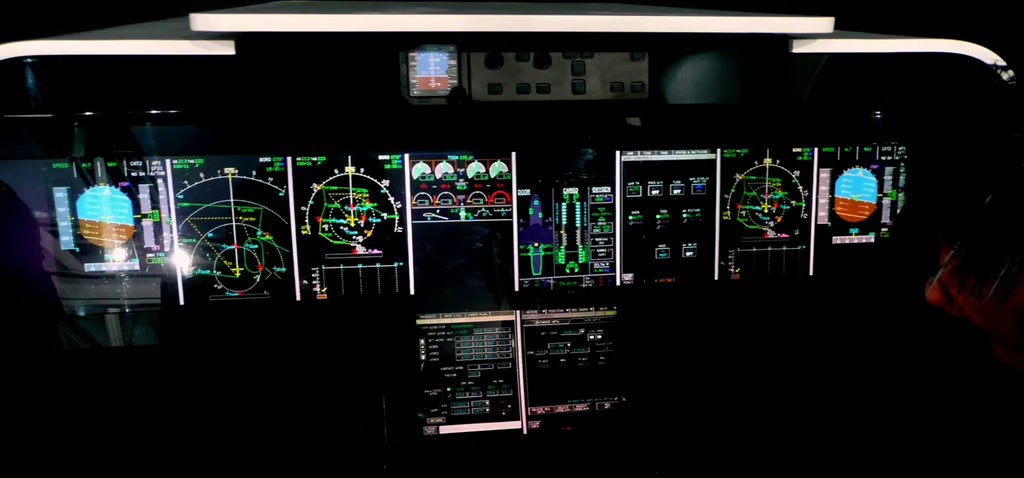
    \n\tToday, cockpits have several small screens, rather than the single large display of ODICIS.

    \n

    \n\tHaving a single display puts fewer constraints on the system in how it presents information. With ODICIS, data, images, charts and maps can take up as much space as needed, depending on what is most important to the pilot at any particular moment.

    \n

    \n\tIt can also fit information into irregular shaped panels such as the triangular ends of the display.

  • Cockpit display with multitouch support

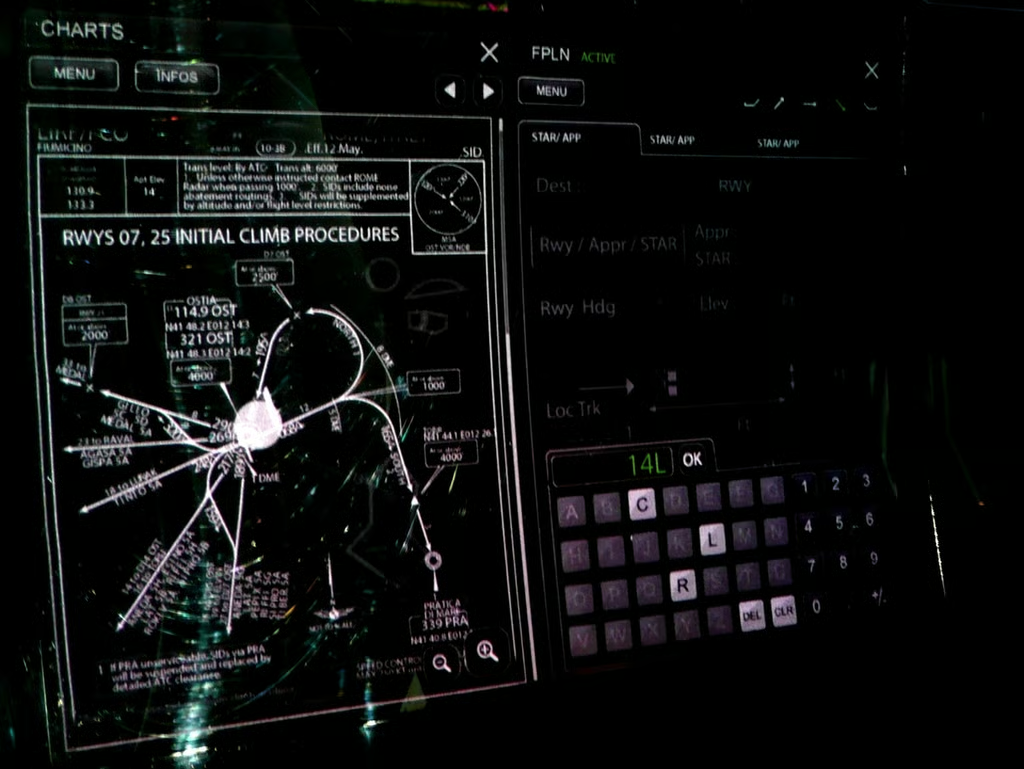
    \n\tPilots would be able to use ODICIS to call up the mix of primary flight displays, navigation displays and other information they need. The display’s multitouch interface will also allow pilots to use gestures such as drag or pinch to interact with the information.

    \n

    \n\tThe reconfigurable nature of the system means it could be set up to work in a variety of aircraft, from commercial airliners to military helicopters.

  • Aircraft synthetic vision system

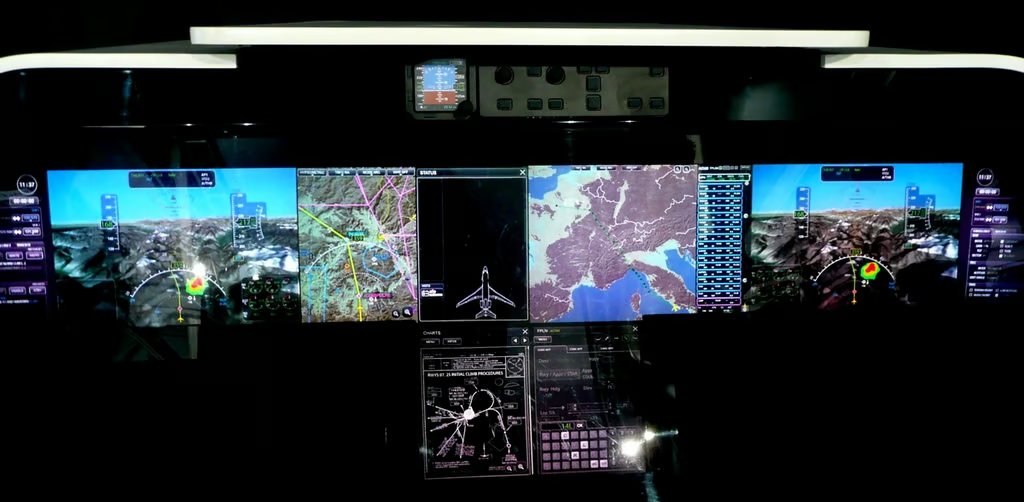
    \n\tThis picture shows how aircraft could use ODICIS to provide pilots with richer information about atmospheric conditions and the terrain they’re overflying.

    \n

    \n\tThe display on the right shows an image constructed from information about the topology of the terrain and readings taken by onboard instruments, about environmental factors such as the weather. It uses Thales Synthetic Vision System and Enhanced Vision System.

  • Multiple LCD projectors

    \n\tThe system processes the image on this curved screen at the base of ODICIS so it is as easy to read as if it were a flat screen.

    \n

    \n\tThe ODICIS on display at Farnborough uses five LCD projectors but Thales has estimated that a commercial system would probably need at least 10 projectors to provide redundancy.

  • Airborne Separation Assistance Systems

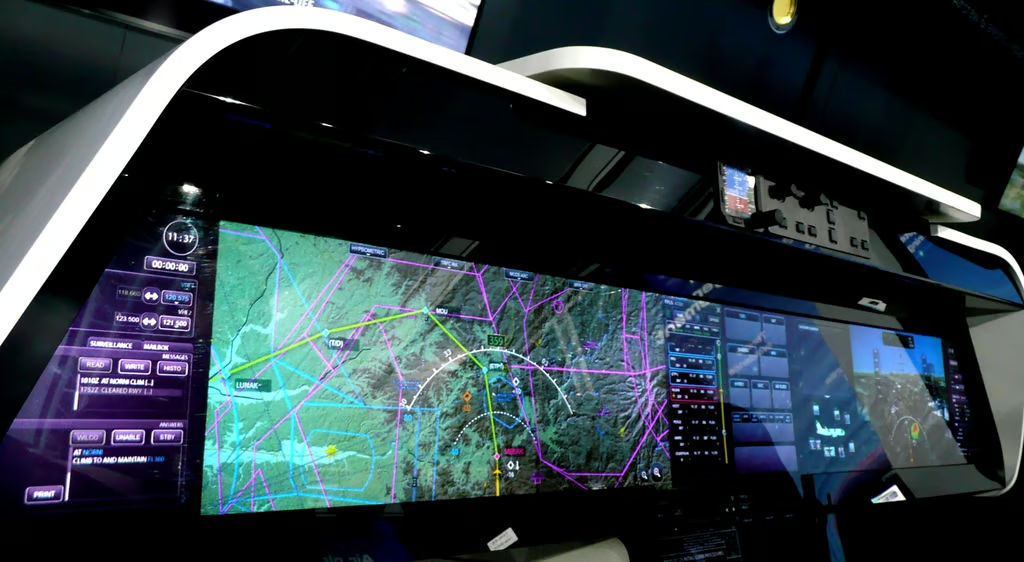
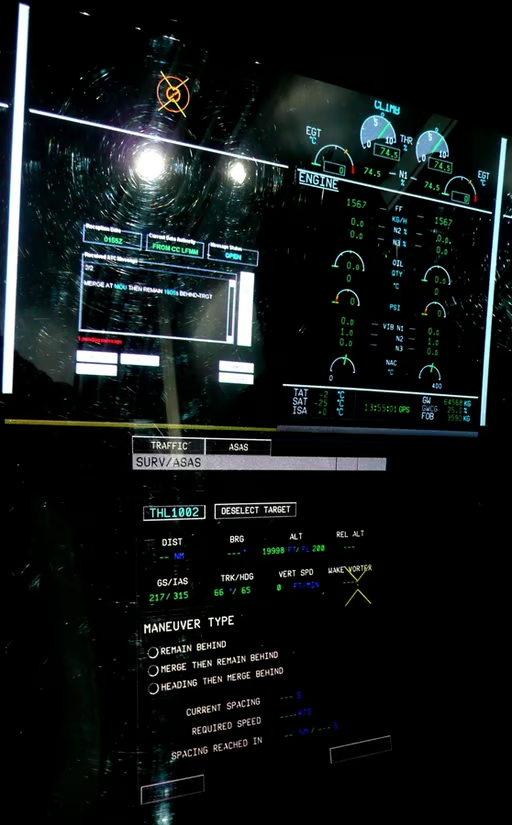
    \n\tThe display shows the Airborne Separation Assistance Systems, which compute and adjust the aircraft’s speed so it can maintain the correct distance from other planes and help the pilot follow air traffic controller instructions.

  • Aircraft sat-nav

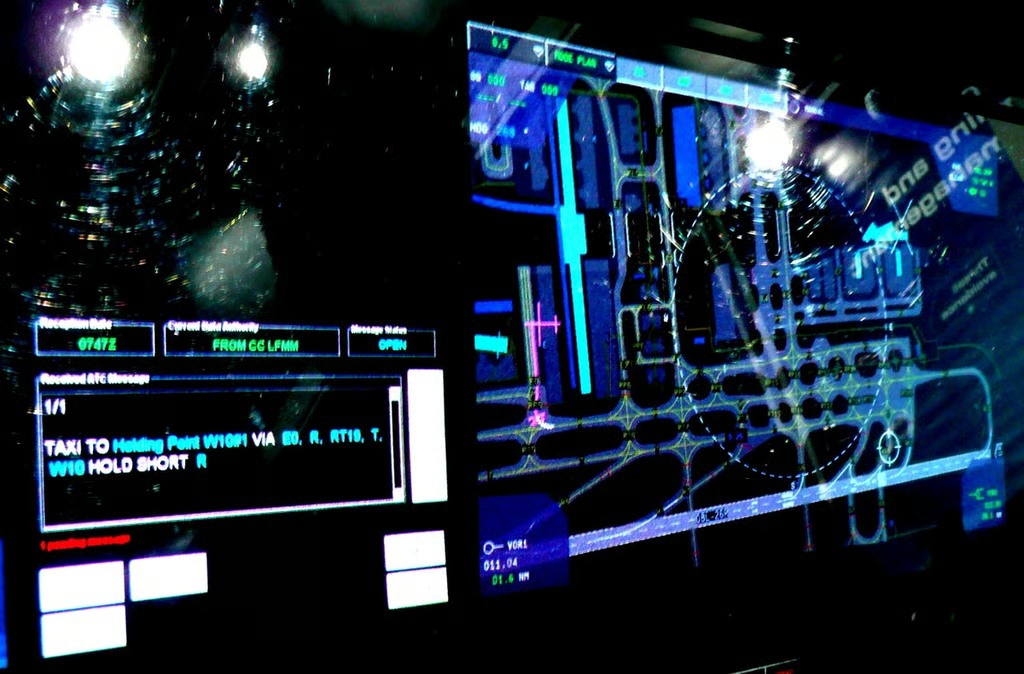
    \n\tThis Digital Taxi service could be described as a sat-nav for aircraft.

    \n

    \n\tTaxing round airports, particularly large ones such as Charles de Gaulle in Paris, can be particularly tricky as pilots often have to rely on signs to find their way.

    \n

    \n\tDigital Taxi sends pilots an electronic message telling them where they need to go and which route to take. It then uses GPS and other data to plot the route on a map for pilots from their current position to their designated airport stand.

1 of 7
Nick Heath

Nick Heath is a computer science student and was formerly a journalist at TechRepublic and ZDNet.