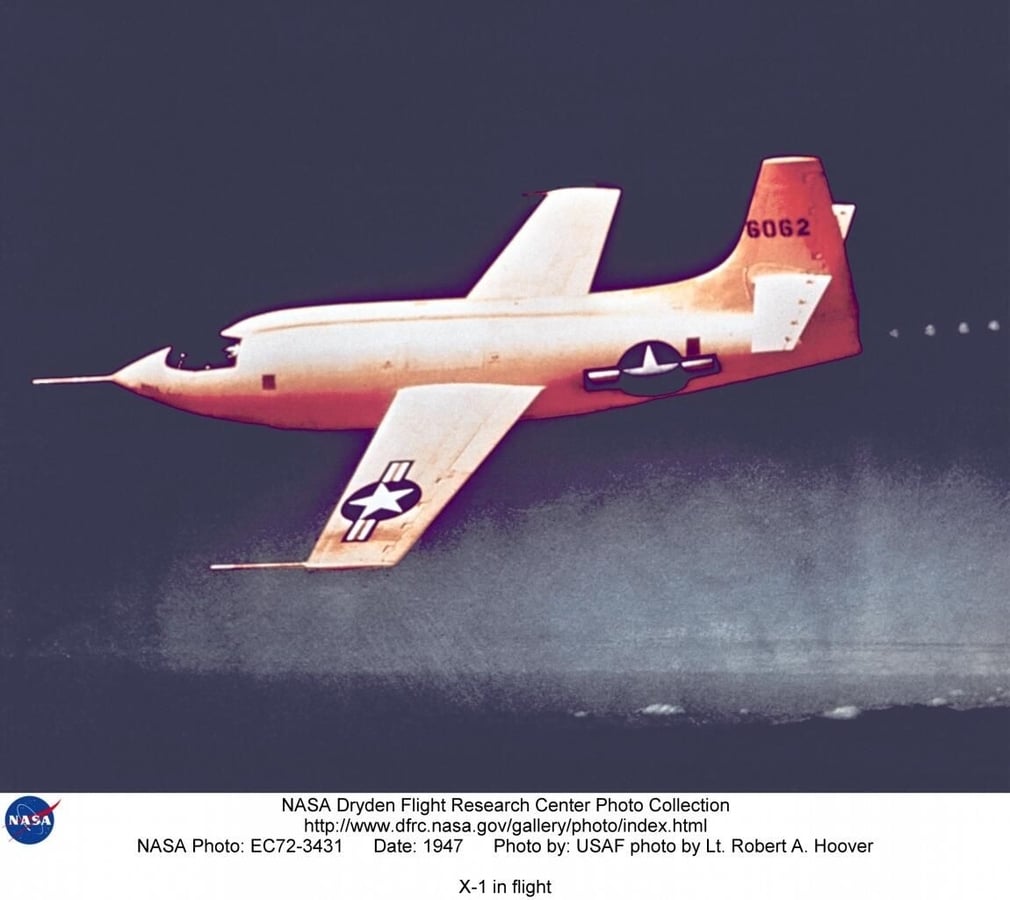
\n\tView this image gallery of examples of Navy X planes.
\n\t
\n\tThe X-1 was rocket-powered research craft that was air-launched from a B-29 or a B-50 Superfortress bomber in 1947.
\n\t
\n\t\u00a9 NASA Dryden Flight Research Center
\n
\n\tThis gallery was originally published in February 2008.
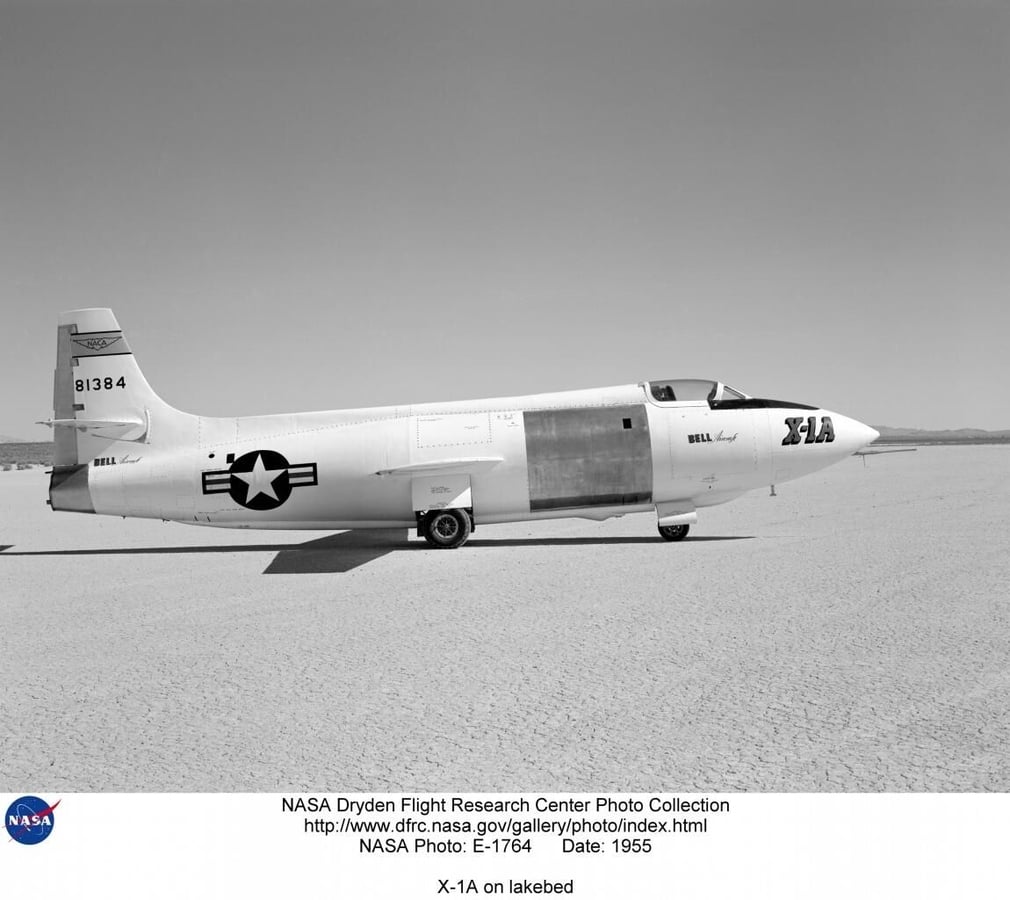
In 1955, an explosion damaged the aircraft. This caused the pilot to scrabble back to the mothership, resulting in the X-1A being jettisoned over the test area.
© NASA Dryden Flight Research Center
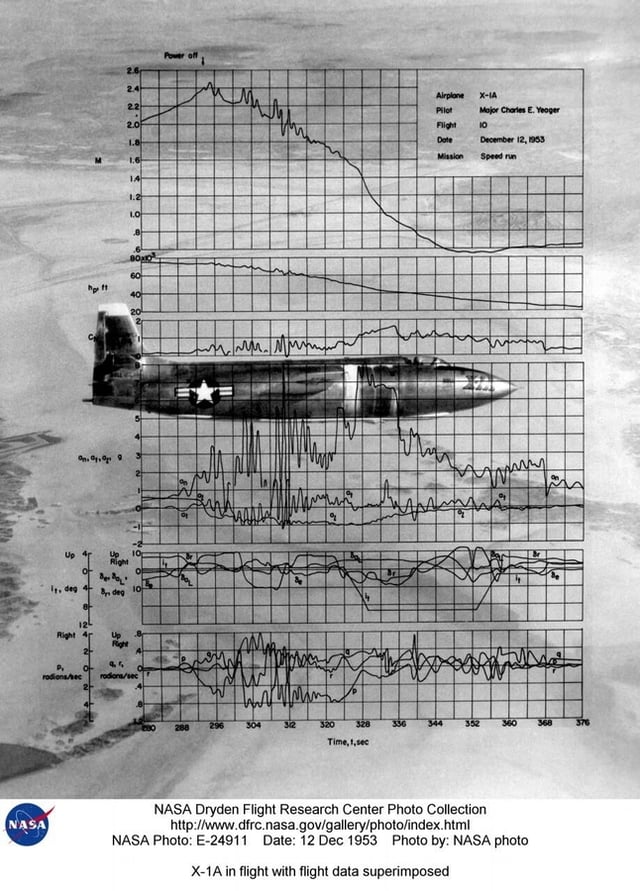
The X-1A with the flight data superimposed.
© NASA Dryden Flight Research Center
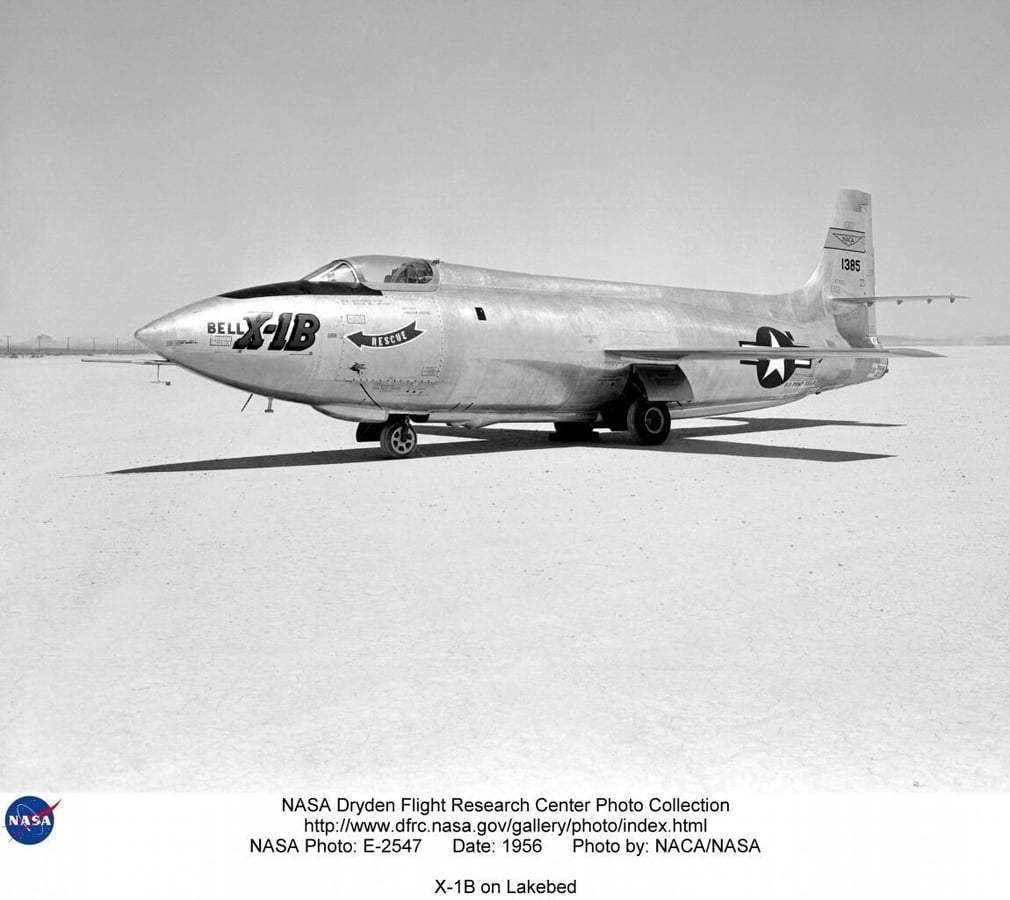
The X-1B had a modified fuselage with greater capacity for fuel tanks.
© NASA Dryden Flight Research Center
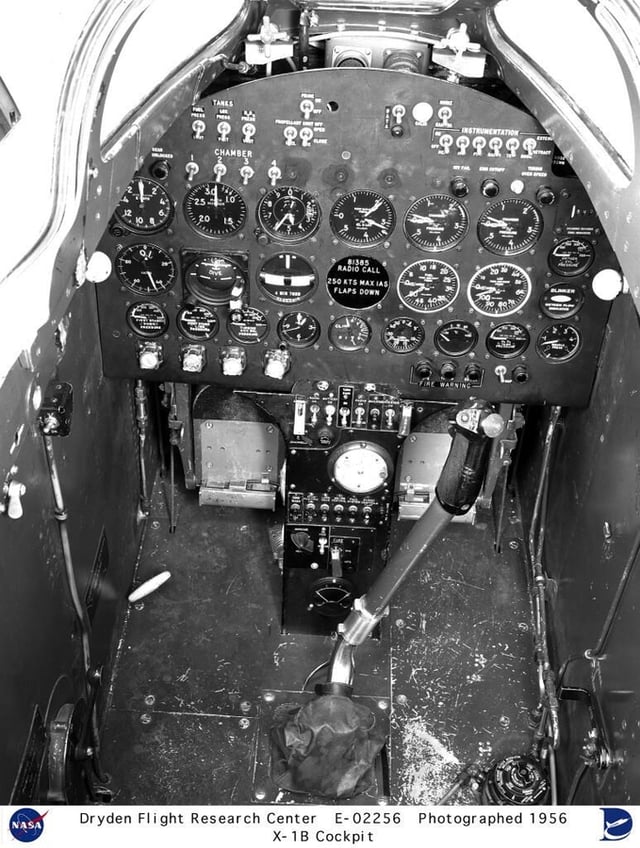
The X-1B’s cockpit and instrument panel.
© NASA Dryden Flight Research Center
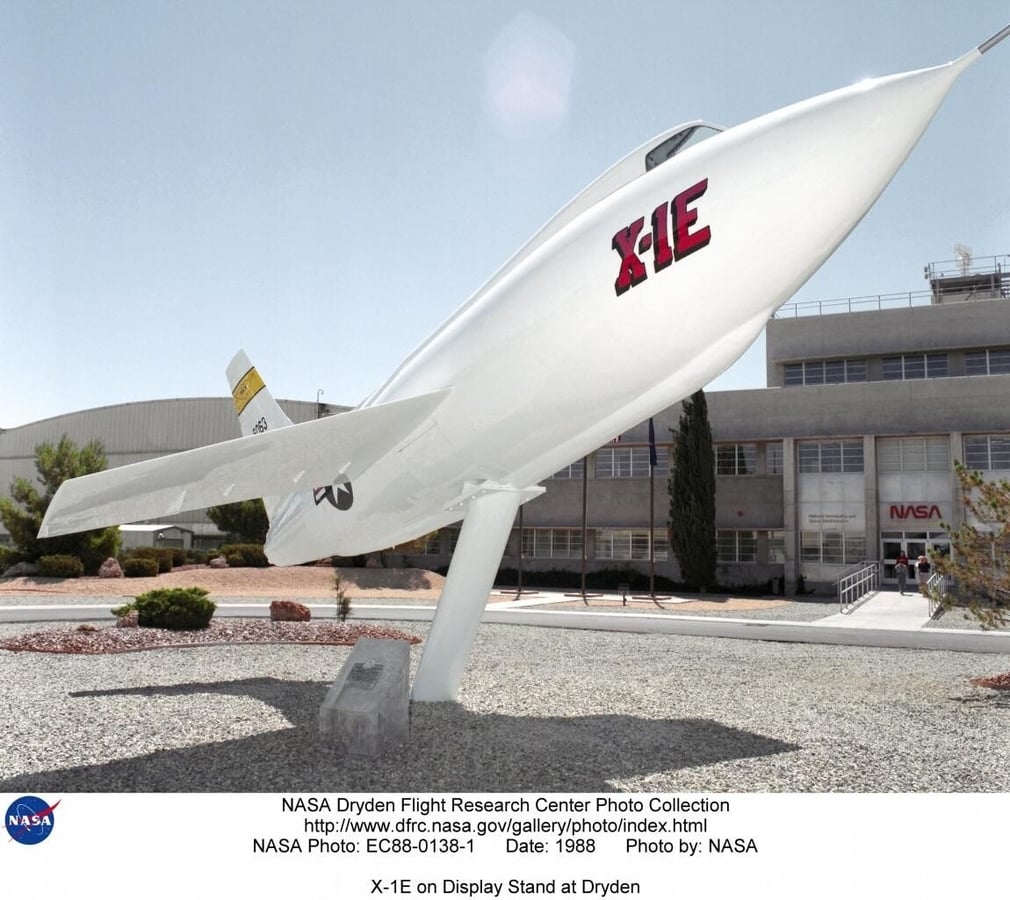
The X-E’s rocket engine allowed it to travel at a speed of 1,471 MPH.
© NASA Dryden Flight Research Center
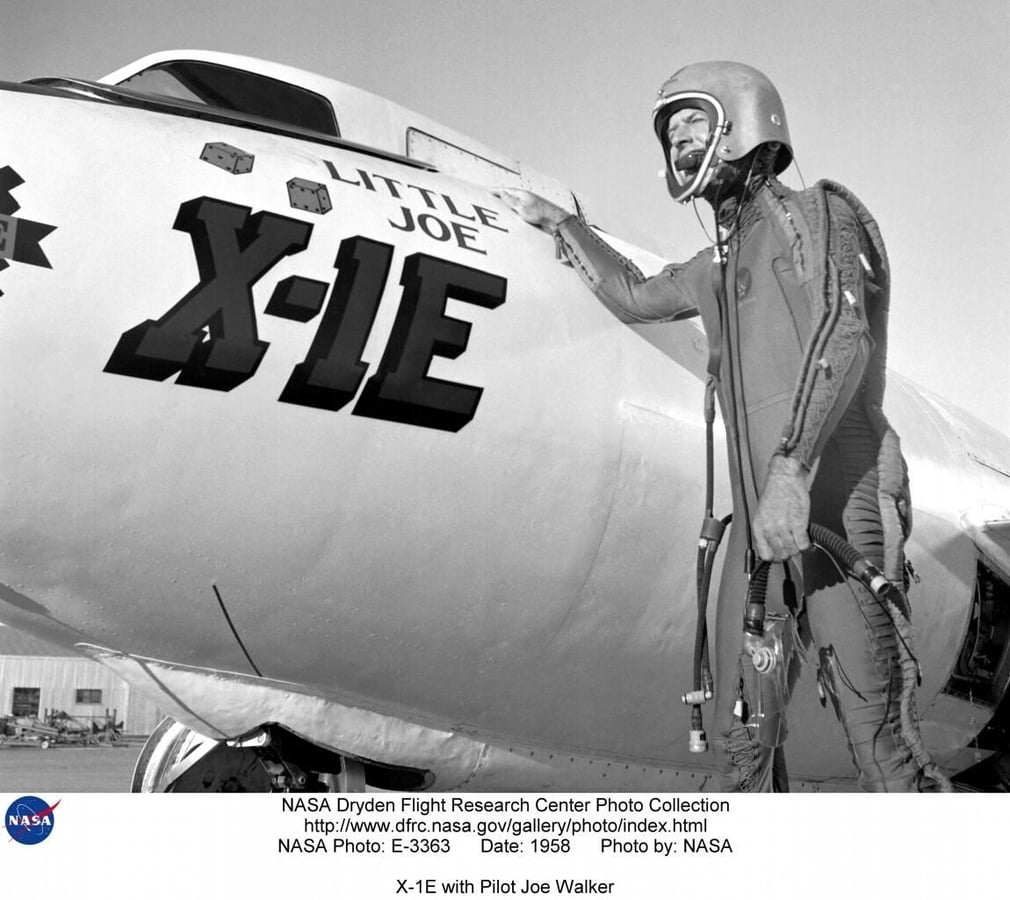
The pilot’s gear protected him if pressure was lost above 50,000 feet.
© NASA Dryden Flight Research Center
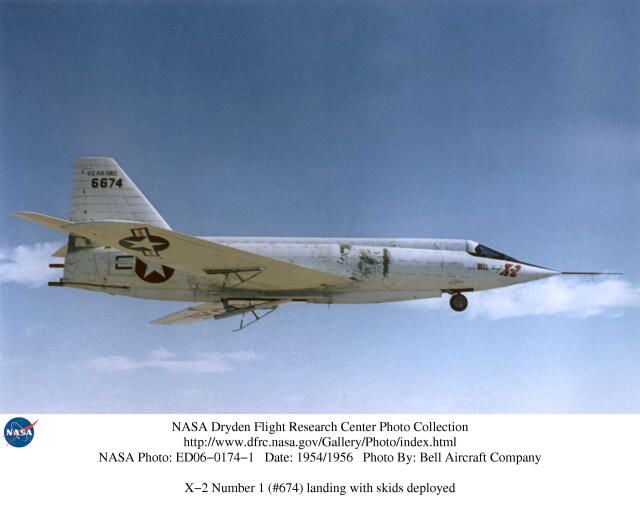
The X-2 was designed and built by Bell Aircraft Company to fly faster than Mach 3.
© NASA Dryden Flight Research Center
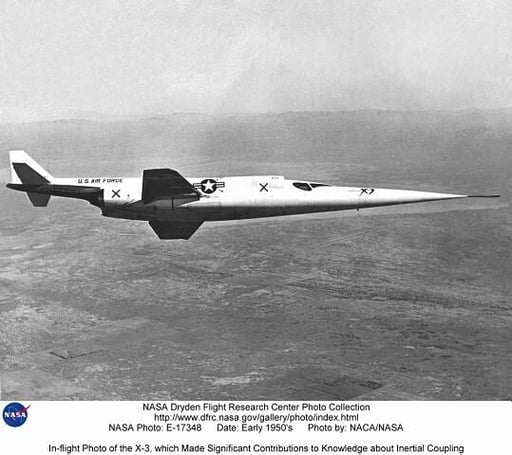
Designed by the Douglas Aircraft Co. the X-3 was the first aircraft to use titanium in major airframe components.
© NASA Dryden Flight Research Center
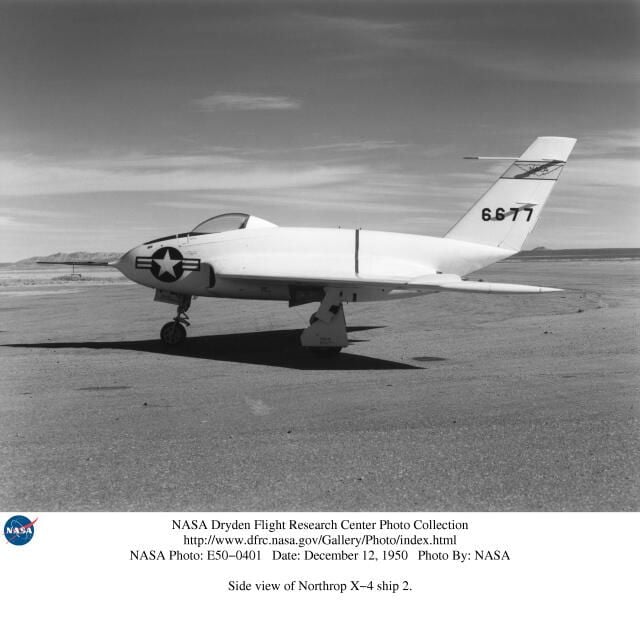
The X-4’s semi-tailless configuration caused stability problems as it approached the speed of sound.
© NASA Dryden Flight Research Center
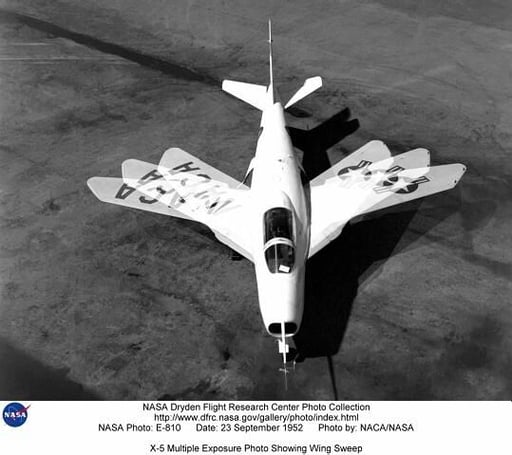
The X-5 was the first aircraft capable of sweeping its wings in flight.
© NASA Dryden Flight Research Center
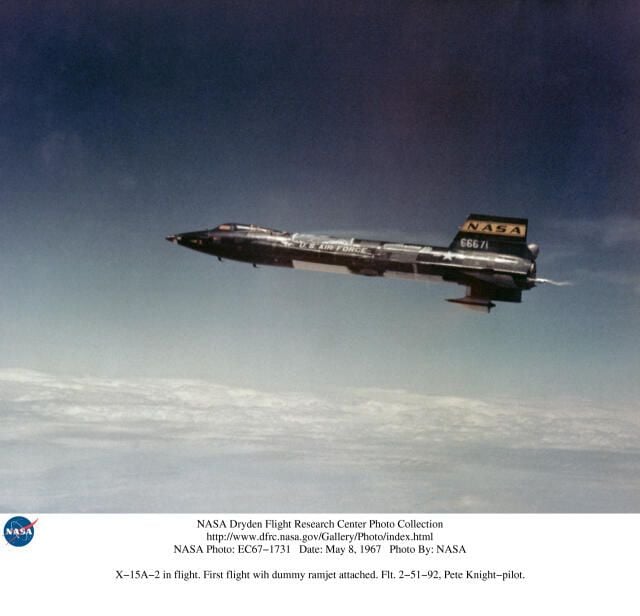
The X-15A-2 recorded a speed of Mach 6.7 and an altitude of 354,200 feet.
© NASA Dryden Flight Research Center
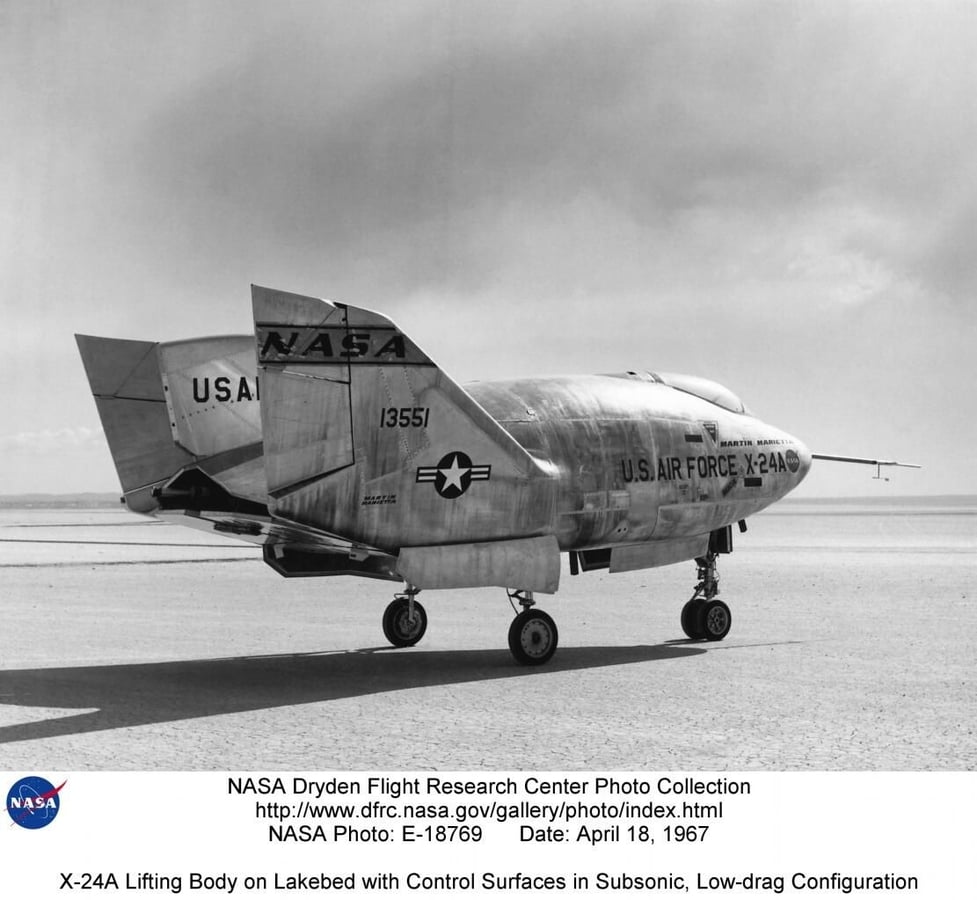
This lifting body aircraft was designed to demonstrate the ability of pilots to safely land wingless aircraft back to Earth from space.
© NASA Dryden Flight Research Center
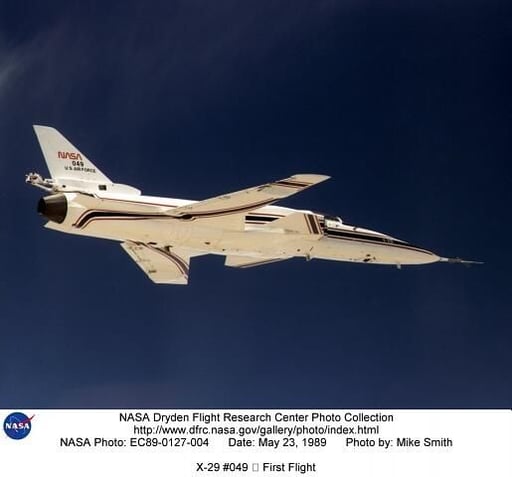
The X-29 investigated high angle-of-attack characteristics.
© NASA Dryden Flight Research Center
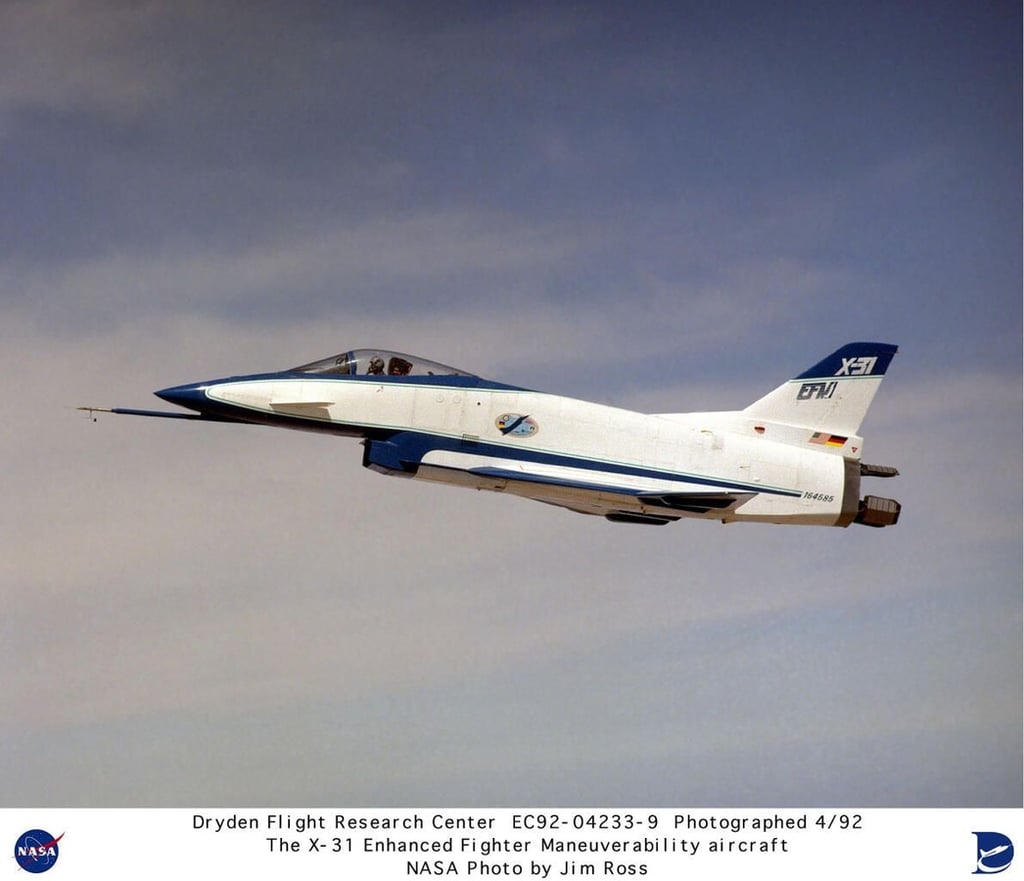
The X-31 was an Enhanced Maneuverability aircraft.
© NASA Dryden Flight Research Center
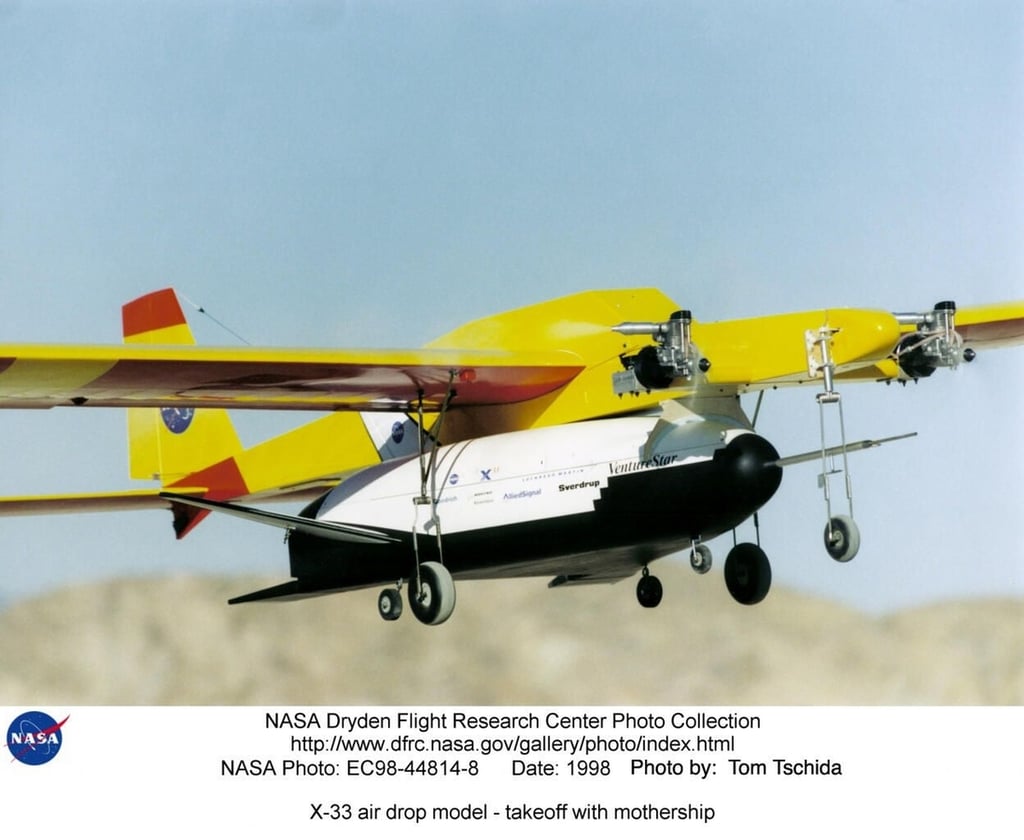
The X-13 was to be rocketed into the air and then glide back to Earth. Technical problems caused the program to end in 2001.
© NASA Dryden Flight Research Center
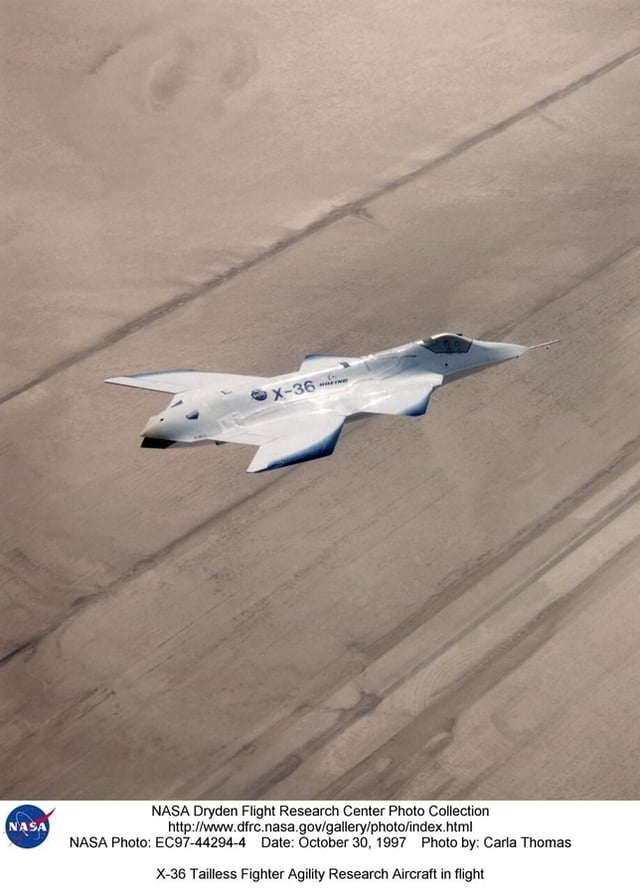
The X-36 was a Tailless Fighter Agility Research Aircraft.
© NASA Dryden Flight Research Center
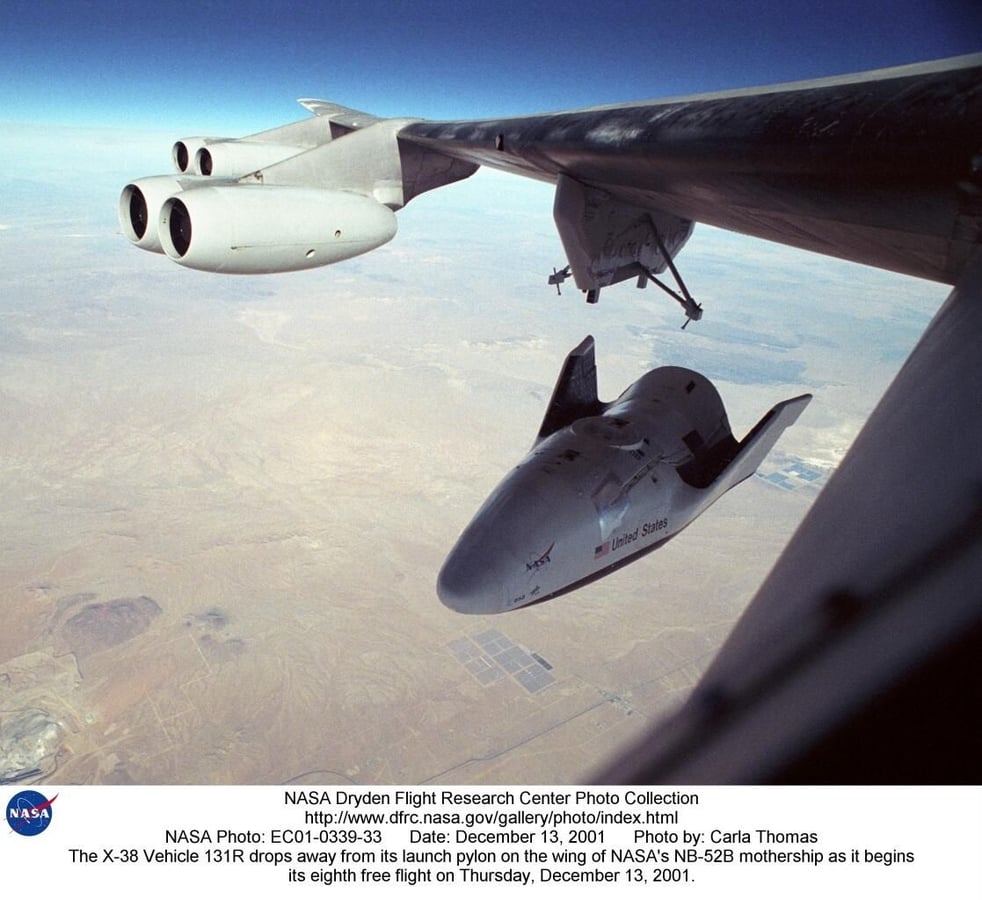
The X-38 is an Experimental Crew Return Vehicle.
© NASA Dryden Flight Research Center
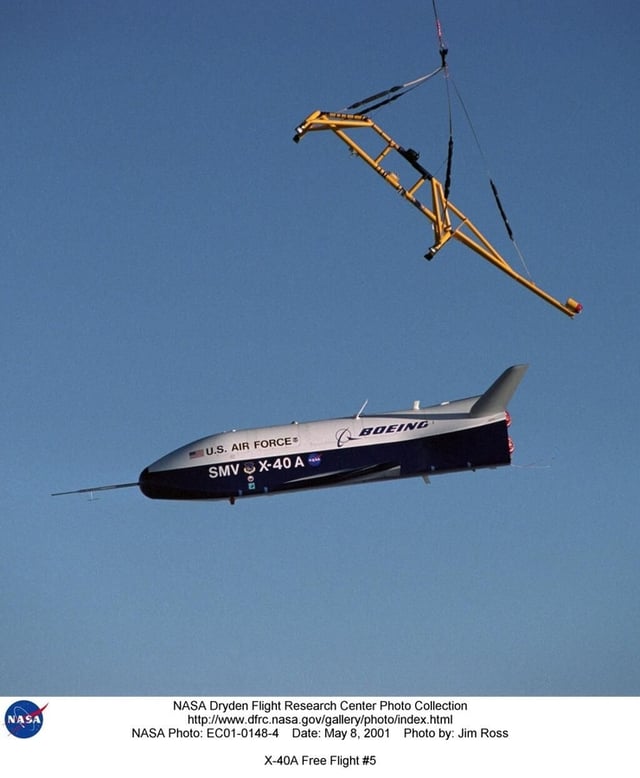
The X-40A was designed to demonstrate the capability of the orbital and reentry environments for reusable launch vehicles.
© NASA Dryden Flight Research Center
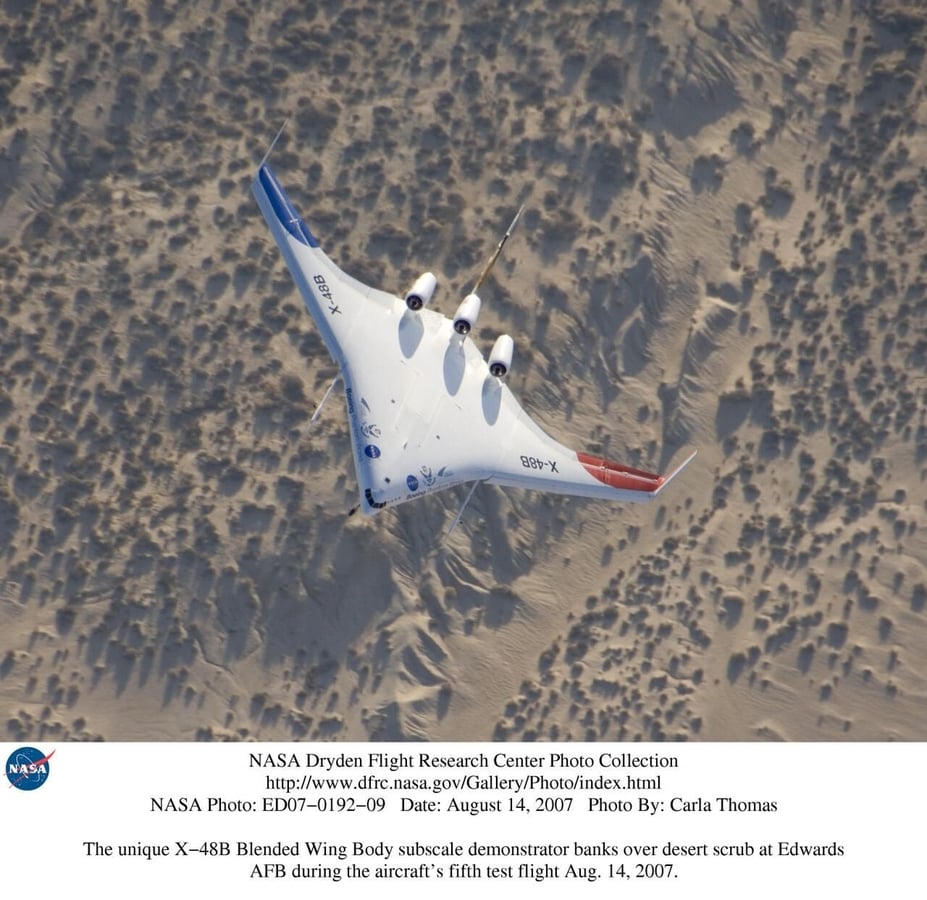
The X-48B is a Blended Wing Body aircraft.
© NASA Dryden Flight Research Center
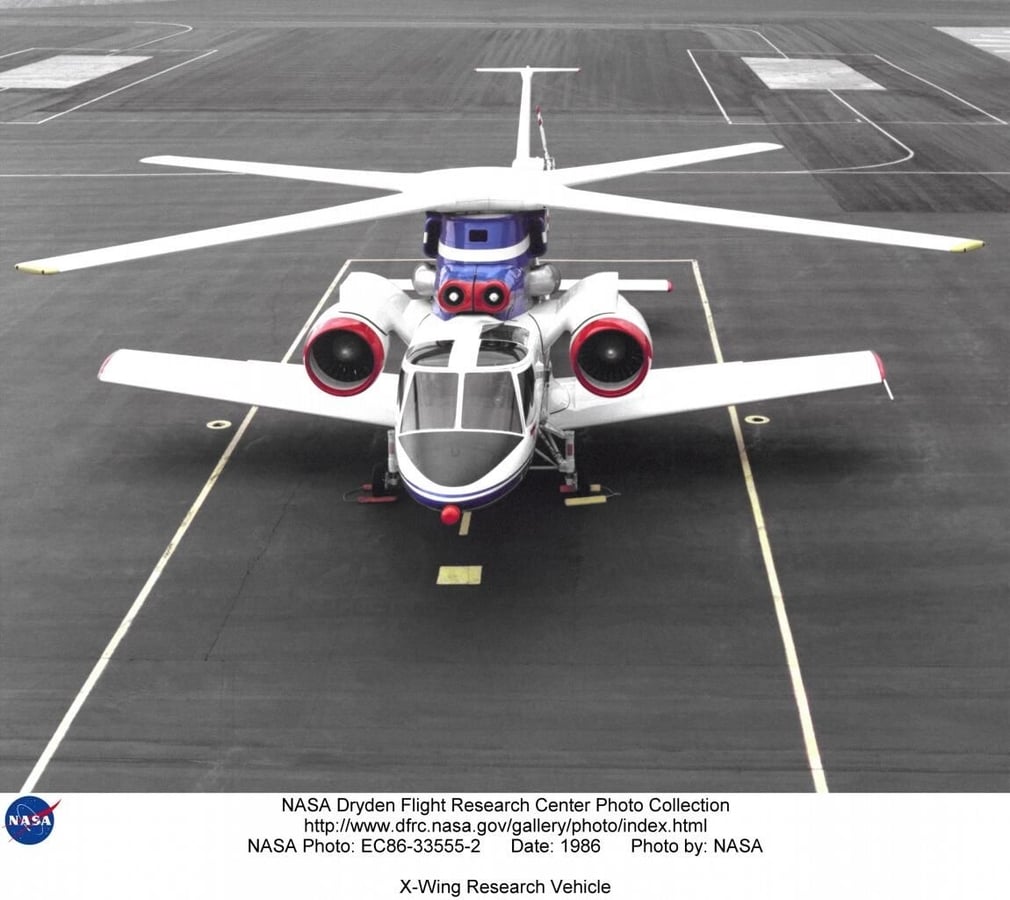
The X-Wing was conceived to provide the vertical lift of a helicopter combined with the speed of a fixed wing aircraft.
© NASA Dryden Flight Research Center
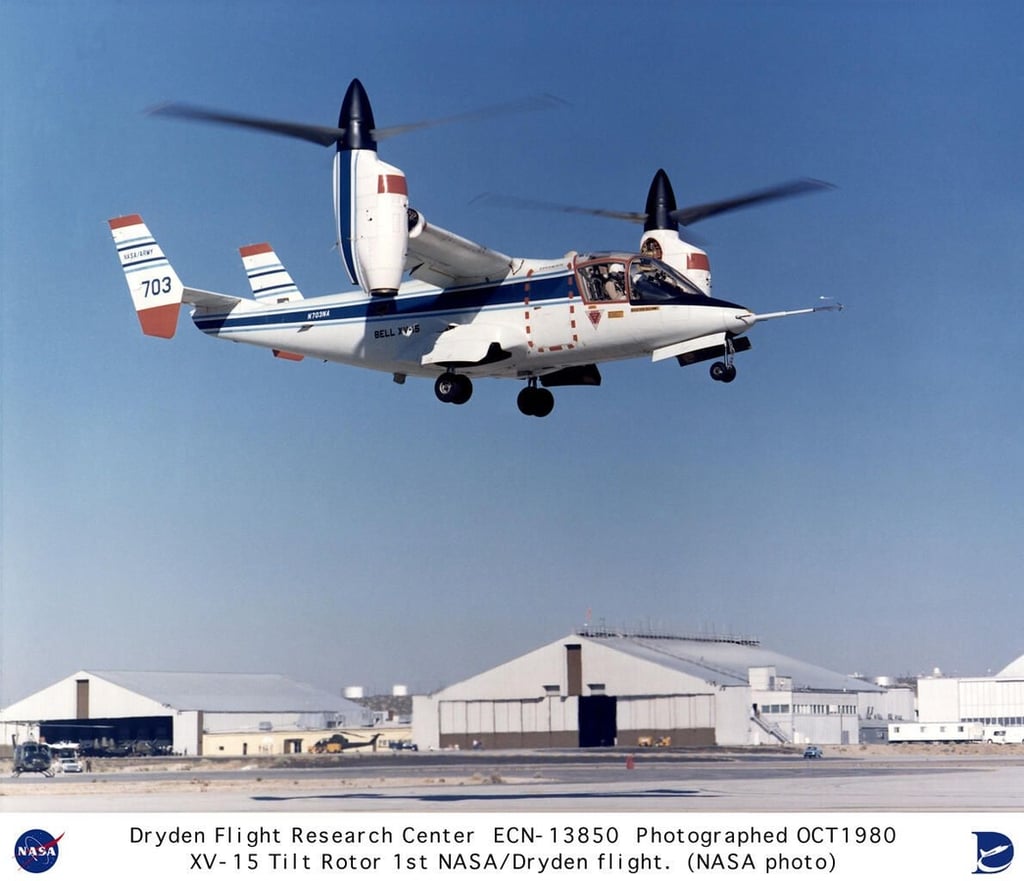
The XV-15 is able to convert from helicopter to airplane mode.
© NASA Dryden Flight Research Center


