World Cup 2006, the biggest sporting event on Earth, kicked off in Germany on June 9 and runs through the final on July 9. Soccer, aka football worldwide, is one of the simplest sports–you need only a ball and field to play–but this year’s tournament will see some technology creeping onto and around the field and new opportunities for fans to follow the action.\r\n\r\n
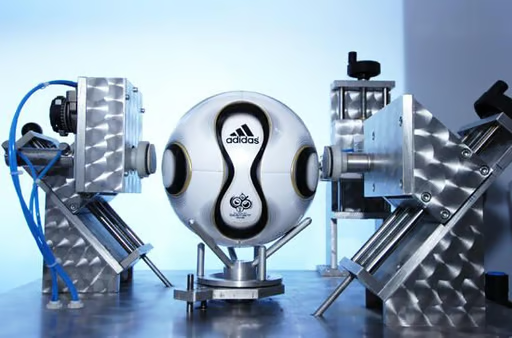
Each match will be played with a new Adidas “Teamgeist” ball with a 14-panel configuration that forms a perfectly smooth exterior. The new ball construction promises to give players increased accuracy and control. But goaltenders have complained that “Teamgeist” veers randomly giving the strikers an added edge.\r\n\r\n
On Amazon.com, the 2006 FIFA World Cup Teamgeist Match Ball carries a list price of $128.70. \r\nMore on the balls later.
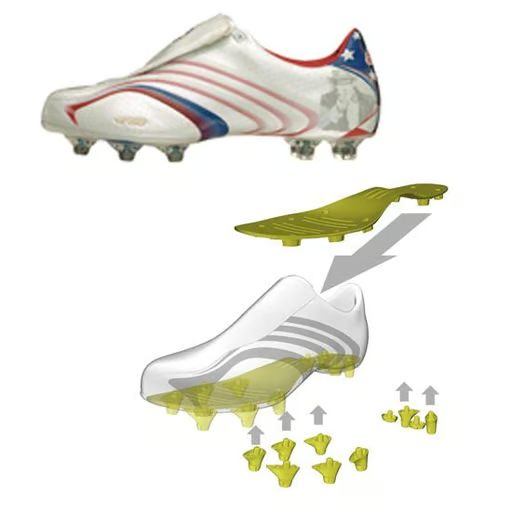
For the players, Adidas has developed the +F50 Tunite football boot. The shoes come with three interchangable components so that each player can easily customize their own shoes. For example, players can adapt these cleats according to weather and field conditions. \r\n\r\n
Adidas has personalized “boots” for each team. At left is the U.S. shoe. They retail on Amazon.com for $168.
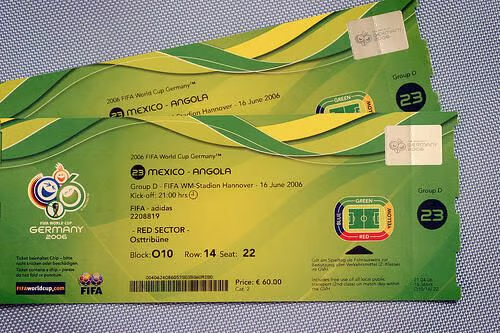
All World Cup tickets contain an RFID chip to hinder counterfeiting and scalping. The chip is embedded in the symbol on the left. Although there are many late ticket returns, former soccer superstar Franz Beckenbauer, president of host Germany’s organizing committee, says he expects all 3 million-plus tickets will be sold, according to Reuters.
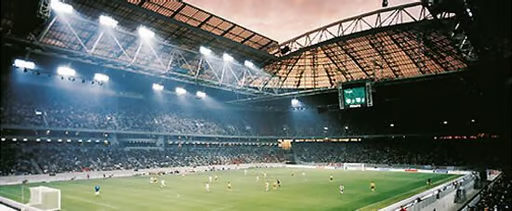
Royal Philips has installed new lighting in eight of the World Cup stadiums which will make it possible for HDTV broadcasts of the matches–not to mention a better atmosphere for fans attending.
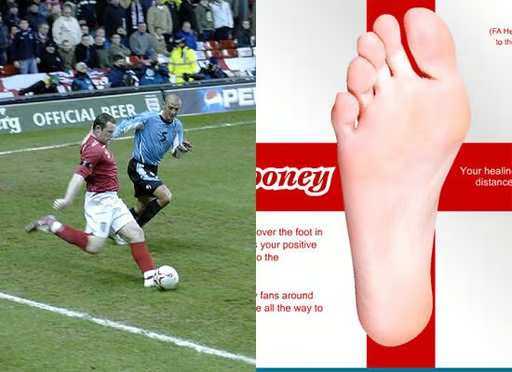
The Web has become a spiritual center where soccer fanatics can share their feelings of joy or despair and organize action on message boards, chat rooms, IMs or e-mails. \r\n
Take the case of England superstar Wayne Rooney. The 20-year-old gifted striker injured his foot in late April and appeared unlikely to appear in the World Cup, severely dimming England’s chances. Special healing sites (left) immediately popped up on the Web, including one to massage his foot with the click of a mouse, prayer blogs and numerous postings giving support\r\nand advice. Rooney has been given medical clearance and may play in England’s second match. \r\n\r\n
The Church of \r\nEngland even dedicated a special prayer for the team.
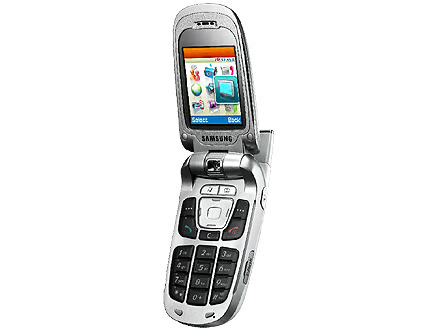
Mobile TV will make its presence felt for the first time at the World Cup. T-Mobile in Germany will broadcast 20 games live, and live matches will be available in Italy. Many in the rest of the world will be able to view goals soon after they are scored and see four minutes of highlights immediately after each match on their mobile devices. Expect every match to be available live on mobile TV for the next World cup in Beijing 2010.
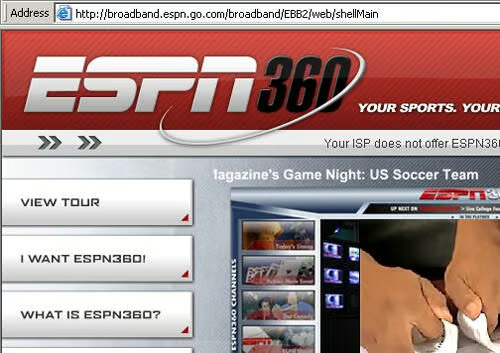
In the United States, matches will be available on your computer via ESPN360. In Canada, Rogers will stream a number of matches, while the BBC will broadcast all the games online in the U.K. only.
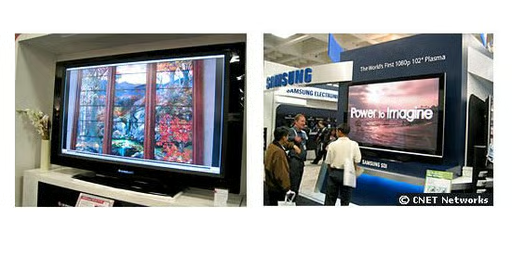
An increase in sales of two items are a guarantee during the World Cup: beer and flat-panel TVs. For the first time, many fans will enjoy the action of every game on HDTV. Coverage depends on your local broadcast area.\r\n\r\n
On the left, a 100-inch diagonal LCD TV from LG.Philips. Right is a 102-inch model from Samsung.
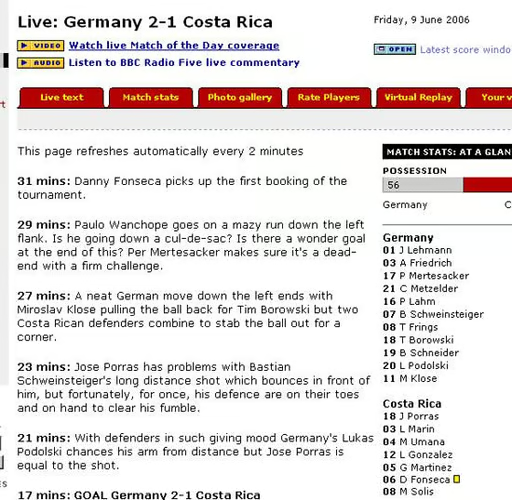
Eight years ago, the more sophisticated World Cup coverage featured an e-mail every time a goal was scored. Now sites give almost live play-by-play and analysis. Some of the more involved include ESPN Soccernet, Yanks abroad, BBC Sport, which provides live TV coverage in the U.K. only, up-and-coming Soccer 365, German coverage from DW-world.de and the official FIFA site. Plus, there are many, many more.\r\n\r\n
Here is a screen shot of the BBC’s live coverage of the first match. The Yahoo/FIFA live Match Data site was experiencing technical difficulties for the first match.
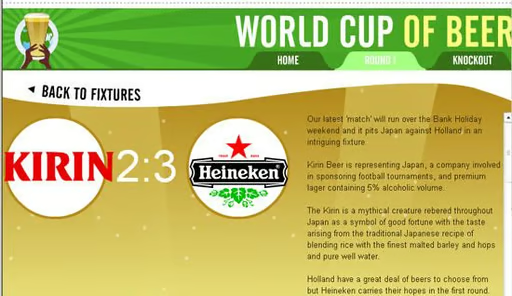
World Cup games are not only available for gaming consoles, but there are many for PCs, cell phones, and more. They range from detailed realistic console games to trivia and beer games. If you’re a gambler, you’re in luck–there are many options available.
For the World Cup of Beer, it’s Japan (Kirin) vs. Holland (Heineken) in a first-round match.
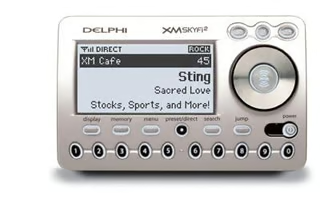
XM Satellite Radio will provide 24-hour coverage for 31 days on one English- and one Spanish-\r\nspeaking channel. The service has even hired Andres Cantor with his famous one-minute “goooaaalll” calls \r\nfor 50 games on the Spanish channel.
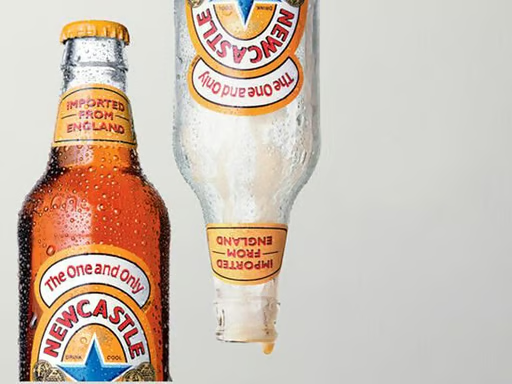
Innserve will use new technology to ensure that the beer keeps flowing on \r\nabout 750,000 beer lines during the World Cup matches. Mobile technicians\r\nwill use PDAs to monitor the flow of beer at more than 100,000 S&N and Newcastle \r\npubs and clubs in the U.K.
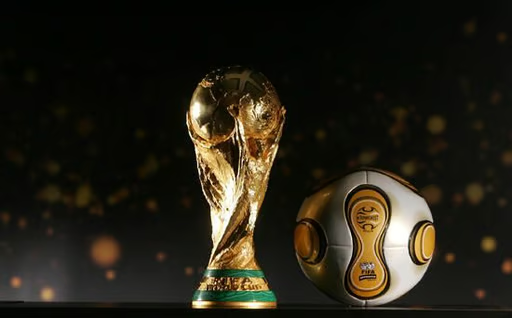
Adidas shows off the “Golden Ball” which will only be used in the final match on July 9 in Berlin. The Teamgeist Berlin ball is similar to the ball used in the other matches except it is gold with black and white trim. The best player in the World Cup tournament wins the Golden Ball trophy.
Bill Detwiler is the Editor for Technical Content and Ecosystem at Celonis. He is the former Editor in Chief of TechRepublic and previous host of TechRepublic's Dynamic Developer podcast and Cracking Open, CNET and TechRepublic's popular online show. Previously, Bill was an IT manager in the social research and energy industries. He has bachelor's and master's degrees from the University of Louisville, where he has also lectured on computer crime and crime prevention.


