\n\tThe UK computer industry enjoyed a mini-rennaisance in 2012 thanks to the popularity of the $40 Raspberry Pi.
\n
\n\tMore than 700,000 of the boards are estimated to have sold since their launch in February this year.
\n
\n\tLaunched to inspire a new generation of children to start programming, the Pi has also won over legions of adult hackers to start Pi-powered projects ranging from home automation to robotics.
\n
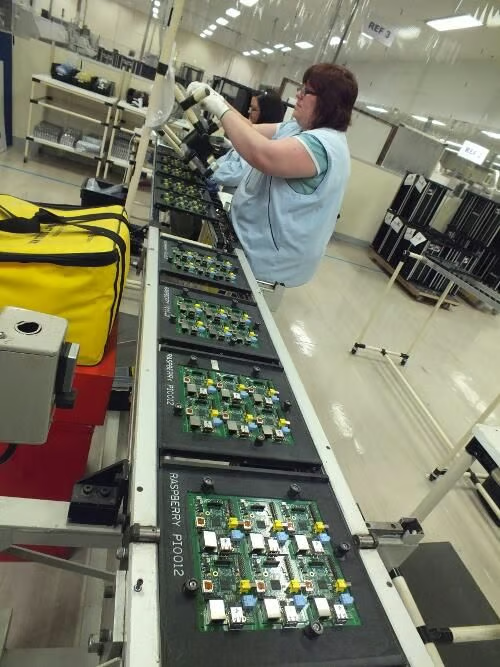
\n\tThis is where life begins for many Raspberry Pi boards, at a Sony factory in Pencoed in South Wales.
\n
\n\tThe factory has been making the boards since August this year and now produces up to 3,000 Raspberry Pi boards every day. From January next year the factory will step up to 4,000 boards each day.
\n
\n\tA total of seventeen staff work on the factory floor manufacturing and assembling the boards, with one board produced every seven and a half seconds.
\n
\n\tPhoto: Nick Heath / TechRepublic
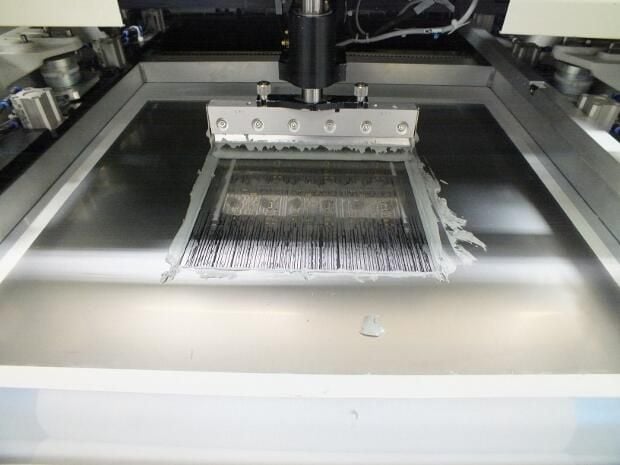
\n\tThe manufacturing process begins by feeding a panel of six Raspberry Pi printed circuit boards into a production line that mounts components on to the board.
\n
\n\tThe first stage of the production process is seen here, coating the boards with the solder paste that will attach the various surface mounted electronic components – the likes of diodes, resistors, capacitors – to the board.
\n
\n\tThe paste is forced through holes in a stainless-steel stencil that deposits micrometre-sized drops of solder on the board wherever a component needs to be attached.
\n
\n\tPhoto: Nick Heath / TechRepublic
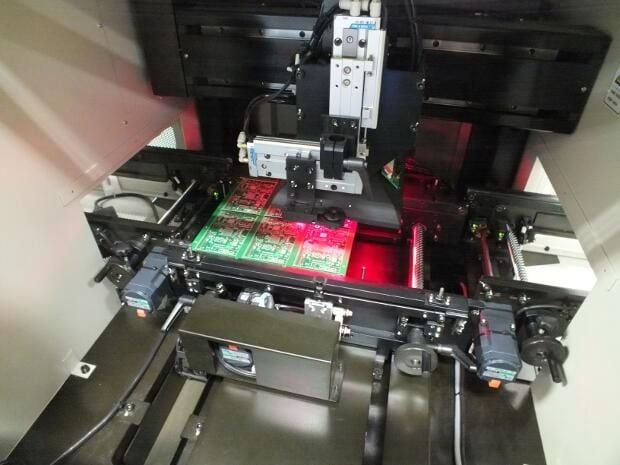
\n\tAn optical inspection system checks the position of each solder drop on the boards to micrometre accuracy.
\n
\n\tPhoto: Nick Heath / TechRepublic
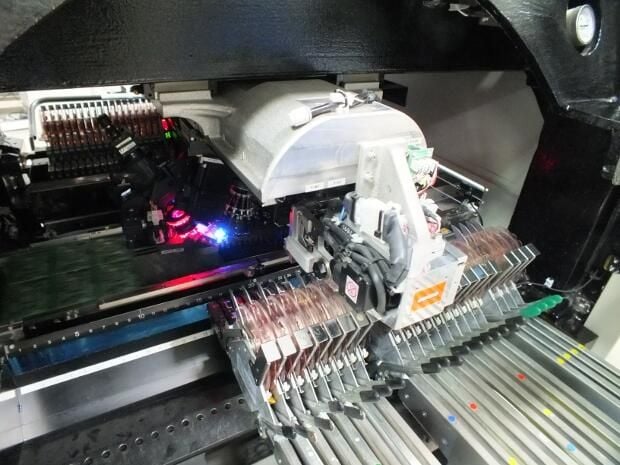
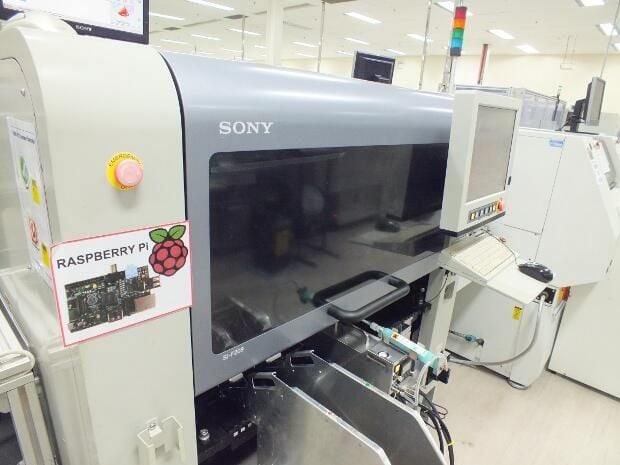
\n\tAfter the solder paste has been added, electronic components are placed on the board using surface mount technology machines.
\n
\n\tThese machines can mount close to 25,000 components every hour, placing individual components in a blur of motion.
\n
\n\tEach Pi has 173 surface mounted components, and it typically takes 150 seconds to finish mounting the six boards in a panel.
\n
\n\tThe factory uses three such machines to produce the Pi, one for mounting the underside of boards and two for the top.
\n
\n\tPhoto: Nick Heath / TechRepublic
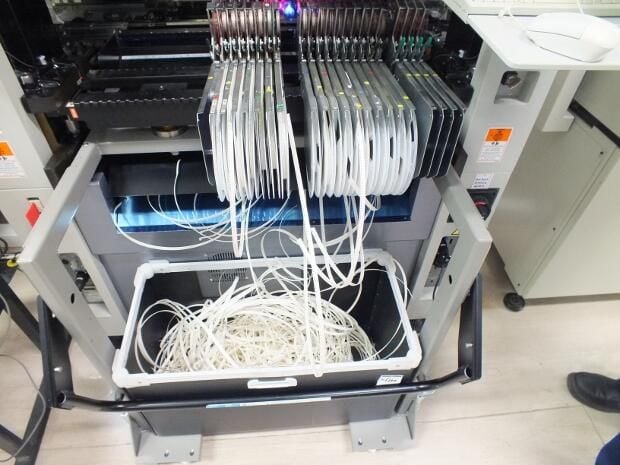
\n\tEach electronic component sits inside a pocket on a reel of tape.
\n
\n\tThe tape is fed into the machine and the component picked out by a vacuum nozzle on the machine’s mounting head, before being placed on the board.
\n
\n\tAn optical inspection system checks the alignment and positioning of each component, precisely lining them up with the correct solder point.
\n
\n\tThe machines monitor how many components are left and automatically order replacements ahead of time so the supply never runs dry.
\n
\n\tPhoto: Nick Heath / TechRepublic
\n\tWhen it comes to mounting components on top of the boards there is an additional stage, adding the Pi’s Broadcom BCM2835 System on a Chip and its memory chip.
\n
\n\tThe memory chip is dipped in solder paste before being placed on top of the Broadcom chip in a package-on-package arrangement.
\n
\n\tPhoto: Nick Heath / TechRepublic
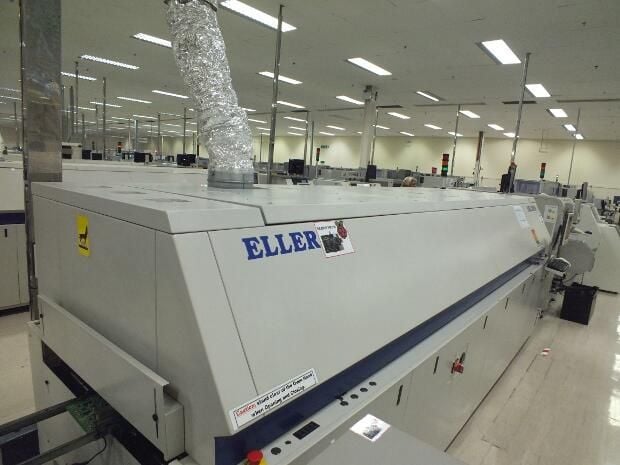
\n\tThis is essentially a very large oven where the parts that have been placed onto the board are soldered in place.
\n
\n\tTemperatures inside this 13-stage reflow oven reaches 237C, causing the solder to melt and fusing the parts in place. Each panel is then gradually cooled.
\n
\n\tThe process has to be carefully controlled: too cold and some of the joints won’t form and too hot and some of the more delicate components will fry.
\n
\n\tPhoto: Nick Heath / TechRepublic
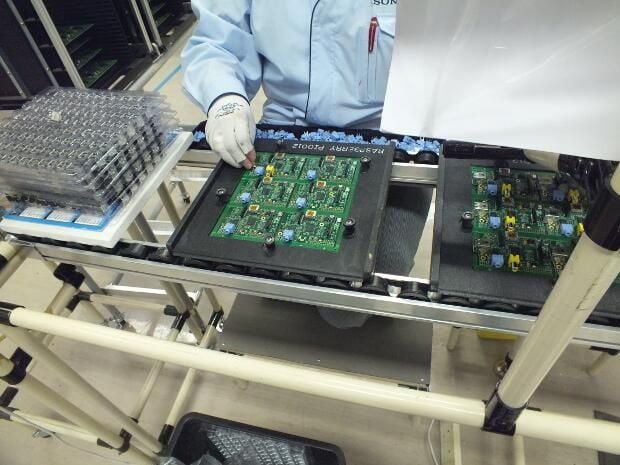
\n\tLarge components, such as USB ports, are manually inserted into the boards. There are five such “through hole” components in the Raspberry Pi.
\n
\n\tPhoto: Nick Heath / TechRepublic
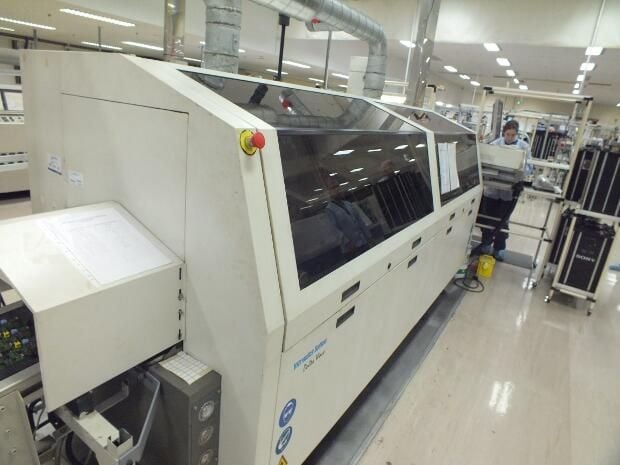
\n\tInside this machine a wave of molten solder is being passed over the underside of the boards to fix the larger hand-inserted components in place.
\n
\n\tThe boards sit inside a solder and heat resistant tray that stops the smaller surface-mounted components from being desoldered and swept away by the molten wave.
\n
\n\tPhoto: Nick Heath / TechRepublic
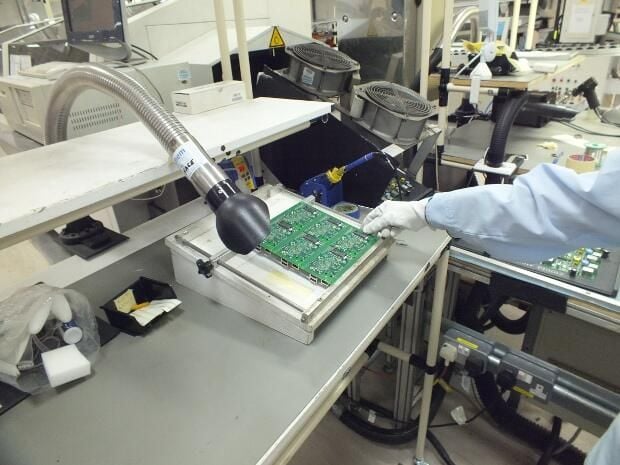
\n\tWorkers manually test the solder joints and touch up any joints they find to be lacking.
\n
\n\tPhoto: Nick Heath / TechRepublic
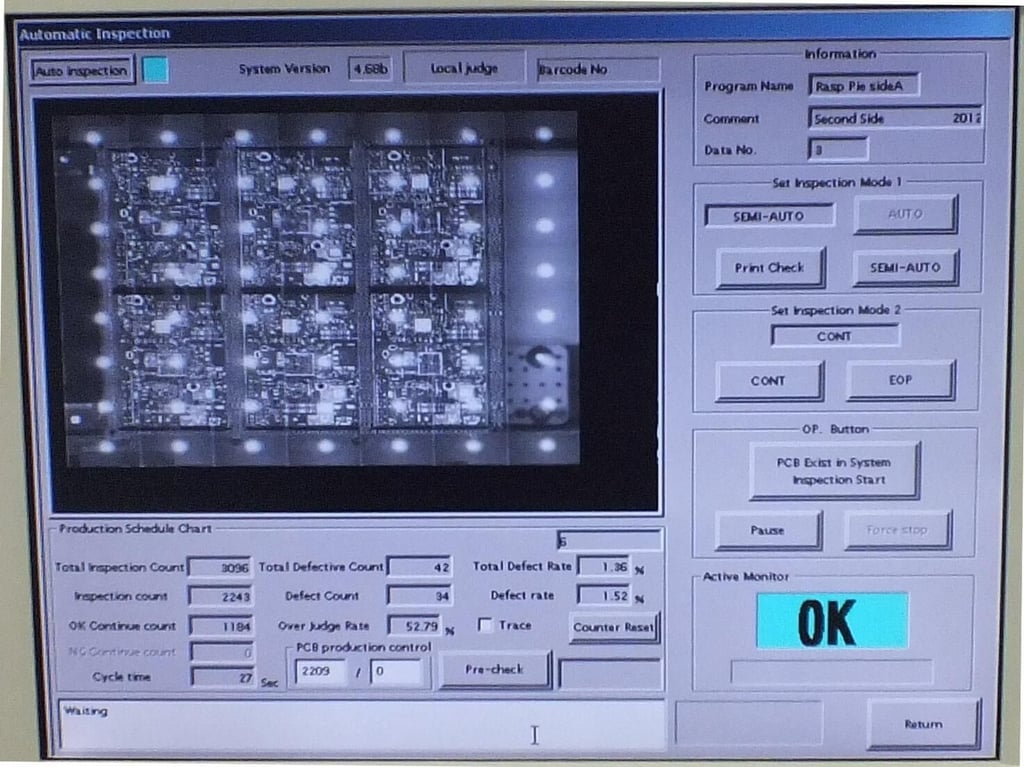
\n\tThroughout the manufacturing and assembly process, there are various automated and manual checks for defects that have helped the Sony plant achieve a very low return rate for the Pi.
\n
\n\tOf the 150,000 boards the factory has made only six have been returned and only two of those related to a genuine defect.
\n
\n\tThere are hundreds of opportunities for errors during the Pi assembly process, anything from a missing component to a defective solder joint.
\n
\n\tPhoto: Nick Heath / TechRepublic
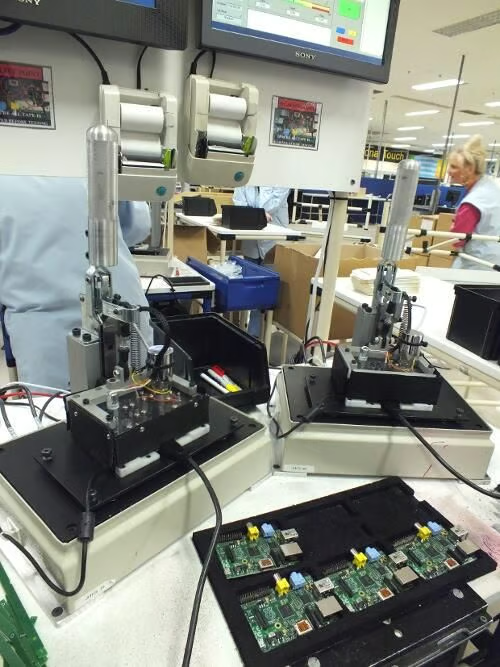
\n\tWith the boards complete they are broken out of their panels and submitted to a final round of tests.
\n
\n\tEach board is powered up and placed in a rig that checks it is working as expected. While in the rig a MAC address, serial number and revision number are downloaded to the board.
\n
\n\tPhoto: Nick Heath / TechRepublic
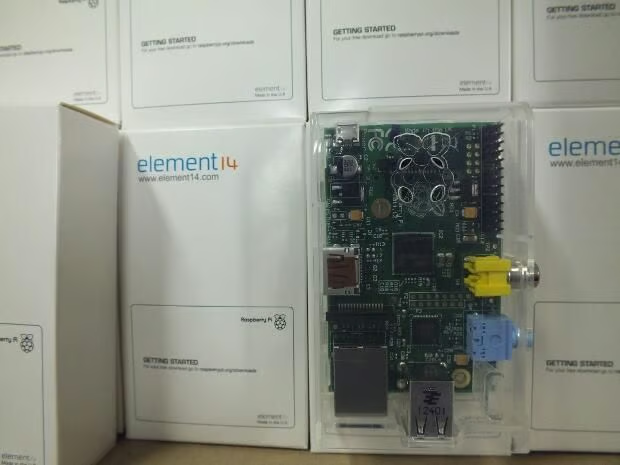
\n\tBoards are then bagged, put inside a clear acrylic case and packed into boxes ready for sending to electronics distributor Premier Farnell.
\n
\n\tUp to 300 boards a day will also be sent to quality control, where they will run through a series of tests that replicate how consumers would use the board.
\n
\n\tPhoto: Nick Heath / TechRepublic
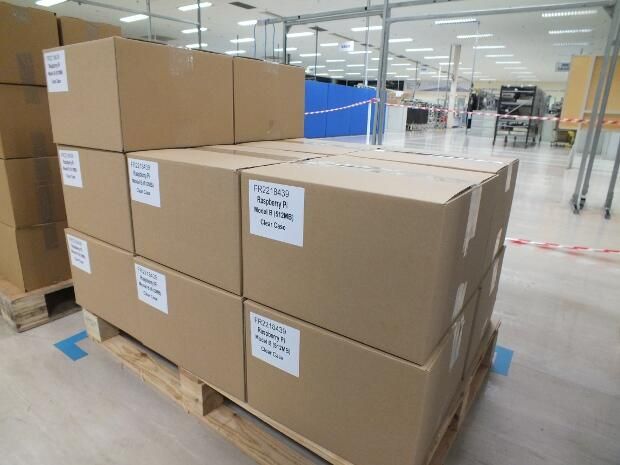
\n\tA pallet of boards ready to be sent to Premier Farnell for shipping to customers. Most boards are sent to Farnell’s distribution centre in Leeds.
\n
\n\tPhoto: Nick Heath / TechRepublic

Nick Heath is a computer science student and was formerly a journalist at TechRepublic and ZDNet.


