![6339155-620-413[1].jpg](https://assets.techrepublic.com/uploads/2012/04/6339155-620-413[1].jpg?w=640)
\n\tA new exhibition charting the history of the internet and its impact on modern society has launched in the UK.
\n
\n\tThe Life Online gallery dedicated to exploring the social, technological and cultural impact of the internet and the web, launched at the National Media Museum in Bradford last week.
\n
\n\tThe permanent exhibition charts the four ages of the internet, starting with the creation of ARPANET, the world’s first operational packet switching network and the forerunner of the internet by the Department of Defence in the late 1960s, and ending with exhibits exploring possible future uses for the net, such as the Internet of Things.
\n
\n\tA section of the gallery is devoted to the history of the web, including the role of Tim Berners Lee, seen here, who in 1989 came up with the idea of linking documents using hypertext, sowing the seeds for the web’s creation.
\n
\n\tThis portrait of Berners Lee, by visual artists Thomson and Craighead, is made out of streams from live webcams situated all over the world.
\n
\n\tIt is designed to reflect the importance of the web staying as an open platform where anyone can share information, as was Berners Lee’s original vision.
\n
\n\tPhoto: National Media Museum/SSPL
\n\tThe \u00a32m project also explores how the net and the web have changed society, from the world of business to personal communication. It looks at the emergence of email, the first virtual societies and how social networking came about.
\n
\n\tInteractive exhibits give visitors the chance to try and protect the internet against the spread of computer viruses and try their hand at becoming a dot com millionaire.
\n
\n\tThe content of the gallery has been informed by a variety of tech experts, including Ben Hammersley, the UK Prime Minister’s ambassador to TechCity and representatives from Google and Microsoft.
\n
\n\tPhoto: National Media Museum
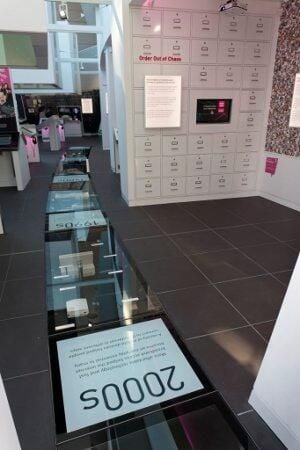
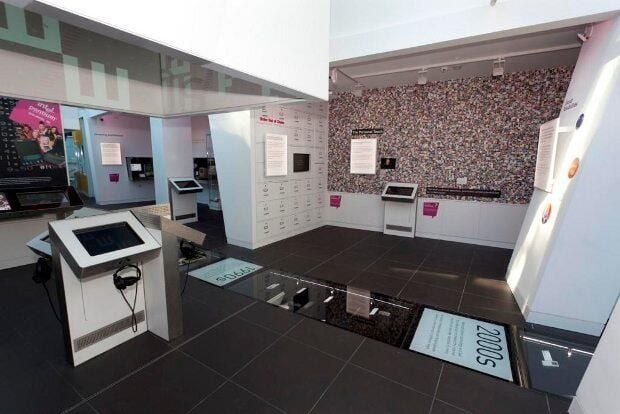
\n\tThe glass walkway allows visitors to stroll through the history of the net and the computers used to access it.
\n
\n\tThe drawers are part of an exhibit about search engines, while the mosaic on the rear wall is made up of hundreds of social network profile photos.
\n
\n\tPhoto: National Media Museum
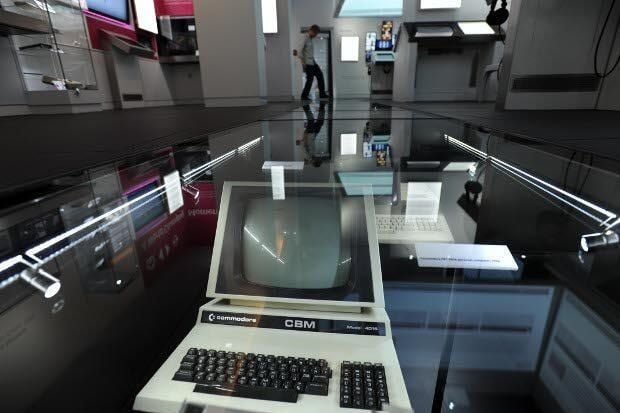
\n\tIn journeying back to the earliest days of the net the exhibition includes quite a few vintage computers, such as this 1980s Commodore Business Machine model 4016.
\n
\n\tPhoto: National Media Museum
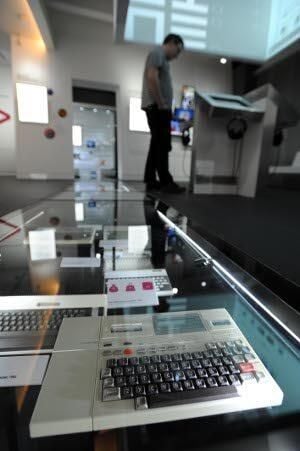
\n\tAnother blast from the past is the Epson HX20, the 1982 machine which was one of the first laptop computers.
\n
\n\tThe machine packed two Hitachi 6301 processors running at 0.614MHz and up to 32K of RAM. In 1982 the computer, would have set you back $795.
\n
\n\tPhoto: National Media Museum
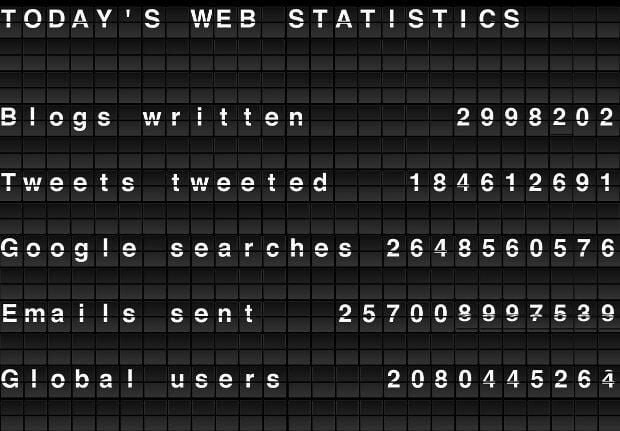
\n\tA dynamic board that shows the number of blogs, tweets, emails and Google searches that have been generated online that day.
\n
\n\tPhoto: National Media Museum/SSPL
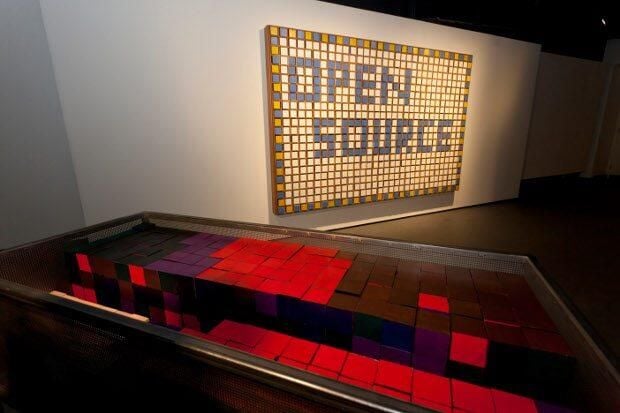
\n\tThe Berners Lee portrait is part of a temporary exhibition within the gallery that explores the idea of “open source culture” online – the freedom to create, consume and share content through the net. It also touches on net neutrality, the principle that every piece of traffic that travels over the net should be given equal priority.
\n
\n\tPhoto: National Media Museum
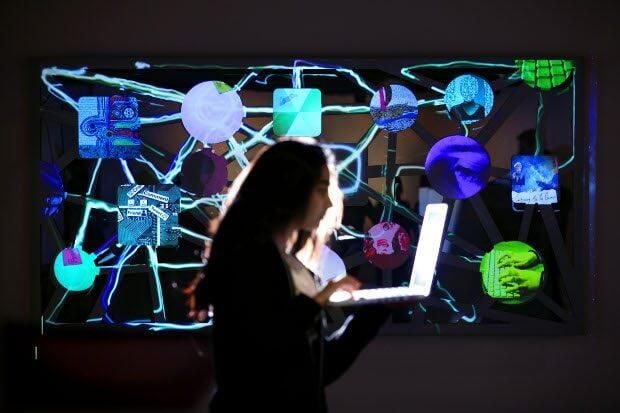
\n\tThis display is called System Overload and was made by a group of ten 14 to 19 year olds who make up the Networked art collective.
\n
\n\tThe piece is designed to demonstrate the interrelated nature of the web, populated by animations which represent the net’s connections and nodes.
\n
\n\tPhoto: National Media Museum
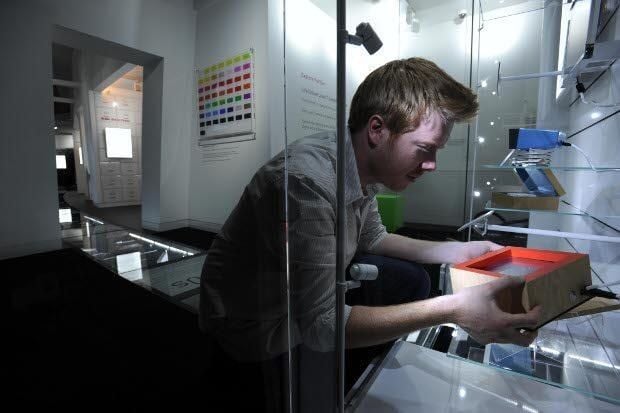
\n\tThe National Media Museum curator of new media, Tom Woolley, organises some of the exhibits.
\n
\n\tPhoto: National Media Museum

Nick Heath is a computer science student and was formerly a journalist at TechRepublic and ZDNet.


