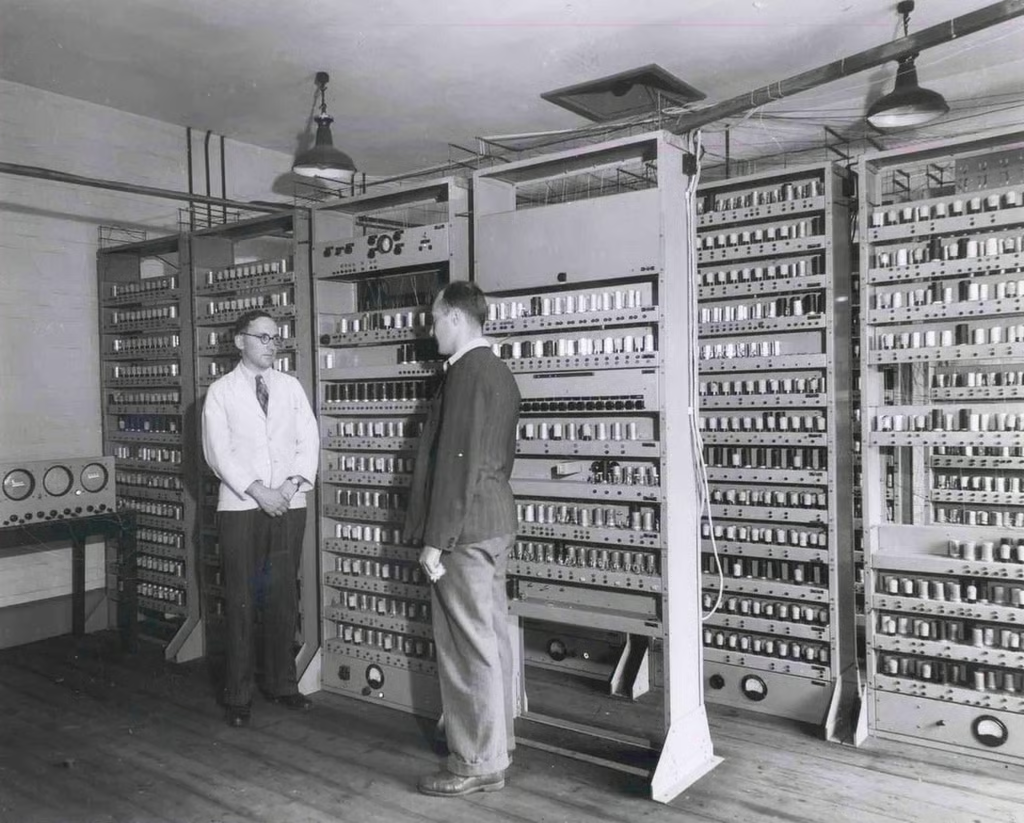
\n\tWork has begun on rebuilding the UK’s first fully operational general-purpose computer.
\n
\n\tThe Edsac – the Electronic Delay Storage Automatic Calculator, seen above – was completed in 1949 and used at Cambridge University to help research into areas including genetics, meteorology and X-ray crystallography.
\n
\n\tUK computer conservation specialists this week produced the first replica components to rebuild the EDSAC. The rebuild will take place in public view at the National Museum of Computing at Bletchley Park in Milton Keynes, England, and is scheduled for completion in 2015.
\n
\n\tThe computer was built from 12 racks spread over 20 square metres. The racks held the more than 3,000 vacuum tubes it used to carry out instructions and the mercury-filled tubes that acted as its memory.
\n
\n\tEdsac could carry out 650 instructions per second and had just 2KB of memory. While obviously orders of magnitude less powerful than a modern PC it effectively computed some 1,500 times faster than the mechanical calculators it replaced.
\n
\n\tThe machine’s principal designer and creator sir Maurice Wilkes, seen here on the left, led the team that built the original Edsac for the Mathematical Laboratory at Cambridge University. Wilkes died in November 2010 at the age of 97.
\n
\n\tPhoto credit: Computer Laboratory, University of Cambridge
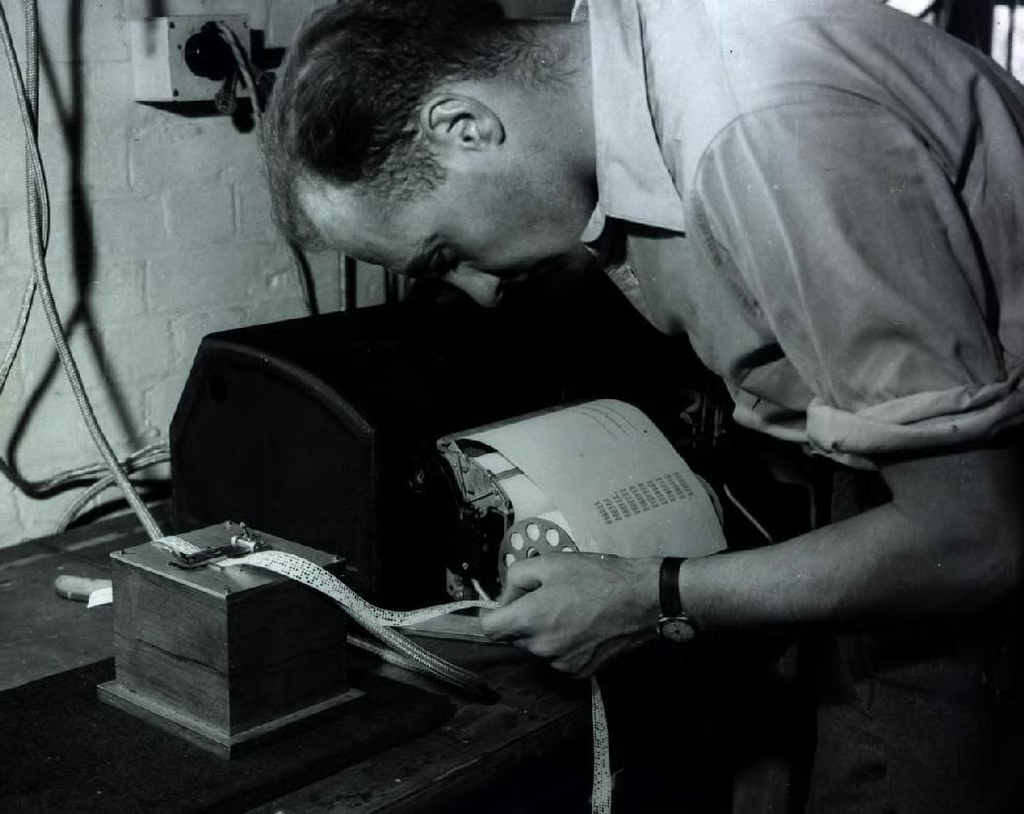
\n\tEdsac read programs from a punched paper tape and printed its results. Here you can see the machine’s five hole tape reader and Creed teleprinter.
\n
\n\tA key element of Edsac’s design survives in computers to this day, the practice of storing both instructions and data in memory. The stored program concept was based upon the ideas devised by the brilliant mathematician John von Neumann in 1945.
\n
\n\tPhoto credit: Computer Laboratory, University of Cambridge
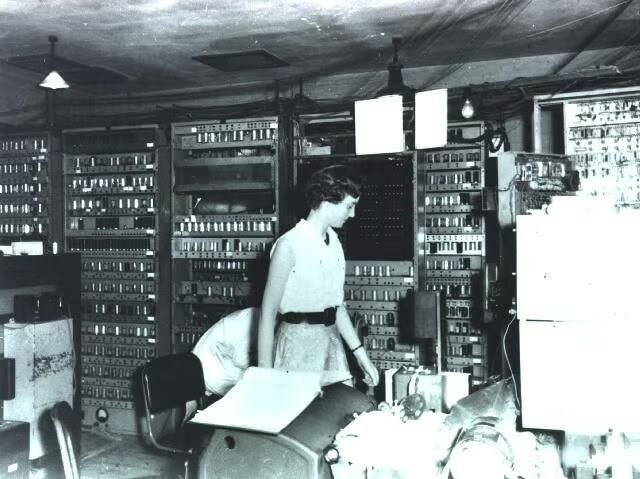
\n\tEdsac rebuild project manager Andrew Herbert said that EDSAC marked a change in what computers were used for, as the first computer to be used in scientific research.
\n
\n\t”The late Professor Sir Maurice Wilkes, now widely regarded as the father of British computing, had the vision and the drive to realise the potential of computers to take on the mathematical calculations that underpin scientific research,” he said.
\n
\n\t”The impact of Edsac has been profound, so we aim to celebrate the achievements of its creators and to inspire future generations of engineers and computer scientists.”
\n
\n\tThe machine’s influence had an impact beyond the world of science, with the design of the Lyons Electronic Office, the first computer used in business, closely modelled on the Edsac.
\n
\n\tPhoto credit: Computer Laboratory, University of Cambridge
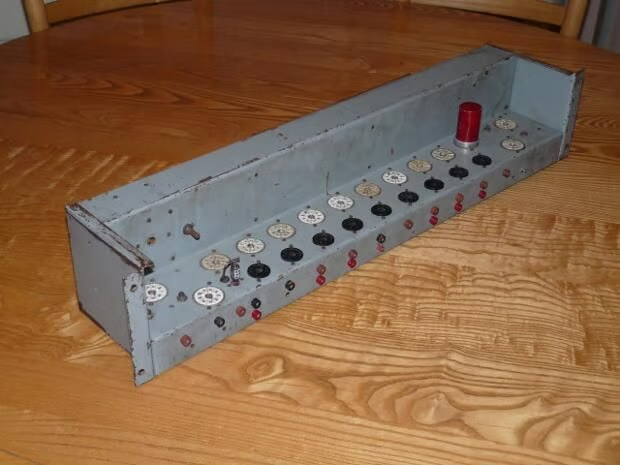
\n\tThe Edsac was first operational in May 1949 and ran for nine years. Since it was scrapped only three of its 140 chassis have survived.
\n
\n\tAbove is a surviving Edsac chassis, which has been used to create a computer model for the replica chassis that will be used to rebuild the machine.
\n
\n\tPhoto: National Museum of Computing
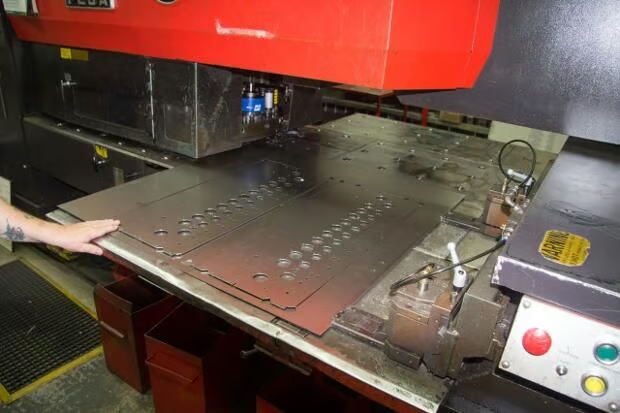
\n\tA hole punch is used to produce the first of 20 replica chassis. The chassis were produced at Teversham Engineering Ltd in Cambridge this week.
\n
\n\tPhoto: National Museum of Computing
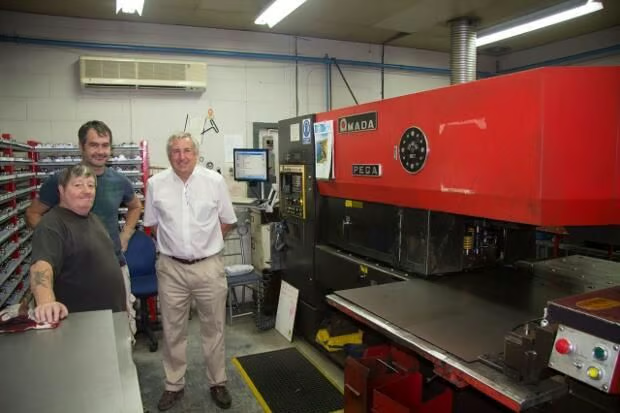
\n\tThe Edsac recreation is being undertaken by Edsac Project volunteers at The National Museum of Computing in association with the Computer Conservation Society.
\n
\n\tFunding is being provided by a consortium led by computing entrepreneur and Acorn co-founder Hermann Hauser, and includes a contribution from Google UK.
\n
\n\tPhoto: National Museum of Computing

Nick Heath is a computer science student and was formerly a journalist at TechRepublic and ZDNet.


