\n\tWorldWide Telescope is a new project from Microsoft Research that combines imagery of space and celestial objects into one easy-to-use interface. From the site’s overview page: “The WorldWide Telescope (WWT) is a environment that enables your computer to function as a virtual telescope–bringing together imagery from the world’s best ground- and space-based telescopes for the exploration of the universe.”
\n
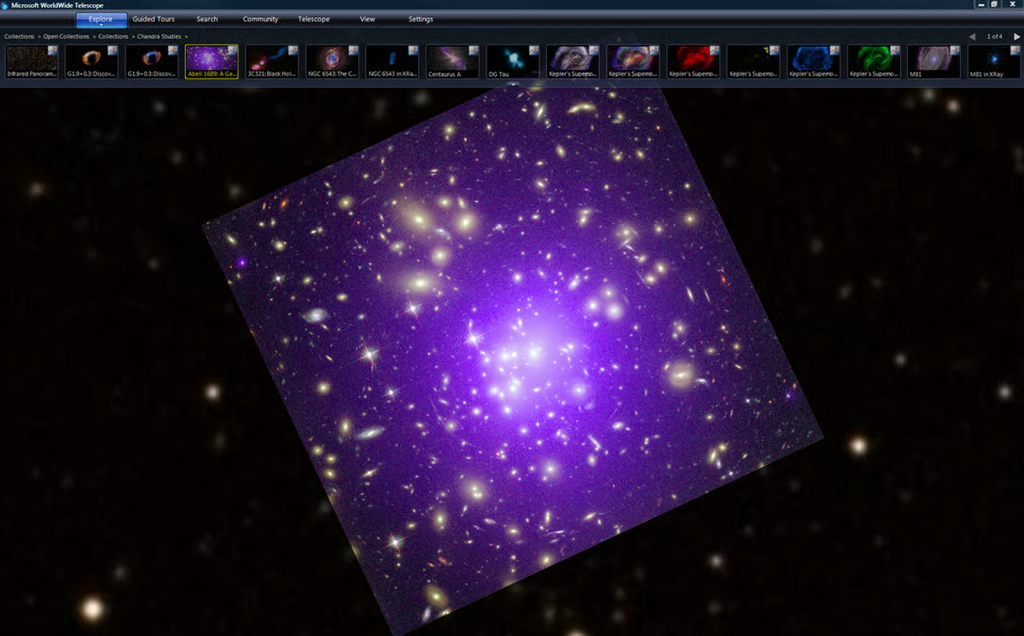
\n\tThis image is a high-resolution image of Abell 1689, a galaxy cluster in the constellation Virgo, as taken by the Chandra X-Ray Observatory. The image is embedded on the digitized sky that is the basis of WorldWide Telescope.
\n
\n\tImage used with permission from Microsoft. Caption by Wally Bahny.
Jupiter
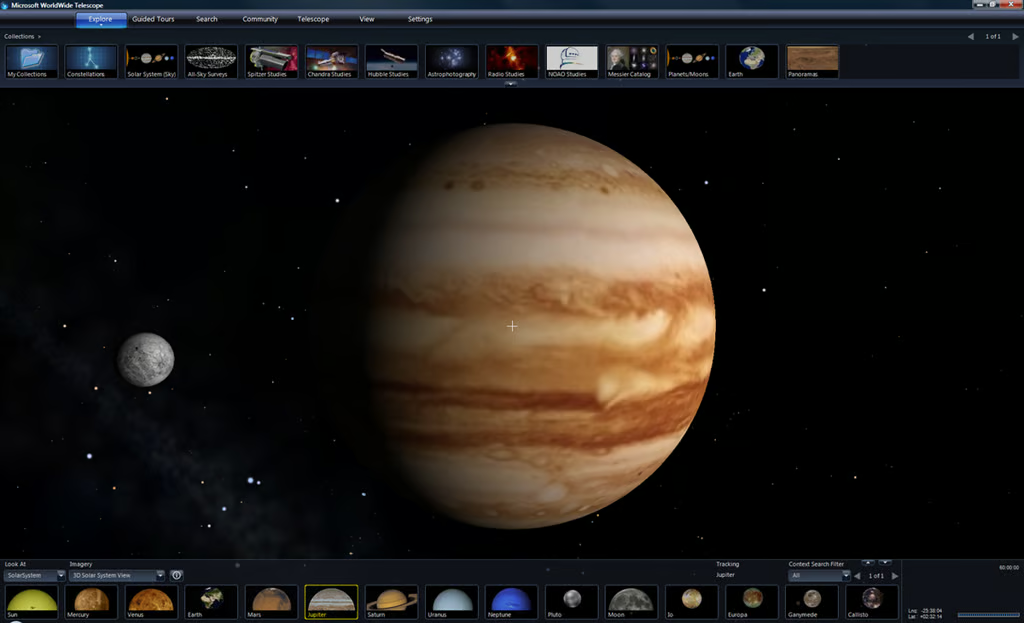
\n\tJupiter is also navigable in the WorldWide Telescope.
\n
\n\tImage used with permission from Microsoft. Caption by Wally Bahny.
Saturn
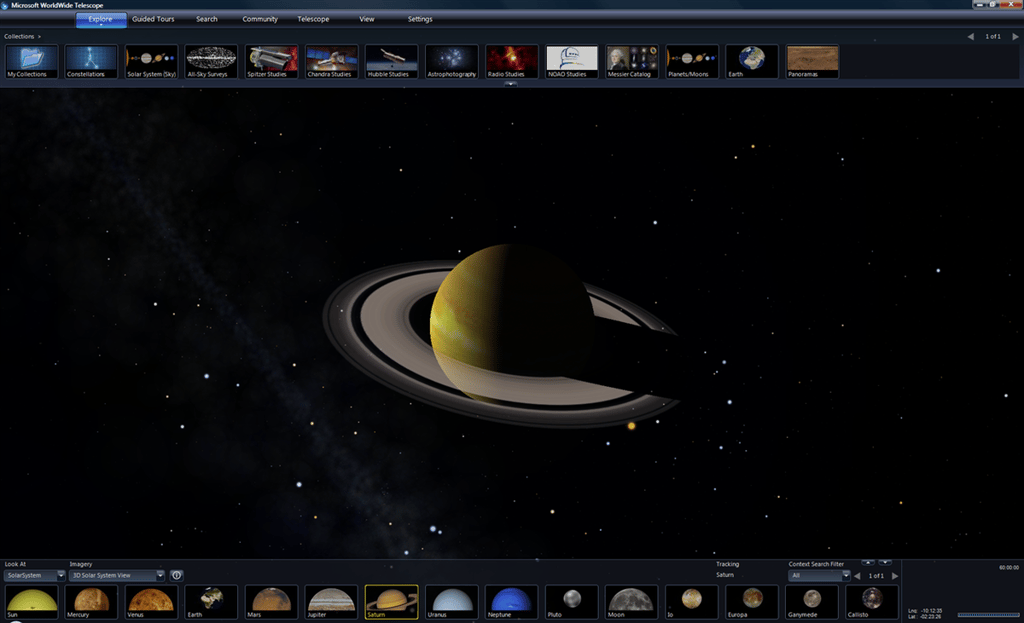
\n\tSaturn can also be turned and twisted in whichever way you would like to see it within the 3D solar system feature.
\n
\n\tImage used with permission from Microsoft. Caption by Wally Bahny.
2017 eclipse
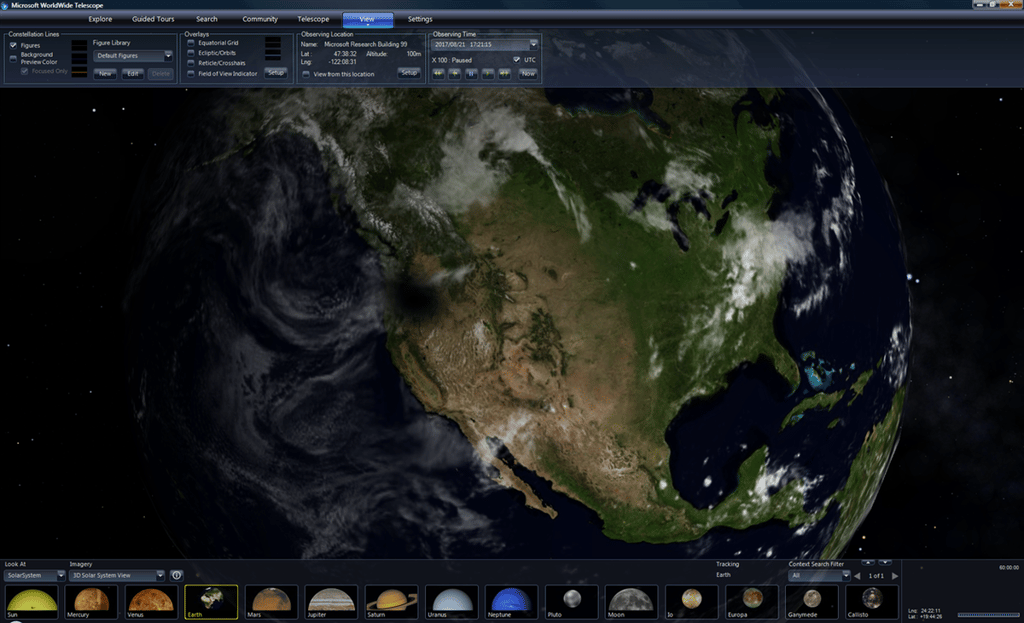
\n\tThis image is a simulated view of the 2017 eclipse that will affect the U.S. Pacific Northwest.
\n
\n\tImage used with permission from Microsoft. Caption by Wally Bahny.
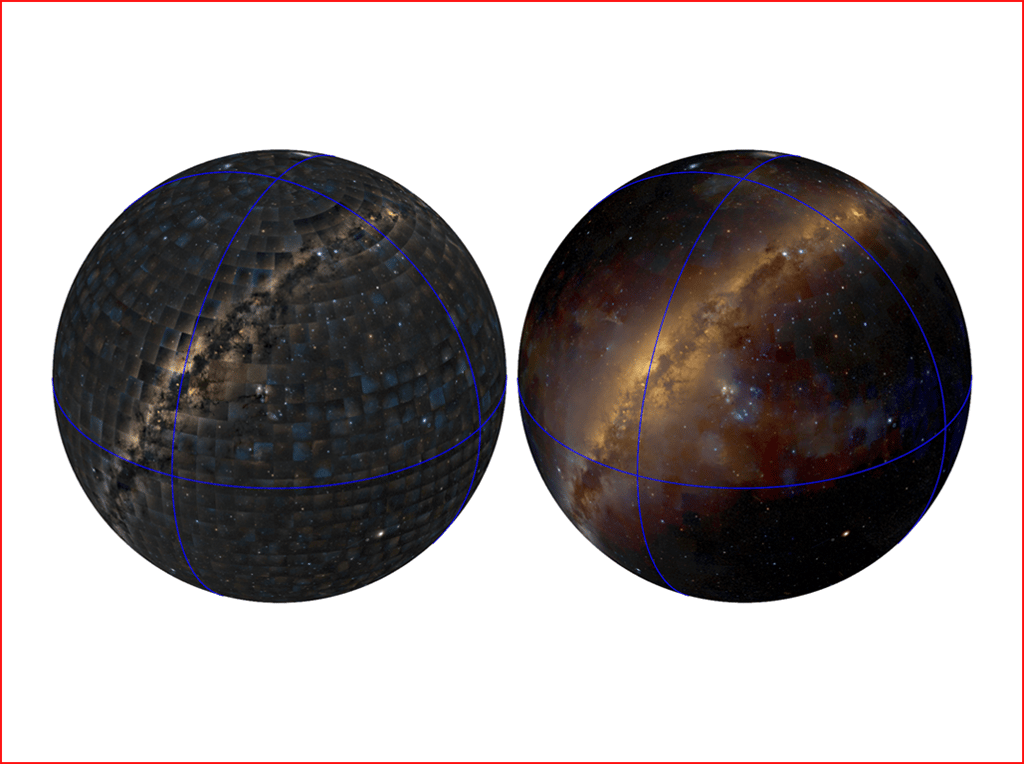
Terapixel before and after
\n\tMicrosoft Research used something called Terapixel to take individual images and combine them into a seamless sky view.
\n
\n\tImage used with permission from Microsoft. Caption by Wally Bahny.
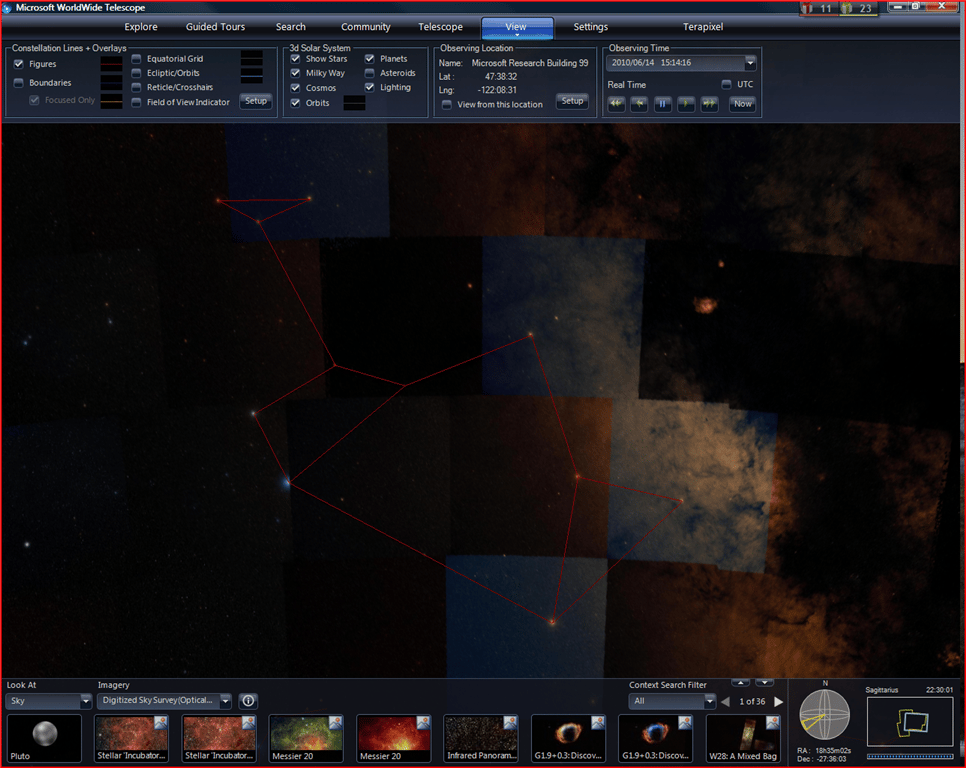
Terapixel Sagittarius before
\n\tThe first example of the Terapixel effect is the constellation Sagittarius. This image shows the various images that make up the constellation.
\n
\n\tImage used with permission from Microsoft. Caption by Wally Bahny.
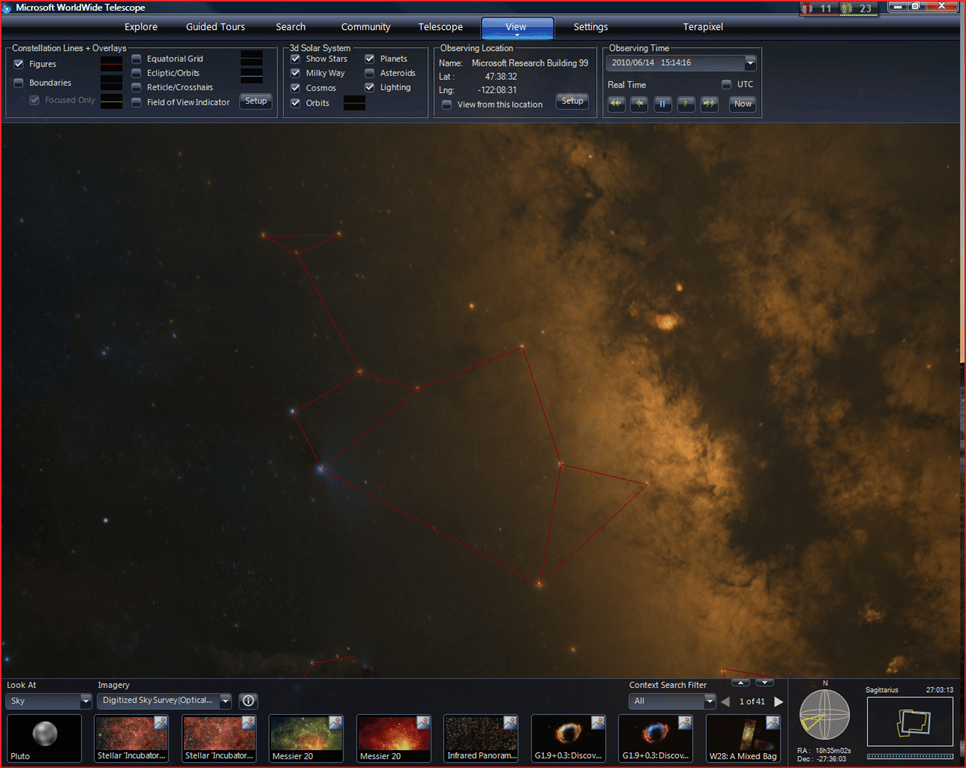
Terapixel Sagittarius after
\n\tAfter the Terapixel smoothing process, Sagittarius has a smoother view.
\n
\n\tImage used with permission from Microsoft. Caption by Wally Bahny.
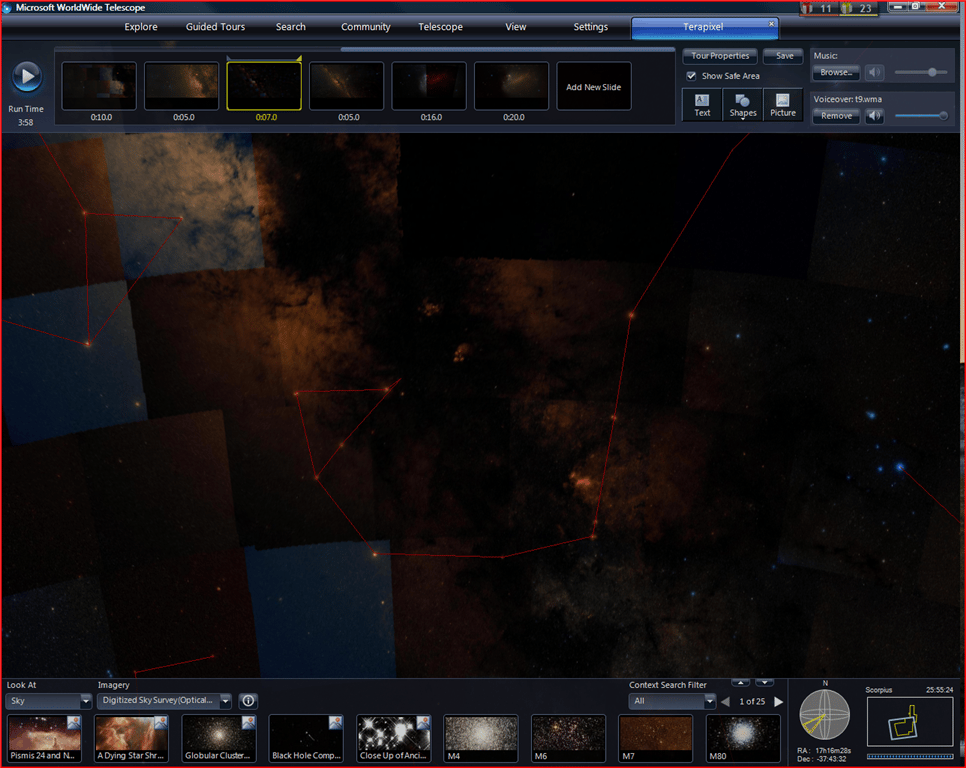
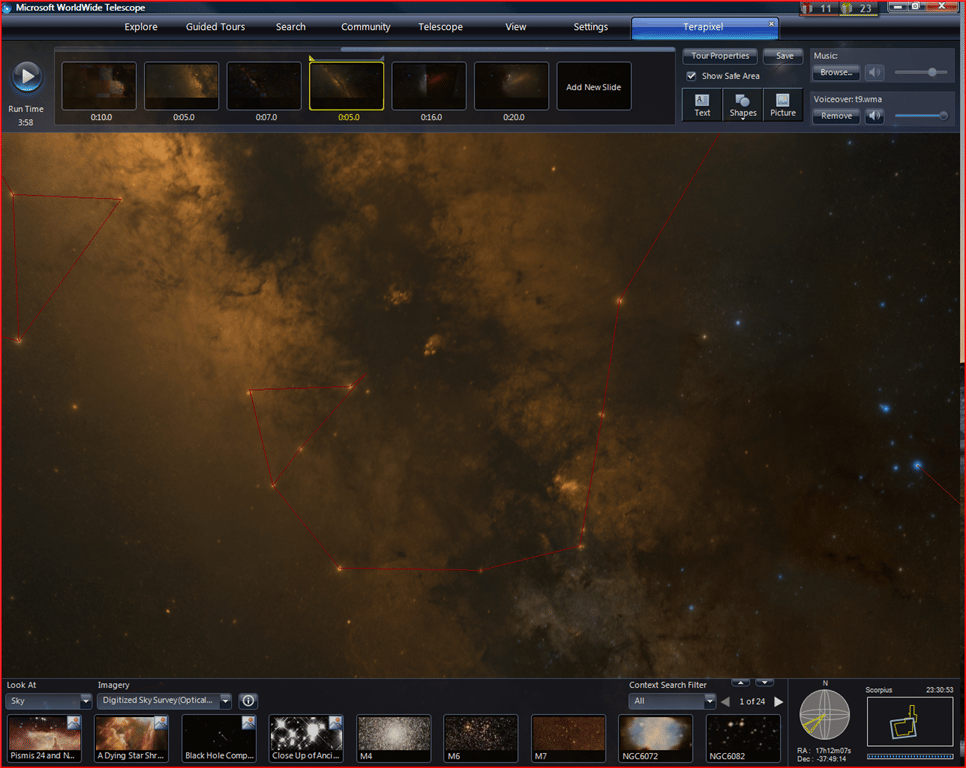
Terapixel Scorpius before
\n\tAnother example of the Terapixel effect is the constellation Scorpius. There are various images that make up this view of the constellation.
\n
\n\tImage used with permission from Microsoft. Caption by Wally Bahny.
Terapixel Scorpius after
\n\tAfter the Terapixel smoothing process, Scorpius has a smoother view.
\n
\n\tImage used with permission from Microsoft. Caption by Wally Bahny.
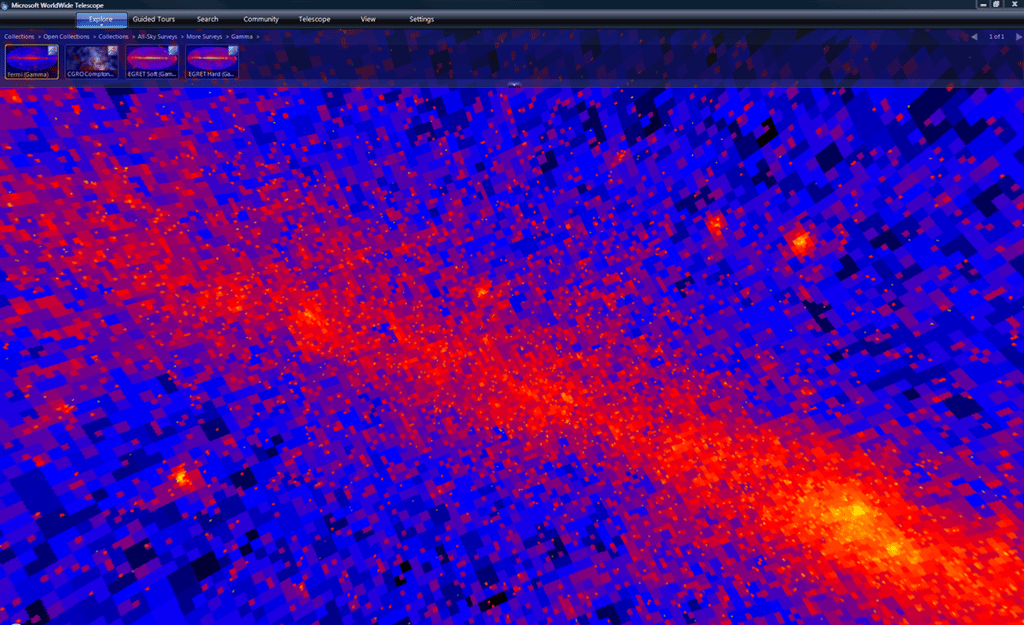
Fermi All Sky Survey
\n\tNot all of the data in WorldWide Telescope is visible light. Some imagery, like this gamma ray shot, is taken in various segments of the EM spectrum.
\n
\n\tImage used with permission from Microsoft. Caption by Wally Bahny.
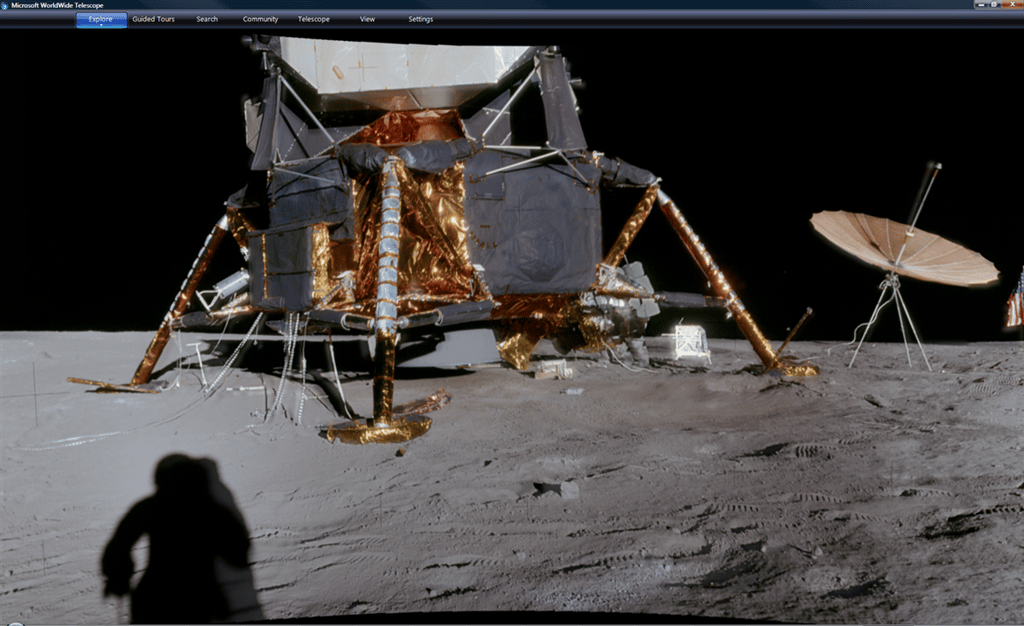
Apollo 12 landing site
\n\tThe WorldWide Telescope also has panoramic imagery of various exploration sites, including the Apollo 12 landing site and several panoramas of Mars.
\n
\n\tImage used with permission from Microsoft. Caption by Wally Bahny.
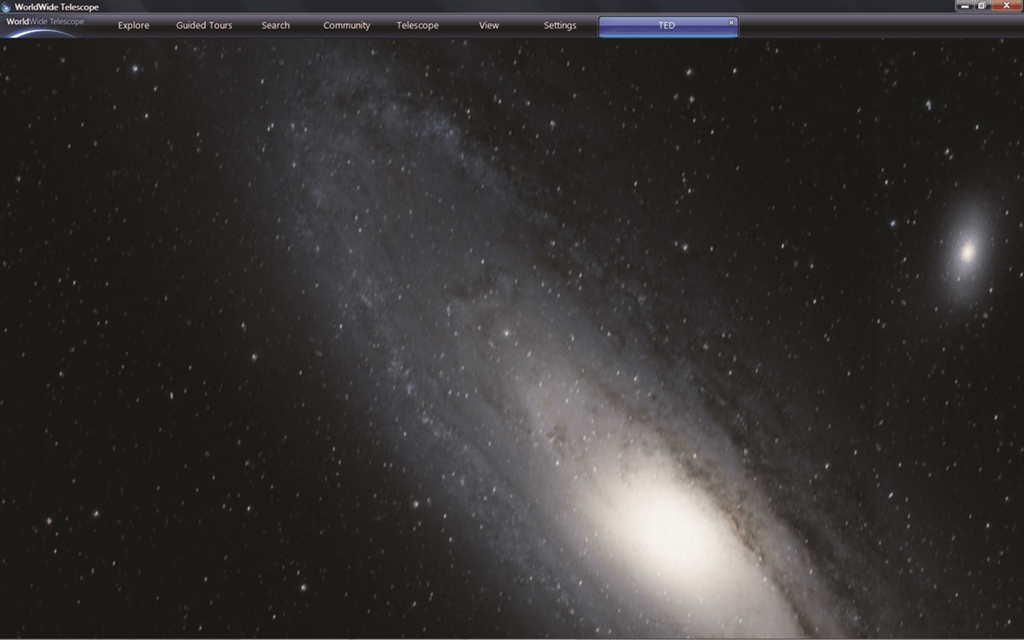
Andromeda Galaxy
\n\tSeveral of the countless galaxies beyond our own are featured in WorldWide Telescope, including the Andromeda Galaxy.
\n
\n\tImage used with permission from Microsoft. Caption by Wally Bahny.
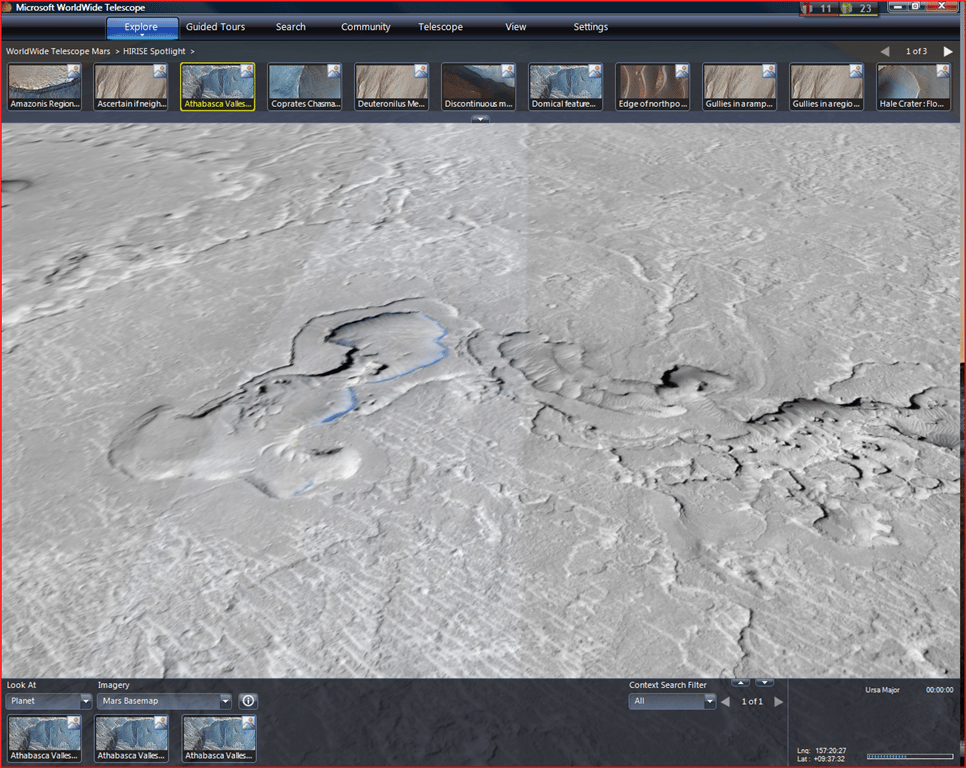
Mars volcanic vent
\n\tImagery from various exploration probes, including the Mars Reconnaissance Orbiter, is also included in WorldWide Telescope. This image is a volcanic vent near Athabasca Valles.
\n
\n\tImage used with permission from Microsoft. Caption by Wally Bahny.
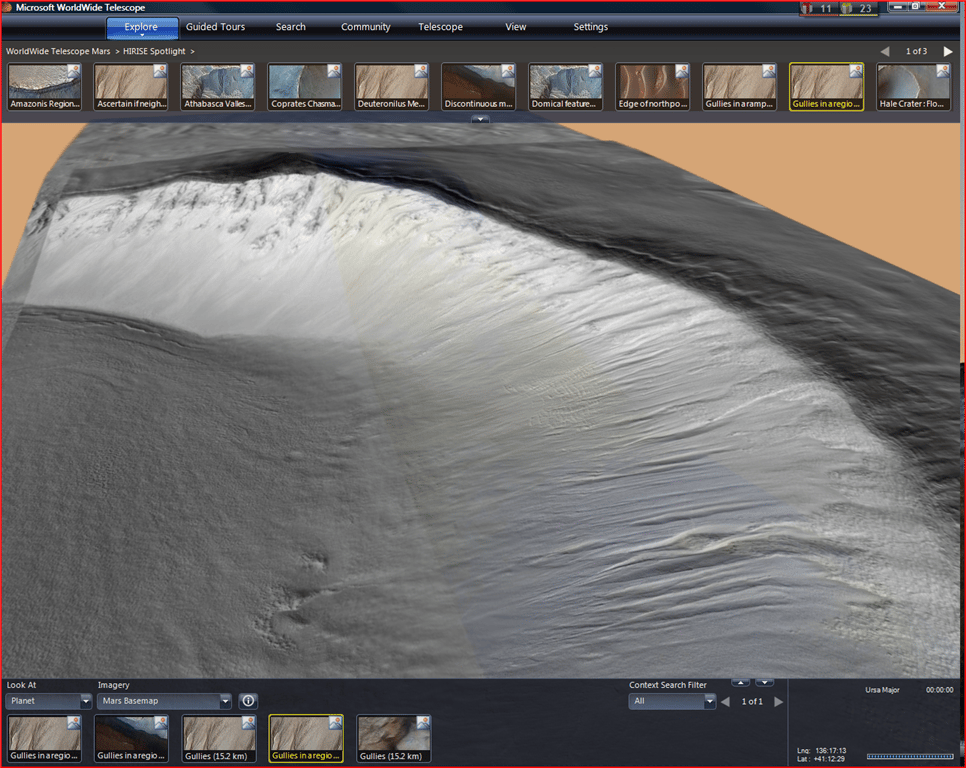
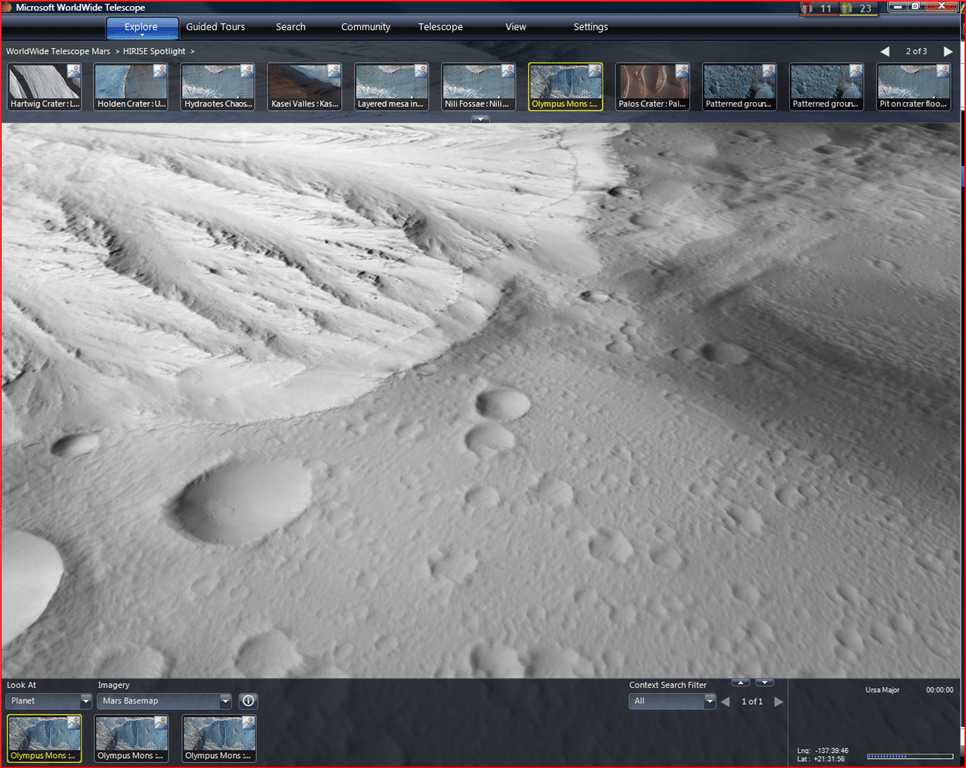
Mars Utopia Planitia
\n\tThis image is of an impact crater that was taken by the Mars Reconnaissance Orbiter. Utopia Planitia (well, orbiting above) is where the Enterprise-D will be built in the 2360s.
\n
\n\tImage used with permission from Microsoft. Caption by Wally Bahny.
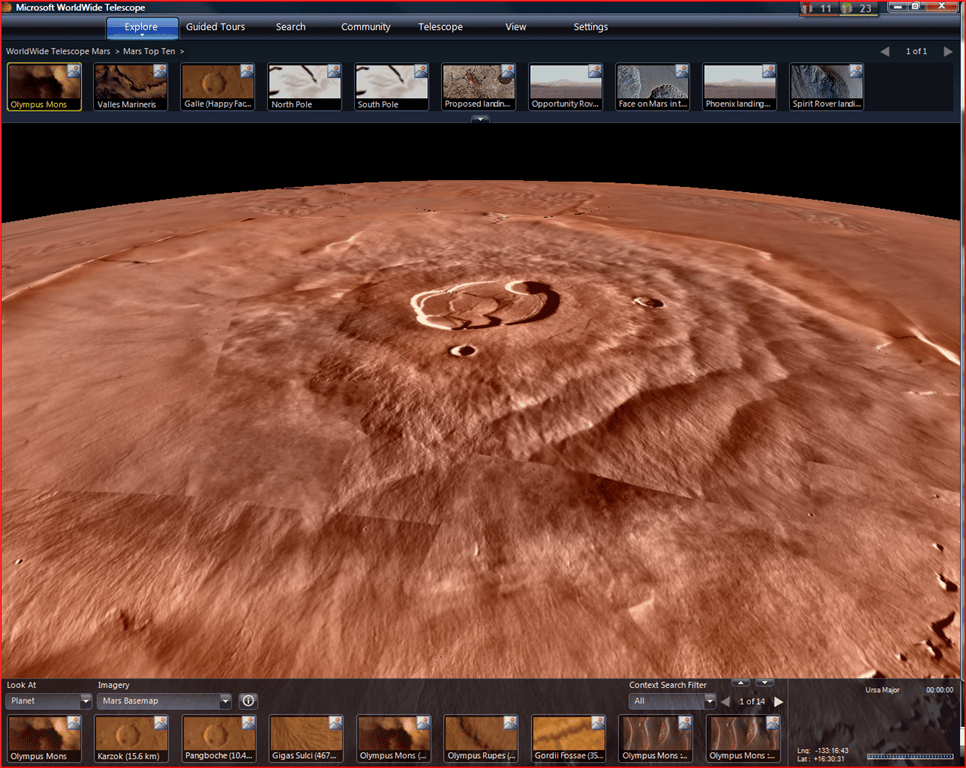
Mars Olympus Mons
\n\tOlympus Mons is the tallest known mountain in the solar system. This image was taken by the Mars Reconnaissance Orbiter.
\n
\n\tImage used with permission from Microsoft. Caption by Wally Bahny.
Another view of Mars Olympus Mons
\n\tThis view of Olympus Mons was created by combining images taken by the Viking orbiters and the Mars Orbiter Camera.
\n
\n\tImage used with permission from Microsoft. Caption by Wally Bahny.
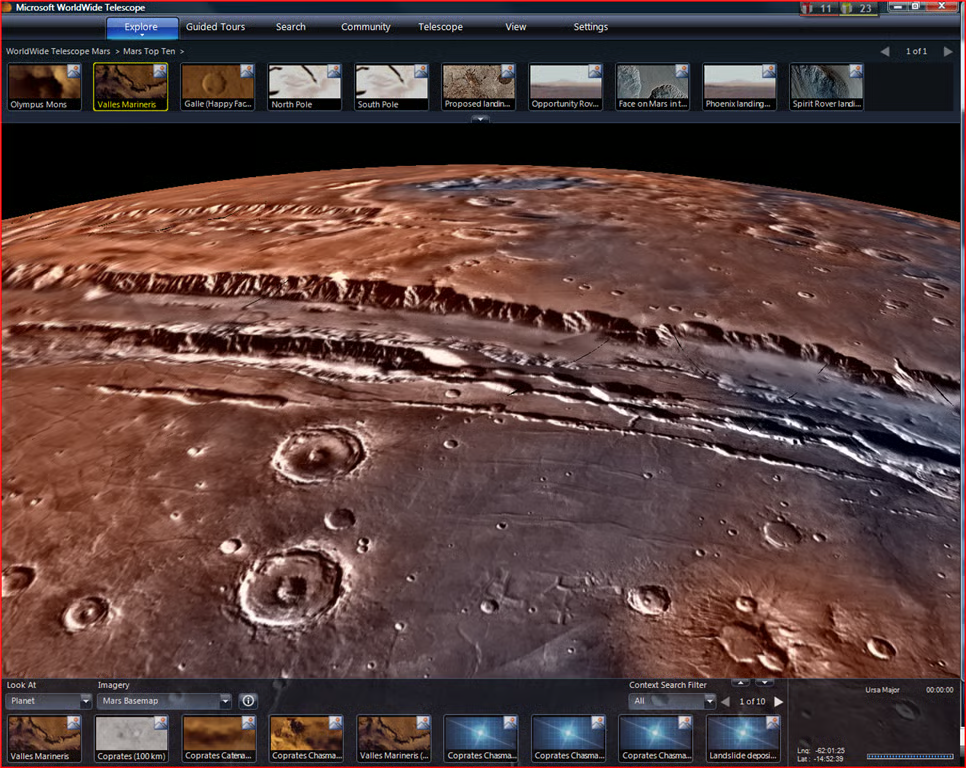
Mars Valles Marineris
\n\tAnother prominent feature of Mars is Valles Marineris. This view was created by combining images taken by the Viking orbiters and the Mars Orbiter Camera.
\n
\n\tImage used with permission from Microsoft. Caption by Wally Bahny.
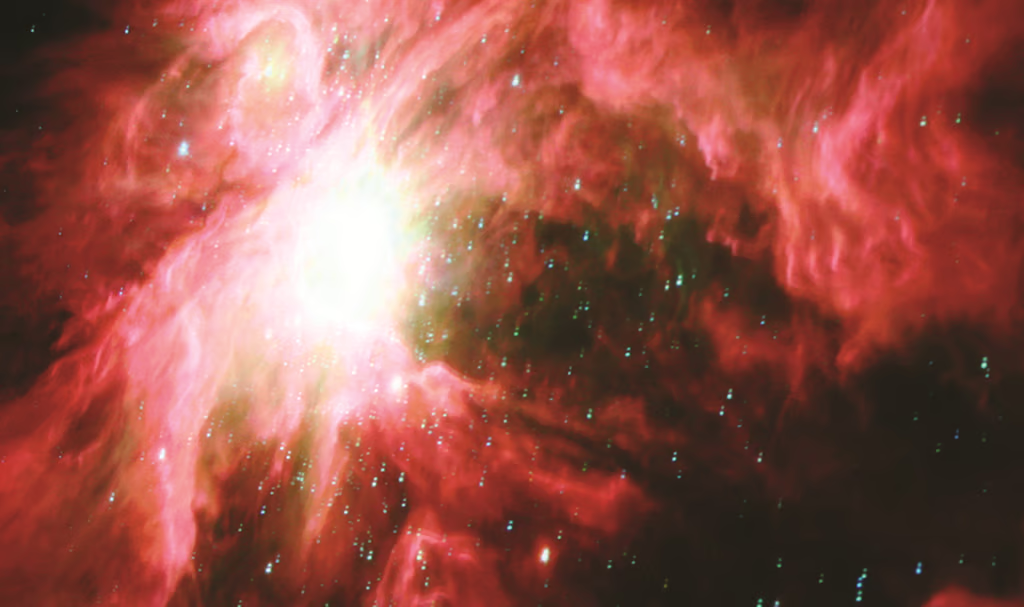
Orion Nebula
\n\tThe Orion Nebula is a very famous spatial object and is often printed for posters. WorldWide Telescope contains vast imagery of this and many other nebulae.
\n
\n\tImage used with permission from Microsoft. Caption by Wally Bahny.
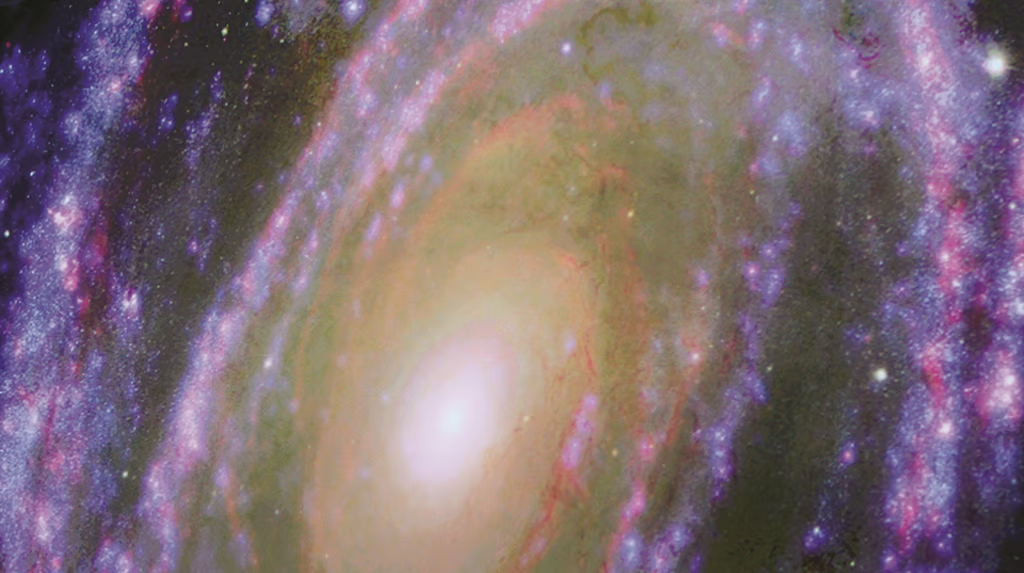
Messier 81 galaxy
\n\tAnother galaxy the WorldWide Telescope can zoom in on is Messier 81.
\n
\n\tImage used with permission from Microsoft. Caption by Wally Bahny.