Vintage Computer Advertisements from the late 1970s - TechRepublic

Vintage Computer Advertisements from the late 1970s

  • Altair 8800 ad from 1977

    \n\t 

    \n

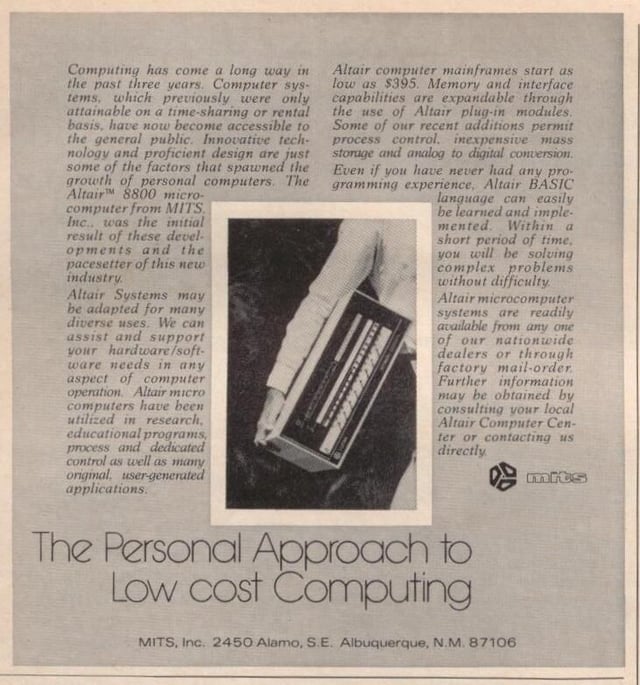
    \n\tThe Altair 8800 was basically the system that started the microcomputer revolution and provided a platform for Microsoft’s first product, Altair BASIC. The Altair 8800 was sold by mail order through advertisements like this one.

    \n

    \n\tFrom the advertisement: Innovative Technology and proficient design are just some of the factors that spawned the growth of personal computers. The Altair 8800 microcomputer from MITS Inc., was the initial result of these developments and the pacesetter of this new industry.

    \n

    \n\tLook! It’s a portable computer!

    \n

    \n\tImages compiled by Greg Shultz for TechRepublic

  • IMSAI Megabyte Micro ad from 1977

    \n\t 

    \n

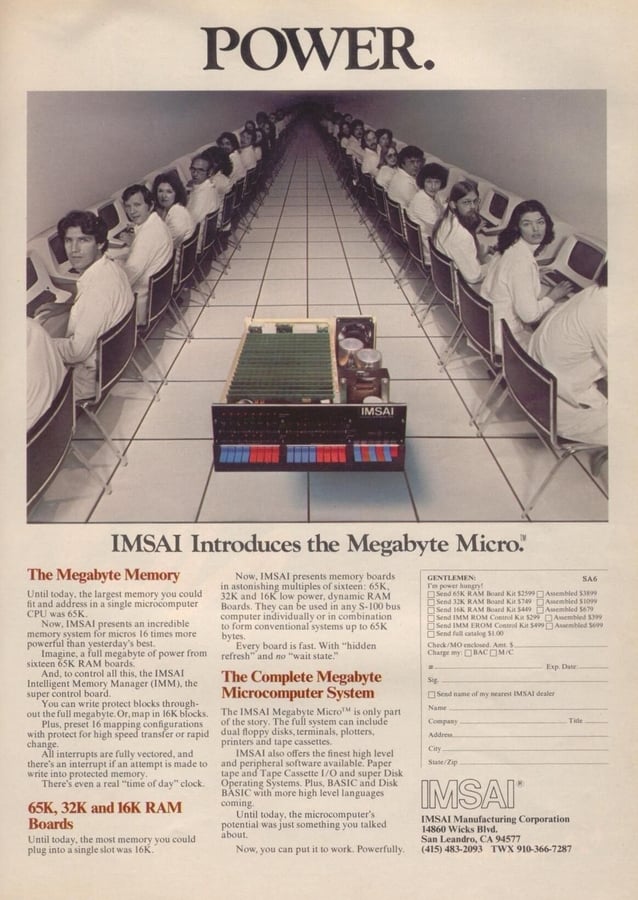
    \n\tIMSAI or IMS Associates, Inc, was an early success story in the microcomputer industry because they immediately recognized the success of the Altair 8800 and developed a similar unit that has become known as the first clone computer.

    \n

    \n\tFrom the advertisement: Until today, the largest memory you could fit and address in a single microcomputer CPU was 65K. Now, IMSAI presents an incredible memory system for micros 16 times more powerful that yesterday’s best. Imagine, a full megabyte of power from sixteen 65K RAM boards.

    \n

    \n\tCheck out the price list!

    \n

    \n\t 

    \n

    \n\tImages compiled by Greg Shultz for TechRepublic

  • TRS-80 ad from 1978

    \n\t 

    \n

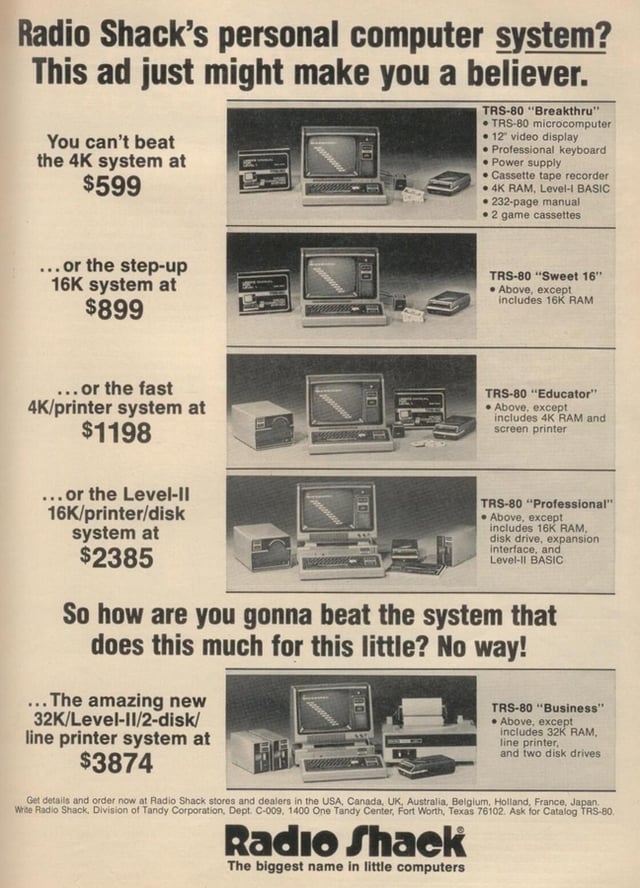
    \n\tTandy Corporation’s TRS-80 computer became very popular because they were easily accessible via the company’s vast network of Radio Shack stores.

    \n

    \n\tFrom the advertisement:The amazing new 32K/Level II/2-disk/line printer system at $3874

    \n

    \n\tImages compiled by Greg Shultz for TechRepublic

  • Apple II ad from 1978

    \n\t 

    \n

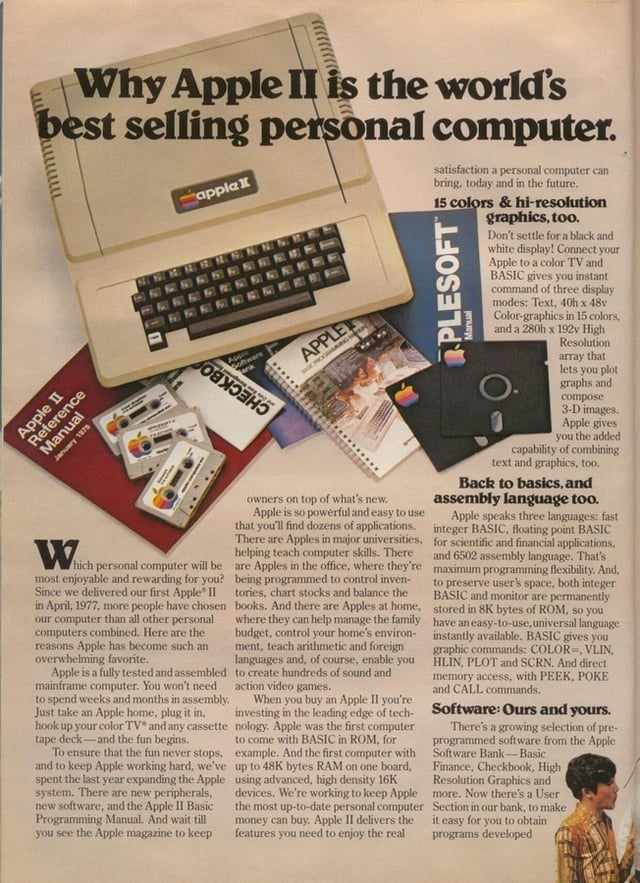
    \n\tBy 1978, the Apple II was well on its way to successfully producing what would become one of the first mass-produced microcomputer products. This is the first page of a full color two-page advertisement.

    \n

    \n\tFrom the advertisement: Apple is a fully tested and assembled mainframe computer. You won’t need to spend weeks and months in assembly. Just take an Apple home, plug it in, hook up your color TV and any cassette deck tape deck—and the fun begins.

    \n

    \n\tImages compiled by Greg Shultz for TechRepublic

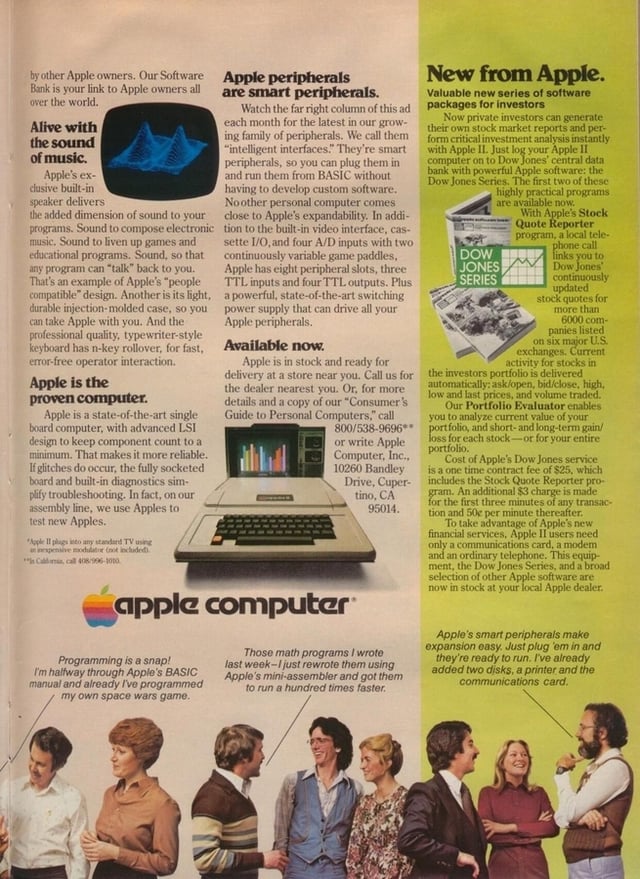
  • Apple II ad from 1978

    \n\t 

    \n

    \n\tThis is the second page of Apple’s full color two-page advertisement.

    \n

    \n\tFrom the advertisement:  Apple is a state-of-the-art single board computer, with advances LSI design to keep component count to a minimum.

    \n

    \n\tImages compiled by Greg Shultz for TechRepublic

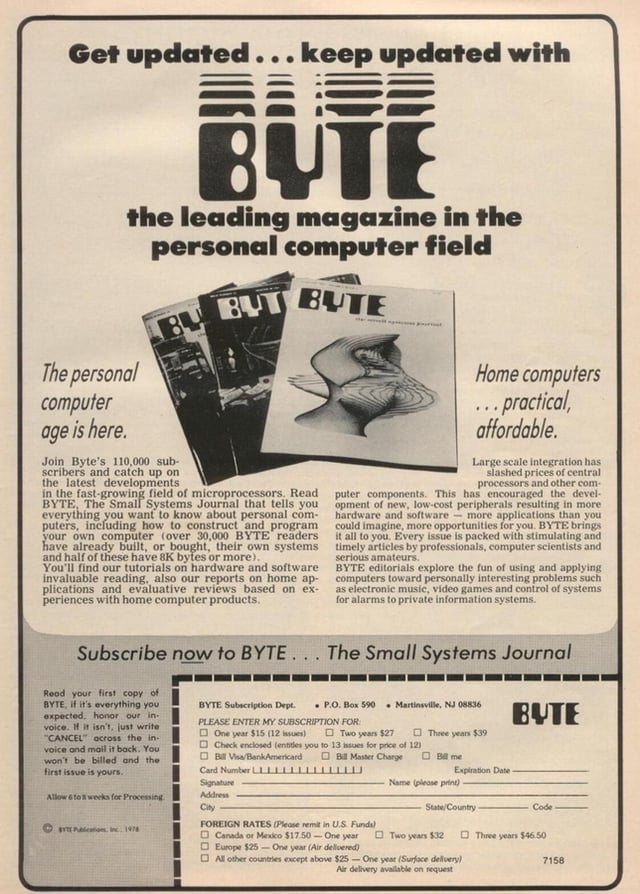
  • Byte magazine ad from 1978

    \n\t 

    \n

    \n\tBy 1978, BYTE Magazine was already claiming more the 100,000 subscribers.

    \n

    \n\tFrom the advertisement: Over 30,000 BYTE readers have already built, or bought, their own systems and half of these have 8K bytes or more.

    \n

    \n\tImages compiled by Greg Shultz for TechRepublic

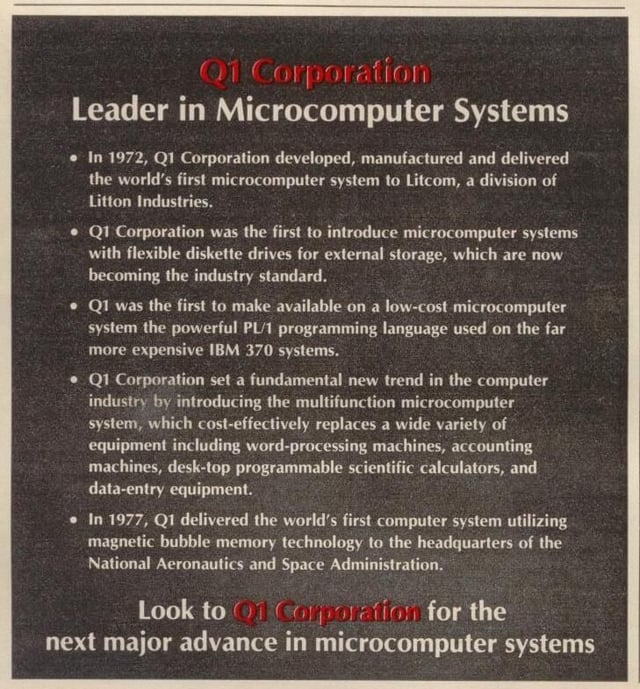
  • Q1 Corporation ad from 1978

    \n\t 

    \n

    \n\t

    \n\t\tThe Q1 Corporation was at a big player in the early microcomputer industry.

    \n\t

    \n\t\tFrom the advertisement: Q1 Corporation was the first to introduce microcomputer systems with flexible diskette drives for external storage, which are now becoming the industry standard.

    \n\t

    \n\t\tImages compiled by Greg Shultz for TechRepublic

    \n\t

    \n\t\t 

    \n

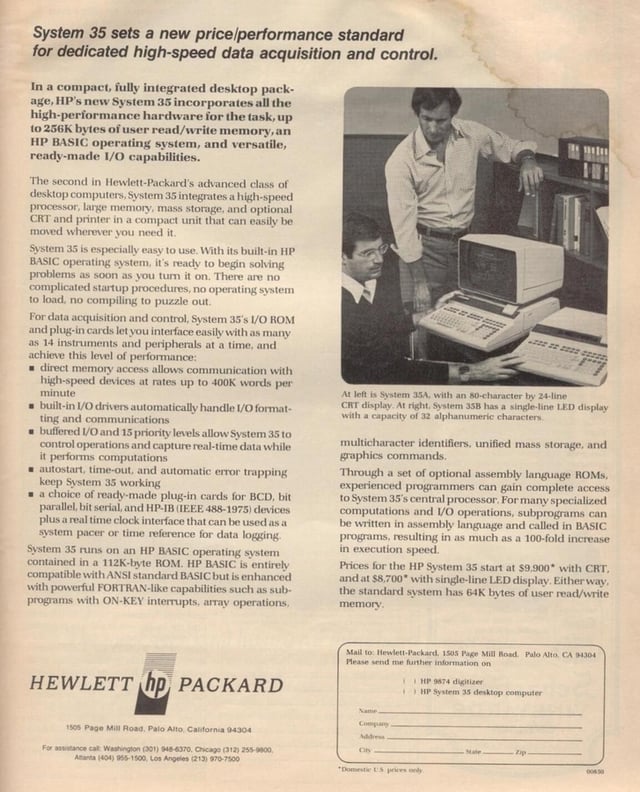
  • HP System 35 ad from 1978

    \n\t 

    \n

    \n\tHewlett-Packard has been in the desktop computer business for a long time and their second system was the System 35.

    \n

    \n\tFrom the advertisement: System 35 is especially easy to use. With its built-in HP BASIC operating system, it’s ready to begin solving problems as soon as you turn it on. There are no complicated startup procedures, no operating system to load, no compiling to puzzle out… Prices for the HP System 35 start at $9,900 with CRT, and at $8,700 with single-line LED display.

    \n

    \n\tImages compiled by Greg Shultz for TechRepublic

  • IBM ad from 1978

    \n\t 

    \n

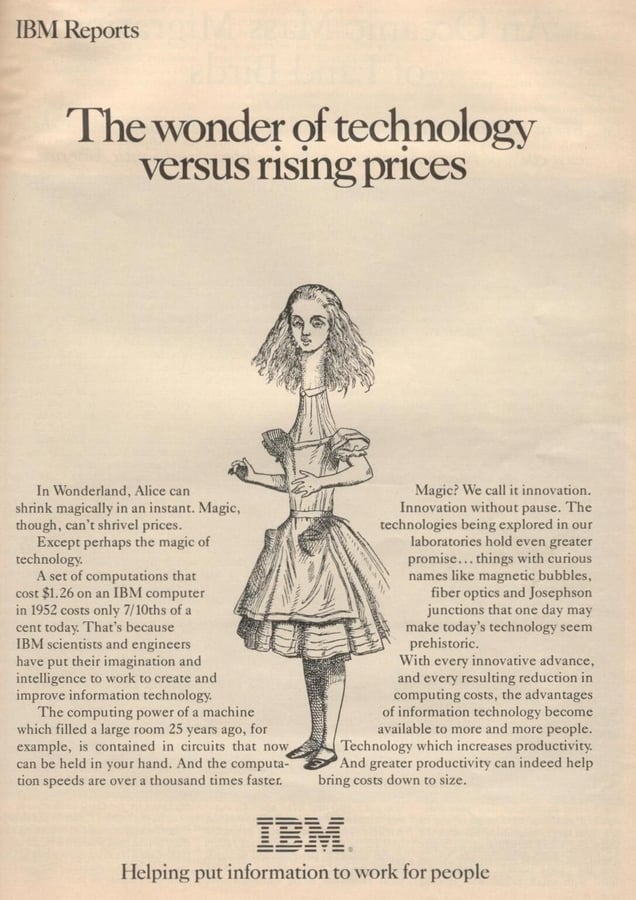
    \n\tIn this ad, IBM uses an image of a shrinking Alice in Wonderland to draw a parallel to the shrinking prices of computer time.

    \n

    \n\tFrom the advertisement: A set of computations that cost $1.26 on and IM computer in 1952 costs only 7/10ths of a cent today. That’s because IBM scientists and engineers have put their imagination to work to create and improve information technology.

    \n

    \n\tImages compiled by Greg Shultz for TechRepublic

  • Apple ad from 1978

    \n\t 

    \n

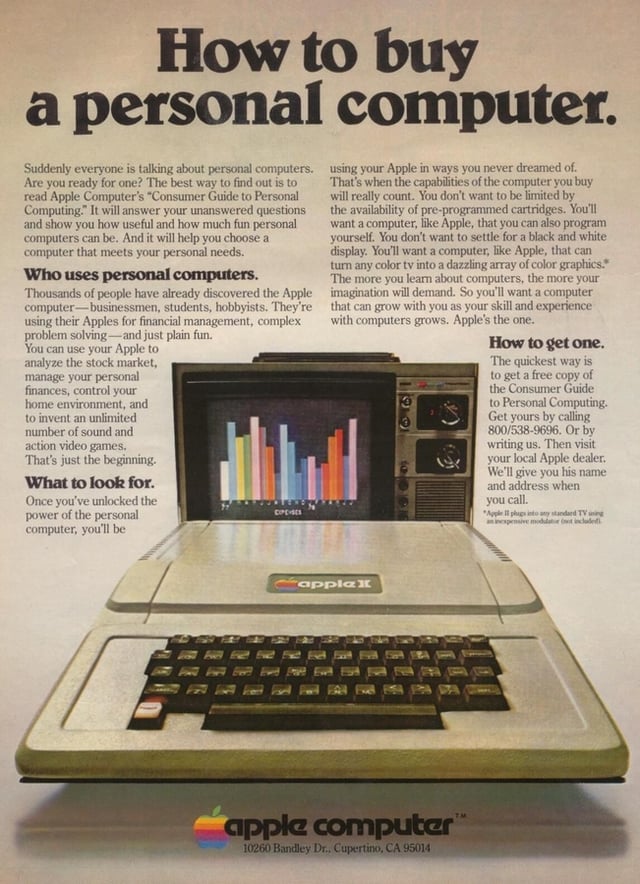
    \n\tA full page color ad from Apple encourages readers to learn more about personal computing.

    \n

    \n\tFrom the advertisement: Suddenly everyone is talking about personal computers. Are you ready for one? The best way to find out is to read Apple Computer’s \u201cConsumer Guide to Personal Computing.\u201d

    \n

    \n\tImages compiled by Greg Shultz for TechRepublic

  • Commodore Pet ad from 1979

    \n\t 

    \n

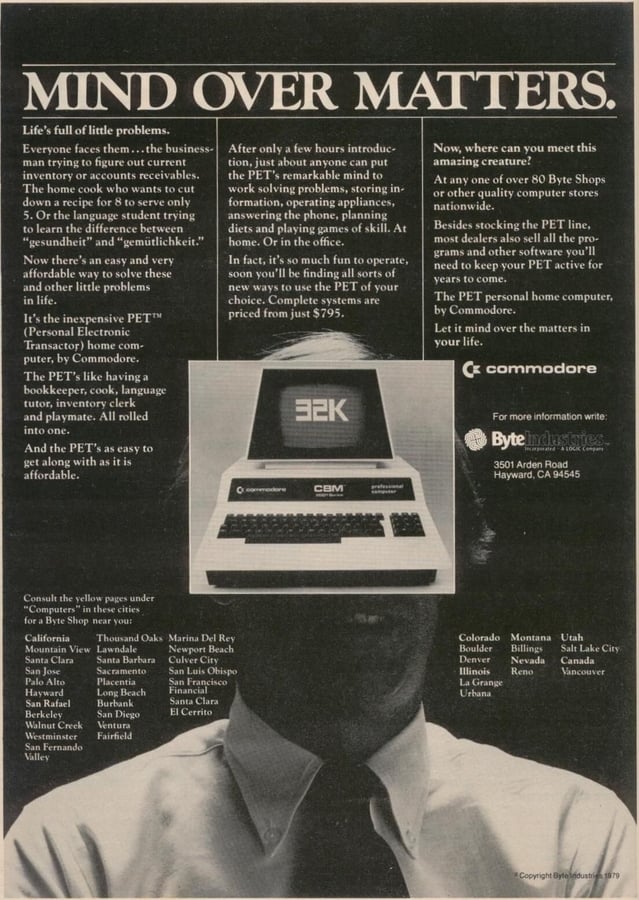
    \n\tThe PET was Commodore’s first full featured 8-bit computer.
    \n

    \n\tFrom the advertisement:It’s the inexpensive PET (Personal Electronic Transactor) home computer by Commodore. Complete systems are priced from just $795.

    \n

    \n\tImages compiled by Greg Shultz for TechRepublic
  • OnComputing magazine ad from 1979

    \n\t 

    \n

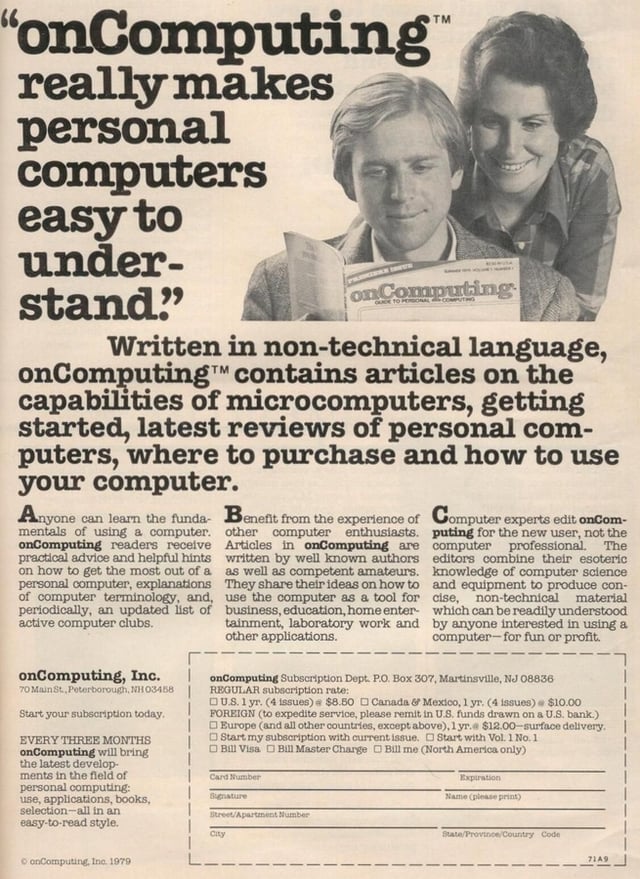
    \n\tWith computers becoming more appealing to the average consumer, there was a need for making computers, software, and technical jargon easy to understand and OnComputing magazine was there to fill that need.

    \n

    \n\tImages compiled by Greg Shultz for TechRepublic

  • Siemens Corporation ad from 1979

    \n\t 

    \n

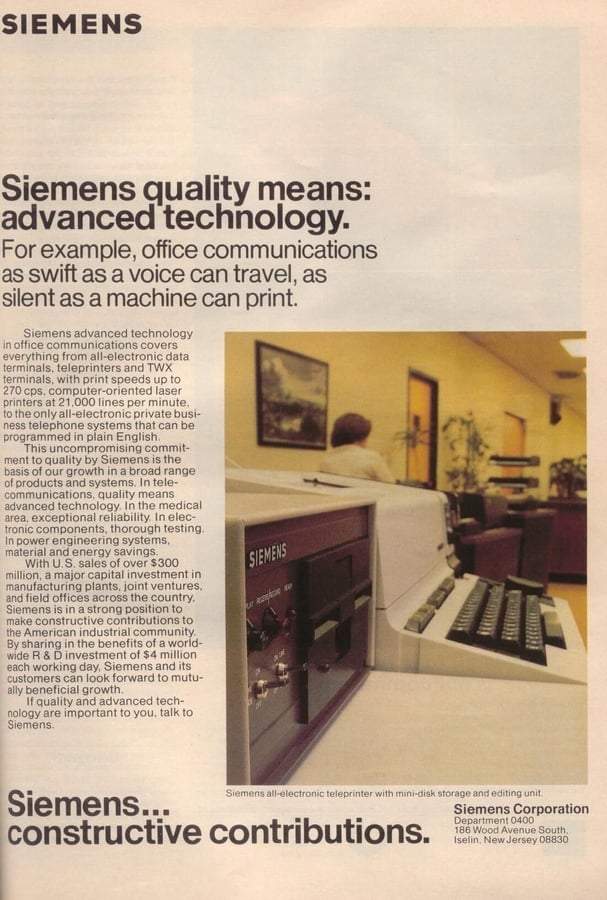
    \n\tSiemens specialized in office communications systems and claimed sales of over $300 million.

    \n

    \n\tThis ad features a picture of the all electronic teleprinter with mini-disk storage and editing unit.

    \n

    \n\tImages compiled by Greg Shultz for TechRepublic

  • ComputerLand ad from 1979

    \n\t 

    \n

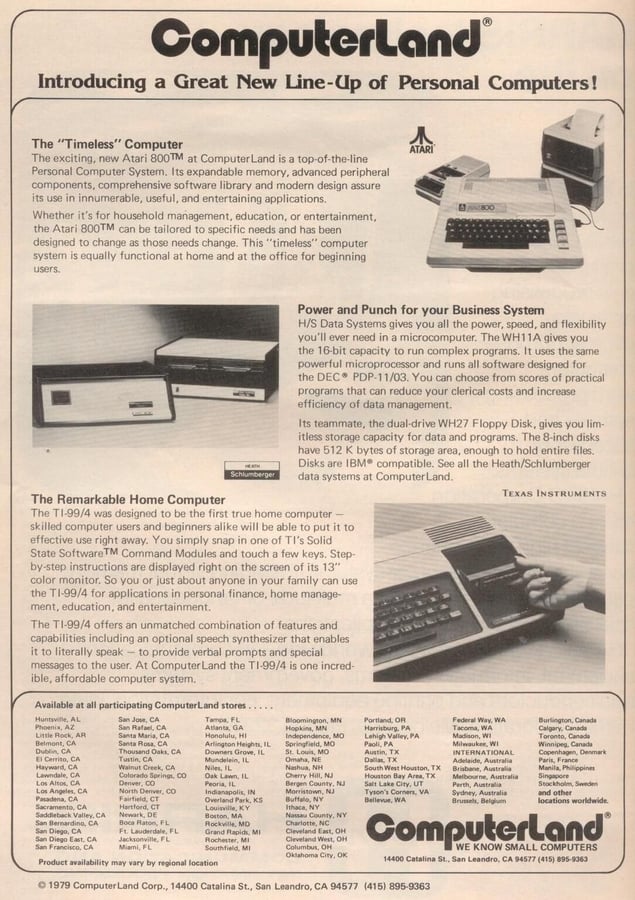
    \n\tAs the IMSAI microcomputer started to face more competition, the owners of the company decided to branch out founded ComputerLand retail computer store, so that they could benefit from their competitors successes.

    \n

    \n\tThis advertisement features the Atari 800, the H/S Data Systems WH11A, and the TI-99/4

    \n

    \n\tImages compiled by Greg Shultz for TechRepublic

  • Apple Ad from 1979

    \n\t 

    \n

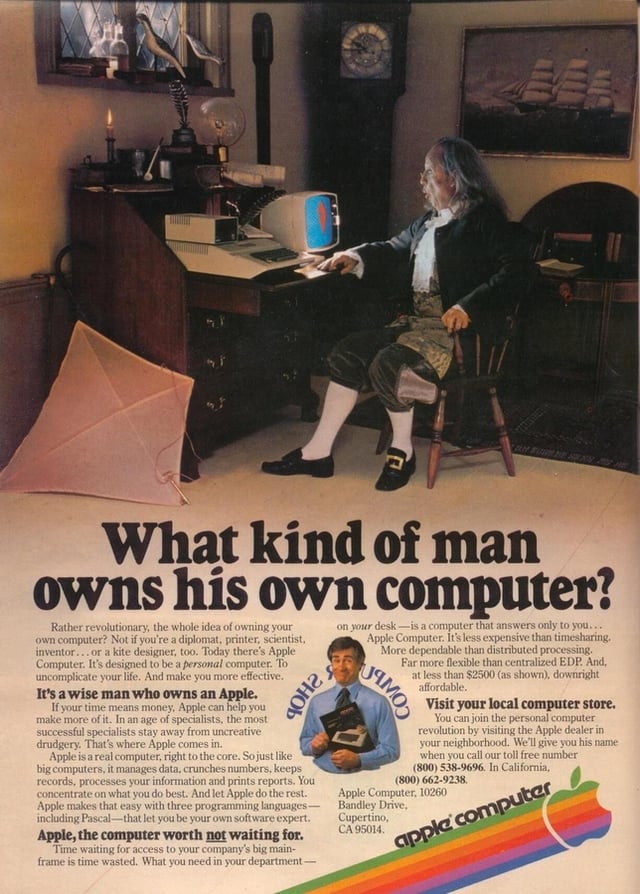
    \n\tIn this advertisement, Apple implies that if computers were around in Ben Franklin’s day, he would have used an Apple.

    \n

    \n\tFrom the advertisement: Time waiting for access to your company’s big mainframe is time wasted. What you need in your department—on your desk—is a computer that answers only to you…Apple Computer.

    \n

    \n\tImages compiled by Greg Shultz for TechRepublic

  • Exxon Information Systems ad from 1979

    \n\t 

    \n

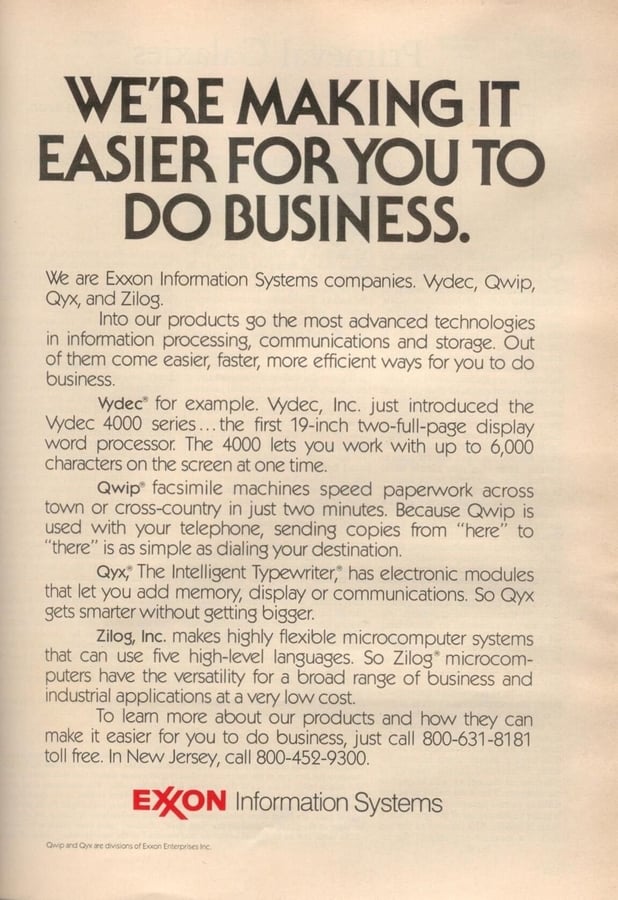
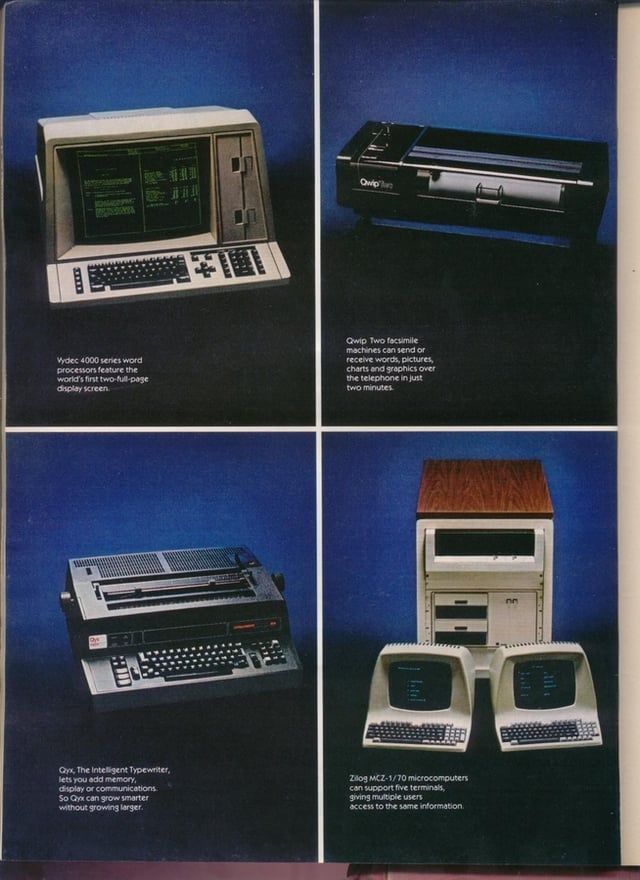
    \n\tWho knew that Exxon sold microcomputers and other office equipment in the 70s?

    \n

    \n\tThis two page ad features the Vydek 4000 19-inch two-page display word processor, Qwip Two facsimile machine, Qyx Intellignet Typewriter, and the Zilog MCZ-1/70 microcomputer system.

    \n

    \n\tImages compiled by Greg Shultz for TechRepublic

  • Exxon Information Systems ad from 1979

    \n\t 

    \n

    \n\tThis is the second page of Exxon Information Systems’ full color two-page advertisement.

    \n

    \n\tExxon Information Systems’s product line: From the top left- Vydek 4000, Qwip Two, Qyx, and Zilog MCZ-1/70.

    \n

    \n\tImages compiled by Greg Shultz for TechRepublic

  • Compucolor II ad from 1979

    \n\t 

    \n

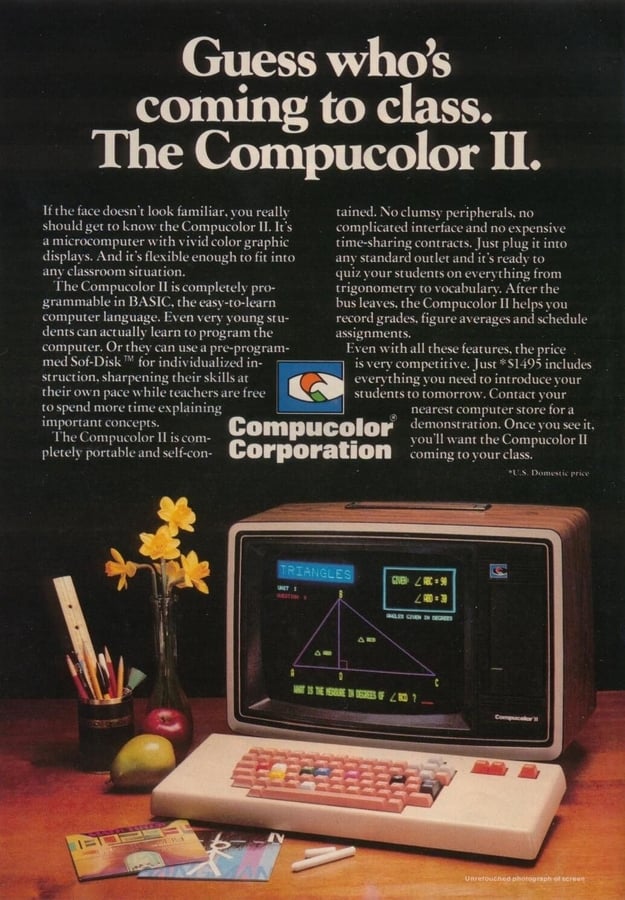
    \n\tThe Compucolor II was designed and marketed for use in schools.

    \n

    \n\tFrom the advertisement: The Compucolor II is completely portable and self-contained. No clumsy peripheral. No complicated interface and no expensive time sharing contracts.

    \n

    \n\tImages compiled by Greg Shultz for TechRepublic

  • HP 9800 System 45B ad from 1979

    \n\t 

    \n

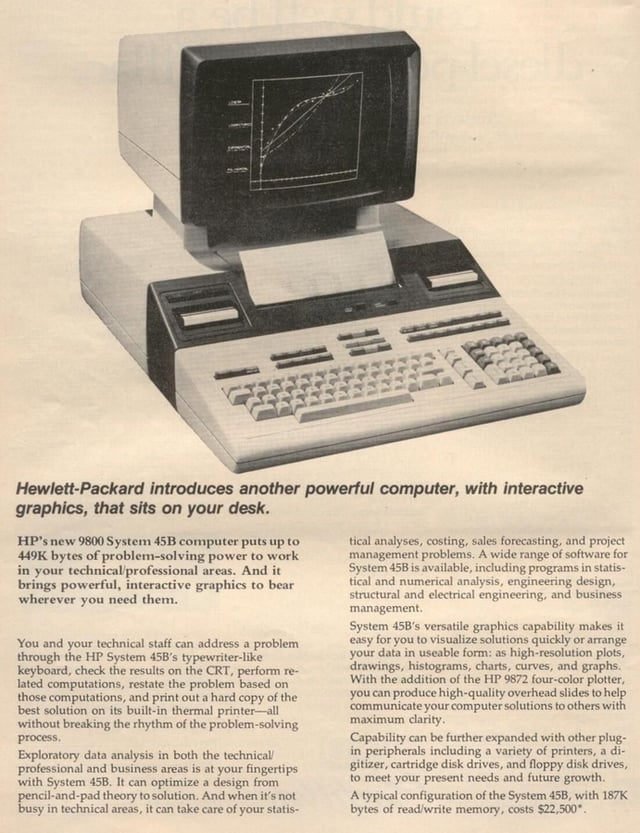
    \n\tAimed at technical professionals, the System 45B’s typical configuration provided 187K of read/write memory and sold for $22,500.

    \n

    \n\tFrom the advertisement: You and your technical staff can address a problem through HP System 45B’s typewriter-like keyboard, check the results on the CRT, perform related computations, restate the problem based on those computations, and print out the hard copy on its built-in thermal printer—all without breaking the rhythm of the problem-solving process.

    \n

    \n\t Images compiled by Greg Shultz for TechRepublic

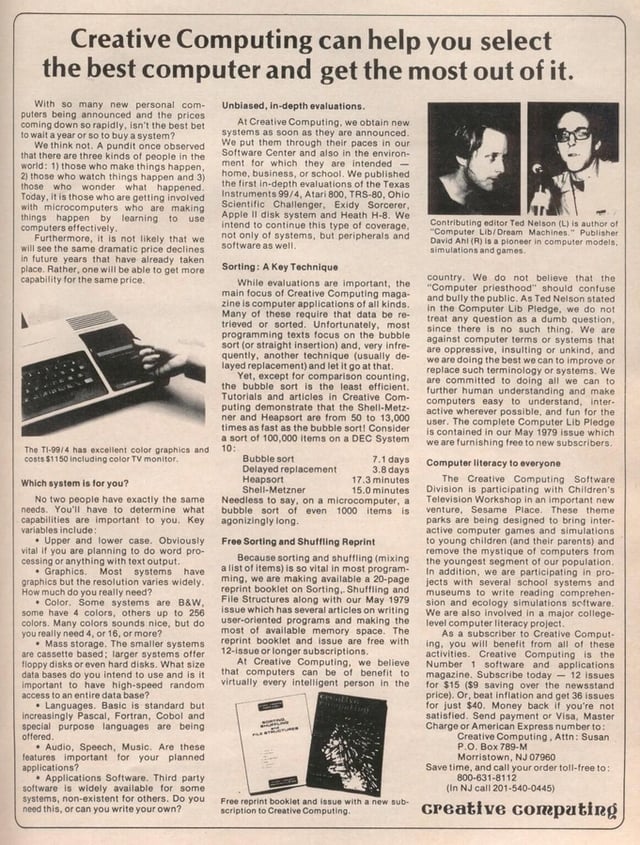
  • Creative Computing magazine ad from 1979

    \n\t 

    \n

    \n\tCreative computing magazine featured articles on computer application as well as in-depth computer reviews.

    \n

    \n\tFrom the advertisement: At Creative computing, we obtain new systems as they are announced.  We put them through their paces in our software Center and also in the environment for which that are intended—home, business, or school.

    \n

    \n\tImages compiled by Greg Shultz for TechRepublic

  • Perkin-Elmer 3220 ad from 1979

    \n\t 

    \n

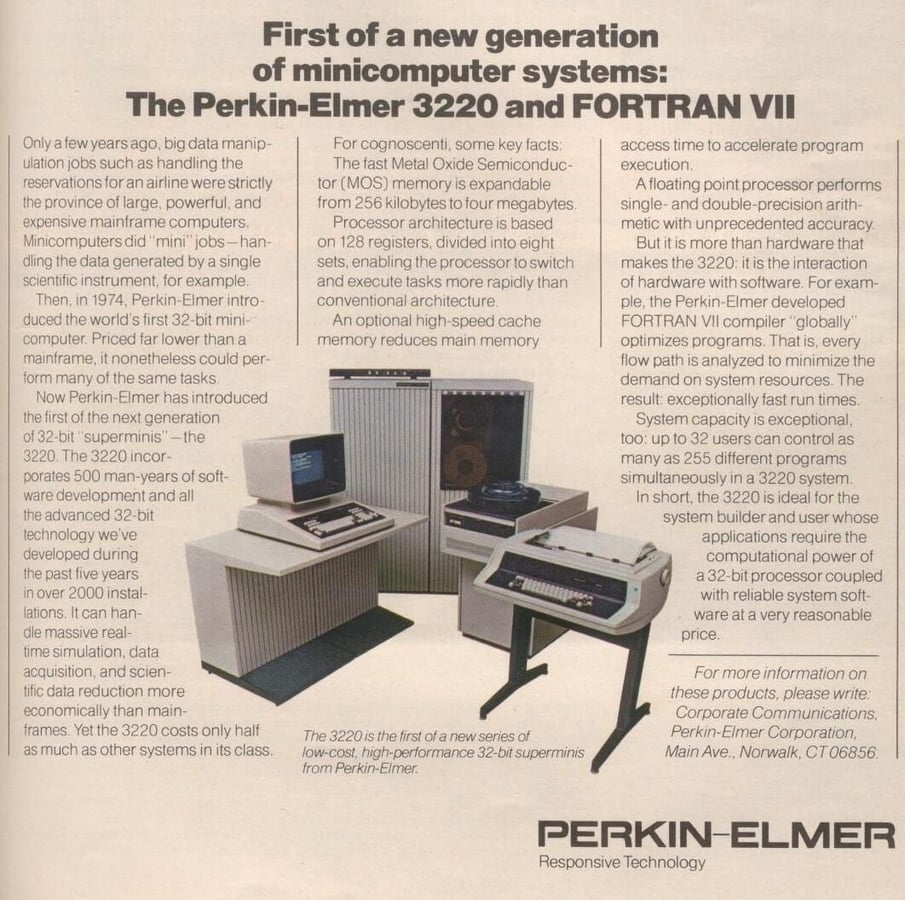
    \n\tWhile microcomputers were causing the storm, minicomputers were along for the ride.

    \n

    \n\tFrom the advertisement: Only a few years ago, big data manipulation jobs such as handling reservations for an airline were strictly the province of large, powerful, and expensive mainframe computers… Now Perkin-Elmer has introduced the first of the next generation of 32-bit \u201csuperminis\u201d—the 3220.

    \n

    \n\tImages compiled by Greg Shultz for TechRepublic

  • Harris Communication and Information Processing ad from 1979

    \n\t 

    \n

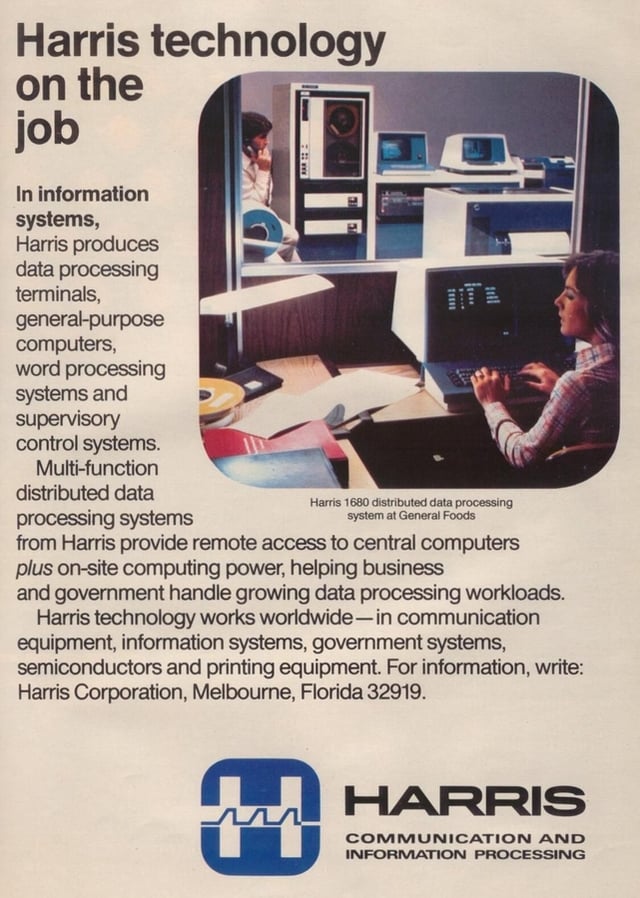
    \n\tHarris specialized in multi-function distributed data processing systems for business and government.

    \n

    \n\tThis Harris ad features a picture of the Harris 1680 distributed data processing system at General Foods.

    \n

    \n\tImages compiled by Greg Shultz for TechRepublic

  • Intecolor 3621 ad from 1979

    \n\t 

    \n

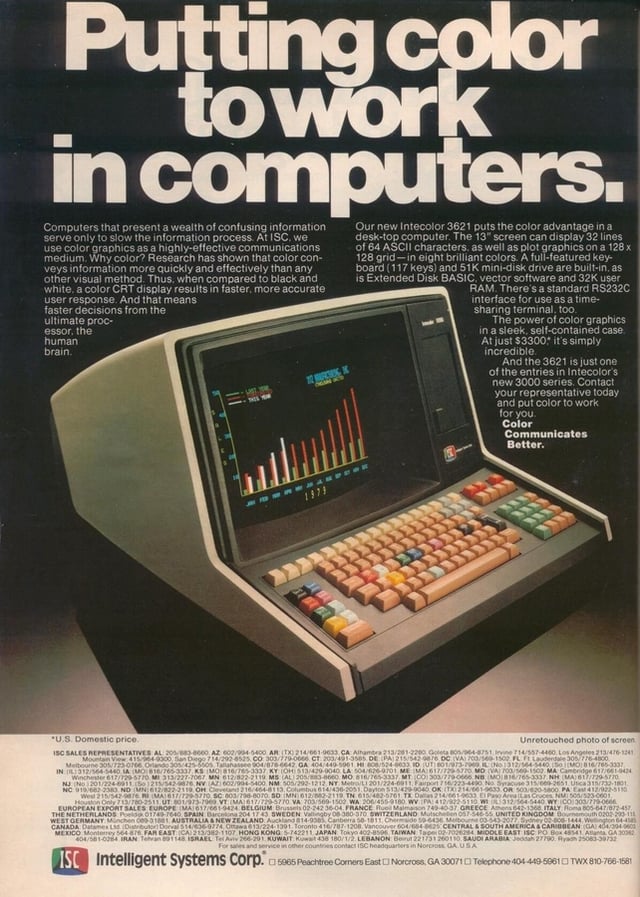
    \n\tThe big selling point for Intelligent Systems’ computers was their high quality color graphics.

    \n

    \n\tFrom the advertisement: Our new Intecolor 3621 puts the color advantage in a desk-top computer. The 13-inch screen can display 32 lines of 64 ASCII characters, as well as plot graphics on a 128 x 128 grid—in eight brilliant colors.

    \n

    \n\tImages compiled by Greg Shultz for TechRepublic

  • ITT ad from 1979

    \n\t 

    \n

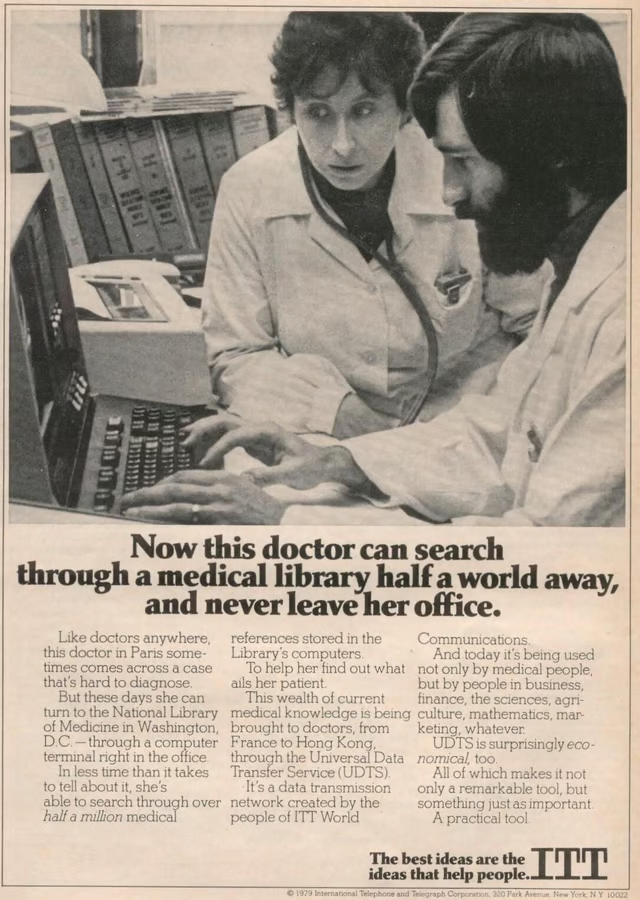
    \n\tITT World Communication created a world wide data transmission network to make data easily accessible to professionals everywhere.

    \n

    \n\tImages compiled by Greg Shultz for TechRepublic

  • Radio Shack ad from 1979

    \n\t 

    \n

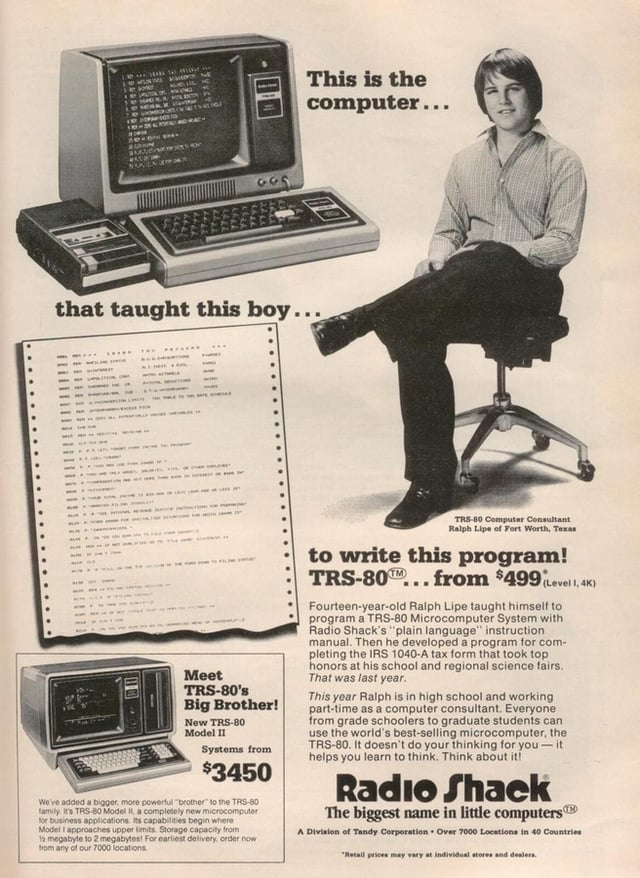
    \n\tThis Radio Shack advertisement features a 14 year old computer consultant and shows of the TRS-80 Model II.

    \n

    \n\tImages compiled by Greg Shultz for TechRepublic

1 of 25
Greg Shultz

My first computer was a Kaypro 16 \"luggable\" running MS-DOS 2.11 which I obtained while studying computer science in 1986. After two years, I discovered that I had a knack for writing documentation and shifted my focus over to technical writing.