


Android 17 is now rolling out to supported Pixel devices, but Samsung, Xiaomi, OPPO, OnePlus, Motorola, and other Android users should not expect the same update timeline.
Google’s Android 17 launch combines three moving parts: core platform features, Pixel-only additions from the June Pixel Drop, and features scheduled for later release. For non-Pixel users and IT teams, the update cycle now shifts to each device maker’s roadmap, beta program, and enterprise testing process.
Pixel gets Android 17 first
Google lists Android 17 over-the-air updates and downloads for Pixel 6 and newer devices, including Pixel Fold models and Pixel Tablet. Supported Pixel users can update through device settings, while developers and testers can use Google’s system images when they need more control over installation.
For most non-Pixel users, the stable update remains a manufacturer-by-manufacturer wait. Google says Android 17 will reach other eligible Android devices throughout 2026, while select partner devices from brands including HONOR, iQOO, Lenovo, OnePlus, OPPO, realme, Sharp, vivo, and Xiaomi can test Android 17 beta builds through separate OEM channels.
Pixel coverage should not be treated as a Samsung, Xiaomi, OPPO, or OnePlus roadmap. Android 17 platform features can move across the ecosystem, but Pixel Drop features and interface changes will vary by device maker.
The Android 17 changes IT teams should test
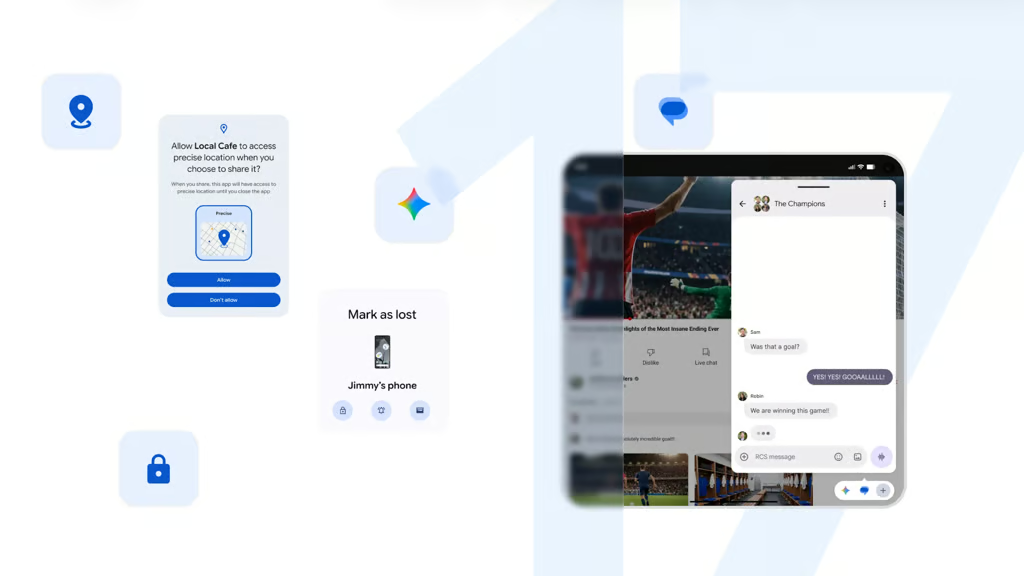
The Android 17 changes to watch affect multitasking, privacy, app behavior, and enterprise testing. Android 17 expands Bubbles beyond messaging, giving users a way to keep apps open in small floating windows while working elsewhere on the device. On large-screen devices, those windows can sit in a dedicated bar for faster switching and resizing.
Android 17 also adds privacy and security controls for managed devices. Users can grant temporary precise-location access and share selected contacts instead of a full address book. The update also strengthens lost-device locking, failed-PIN protections, Live Threat Detection, and Advanced Protection Mode for higher-risk users, a reminder that Android app governance should stay part of mobile security planning.
Some announced features are still pending. Foldable gaming mode is enabled in Android 17 but will become available in the coming months. Gemini Intelligence is also expected later on select advanced devices, though Google has not specified which non-Pixel models will qualify. For IT teams, that keeps Android in the same broader conversation as AI agents on managed enterprise devices.
Google’s June Pixel Drop includes Pixel-specific AI and sharing updates, including Magic Cue support for Snapchat conversations. Those additions should not be presented as standard Android 17 features for other manufacturers.
For IT teams, the practical issue is app testing. Apps targeting Android 17, or API level 37, lose the opt-out that let some apps avoid large-screen orientation and resizing rules. Enterprise teams with Android tablets, foldables, or line-of-business apps should test layouts before approving the update across a fleet, just as they would validate AI-capable hardware and drivers before a Windows rollout.
Non-Pixel users and IT teams should monitor manufacturer channels, test critical apps, and separate core Android 17 features from Pixel-only or delayed additions before planning a rollout.
Also read: AI wearables are pushing workplace privacy questions as more devices bring cameras, microphones, assistants, and continuous context into enterprise environments.