


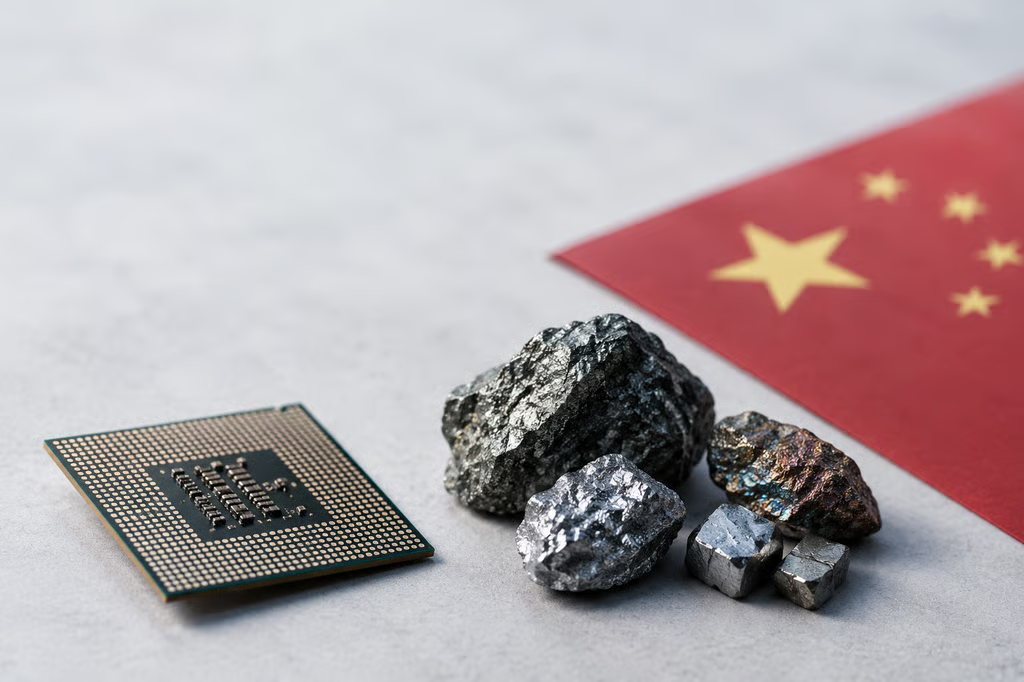
The hardware behind AI data centers, semiconductors, electric vehicles, industrial robots, telecom gear, and defense systems depends on minerals supply chains the G7 no longer wants concentrated in China.
At this week’s G7 summit, leaders put that hardware risk back on the agenda. The question now is whether governments and manufacturers can finance enough refining, recycling, magnet production, and long-term purchase deals to make alternatives viable.
A June 17 summit report said G7 leaders planned closer cooperation on critical minerals, including stockpiling, recycling, and a platform supported by the International Energy Agency. The push builds on the G7 Critical Minerals Action Plan and Critical Minerals Production Alliance, announced at the June 2025 summit in Kananaskis, Canada.
For APAC technology manufacturers and buyers, the risk is not just where hardware is assembled. Japan, South Korea, Taiwan, India, Vietnam, and other regional hubs may make more high-value electronics and infrastructure, while AI data center growth is already putting new pressure on regional power planning. Final assembly does not remove exposure to minerals still refined, processed, or licensed through China-linked supply chains.
China’s rare earth controls put hardware supply chains an alert
China’s export controls have made the supply-chain issue harder to ignore. Beijing restricted exports of several medium and heavy rare earth-related items in April 2025. On Oct. 9, 2025, it announced broader controls covering rare earths, related technologies, and some foreign-made products using Chinese-origin inputs or technology.
China later suspended a range of those expanded Oct. 9 measures for one year, through Nov. 10, 2026. The pause lowered near-term pressure, but licensing rules can change and processing capacity remains highly concentrated.
The International Energy Agency said China is the leading refiner for 19 of the 20 strategic minerals it tracks. Its average market share is about 70%.
That concentration touches several layers of the tech stack. Rare earth magnets are used in electric motors, robotics, drones, wind turbines, and industrial systems. Other critical minerals feed into batteries, semiconductors, power electronics, grid equipment, and the power and cooling systems behind AI data centers.
Financing will decide whether the G7 plan scales
New mines and refineries need more than policy statements. They need long-term purchase commitments from automakers, battery makers, chip suppliers, cloud infrastructure vendors, robotics companies, and defense contractors.
Offtake agreements are central to the G7 strategy. In October 2025, Canada followed the Kananaskis plan with 26 investments, partnerships, and measures intended to unlock $6.4 billion in critical minerals projects, including offtake arrangements and co-investments with allied countries.
Apple provided one model in July 2025, when it committed to buy $500 million in rare earth magnets from MP Materials. The deal is tied to MP’s Fort Worth, Texas, facility and a rare earth recycling line at Mountain Pass, California.
APAC’s role will be crucial because the region contains much of the demand. Chipmakers, electronics manufacturers, battery suppliers, automakers, robotics firms, and defense contractors across the region can turn mineral-security policy into bankable projects, especially as AI infrastructure buildouts move deeper into markets such as India.
The next signal will be named projects, clear funding, long-term buyers, and participation from APAC companies that depend on these materials. Without that, technology buyers could remain exposed to price swings, licensing shocks, and hardware supply constraints.
Read next: India’s AI strategy is putting infrastructure control, foreign chips, and cloud dependence under sharper scrutiny.