


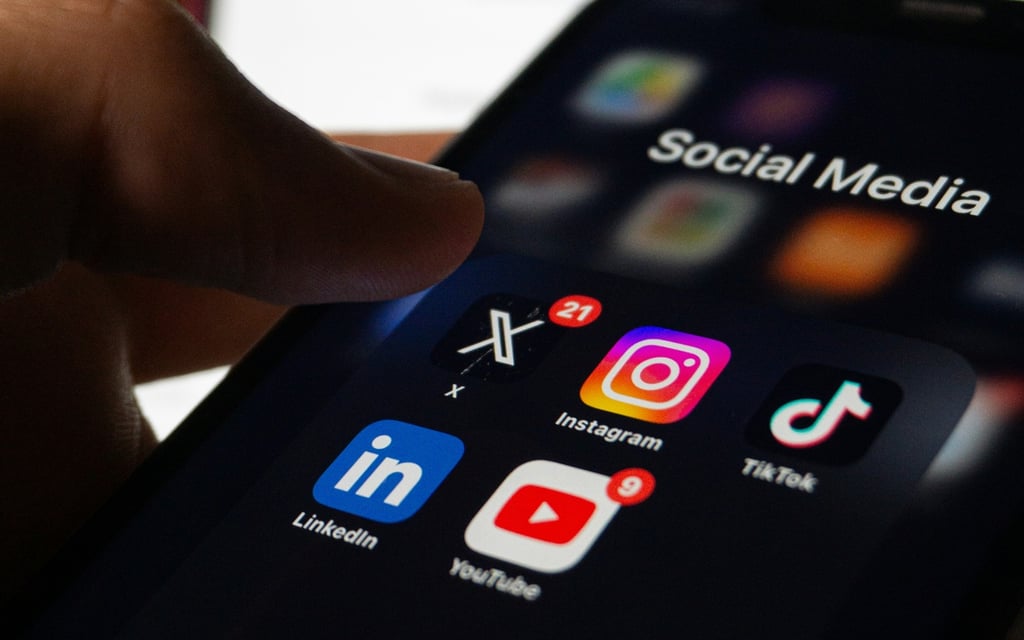
A fight over who gets to post, who gets protected, and who gets fined has landed in Australia’s highest court, where a pair of teenagers is challenging a new law set to ban all under-16s from social media.
The landmark legislation, passed last year and due to take effect on Dec. 10, requires platforms like YouTube, TikTok, Meta’s Facebook and Instagram, and Snapchat to ensure that Australian children under 16 cannot hold accounts. Companies that fail to comply risk hefty fines of up to A$49.5 million ($29.3 million).
However, the ban is now facing a constitutional challenge from two 15-year-olds, Noah Jones and Macy Neyland, who are backed by the advocacy group, the Digital Freedom Project (DFP). The core of their argument is that the law unlawfully restricts the implied freedom of political communication, a right not expressly written into the Australian Constitution but understood as part of the Constitution.
The DFP’s High Court filing seeks three main things: a formal declaration that the minimum age provisions of the law are invalid, or an urgent injunction to stop the government and the eSafety Commissioner from enforcing the ban to the extent it prevents young people from engaging in political communication.
Alternatively, they ask for the provisions to be read down or severed so they do not apply to political communication.
They argue the ban will prevent young people from using social platforms, which are now seen as essential for political participation, to “engage in communication by, to and between them of political and governmental matters.”
A plea for safety, not silence
For the young plaintiffs, the issue is less about whether social media is perfect and more about the government’s approach to safety. They contend that simply shutting down accounts is a “lazy” policy and an overreach that is not proportionate to the goal of reducing online harm.
They argue that resources should be directed toward removing harmful elements from the platforms, rather than removing the users. Speaking to BBC Radio 4, Jones said social media platforms “should be using this money and resources to try to get rid of the predators and harmful content out there” instead of trying to avoid government fines. The teenagers also stressed the importance of these platforms for political education and civic life.
Jones’s co-plaintiff, Neyland, said that social platforms bring “so much good,” including “education, communication and inclusion with society”. She also warned about the unintended consequences of the ban, stating, “Driving us to fake profiles and VPNs is bad safety policy. Bring us into safer spaces, with rules that work: age‑appropriate features, privacy‑first age assurance, and fast takedowns.”
The teens proposed that lawmakers should prioritize enhanced safety measures, better education about online harms, and age assurance technology that respects user privacy, rather than a “blanket ban.”
Government stands firm as rollout looms
Despite the constitutional challenge, the government has vowed not to back down. Communications Minister Anika Wells has publicly defended the legislation, stating, “We will not be intimidated by threats. We will not be intimidated by legal challenges. We will not be intimidated by big tech. On behalf of Australian parents, we stand firm.”
The government maintains that the law is necessary to shield young Australians from harmful algorithms and content that contribute to bullying and poor body image.
Meanwhile, the nation’s online safety regulator, eSafety Commissioner Julie Inman Grant, has acknowledged that the implementation of the ban will be complex. She told ABC News that not all Australians under 16 will “magically disappear overnight” from social platforms when the law starts. The Commissioner has noted that compliance will “vary platform to platform,” and her office intends to follow a “gradual and fair compliance process” before issuing financial penalties.
The regulator’s guidance encourages platforms to adopt a “layered approach” to age checking and explicitly states that companies cannot rely solely on government-issued ID for age verification. Despite the complexities, the Commissioner stated that the eSafety office will compel platforms to provide “very specific information about what they’ve done and how many accounts that they’ve deactivated or de-platformed.”
If you want to learn more about social media, Kara Sherrer and TechRepublic Premium present 10 must-read books to add to your shelves.