
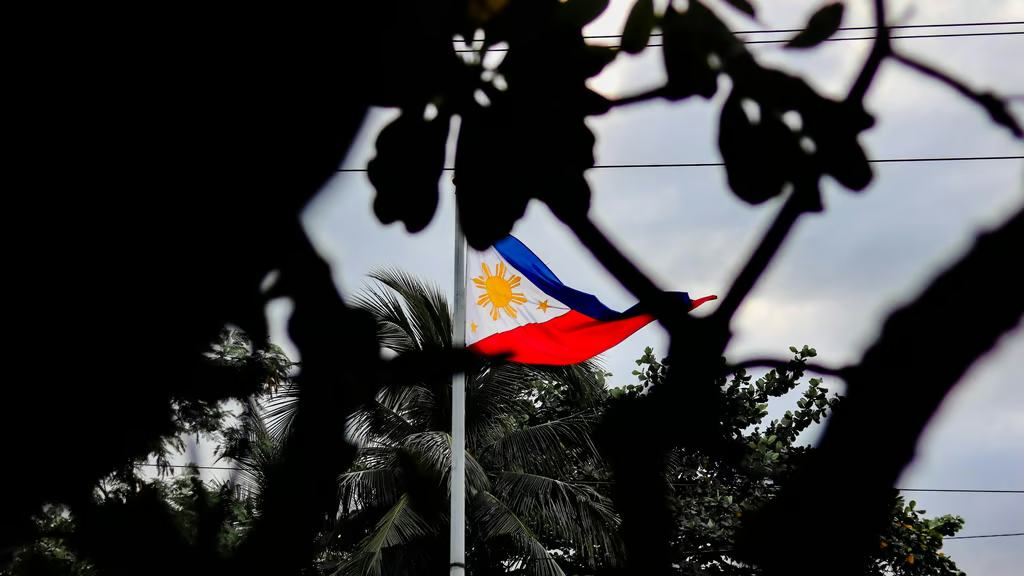


A long-paused EU-Philippines trade deal is nearing the finish line, but its detailed digital-trade rules are not yet public. Negotiations began in 2015, were put on hold after 2017, and resumed in 2024; the emerging agreement could affect digital commerce, technology services, and access to covered government contracts.
The two sides reached substantial agreement Sept. 22 on a free trade agreement (FTA) covering digital trade, services, investment, procurement, and broad tariff reductions. The European Commission says negotiators still need to finalize implementation and technical details before the agreement can move through the legal steps required to take effect.
For cloud providers, SaaS companies, IT outsourcers, and technology vendors, the unpublished final text and procurement schedules could shape market access and compliance. The deal also arrives as surveyed ASEAN MSMEs report persistent cross-border e-commerce barriers across six Southeast Asian economies.
Digital trade rules could expand market access
The European Commission’s Sept. 22 announcement says the FTA would establish digital-trade rules while preserving privacy and consumer safeguards. It also says the agreement would open the Philippine government procurement market to foreign bidders for the first time, although detailed coverage schedules have not yet been published.
For technology vendors, those schedules will show which public-sector contracts fall within the agreement. Any new access will still depend on the FTA completing the legal steps required before it takes effect. That question is increasingly relevant as the Philippines expands digital government services, including 11 Google Gemini-powered tools added to eGovPH for document processing, translation, agriculture, tourism, and identity verification.
The Philippines is also pursuing a larger technology infrastructure buildout under an AI masterplan with $34.4 billion in investment requirements and a target of 1.5 GW of AI data center capacity by 2033. The FTA is being finalized alongside that broader push to attract cloud, AI, and data center investment.
The agreement would also liberalize more than 94% of tariff lines covering more than 97% of bilateral goods trade. EU trade data puts bilateral goods trade at €17.6 billion in 2025 and services trade at €10.3 billion in 2024.
Final text will clarify data and procurement rules
The final digital-trade chapter has not been published. The Commission’s negotiating documents say earlier proposals remain subject to revision before the agreement is finalized.
The final treatment of issues common to EU digital-trade agreements — including data localization, source-code protection, and electronic authentication — remains unconfirmed for the Philippines. The completed text will determine any resulting changes to cross-border data practices, contracts, procurement eligibility, or compliance requirements.
President Ferdinand Marcos Jr. specifically cited artificial intelligence and digital technologies as areas where the Philippines sees opportunities from deeper EU trade ties, according to a Sept. 22 government statement. The government also cited investment, jobs, and more diversified supply chains as expected benefits.
Publication of the legal text will show how the digital-trade and procurement provisions affect market access, data handling, procurement eligibility, and compliance requirements for technology companies. Until then, the direction is clearer than the rulebook.
Read more: Elsewhere in Southeast Asia, Indonesia is debating how its One Data framework should handle information processed overseas.