
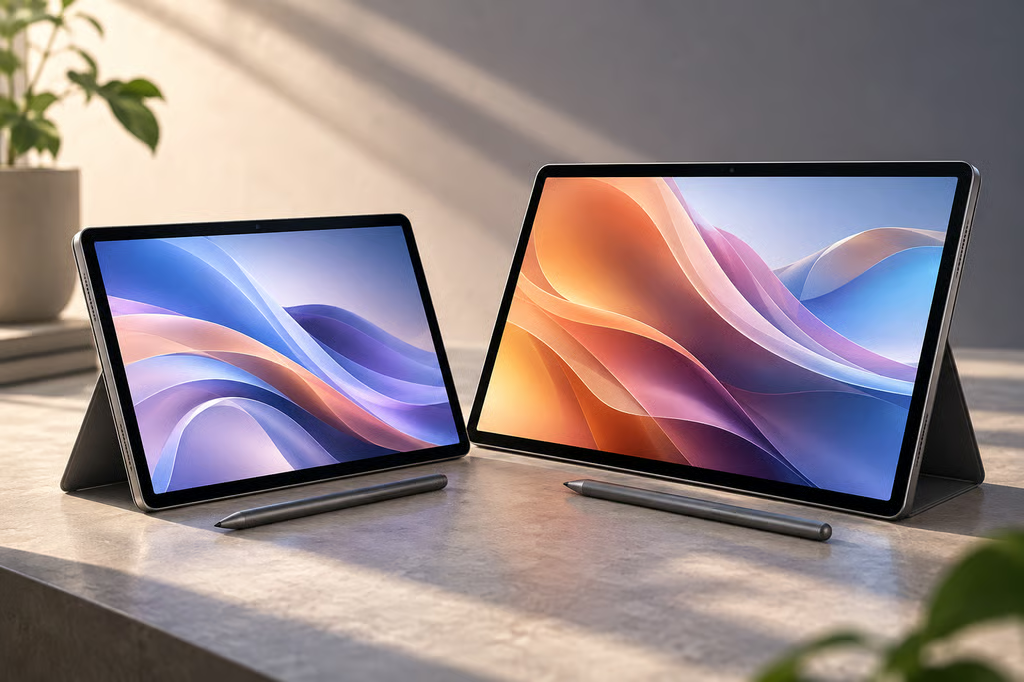


Lenovo’s Yoga Tab Gen 2 and Yoga Tab Plus Gen 2 share more than their names suggest. Both offer 4K 144Hz displays, pen support, expandable storage, Wi-Fi 7, Android 17, and seven major OS upgrades through Android 24.
The differences show up in size, performance, memory, battery capacity, audio, weight, and price. The standard model is smaller and cheaper without sacrificing the core experience, while the Plus gives buyers a larger screen, Snapdragon 8 Elite chip, more memory and storage, and a bigger battery.
| Feature | Yoga Tab Gen 2 | Yoga Tab Plus Gen 2 |
|---|---|---|
| European starting price | €649 | €849 |
| Reported US starting price | $729 | $999.99 |
| Display | 11.1-inch 4K, 144Hz | 13-inch 4K, 144Hz |
| Processor | MediaTek Dimensity 9500s | Snapdragon 8 Elite |
| RAM | 8GB or 12GB | 12GB or 16GB |
| Storage | 128GB or 256GB | 256GB or 512GB |
| Battery | 11,000mAh | 12,700mAh |
| Weight | About 480g | Starting at 605g |
| Speakers | 4 | 6 Harman Kardon |
| Software support | Android 17 to Android 24; security through 2033 | Android 17 to Android 24; security through 2033 |
Where the Yoga Tab Plus Gen 2 pulls ahead
The most obvious difference is size. The Yoga Tab Plus Gen 2 uses a 13-inch 3840×2560 PureSight Pro display, while the standard tablet uses an 11.1-inch panel at the same resolution. Both support refresh rates up to 144Hz, reach a claimed 1,100 nits of peak brightness, and support Dolby Vision.
That identical resolution means the smaller tablet is actually sharper on paper at 415 ppi versus 355 ppi for the Plus. Lenovo lists 100% DCI-P3 coverage specifically for the Plus, giving creators another reason to consider the larger model.
Performance creates a clearer divide. The Plus uses Qualcomm’s Snapdragon 8 Elite, while the standard model runs MediaTek’s Dimensity 9500s. Android Authority notes that the Dimensity 9500s is effectively based on the previous-generation Dimensity 9400 Plus flagship platform, so the cheaper tablet is still positioned as a high-performance device.
The Plus also offers more headroom. Its configurations reach 16GB of RAM and 512GB of storage, compared with 12GB and 256GB on the standard model. Both support microSD expansion up to 2TB.
Battery capacity rises from 11,000mAh to 12,700mAh on the Plus, while both support 68W charging. The Plus also gets six Harman Kardon speakers instead of four.
Those upgrades come with a portability trade-off. The Plus starts at 605 grams, around 125 grams heavier than the roughly 480-gram Yoga Tab Gen 2.
Where the standard Yoga Tab Gen 2 makes the stronger case
Several features that could have justified buying the Plus are actually shared. According to Lenovo’s specifications, both tablets include Wi-Fi 7, Bluetooth 6.0, USB-C 3.2 Gen 1 connectivity, microSD expansion, and support for Lenovo’s Tab Pen Pro 2.
Software longevity is also identical. Both launch with Android 17 and are promised seven major OS upgrades through Android 24, with security updates continuing through 2033.
That matters because buyers do not have to pay for the Plus simply to get longer support.
Lenovo estimates European starting prices of €649 for the Yoga Tab Gen 2 and €849 for the Plus, a €200 difference. Android Authority reports US starting prices of $729 and $999.99, respectively, putting $270.99 between the two models.
The standard model therefore keeps most of the features buyers interact with every day while being smaller, lighter, and cheaper. Its 11.1-inch display has the same resolution, refresh-rate ceiling, peak-brightness claim, and Dolby Vision support as the larger panel.
Long-term software support also makes the standard model easier to justify for buyers who plan to keep the tablet for several years.
Which Lenovo Yoga Tab Gen 2 should you buy?
The Yoga Tab Plus Gen 2 makes the most sense for buyers who will use the extra hardware. A 13-inch display gives artists and designers more physical working space, while the Snapdragon 8 Elite, 16GB RAM option, larger battery, and six-speaker system give the Plus more room for demanding creative work and multitasking.
The standard Yoga Tab Gen 2 is the stronger value choice. It retains the 4K 144Hz display, pen support, expandable storage, modern connectivity, 68W charging, and the same unusually long update policy for €200 less.
It is also considerably lighter, which matters if the tablet will spend more time in a bag or in your hands than sitting on a desk.
One important limitation to any early recommendation: neither model has been independently benchmarked or battery-tested yet. The Snapdragon 8 Elite and larger 12,700mAh battery give the Plus an advantage on paper, but the size of that advantage in everyday use remains to be tested.
For buyers who want the biggest canvas and highest performance ceiling, the Yoga Tab Plus Gen 2 is the better fit. For most people who want a premium Android tablet without paying for capacity they may not use, the Yoga Tab Gen 2 gives up surprisingly little and costs considerably less.
Also read: Acer’s DualPlay Mini takes the laptop-replacement idea in a different direction, combining an 8-inch handheld design with physical keyboard controls.