
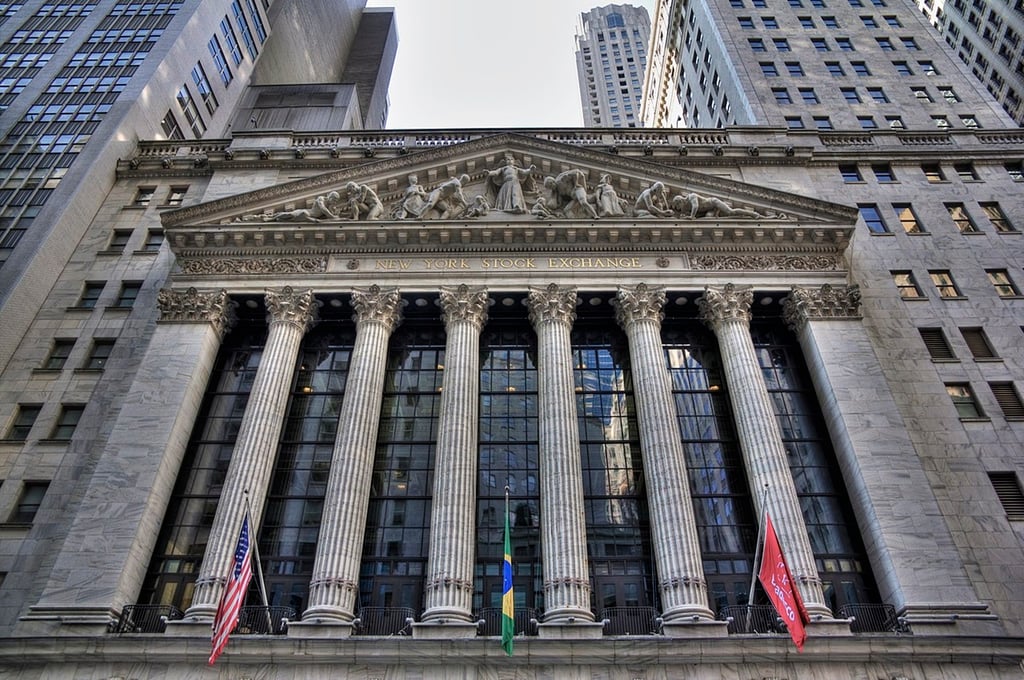


New York, New York, it’s a wonderful town… for fintech news.
The New York Stock Exchange has plans that could completely reshape how we trade stocks. The world’s largest stock exchange is developing a blockchain-based platform for tokenized securities that would operate around the clock—meaning you could trade Apple or Tesla at 2 AM on a Sunday.
After years of crypto promises and blockchain hype, we’re finally seeing Wall Street’s biggest players make concrete moves into digital finance. NYSE’s parent company, Intercontinental Exchange, isn’t just testing the waters—they’re diving headfirst into what could be the next evolution of capital markets.
Michael Blaugrund, Vice President of Strategic Initiatives, ICE, said in the announcement, “Supporting tokenized securities is a pivotal step in ICE’s strategy to operate on-chain market infrastructure for trading, settlement, custody, and capital formation in the new era of global finance.”
What exactly is NYSE building?
NYSE’s new digital platform promises to deliver everything traditional stock trading isn’t: 24/7 operations, instant settlement, fractional share trading, and stablecoin-based funding. Instead of waiting two business days for trades to settle, transactions would happen immediately on blockchain infrastructure.
The platform combines NYSE’s existing Pillar matching engine—the technology that already handles billions in daily trades—with blockchain-based post-trade systems. This hybrid approach means traders get the reliability and speed they’re used to, plus the benefits of cryptocurrency-style settlement.
NYSE explicitly stated the platform will support both tokenized versions of regular stocks and natively issued digital securities. Both types would carry full dividend and governance rights, just like conventional shares.
Breaking down the technical magic
The real innovation lies in the details. NYSE’s plans include orders sized in dollar amounts rather than share quantities, stablecoin-based funding mechanisms, and support for multiple blockchain networks for settlement and custody.
Picture this: Instead of buying exactly 10 shares of a $200 stock, you could invest exactly $2,000 worth, getting 10 shares automatically. Need to fund your account? Send USDC stablecoins instead of waiting for bank transfers. Want to trade on Saturday evening? The platform never closes.
ICE is working with major banks, including BNY and Citi to support tokenized deposits across their clearing houses. This partnership helps clearing members transfer and manage money outside traditional banking hours, accommodating funding requirements across different jurisdictions and time zones.
The regulatory reality check
Of course, none of this happens without regulatory approval. NYSE is currently seeking permissions from the Securities and Exchange Commission. Launch could come later this year.
But the regulatory landscape has shifted dramatically. The SEC, under Chair Paul Atkins, has shown openness to blockchain applications, signaling a potential shift toward accommodating innovation. The Depository Trust & Clearing Corporation received a no-action letter allowing it to custody tokenized stocks, bonds, and treasuries on approved blockchains for three years.
Recent regulatory movement, including passage of the GENIUS and CLARITY Acts, suggests both regulatory and retail momentum are building, according to Broadridge.
Industry competition heats up
NYSE isn’t operating in a vacuum. Nasdaq has submitted its own proposal for blockchain-based securities trading, potentially offering a permissioned blockchain operated by the Depository Trust Company.
Major financial institutions are also making aggressive moves. JPMorgan Chase and BlackRock are using tokenization to enable instant settlement of assets, reducing reliance on intermediaries and cutting costs. BlackRock’s BUIDL fund has grown to over $2.3 billion in assets under management since launching in 2023.
Change and challenges
NYSE’s announcement represents more than a technology upgrade—it’s part of a massive shift in how financial markets operate.
Tokenization market projections suggest the sector could reach $13.53 billion by 2030, growing at a 24.09% annual rate from 2022 levels.
Despite the excitement, significant hurdles persist. Regulatory uncertainty remains the top concern, cited by 73% of financial institutions surveyed by Broadridge about tokenization adoption.
Technology integration presents another complex challenge. Security concerns affect 54% of surveyed firms by Broadridge, highlighting that while blockchain can enhance security when implemented correctly, poor execution can actually increase risks.
Market fragmentation also poses questions. Will decentralized platforms fragment liquidity pools? How will price discovery adapt to continuous trading cycles? These uncertainties highlight the need for robust governance and transparency to maintain trust in digital-first systems.
That said, the future of trading is taking shape right before our eyes, and it runs on blockchain rails.
One of the UK’s biggest banks took an unprecedented leap into the stablecoin sector.