


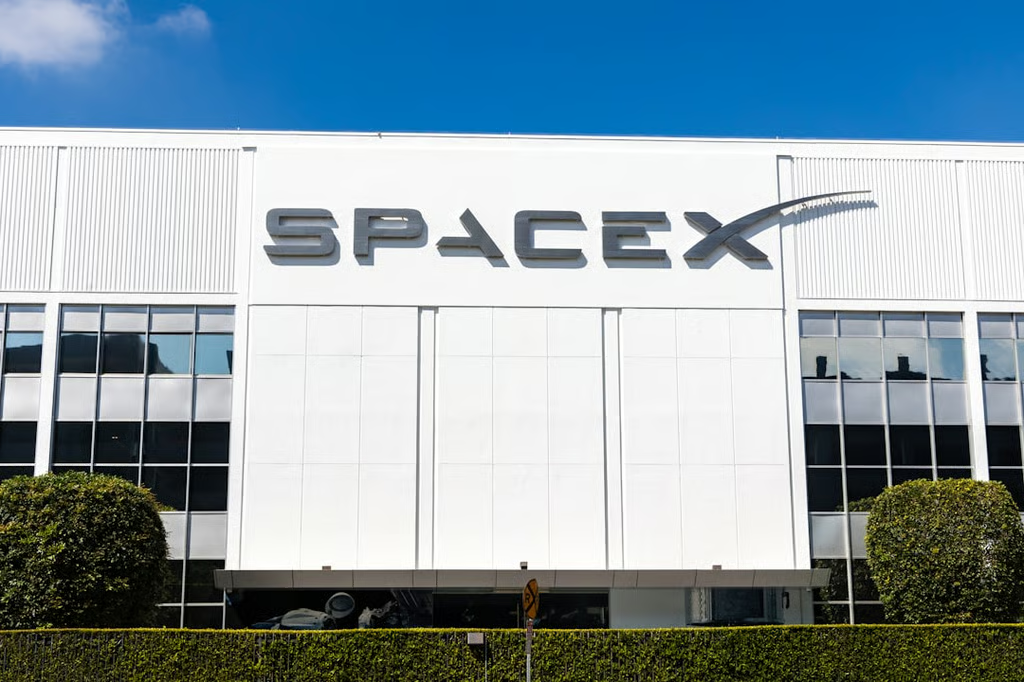
SpaceX spent $329 million on Tesla Megapack battery systems during the first half of 2026 as costs connected to its AI data center expansion rose sharply, according to a public quarterly filing with the Securities and Exchange Commission.
Purchases reached $295 million in the second quarter alone, up from $34 million in the first. The six-month total was already about 65% of the $506 million SpaceX recorded in Megapack purchases for all of 2025.
The increase adds another cost to the AI infrastructure equation. Beyond servers, networking, and cooling, large data centers need electrical systems that can respond quickly when thousands of chips raise or lower their power use at the same time.
Megapack purchases rose alongside AI infrastructure costs
SpaceX’s quarterly filing records the Megapacks as property, plant, and equipment. SpaceX acquired xAI on February 2 and now reports AI as one of its three operating segments.
Research and development costs in that segment increased by $2.53 billion during the first half of 2026 compared with the same period last year. SpaceX attributed $1.74 billion of the increase to infrastructure and cloud computing expenses associated with expanding its data centers.
The figures extend the picture presented in SpaceX’s initial public offering filing, which showed how deeply the company’s financial performance had become tied to xAI’s computing ambitions.
Megapacks can store electricity for use during periods of high demand, supply short-term backup power, and help stabilize fluctuations in a facility’s electrical load. The U.S. Department of Energy has described AI data centers as large, dynamic loads that can create repeated swings in electricity demand.
Those characteristics make battery storage useful even when a facility has access to the grid or its own generators. The batteries can respond faster than many generation sources when demand changes suddenly.
Batteries support, rather than replace, power generation
Megapacks do not produce electricity. They must be charged from the grid, renewable resources, or on-site generation before they can release power back to a data center.
SpaceX and xAI have been expanding those other sources as well. Musk’s acquisition of mobile power provider APR Energy could provide temporary or supplemental generation, while xAI has pursued gas-fired power for its Mississippi data centers.
Used together, generation and battery storage can serve different parts of the same workload. Generators and grid connections provide the electricity, while batteries help manage short-term changes, peaks, and interruptions.
The Tesla purchases appear in the filing’s related-party transactions section because Elon Musk leads both companies. SpaceX did not disclose how many Megapacks it bought, their combined storage capacity, where they are installed, or how long they could support a data center during an outage.
The purchase value therefore provides a clear measure of spending, but not of the systems’ performance. Capacity, discharge duration, and facility load would be needed to establish how much operational resilience the batteries provide.
For companies expanding AI capacity, SpaceX’s spending illustrates how quickly the power portion of a project can grow. Access to chips may determine what a data center can compute, but electricity supply, storage, and grid connections can determine when that computing capacity is ready to use.
Also read: Filings suggest Musk’s proposed Texas Terafab chip plant could cost up to $119 billion.