
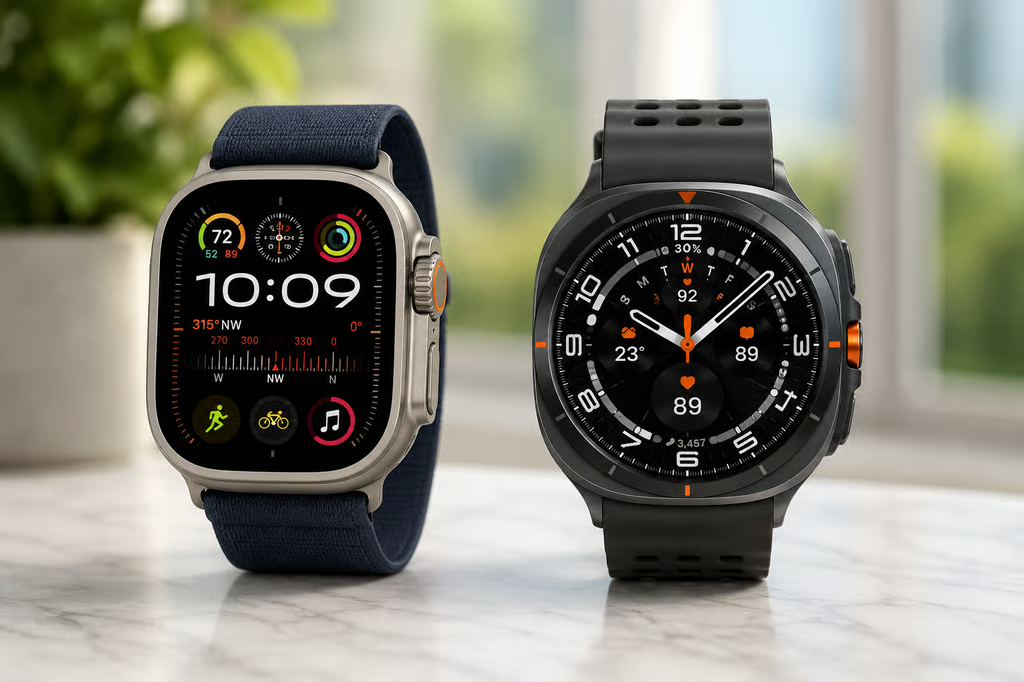


Samsung’s Galaxy Watch Ultra2 starts at $699.99, while Apple Watch Ultra 3 costs $799. That makes Samsung’s smartwatch about $99 cheaper before either watch is connected to a cellular plan.
For most buyers, phone compatibility comes first.
Apple Watch Ultra 3 requires an iPhone, while Galaxy Watch Ultra2 works with Android phones. If you’re choosing between ecosystems, battery life, health features, and satellite connectivity separate the two.
Watch Ultra 3 vs Watch Ultra2 at a glance
| Apple Watch Ultra 3 | Galaxy Watch Ultra2 | |
|---|---|---|
| Starting price | $799 | $699.99 |
| Phone compatibility | iPhone 11 or later with iOS 26 | Android 13 or later; some health features require a Galaxy phone |
| Rated battery life | Up to 42 hours; 72 hours in Low Power Mode | Up to 60 hours with always-on display; 80 hours without |
| Outdoor safety | Satellite SOS, messaging, and location sharing | Siren, fall detection, and emergency calling |
| Water/dive rating | WR100; recreational diving to 40 meters | 10 ATM/IP69K; recreational diving to 40 meters |
Price, compatibility, and health features
Samsung put the Galaxy Watch Ultra2 on sale in the US on August 7 for $699.99, according to its launch announcement. It runs Wear OS Powered by Samsung and requires a compatible phone running Android 13 or later.
Apple Watch Ultra 3 costs $799 and requires an iPhone 11 or later running iOS 26, according to Apple. Neither watch works across both phone platforms, so switching watches may also mean switching phones.
Galaxy Watch Ultra2 works with Android phones from different brands, but some health tools are more limited outside Samsung’s ecosystem. ECG and sleep apnea monitoring use Samsung Health Monitor, which requires a compatible Galaxy phone.
Samsung also offers blood-pressure monitoring, Vascular Load, and Heart Health Score. Blood-pressure readings require calibration with an upper-arm cuff and regular recalibration.
Apple’s hypertension notifications have received FDA clearance. The feature looks for patterns that may point to hypertension rather than giving an on-demand blood-pressure reading.
The FDA clearance covers adults 22 and older who have not previously been diagnosed with hypertension and are not pregnant.
Both watches can flag potential health problems, but smartwatch health alerts are not a medical diagnosis. Availability also varies by country, especially for regulated features.
Long-term software support may matter if you plan to keep the watch for several years. Samsung has reportedly extended Galaxy Watch software support to five major OS upgrades for its newest models.
Battery, durability, and outdoor safety
Samsung has the longer advertised battery life. Its Galaxy Watch Ultra2 specifications list an 800mAh battery and up to 60 hours of use with the always-on display enabled, or up to 80 hours with it disabled. Samsung also rates GPS tracking at up to 20 hours.
Apple rates the Ultra 3 for up to 42 hours of normal use or 72 hours in Low Power Mode. Its technical specifications list up to 20 hours of continuous outdoor workout tracking with GPS and heart-rate readings in Low Power Mode.
The companies use different battery tests, so their numbers are not directly comparable. Samsung still has the longer claimed everyday battery life, while both watches list 20-hour figures for extended GPS use under specific settings.
Galaxy Watch Ultra2 also has the brighter display, reaching up to 5,000 nits compared with 3,000 nits on Apple Watch Ultra 3.
Both are designed for rough outdoor use and recreational diving to 40 meters. Apple lists WR100 water resistance, IP6X dust resistance, EN13319 dive certification, and MIL-STD-810H testing.
Samsung lists 10 ATM water resistance, IP69K protection, EN13319 certification, and MIL-STD-810H durability.
Apple has a major advantage when you’re outside cellular coverage. Ultra 3 supports Emergency SOS via satellite, satellite messaging, and Find My location sharing.
Emergency SOS via satellite does not require a cellular plan, while messaging and Find My sharing do. Apple says satellite features are included for two years after activation, although availability varies by country and pricing after that period has not been announced. Apple’s satellite support page lists the current requirements.
Galaxy Watch Ultra2 does not have an equivalent satellite messaging feature. Its Quick Button can trigger an 86-decibel siren designed to be heard from up to 180 meters away, while fall detection and emergency calling provide additional safety tools when a suitable network connection is available.
Samsung’s outdoor tracking did show a weakness in one recent test. Tom’s Guide found that the Galaxy Watch Ultra2 recorded nearly twice the known elevation gain during a Cascade Mountains hike.
That’s only one test, but hikers who rely heavily on elevation data may want to compare readings with another navigation tool.
Choose Apple Watch Ultra 3 if you use an iPhone and want satellite communication for trips beyond cellular coverage. The extra cost is easier to justify for that feature than for health tracking or durability alone.
Choose Galaxy Watch Ultra2 if you use Android and want the lower price, longer rated battery life, and brighter display. Galaxy phone owners also get the fullest access to Samsung’s health features.
If you’re choosing between both ecosystems from scratch, Samsung offers more battery life for less money, while Apple gives you stronger communication options when you’re away from cellular service.
Also read: Pixel Watch 5 vs Galaxy Watch9 compares two less expensive Android options on price, battery life, compatibility, and health features.