


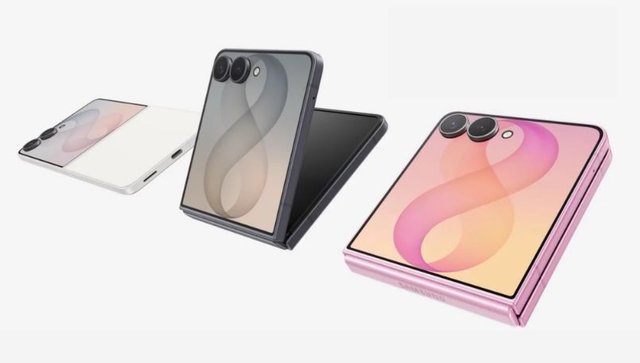
A smaller phone doesn’t have to mean a smaller screen.
Samsung’s Galaxy Z Flip8 starts at $1,199.99 in the US. It’s slimmer than the Flip7, with a redesigned hinge and access to more apps from the cover screen.
Whether you’re considering your first foldable or thinking about upgrading from an older Galaxy Z Flip, this cheat sheet covers its specifications, key features, pricing, and what to know before buying.
Samsung Galaxy Z Flip8 at a glance
| Release date | Aug. 7, 2026 |
| Dimensions and weight | Folded: 85.7 x 75.4 x 13.1 mm; unfolded: 166.9 x 75.4 x 6.1 mm; 180g |
| Main display | 6.9-inch FHD+ Dynamic AMOLED 2X, adaptive 1–120Hz refresh rate |
| Cover display | 4.1-inch Super AMOLED, 60/120Hz refresh rate |
| Processor | Snapdragon 8 Elite Gen 5 for Galaxy; Exynos 2600 |
| Memory and storage | 12GB RAM; 256GB or 512GB storage |
| Rear cameras | 50MP wide and 12MP ultrawide |
| Front camera | 10MP |
| Battery and charging | 4,300mAh; 25W wired, 15W wireless, reverse wireless charging |
| Durability | IP48 rating |
| Connectivity | 5G, Wi-Fi 7, Bluetooth 5.4, SIM, and eSIM |
| Software | Android 17 with One UI 9 |
| Starting price | $1,199.99 |
| Source: Samsung | |
Key features of the Samsung Galaxy Z Flip8
Samsung has refined several aspects of its flip phone, from how easily it opens to how its two displays work with apps, cameras, and AI tools.
Design and display
At 180 grams, the Galaxy Z Flip8 is Samsung’s thinnest and lightest flip phone to date. It’s 8 grams lighter than the Flip7 and measures just 6.1 mm thick when unfolded.
Samsung redesigned the Armor FlexHinge to reduce resistance when opening and closing the phone. Beveled inner edges also give users more room to position their fingertips when separating the two halves.
Both AMOLED displays support refresh rates of up to 120Hz, while the company advertises peak brightness of 2,600 nits.
An Armor Aluminum frame and Corning Gorilla Glass Victus 2 on the cover screen provide exterior protection. However, the flexible inner display still requires extra care.
Its IP48 rating covers water immersion under specific laboratory conditions but does not indicate protection against fine dust or sand.
FlexWindow and cover screen
FlexWindow, Samsung’s name for the outer display, gives users access to notifications, applications, and everyday controls without having to unfold the phone.
Some of its practical uses include:
- Quick interactions. Read notifications, send AI-suggested message replies, adjust screen brightness, and change connectivity settings.
- App access and customization. Arrange frequently used compatible apps alongside widgets for weather, calendar appointments, and other information.
- Payments and passes. Swipe up to access Samsung Wallet once it has been configured.
Opening an app on FlexWindow, however, doesn’t necessarily mean every function is available on the smaller display. A messaging app may let you read and respond to a notification, while other interactions could require unfolding the phone.
Performance
US models of the Galaxy Z Flip8 use the Snapdragon 8 Elite Gen 5 for Galaxy processor. Samsung uses the Exynos 2600 in select international markets.
Both storage configurations include 12GB of RAM, with hardware designed to accommodate demanding applications, gaming, video editing, and AI processing.
There are also several ways to work with multiple apps:
- Split screen. Display two compatible apps simultaneously, such as a browser and a note-taking app.
- Pop-up view. Keep an application in a floating window while working in another.
- Samsung DeX. Connect to a compatible external display for a desktop-style interface with resizable app windows and keyboard and mouse support.
DeX is useful when traveling and working with documents that are cumbersome to edit on a phone. Connecting to an external monitor provides additional working space without transferring files to another computer.
Camera features
The Flip8 has a dual rear camera arrangement, with improvements concentrated on image processing, creative shooting options, and video stabilization.
The clamshell design allows for more creative shooting positions:
- FlexCam. Partially fold the device on a stable surface to capture photos or videos without holding it. With palm gestures enabled, users can step back and trigger a group photo by raising a hand.
- Auto Zoom and Dual Preview. Automatic framing adjusts as subjects move, while the cover screen lets people see themselves before a photograph is taken.
- Super Steady and Horizontal Lock. Video stabilization helps reduce camera shake and keep footage level when recording on the move.
Both the rear and front cameras support video recording at up to 4K at 60 frames per second.
One advantage of the folding design is being able to take selfies using the higher-resolution rear camera while still seeing the shot on the outer display. That said, Samsung’s advertised 2x optical-quality zoom should not be confused with a dedicated telephoto lens, which the Flip8 lacks.
Battery and charging
Samsung equips the Galaxy Z Flip8 with a 4,300mAh battery, matching the capacity of its older model.
The phone offers up to 31 hours of video playback. Its test used a locally stored 720p video played on the main display with Bluetooth earphones connected.
Watching a downloaded movie during a flight is closer to those test conditions than spending an afternoon using GPS navigation, recording videos, and streaming content over a mobile connection.
The company also estimates that a compatible 25W charger can bring an empty battery to approximately 55% in 30 minutes under controlled conditions. Wireless PowerShare allows users to share battery power with compatible devices, such as wireless earbuds.
A charging adapter is sold separately.
One UI 9, Galaxy AI, and software support
Android 17 and One UI 9 bring updated AI capabilities, personalization options, and tools for managing information across applications.
Some notable software features include:
| Presents personalized updates based on information such as calendar events, reminders, and daily routines. | |
| Suggests relevant actions during conversations, such as checking your schedule or saving a location. | |
| Handles conversational requests and performs actions across supported apps and services. | |
| Lets users describe image edits in writing, such as removing unwanted objects or changing backgrounds. | |
| Transfers supported data, including photos, contacts, and messages, from an existing Android or iOS device. |
Users concerned about sending information to cloud servers can navigate to Settings > Galaxy AI > Process data only on device. Enabling this option restricts cloud processing for supported Galaxy AI functions. However, tools that depend on remote processing may become unavailable.
Basic Galaxy AI features are free, but advanced and third-party AI services may carry separate fees or requirements.
Samsung also promises seven generations of operating system upgrades and seven years of security updates from the phone’s initial global launch.
Galaxy Z Flip8 price and availability
The Galaxy Z Flip8 is available in two configurations in the US:
| Note: Prices may vary according to promotions and trade-in offers. | |
Spending an additional $200 doubles the storage capacity but does not increase the phone’s memory. Since the Flip8 does not support microSD expansion, check how much storage your current phone uses, especially if you keep large video files, downloaded movies, or games.
Color options include Pink, Graphite, and Cream, with Mint available exclusively through Samsung’s own sales channels.
Who is the Samsung Galaxy Z Flip8 for?
The Galaxy Z Flip8 is a good fit for people who want a premium Android phone that takes up less space in a pocket or small bag. Its folding design also lends itself well to frequent travelers, casual content creators, and people who often take group photos.
If you’re upgrading from a Galaxy Z Flip5 or Flip6, the larger cover screen and increased battery capacity offer tangible improvements.
I’d hold off on upgrading from the Flip7. If your current phone still gets you through the day, a faster processor and a slightly slimmer design may not be worth spending another $1,200.
First-time foldable buyers should spend a few minutes with a demonstration unit. Try typing a message, opening a favorite app on the cover screen, and reading a webpage under overhead lighting to see how the crease affects visibility.
A flip phone is worth considering when its folding design solves something you find inconvenient about your current phone. Otherwise, a conventional flagship may be the better investment.
More on smartphones: Some Google Pixel owners on T-Mobile are still waiting for November’s Android 17 update, leaving critical security fixes and new features unavailable.