


- Best for broad reach with minimal setup: ZipRecruiter
- Best for remote-first hiring with global reach: Hubstaff Talent
- Best for candidate reach and volume: Indeed
- Best for sourcing technical talent: Wellfound
- Best for professional-level talent sourcing: LinkedIn
- Best for finding early career talent: Handshake
Budgets are tight, and for most of us, hiring isn’t slowing down, which creates pressure to do more with less. Paid job boards help, but they’re not always feasible when cost is a primary factor.
Free job boards can ease some of that pressure, as long as you choose platforms that support your hiring goals. Let’s review some free and free-to-start job boards that have a strong applicant volume, niche technical talent, and features that save you time.
What are the free job boards every recruiter should know about?
 | |||
 | |||
 | |||
 | |||
 | |||
 |
ZipRecruiter: Best for AI candidate matching with minimal setup
ZipRecruiter is a job marketplace designed to reduce the time and manual effort you spend sourcing talent. Instead of relying on applicants to find your post, ZipRecruiter distributes your job to hundreds of job sites and uses its matching technology to present your job listing to qualified candidates.
The differentiator is the platform’s proactive approach to recruiting. Most job boards function as searchable databases or passive posting platforms. With ZipRecruiter, once a job is live, the platform’s AI candidate matching identifies strong matches and invites them to apply, helping you generate a targeted pipeline.
Pricing
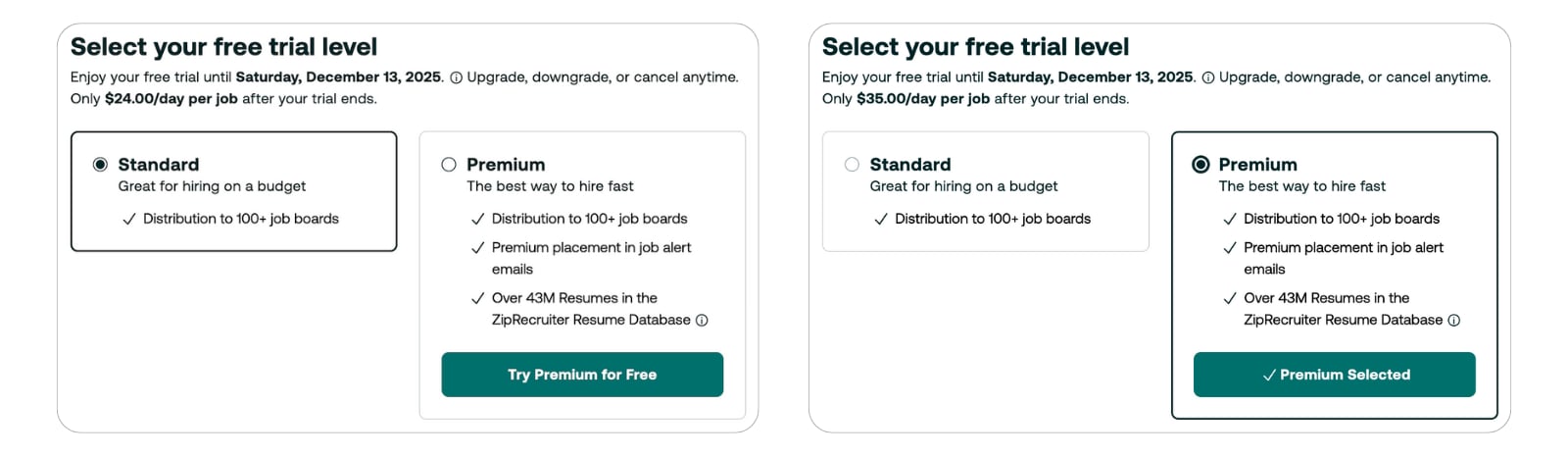
ZipRecruiter offers a free 2-day trial to get you started. This gives you a way to test-drive the platform’s AI matching technology and see what kind of applicants you could expect long-term.
After the free trial ends, pricing is based on a daily rate. This can add up quickly if you’re hiring for several positions at one time, but there’s a bright side: you can pause or adjust your posts at any time to help manage costs.
Additionally, ZipRecruiter doesn’t charge more based on the engagement your post gets. Some job boards charge per view or application, but ZipRecruiter helps you attract the maximum number of candidates for the same price.
These are the rates we could verify at the time of this writing:
- Standard: $24/day per job
- Premium: $35/day per job
- Pro: Available upon request
Pros
- Proactive, AI-enabled candidate matching reduces screening time
- Easy integrations with major ATS and HR platforms
- Higher tiers include direct access to ZipRecruiter’s résumé database
- One-click distribution sends listings to 100+ job boards
Cons:
- Daily pricing structure can be expensive when hiring for multiple roles
- Match accuracy varies for highly specialized technical roles
- High applicant volume can be overwhelming without an ATS
Why I chose ZipRecruiter?
ZipRecruiter doesn’t have a long setup process, and the platform is straightforward enough for you to start sourcing right away. In most cases, you really can receive quality candidates within the first couple of days.
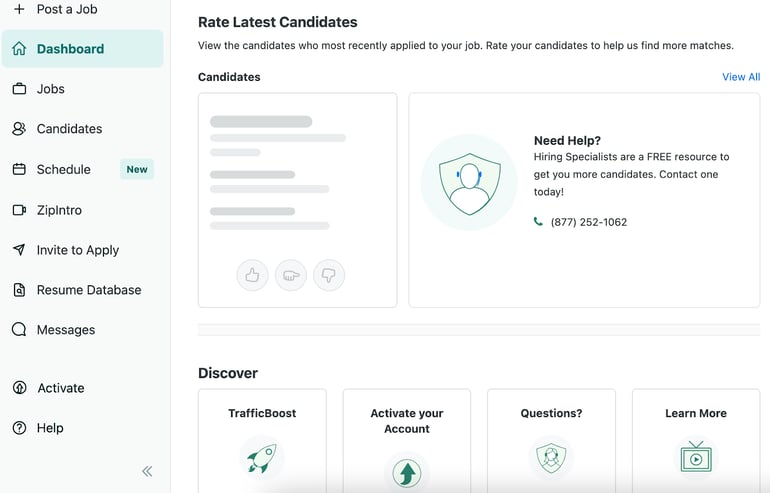
There are two things that make ZipRecruiter stand out for me. First, it integrates smoothly with popular HRIS and ATS systems, allowing you to keep your existing workflow. Secondly, the platform centralizes applicant management. You can review candidates, schedule interviews, and automate follow-ups from one dashboard or through the ATS you connected.
Hubstaff Talent: Best for remote-first hiring and finding freelancers
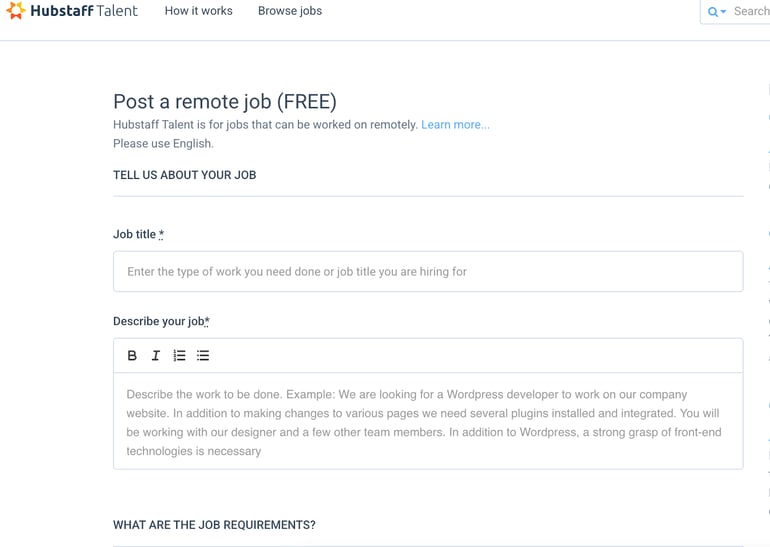
Hubstaff Talent is a free, global marketplace built for companies that want to hire remote contractors. Instead of charging employers to post roles or access profiles, Hubstaff Talent offers the platform for free. That means unlimited job posts and direct access to freelancers who have engineering, data, marketing, and other technical skills.
You can filter through its searchable talent directory by experience, skills, availability, rates, and location. You can also source global talent without using multiple regional job boards.
Pricing
Hubstaff Talent is completely free. There are no subscription fees or charges to contact candidates. Since the company relies on its parent company’s software ecosystem for revenue, it’s able to offer the platform at no cost to you.
- Unlimited job posts: Free
Pros
- Completely free with no posting or subscription fees
- Can recruit global talent without added fees
- No limit on the number of job posts
- Great for filling project-based or contract technical roles
Cons:
- No candidate rating system
- Can take 24 hours for job posts to go live
- No paid boosts, so visibility depends on search placement
- Lacks AI matching and automation tools
Why I chose Hubstaff Talent?
In my opinion, Hubstaff Talent offers something that most job boards don’t: true, no-strings-attached access to global talent. You can find qualified freelancers without trying to bypass paywalls or being restricted by a limited number of searches. I also appreciate that Hubstaff Talent doesn’t force you to use its other products just to access the platform.
Indeed: Best for high applicant volume
It’s hard to talk about free job boards without mentioning Indeed because of its massive candidate pool. The platform’s reach makes it a reliable source of applicant volume. That’s one of the main reasons why small businesses, mid-sized companies, and enterprises all use it.
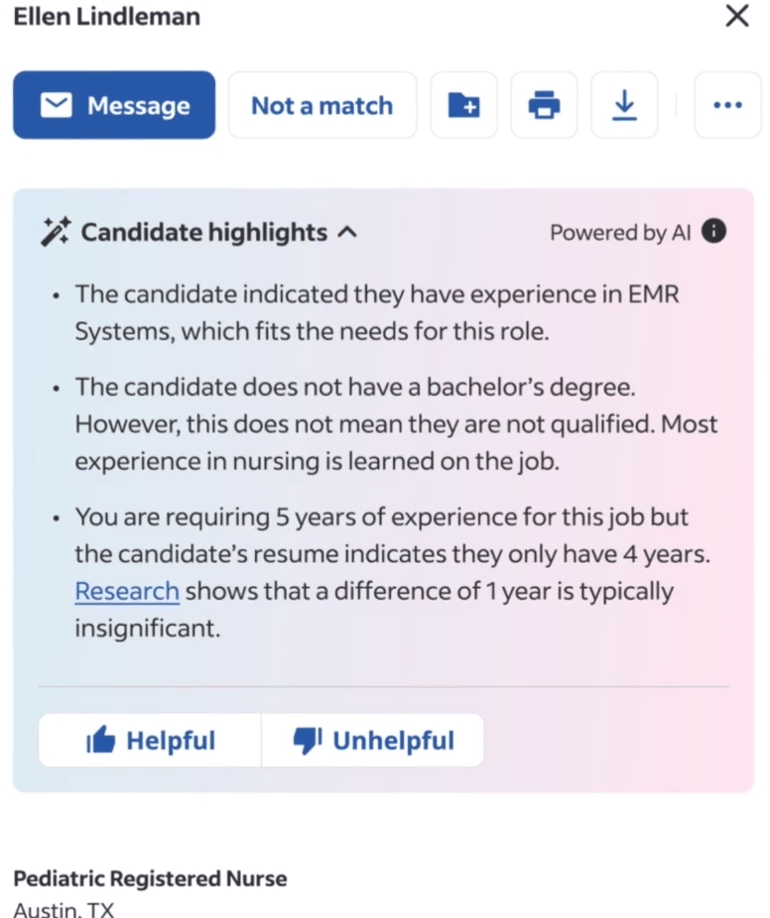
Candidates can apply to your job posts directly, but Indeed also surfaces candidates by skill, experience, and resume keywords. This dual model helps you build pipelines even when your applicant flow slows down.
The free posting option offers basic visibility, and sponsoring your posts improves candidate targeting. Even without a paid promotion, Indeed is a dependable job board for hiring teams with a fixed or limited budget.
Pricing
Indeed lets you post jobs for free, but most teams end up using sponsored posts to maintain visibility in competitive categories. It also offers Smart Sourcing as a monthly or annual subscription that gives you access to automated candidate matching and unlimited resume views. Overall, the platform is cost-flexible, but requires careful budgeting to avoid overspending.
- Job posts: Free
- Sponsored posts: Pay-per-application with customizable budget
Smart Sourcing:
- Standard plan: $120/month; $1149.96 annually
- Professional plan: $400/month; $3840 annually
Pros
- One of the largest candidate pools for both technical and nontechnical roles
- Free job posts
- Smart Sourcing automates outreach and provides stronger matches
- Employer dashboard to track applicants across multiple roles
Cons:
- Sponsored posts are often necessary for competitive or specialized roles
- Free posts offer limited control over targeting
- Candidate resumes may be incomplete or outdated
Why I chose Indeed?
I chose Indeed because it consistently delivers applicant volume, even for roles that may not get much traction elsewhere. When I need to gauge market interest or build a quick shortlist of talent, Indeed is one of the first places I look.
The free posting is also helpful for getting a handle on a tight budget, and when I need more visibility, I can plan for the costs of sponsoring the post or using Indeed’s Smart Sourcing.
Wellfound: Best for sourcing technical talent
Wellfound is a niche job board built to source hard-to-find technical talent. What sets it apart is its focus on specifically helping start-ups and small businesses connect with engineers, product specialists, and data professionals.
Most candidates on the platform are intentionally looking for companies where they can make an early impact or possibly work with the next up-and-coming unicorn, like Meta or Uber. Wellfound is a good fit for hiring teams seeking tech-savvy applicants who understand the realities of building something from the ground up.
Pricing
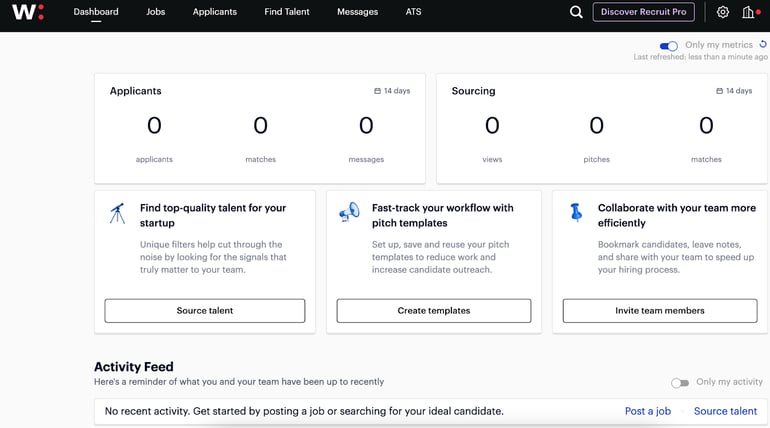
Wellfound offers a free plan that lets employers post unlimited jobs and message candidates directly. The trade-off is that advanced features, like expanded search filters, detailed insights, and candidate screening questions, are in the paid tier.
For a more enhanced experience, the Autopilot plan gives you a few more bells and whistles. Wellfound’s Autopilot automates candidate sourcing, communicates with applicants, and schedules them for you.
It’s a feature that saves time, but it is an added expense. The free tier is still effective. You just won’t have access to these advanced features.
- Access plan: Free for all users
- Recruit Pro: $499/month
- Autopilot plan: Custom pricing
Pros
- Niche platform with a strong pool of technical talent
- Unlimited job posts and direct messaging in the free plan
- Autopilot plan adds helpful automation for sourcing and outreach
- Strong option for employers who want culture-fit and technical alignment from the start
Cons:
- Smaller overall candidate volume compared to general job boards
- Free pan requires manual outreach and screening
- Not ideal for companies that need roles that aren’t tech-centric
Why I chose Wellfound?
I chose Wellfound because it’s one of the few free platforms where the majority of the candidate pool actually fits the type of environment startups and small teams operate in. I also appreciate how much you can do with the free plan before having to upgrade. The only issue I have is that you can’t add candidate screening questions in the free tier.
LinkedIn: Best for jobs that require professional experience
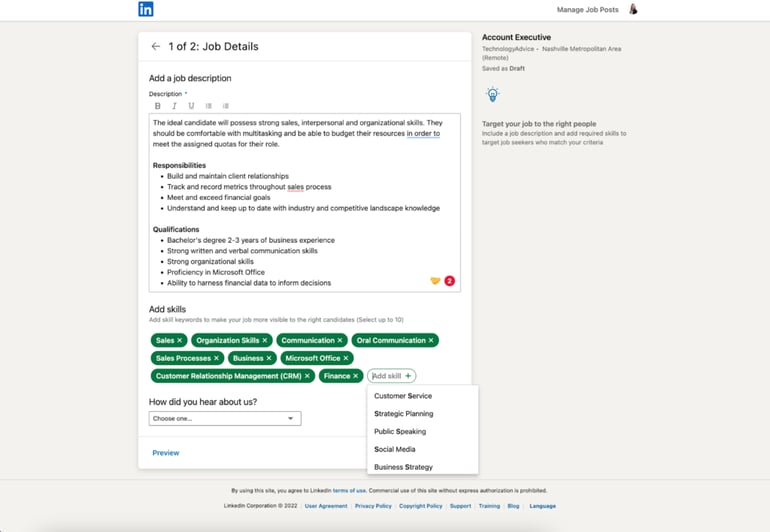
LinkedIn is one of the most strategic places to source professional talent because of its live ecosystem of career activity. The free job posting option gives you access to a vast network of skilled professionals.
The real value in the network comes from how LinkedIn uses connections, profile activity, and algorithmic recommendations to get the word out about your open position. Unlike other job boards that rely almost entirely on active applicants, LinkedIn also reaches passive candidates.
Pricing
LinkedIn lets you post one job listing at a time for free, but visibility is limited compared to its paid tiers. Many teams end up boosting their posts to stay competitive.
If you need to hire for more than one role, you’ll need to purchase job slots. For pricing, you have to reach out to their sales team.
If you want to expand your search filters, get more candidate recommendations, and create a company page, you’ll need to upgrade to one of the paid plans.
- Job posting: One free job listing at a time
- Business plan: $44.99/month when billed annually
- Sales Navigator Core plan: $67.49/month when billed annually
- Recruiter Lite plan: $139.99/month when billed annually
Pros
- Access to a massive network of professional and technical talent
- Great for reaching passive and active candidates
- Free posts can generate visibility through your connections and recommendations
Cons:
- Free posts have to be boosted to amplify their reach
- Limited search and outreach capabilities without paid recruiter tools
- High applicant volume doesn’t always translate to qualified fits
Why I chose LinkedIn?
I chose LinkedIn because it consistently delivers the kind of professional and technical talent you can’t always reach through traditional job boards. Even with the free posting option, job posts get picked up through network activity and algorithmic suggestions.
LinkedIn may not be the most cost-effective, but the free posts still offer meaningful exposure for roles that require experience, specialization, or leadership potential.
Handshake: Best for finding early-career talent
Handshake is a different kind of job board. They’ve built a network by partnering with over 1,500 colleges and universities to create a fresh candidate pool of early-career talent. The goal is to connect students and recent graduates with real job opportunities.
It’s the closest thing to a digital campus recruiting network. You get access to candidates who are actively preparing for the jobs you’re hiring for. Candidate profiles highlight the students’ coursework, certifications, academic projects, and technical skills.
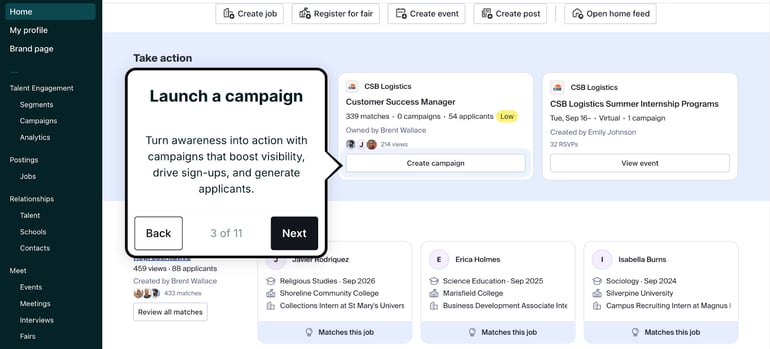
And here’s the thing: the schools verify the credentials, so you know for sure that you’re getting a qualified candidate. If you want more advanced features, Handshake’s Talent Engagement Suite lets you do large-scale promotional campaigns, advanced analytics, and provides a dedicated customer success team to refine your recruitment strategy.
Pricing
Handshake’s basic plan is free and includes unlimited job posts, applicant management tools, and messaging templates. The trade-off is that these features are limited. You only get ten candidate messages per month and up to 100 talent matches.
If you need a little more structure, you can choose between two paid tiers. In the Plus plan, you get 200 candidate messages per month, unlimited talent matches for up to ten jobs, and school recommendations for up to ten jobs.
In the Talent Engagement Suite, all of these features are unlimited, and you get access to advanced recruiting analytics and their add-on products.
- Basic plan: Free
- Plus plan: $309/month per job
- Talent Engagement Suite: Contact for a custom quote
Pros
- Access to a verified, early-career talent pool
- Great for technical and professional entry-level roles
- Free plan includes unlimited job posts and applicant management
- Schools actively promote opportunities to their students
Cons:
- Limited features in the free plan
- Competition for top students can be high during peak seasons
- Need strong employer branding to stand out to high-performing students
- Advanced analytics and engagement features are only available in the highest-tier plan
Why I chose Handshake?
I chose Handshake because there aren’t many job boards built for college students and graduates, and specifically targets Gen Z. I also like that you can connect with colleges and universities within Handshake’s network.
When you connect with an institution, you can request to post your listing on the school’s career site. Once you’re approved, you can host hiring events, attend the school’s career fairs, and interact with students directly. If you’re trying to future-proof your talent pipeline, this level of access is hard to beat.
How do I choose the best free job board?
Choosing the right job board starts with understanding what you actually need the platform to do for your hiring process. Free doesn’t mean one-size-fits-all, so the more clarity you have upfront, the easier it is to select a platform that supports your workflow.
Step 1: Look at your hiring goals
If you’re trying to build a large applicant pool quickly, you’ll need a board with substantial reach and high daily traffic. If you’re hiring for specialized technical roles, a smaller but more niche talent pool may serve you better.
Step 2: Look at your team’s capacity
Some job boards generate a heavy applicant volume, which sounds great until your team is overwhelmed sorting through unqualified resumes. Others produce fewer applicants but require more manual sourcing or outreach.
Step 3: Think about long-term scalability
Free job boards are great for saving money, but the platform you choose should also support your hiring needs as they grow. The job board that meets your needs today may be limiting six months from now.
After factoring in your hiring goals, workload capacity, and long-term scalability, the best free job board boils down to the one that fits your hiring reality.
Methodology
This list reflects both my firsthand experience and an objective review of each platform’s effectiveness. I’ve personally used several of these job boards in real hiring scenarios and have demoed the others to understand how they function in practice.
To validate my impressions, I cross-referenced user feedback from G2 and Capterra. I evaluated each job board based on:
- Pricing
- The strength and usability of freemium plans
- Available features
- Whether the platform reduces recruiters’ workload
- The type of talent pool each job board attracts
The result is a curated list of free or free-to-start job boards that support your team without stretching your budget.