


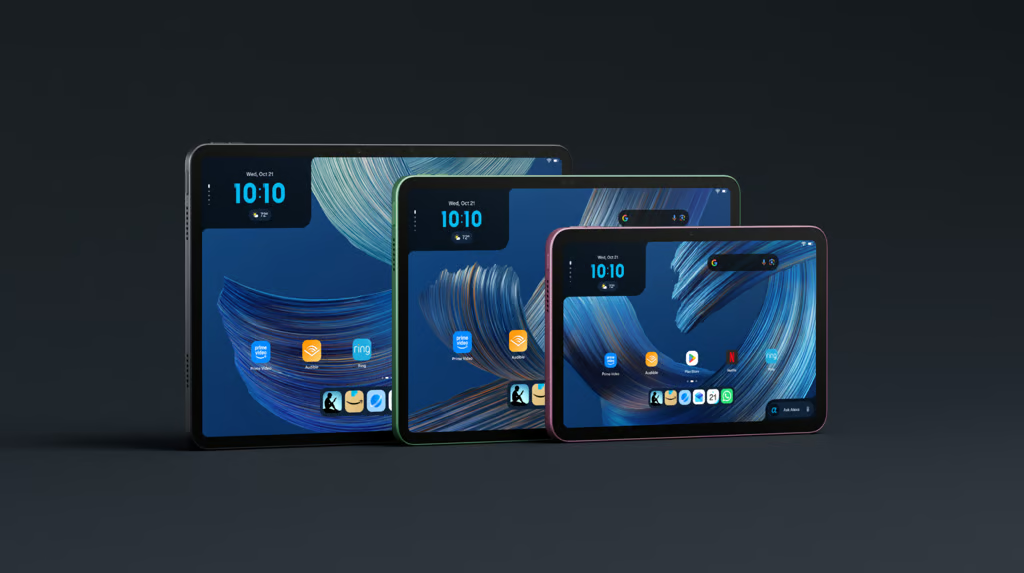
Amazon is preparing to move beyond its traditional Fire tablet lineup with three new Alexa tablets that address one of the biggest limitations of its older devices: the lack of built-in access to the Google Play Store.
The company announced the new Alexa tablets on Oct. 8, with prices starting at $229.99. The devices run Android, include Alexa+, and offer access to Google’s app marketplace as well as Amazon’s entertainment services. Orders opened October 8, with shipping beginning October 14 in the United States, Canada, and Mexico.
The change represents a significant shift in Amazon’s hardware strategy. Rather than focusing primarily on inexpensive tablets with a limited app ecosystem, Amazon is introducing higher-priced Android devices with broader software compatibility and integrated AI features.
Amazon’s new Alexa tablets: Prices and specifications
Amazon introduced three models: the Alexa Tablet 8, Alexa Tablet 11, and Alexa Tablet 12 Pro. All three have aluminum bodies, built-in Alexa+, and official Google Play Store access.
| Feature | Alexa Tablet 8 | Alexa Tablet 11 | Alexa Tablet 12 Pro |
|---|---|---|---|
| Starting price | $229.99 | $329.99 | $499.99 |
| Display | 8.7 inches | 11 inches | 12 inches |
| Refresh rate | 60Hz | 90Hz | 120Hz |
| Base RAM | 4GB | 8GB | 8GB |
| Base storage | 64GB | 64GB | 128GB |
| Video playback | Up to 14 hours | Up to 15 hours | Up to 16 hours |
| Google Play Store | Included | Included | Included |
| Alexa+ | Built in | Built in | Built in |
According to Amazon:
- The Alexa Tablet 8 is the smallest option, weighing 329 grams and supporting Wi-Fi 6. Its size makes it better suited to portable reading, browsing, and streaming.
- The Alexa Tablet 11 adds a 2.5K display, dual Dolby Atmos speakers, and 8GB of RAM. It occupies the middle of the lineup for buyers who want a larger screen without paying for the Pro model.
- The Alexa Tablet 12 Pro features a 12-inch display with a 120Hz refresh rate, Wi-Fi 6E, and quad Dolby Atmos speakers. A Nanomatte version, designed to reduce screen glare, starts at $549.99.
Amazon also offers a Pro Keyboard for $149.99 and a Pro Pen for $89.99, both designed for the 12 Pro. Buying the base tablet with both accessories would bring the total to $739.97 before taxes.
There is another cost consideration for buyers choosing the two smaller models. According to Droid Life’s coverage of the launch, the Alexa Tablet 8 and Alexa Tablet 11 include lockscreen advertisements in their base configurations. Removing those advertisements costs an additional $20.
That brings the starting prices for versions without lockscreen advertisements to $249.99 and $349.99, respectively.
Why Amazon is moving away from Fire tablets
Previous Fire tablets used Fire OS, Amazon’s customized version of Android, and relied primarily on the Amazon Appstore rather than offering Google Play out of the box. That limited straightforward access to popular Google applications and other Android software.
The new Alexa tablets take a different approach, running Android with the full Google Play Store included. Amazon identifies apps such as YouTube, Netflix, Gmail, and Google Docs as available through the marketplace.
According to TechCrunch’s reporting on the launch, Amazon describes the devices as a new hardware and operating-system lineup rather than a simple rebranding of existing Fire tablets.
The transition also signals the planned end of Amazon’s current Fire tablet lineup. According to WIRED’s coverage of the announcement, Amazon intends to stop shipping existing Fire tablets in approximately 1 to 2 months. Remaining inventory may continue to be sold during the transition.
For current Fire tablet owners, the change does not mean their devices will immediately lose support. WIRED reports that Amazon plans to continue supporting existing Fire tablets for four years after their final shipment date. Owners should still consult Amazon’s device-specific support information to confirm the applicable coverage for their model.
The shift follows other changes to Amazon’s device business. In August, TechRepublic reported that Amazon raised prices on several Echo, Kindle, and Fire TV products.
Alexa+ brings new AI features to Amazon’s tablets
Amazon is making Alexa+ a central part of the new tablet experience, with the assistant built into all three devices.
Users can activate Alexa+ by voice or through an on-screen button to ask questions, control compatible smart-home devices, and access other supported functions.
One new capability, called On-Screen Intelligence, allows users to give Alexa access to information displayed on the screen and ask questions about it. Amazon says the feature could help users compare information on a webpage or add dates from an event schedule to a calendar. These examples describe the company’s intended functionality rather than independently tested performance.
The company says On-Screen Intelligence requires users to opt in. A visual indicator appears when Alexa has access to the screen, and users can disable the feature in Settings.
Amazon has been extending Alexa+ across its hardware ecosystem. TechRepublic previously covered how Alexa+ became available at no additional cost on eligible Fire TV devices.
The practical question is whether the tablet-specific AI features make everyday tasks easier or simply add another interface for functions users can already perform through conventional apps.
Release dates and software support
Amazon opened orders for all three Alexa tablets on October 8. Shipping begins October 14 in the United States, Canada, and Mexico, followed by October 19 in the United Kingdom, Germany, France, Italy, and Spain.
According to WIRED’s reporting, the new tablets launch with Android 16, with an upgrade to Android 17 planned for early 2027. Amazon has also committed to providing at least four years of software updates for the new devices. That commitment is separate from the reported four-year support period for existing Fire tablets, which WIRED says begins after Amazon’s final shipment of those devices.
Neither commitment should be interpreted as a guarantee of four years of major Android version upgrades. Buyers evaluating long-term support should distinguish between security maintenance, feature updates, and operating-system upgrades.
The company also announced Amazon Kids tablet bundles in 8.7-inch and 11-inch sizes. These include protective cases and a year of Amazon Kids+.
The Alexa tablets will be sold through Amazon and selected retail partners, including Best Buy and Target.
Amazon’s new hardware also arrives shortly after a refresh of its dedicated e-readers. TechRepublic’s comparison of the latest Kindle models outlines how those devices differ in pricing, display technology, and intended use.
Should Fire tablet owners upgrade?
The clearest reason to consider an Alexa tablet is official Google Play access. For people who regularly use Google’s apps or other Android software unavailable through the Amazon Appstore, that removes an important obstacle.
However, the higher prices mean an upgrade is not automatically worthwhile, particularly for existing Fire owners whose devices remain supported and meet their everyday needs.
Buyers should consider:
- Application requirements: Check whether the new device supports the specific apps and services you use regularly.
- Total cost: The smaller models cost $20 more without lockscreen advertisements, while the 12 Pro’s keyboard and stylus are optional purchases that substantially increase its price.
- Software longevity: Amazon has outlined separate support commitments for new Alexa tablets and existing Fire devices. Buyers should confirm the applicable security-update period and the types of updates included.
- AI features: Evaluate Alexa+’s practical usefulness and check whether any third-party services require additional payments.
For professionals planning to use the tablets for work, access to Google Play is a positive development, but it should not be mistaken for proof of enterprise readiness. Organizations should verify mobile device management support, security update policies, application compatibility, and administrative controls before deploying the hardware.
Amazon’s transition away from Fire tablets removes a longstanding software limitation while moving the company into a more expensive segment of the market. For existing Fire owners, the decision is whether broader app access, upgraded hardware, and integrated AI features justify replacing a device that may still meet their needs.
Related reading: For buyers comparing Amazon’s new Alexa tablets with other options, TechRepublic’s guide to the best tablets under $500 examines affordable alternatives from Apple, Samsung, Lenovo, and Motorola.