


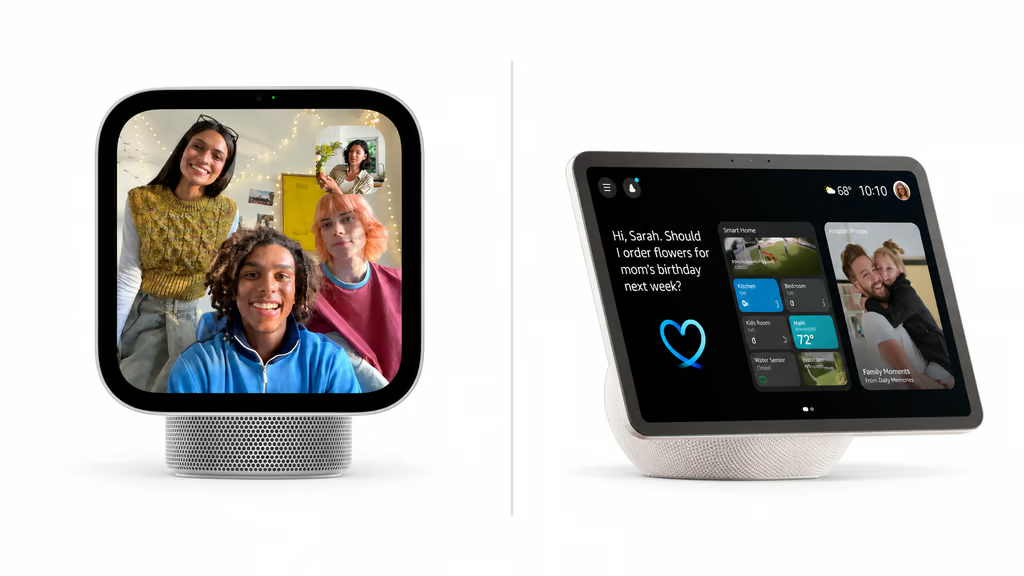
Apple wants to make the smart-home screen personal. Amazon has spent years making it practical. With its new HomeView, Apple is bringing Siri AI, facial recognition, and tighter iPhone integration into direct competition with Amazon’s Echo Show 11.
Unveiled October 13, the $299 HomeView promises an experience tailored to individual household members, while Amazon’s $219.99 display offers a larger screen, established Alexa+ integrations, and broader smart-home connectivity. HomeView arrives November 13, making the choice largely about which ecosystem fits the devices and services already in a household.
Apple introduced HomeView during its October 13 smart-home event, alongside refreshed HomePod mini and Apple TV hardware. According to Apple’s announcement, HomeView launches in eight markets, including the US and UK, but not the European Union. Echo Show 11 has been available since November 2025.
| Feature | Apple HomeView | Amazon Echo Show 11 |
|---|---|---|
| US launch price | $299 | $219.99 |
| Display | 7-inch Liquid Retina | 11-inch touchscreen |
| Processor | Apple A18 | Amazon AZ3 Pro |
| AI assistant | Siri AI | Alexa+ |
| Smart-home support | Apple Home, Matter, Thread | Alexa, Matter, Thread, Zigbee |
| Personalization | Facial recognition for up to six users | Visual ID, Omnisense |
| Video calling | FaceTime, 12MP camera | Alexa calling, 13MP camera |
| Availability | November 13, 2026 | Available since November 2025 |
Prices reflect US launch pricing; retail discounts may vary.
How we compared: We examined manufacturer specifications, connectivity, AI features, privacy safeguards, and ownership costs alongside independent reporting. Recommendations prioritize household compatibility, practical features, and value.
Display, AI, and smart-home compatibility
HomeView’s compact display suits smaller counters and entryways, while Echo Show 11 provides more viewing space for recipes, calendars, and security cameras. Amazon’s documented Zigbee hub support gives Echo Show 11 an advantage for households with compatible accessories using that protocol.
Apple emphasizes individual experiences. HomeView recognizes up to six users and can display personalized calendars, messages, and reminders. Private information requires facial recognition and a paired iPhone or iPad meeting Apple’s authentication conditions. Advanced Siri personal-context features require compatible Apple Intelligence hardware.
This builds on Apple’s earlier plans to make Siri central to home automation. Echo Show 11 uses Alexa+ for conversational requests, scheduling, and routines triggered by its Omnisense sensors.
HomeView supports FaceTime, Apple TV, and compatible third-party entertainment apps, according to its technical specifications. Echo Show 11 offers established streaming services and Alexa video calling.
Amazon is also introducing autoplay video ads on eligible Echo Shows, a consideration for shared household screens. The Verge’s early HomeView assessment offers initial impressions, but long-term performance remains untested.
Pricing, privacy, and the better fit
HomeView’s wall-mounted version requires a separately purchased mount, starting at $59.95. The display and mount cost at least $358.95. The USB-C mounting option includes a cable but requires a separate power adapter rated at 20W or higher.
Echo Show 11 launched at $219.99, making it $79.01 cheaper. In the US, Alexa+ is included with Amazon Prime or costs $19.99 monthly for nonmembers. HomeView’s advanced camera-recognition features require compatible cameras and an eligible iCloud+ subscription.
Apple says HomeView uses Secure Exclaves to protect sensitive camera and microphone data during processing. Amazon offers hardware controls for disabling its camera and microphones. Neither approach establishes an overall privacy winner.
HomeView is better suited to Apple-centered households seeking personalized information, FaceTime, and wall-mounted controls. Echo Show 11 is the stronger option for buyers prioritizing screen size, Zigbee compatibility, and established Alexa integrations at a lower price.
HomeView’s reliability and audio performance still need independent testing after November 13. Until then, the most useful buying guide is already in your home: the devices you own, the services you use, and how well they’ll work with either display.
Also read: Amazon’s expansion of free Alexa+ access to eligible Fire TV devices also illustrates how assistant features and subscription requirements can differ across products within the same ecosystem.