
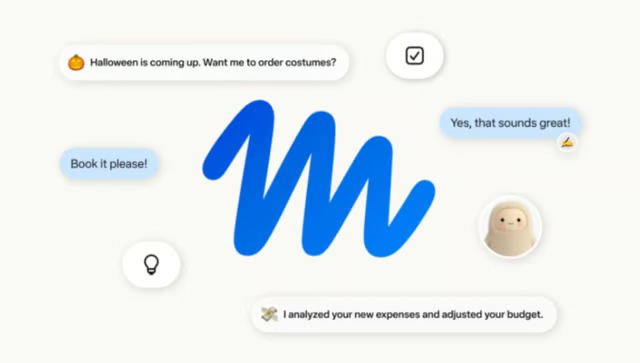


Meta introduced Muse on Tuesday, a personal AI agent designed to move beyond chatbot-style conversations and take action for users.
Available initially in the US on iOS, Android, the web, and WhatsApp, Muse can handle tasks such as sending emails, booking travel, filling out forms, lowering bills, and making purchases.
Support for Meta’s AI glasses is also planned.
The agent is powered by Muse Spark, Meta’s latest AI model, and is designed to keep working after users close the app. It can break larger goals into plans, monitor progress, and return when something changes or it needs human approval.
Meta says Muse can also remember information from previous conversations and use it to make suggestions without being prompted. Meta’s design goes far beyond a conventional assistant. Muse has access to a browser, file system, and terminal, allowing it to navigate websites, fill out forms, and build tools for tasks.
It can also create documents, PDFs, web pages, and interactive “Artifacts,” such as spending trackers or study guides. The company says users can customize Muse by naming it, choosing an avatar, and adjusting how proactive it should be.
For purchases, Muse can use Link by Stripe, which generates a one-time-use card so users’ actual payment details are not exposed to websites. Meta says Muse is the first AI agent covered by Link’s purchase protections.
Muse is free for most users, but Meta is introducing two paid plans: Power at $20 per month and Maximum at $100 per month. The company expects most people to remain on the free tier.
Security is the bigger pitch
The most important part of Muse may be what sits underneath it.
Meta built Muse around a dedicated cloud-based virtual machine called Muse Secure VM. A separate system, Sentinel, controls what Muse can send to the internet and connected services. Sensitive actions, including purchases and sending emails, can require explicit approval.
Users decide which services Muse can access and what permissions it receives. Meta says it keeps credentials in secure storage and keeps them from Muse, while users can disconnect services or tell Muse to forget specific information.
Still, the security architecture does not eliminate the trust problem. WIRED reported that Meta acknowledges Muse Secure VM is not technically inaccessible to Meta, even though company policy bars Meta from accessing users’ Muse data. A more locked-down Confidential VM is planned later this year.
More must-read AI coverage
- SS&C Intralinks DealCentre AI vs. Datasite: Which platform is built for the future of dealmaking?
- SS&C Intralinks FundCentre AI vs. Juniper Square: Which platform better supports modern private markets fund managers?
- Why Data, Not Models, Determines AI Success
- The Rise of the AI-Native Factory: How Physical AI Is Transforming Manufacturing
Privacy concerns remain
Muse’s biggest advantage may also be its biggest weakness. Meta is asking people to hand an AI access to email, calendars, payments and other personal services. That makes privacy and reliability far more important than they are with a chatbot that simply generates text.
Meta has built extensive controls around Muse, but its history of privacy controversies means consumers may judge those promises more skeptically.
The product therefore faces a simple test: Can Muse save people enough time that they are willing to let it act on their behalf? If so, Meta may have a serious consumer agent on its hands. If not, even impressive automation may not overcome the trust barrier.
Also read: Meta recently expanded the Muse lineup with Muse Voice Transcribe, which adds real-time multilingual speech recognition and speaker labeling.