


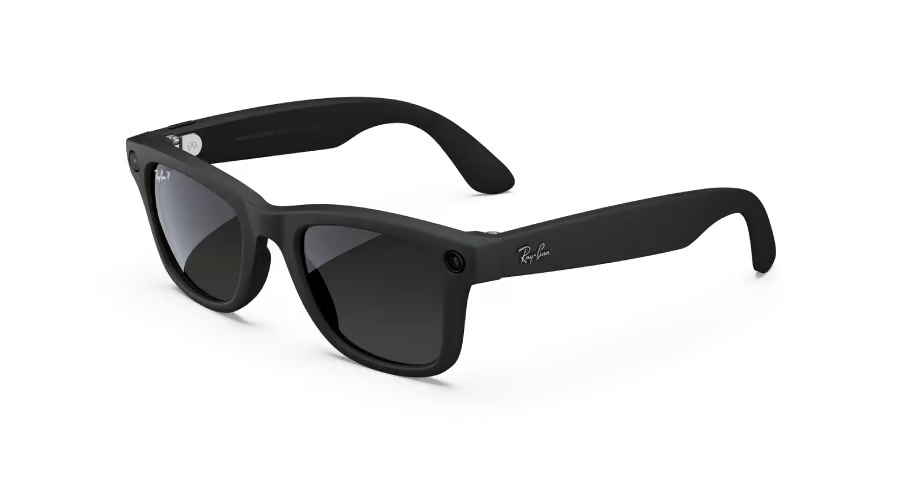
British moviegoers might soon have to choose between their popcorn and their Meta smart glasses as cinemas across the UK move to restrict the AI-enabled eyewear over piracy concerns.
Cinema operators across the UK are considering policies that would ban or restrict camera-equipped smart glasses, including Meta’s AI-powered eyewear, the UK Cinema Association said Thursday.
The industry group said major cinema operators are reviewing how to handle the devices, balancing concerns about unauthorized film recording and privacy against their potential value for customers with accessibility needs. No industry-wide ban has been introduced, and the UKCA said it was not aware of any member imposing a ban so far. Instead, individual cinema chains are expected to decide whether and how to restrict the glasses.
The issue is gaining attention as Meta’s glasses become more popular. More than 7 million pairs were sold in 2025, TechRepublic examined in March. The glasses can take photos and videos, make calls, play music and interact with Meta’s AI. Some models also offer features such as live translation and message and map displays.
Piracy is the sticking point
For cinemas, the biggest concern is that the cameras could make it easier to secretly record movies.
The UKCA estimates copyright infringement costs the UK’s creative industries at least £500 million a year, while more than 90% of illegal copies of newly released films are sourced from cinemas, according to Euronews.
That makes camera-equipped glasses a particular concern because they can be worn throughout a screening without requiring a customer to visibly hold a recording device.
Meta says its glasses activate a small LED when recording, and the company has added tamper-detection technology designed to prevent users from covering the light. But reports that the indicator can be concealed have fueled wider privacy concerns, Euronews reported.
Other venues are already taking action. ATG Theatres said people wearing the glasses during performances will be asked to remove them, while Wetherspoons has told customers not to use the glasses to record people.
Courts in England and Wales have also prohibited Meta glasses due to existing restrictions on taking images and videos.
More must-read AI coverage
- SS&C Intralinks DealCentre AI vs. Datasite: Which platform is built for the future of dealmaking?
- SS&C Intralinks FundCentre AI vs. Juniper Square: Which platform better supports modern private markets fund managers?
- Why Data, Not Models, Determines AI Success
- The Rise of the AI-Native Factory: How Physical AI Is Transforming Manufacturing
What IT leaders should take from the debate
The cinema debate is an early example of a problem IT leaders are likely to face more often as AI-powered wearables become commonplace. Smart glasses can function as cameras, communication tools, AI assistants and accessibility devices, making them harder to govern with traditional policies built around phones, laptops or dedicated recording equipment.
For businesses, the challenge will be setting rules that address privacy, confidential information and unauthorized recording without blocking legitimate uses. That may require updating acceptable-use policies, clarifying where camera-equipped wearables are permitted and creating exceptions for employees who rely on accessibility features.
As devices like Meta’s smart glasses become less conspicuous, IT and security teams may need to treat wearable AI as a separate policy category rather than assuming existing mobile-device rules are sufficient. The UK cinema debate offers an early glimpse of how complicated that balancing act could become.
Related reading: For another look at the privacy challenges surrounding AI eyewear, read how Apple is reportedly designing its upcoming smart glasses around privacy safeguards.