


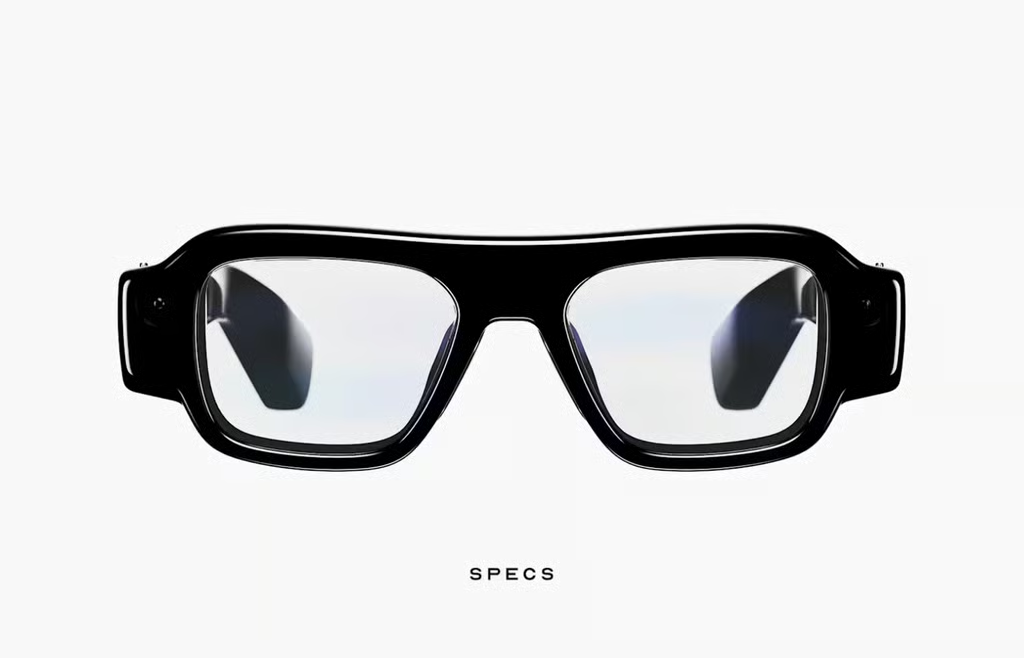
Snap is trying to make smart glasses more than a camera on your face.
The company unveiled the next generation of its augmented reality eyewear on Tuesday, adding more advanced features and a far higher price tag. The revamped Specs will cost $2,195, but offer a much broader augmented reality experience than previous editions.
A high-resolution projection on the lenses can show notifications, directions, and third-party apps, while users can speak to a built-in artificial intelligence assistant. Cameras on the glasses provide contextual information to the assistant, giving it a better understanding of what the wearer is looking at.
“We believe augmented reality is the most natural way to use a computer because it aligns with how people already experience the world: visually, socially, and in three dimensions,” the company wrote in a news release.
Snap is trying to carve out a market between restrictive, high-functionality headsets such as the Apple Vision Pro and Meta Quest, and the lightweight, screen-free AI glasses Meta sells through its Ray-Ban and Oakley partnerships. It is similar to the category Google Glass tried and failed to create: wearable computing designed for working on the go, without the bulk of a full headset.
From lightweight to middleweight
It is an interesting turn for Snap, which was an early pioneer of screen-free smart glasses. Meta has since captured a decent chunk of that market, selling seven million units in 2025 and launching prescription-first models a few months ago. Apple and Google are both reportedly looking to enter the category this year or next.
Snap never managed to bring its own lightweight glasses to a commercial audience, instead focusing on developer editions. When announcing Specs, Snap CEO Evan Spiegel threw cold water on screen-free smart glasses, saying “they don’t really offer much,” according to Bloomberg.
Spiegel spent part of the unveiling emphasizing the glasses’ comfort and wearability, clearly trying to present them as something that could be worn throughout the day. The first edition comes with four hours of battery life, but the case can recharge the glasses four times, meaning they could last all day with a few charging sessions.
Snap tries to find the next big thing
Snap had major success in the mid-2010s with Snapchat, but changes in the ad market have weighed on the company’s outlook. It recently cut more than 1,000 employees, citing AI advancements, though the move also appears aimed at pushing the company closer to sustained profitability.
While its ad business has struggled over the past few years, Snap has seen stronger growth through its Snapchat+ subscription service. The company recently revealed the subscription was generating more than $1 billion in annualized revenue. It has also signed deals with AI model makers, including Perplexity, which will become the default AI search engine on the social network.
But Snapchat may struggle to maintain growth over the next few years as more countries consider restrictions on teenagers’ social media use. The UK is the most recent country to unveil a ban on social media for under-16s, and other European countries will be watching closely to see how the policy is implemented.
Snapchat is more exposed than rivals such as Instagram, Facebook, and TikTok because its audience skews younger, with teenagers making up a larger share of its user base.
Also read: Oura Ring uses Stelo by Dexcom to turn glucose readings into meal, timing, and blood sugar pattern insights.