


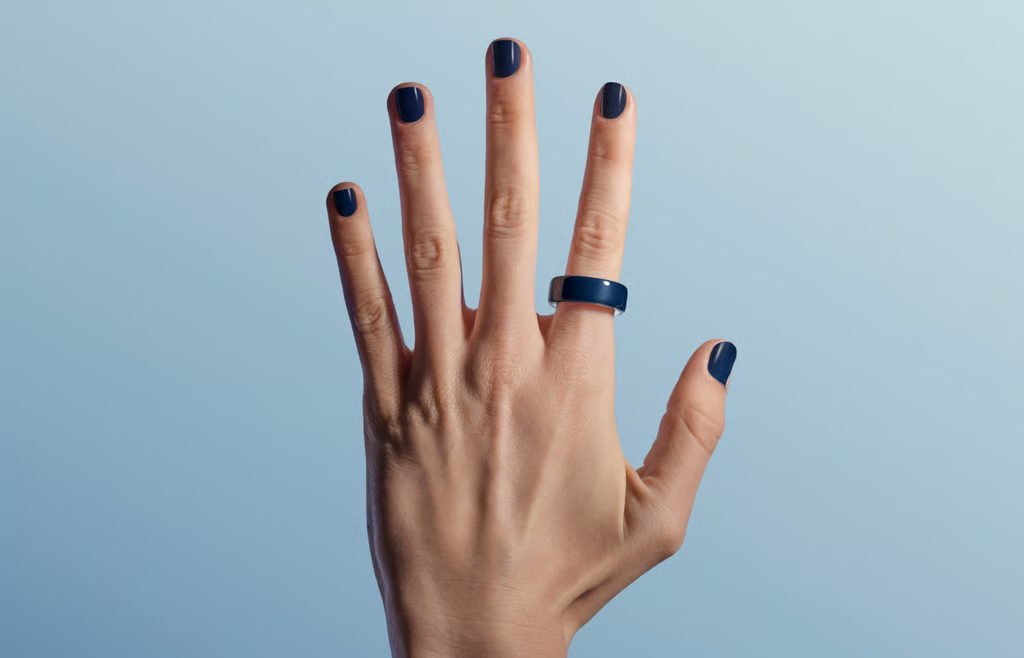
Many glucose-tracking wearables focus on quick checks: a current number, a trend arrow, or an alert. Oura Ring is better suited to review than glance checks. Its glucose feature looks at what happened around a reading, especially after meals and across daily routines.
A single reading only captures one moment. Oura provides a longer view of those readings, so users can see whether blood sugar rose briefly, remained elevated, or followed a recurring pattern over time.
Stelo is the source of Oura’s glucose data
According to Oura, its glucose feature uses the Dexcom Stelo Glucose Biosensor. Stelo is worn on the upper arm and tracks glucose in near real time. After setup, Oura puts those readings near meal logs and daily data.
Access is limited for now. Users need Oura Ring Gen3 or Oura Ring 4, an active Oura Membership, a Stelo account, and the Stelo biosensor. The feature is currently available only in the US.
Oura’s glucose graph shows daily blood sugar movement
The smart ring’s glucose graph shows blood sugar levels throughout the day. After eating, the graph can show whether glucose rose briefly or stayed elevated longer than expected.
Morning readings may need extra context. Some users may see early increases in blood glucose from the dawn phenomenon, when hormones such as cortisol and growth hormone help prepare the body to wake up.
Exercise, heat, dehydration, and stress can also temporarily raise blood sugar. Pairing a reading with what happened around the same time can help explain the pattern.
Meal logging connects food with blood sugar
Meal logging links each meal to the subsequent glucose response. Users can log a meal, snack, or drink by taking a photo, uploading one, or typing what they ate. Oura then estimates details such as protein, fiber, processing level, added sugars, fats, and carbs.
When Stelo is connected, logged meals can be reviewed with glucose data. Someone might see that a sweet drink led to a faster rise, while a higher-protein, higher-fiber meal led to a steadier response.
Meal timing becomes easier to compare as well. A late dinner may affect glucose differently than the same meal earlier in the day.
Time Above Range shows how long glucose stays elevated
The ring’s Time Above Range feature measures how long glucose remains above the target range after a logged meal. Oura uses a two-hour assessment window from the time the meal was logged.
A brief rise after eating can be normal. A longer stretch above the range may prompt users to review the meal, portion size, timing, or the activity around it.
Time Above Range turns the graph into a duration. It shows whether glucose came back down quickly or stayed elevated long enough to deserve another look.
Oura breaks Time Above Range into four labels:
- Optimal: Glucose stayed stable without prolonged peaks or major drops.
- Good: Glucose mostly stayed within the normal range.
- Fair: Glucose spent some time above range.
- Elevated: Glucose stayed above range for three hours or longer.
Oura says these thresholds are designed for people without diabetes, so users managing diabetes should not treat them as medical targets.
Why a ring may fit glucose tracking better for some users
With Stelo connected, Oura Ring turns glucose readings into a review of meals, timing, and time above range. Users can see whether blood sugar has returned to range and whether the same response continues to appear.
Ring design may also make the wearable more convenient for some people than a smartwatch. Smart rings can feel more comfortable to wear through sleep, meals, and routine parts of the day.
For users who do not want glucose tracking to feel like another screen-driven habit, a ring may fit more naturally into daily tracking.
Read our guide to see how Apple Watch, Garmin, Oura, Samsung, Withings, Huawei, and Evie Ring compare on blood sugar tracking.