


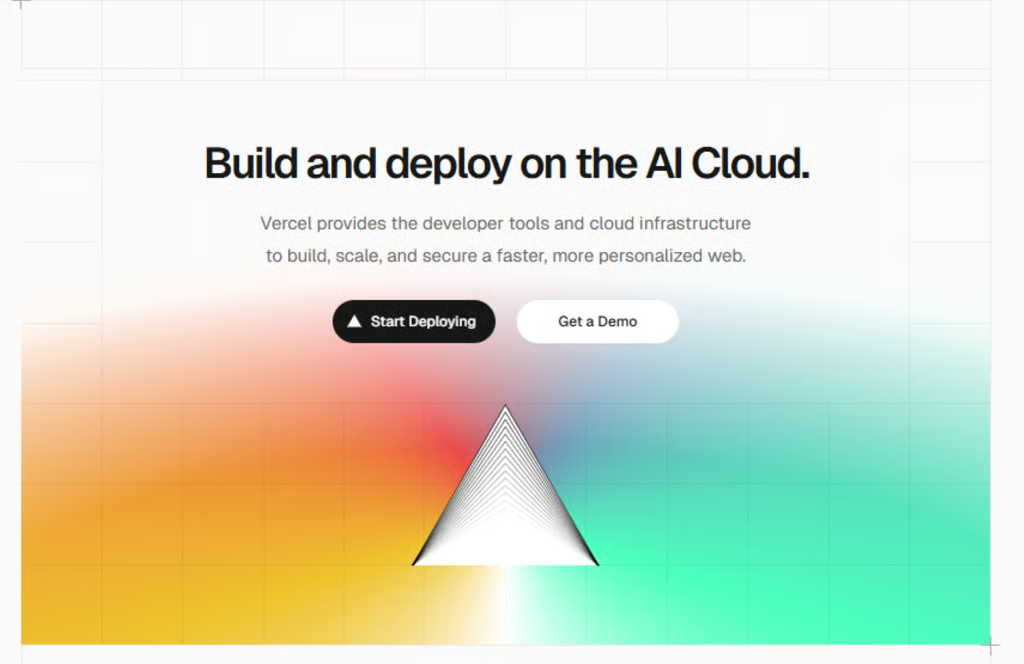
Vercel just dropped v0.app, and it’s basically trying to make every product manager, marketer, and designer into a software developer overnight. The company rebranded its v0.dev vibe-coding tool to v0.app with a bold promise: describe any app idea in a single prompt, and you’ll get a complete working application — frontend, backend, copy, and logic included.
With 3.5M+ users, v0 has struck a nerve. But here’s what’s interesting: While it started as a developer tool, most of its growth came from non-developers. Companies like Cox Enterprises, WPP, and Belk are now using it for entire teams of PMs, designers, and marketers.
v0.app: Key difference and features
With the old v0.dev, you’d prompt for something, then prompt again for fixes, better design, or added functionality. The new v0.app handles all that automatically using what they call “agentic intelligence” — it plans, adjusts, and improves the code without being told.
Here’s what v0.app does for you automatically:
- Plans out work step-by-step for your request.
- Searches the web and returns results with citations.
- Reads files and inspects live websites with screenshots.
- Generates design inspiration and manages to-dos.
- Spots errors and implements integrations with your favorite tools.
According to GM Zeb Hermann, they “learned from other agentic projects like Codex and Claude Code” that the key is making agents both highly capable and user-steerable, “getting the interaction right so anyone can build cool apps.”
What kind of cool apps can you make?
Some real-world examples include:
- Startup MVPs with landing pages, onboarding flows, and working dashboards.
- E-commerce storefronts, which are perfect for designers.
- Survey apps connected to actual databases.
- Custom slide decks with editable layouts and live content.
The timing is perfect
While AI coding startups are struggling with unsustainable pricing models, v0 implemented token-based pricing back in May 2024 and sells tokens at cost. Vercel believes “tokens are a commodity” and should be sold like one, so their business metrics are positive because they’re targeting the right users.
Our take, plus an intro to Ikigai
v0 is interesting because it’s not just making coding easier, it’s making app building accessible to people with domain expertise but no technical skills.
Got a great idea for your industry, but can’t code? Instead of waiting for developers to help you, now you can go prototype it yourself.
The real question then becomes: “What will you build when ALL coding barriers disappear?”
If you’re wondering where to start, may we introduce you to the Japanese concept of Ikigai?
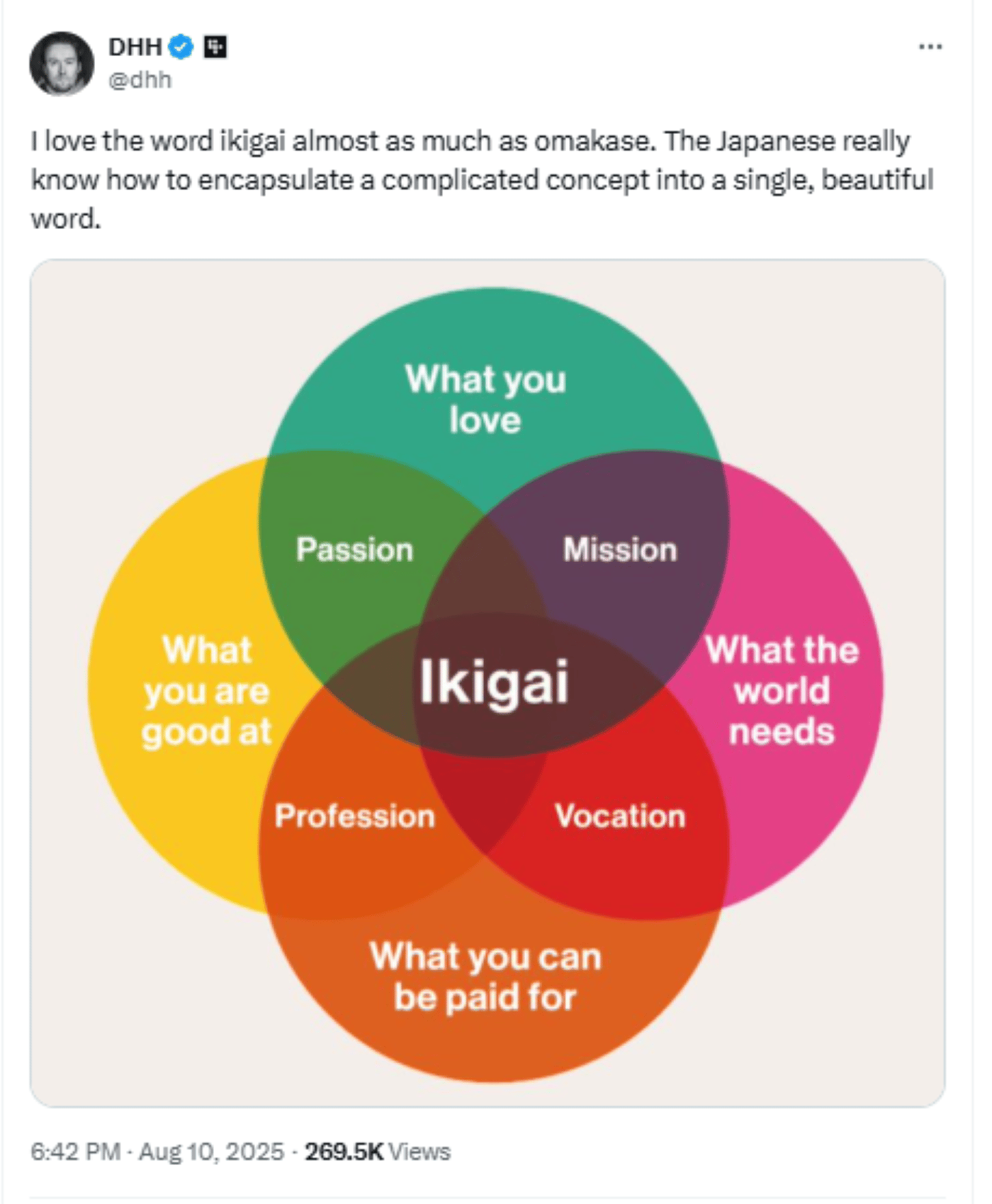
If you focus on the intersection of 1. what you love, 2. what you’re good at, 3. what the world needs, and 4. what you can be paid for (hello, Ikigai!), you’ll have endless projects worth building — regardless of whether artificial general intelligence arrives tomorrow or in 20 years.
Sure, what the world needs and what you can be paid for will shift over time, but if you’re building in a domain you love and leveraging what you’re good at today and getting even better at it, you can always adapt and find new ways to create value.
How to find your personal Ikigai
Here’s a short prompt inspired by this post from Garima Shah you can try to turn ChatGPT into your own personal Ikigai coach:
“Act as an Ikigai coach by asking me detailed questions about my life. Continue asking questions until you have a complete understanding of where my passions, proficiencies, and purpose intersect in a profitable way. Your goal is to develop a deep understanding of what I love to do and how I can make money at it.”
Editor’s note: This content originally ran in today’s newsletter of our sister publication, The Neuron. To read more from The Neuron, sign up for its newsletter here.